Diagnóstico de vibração: interpretando a linguagem das máquinas



Diagnóstico de vibração is an advanced form of monitoramento de condição in which vibration data is not merely collected but deeply analysed and interpreted to determine the health of a machine and pinpoint the root cause of specific faults. It is the process of translating raw vibração signals into actionable maintenance information. Where simple monitoring asks “is anything wrong?”, diagnostics asks the harder and more valuable question: “what exactly is wrong, how bad is it, and why did it happen?”
1. Definição: O que é Diagnóstico de Vibração?
Enquanto monitoramento de vibração may track overall levels and raise an alarm when a threshold is crossed, diagnostics focuses on the “why.” It seeks to answer questions like: Is this vibration caused by desequilíbrio ou desalinhamento? Is that bearing failing? Is there a problem with the gears, the coupling, or the foundation? Diagnostics therefore sits one level deeper than detection: it is the interpretive layer that turns a “high vibration” reading into a named defect on a named component.
That distinction matters because every fault demands a different corrective action. Confusing unbalance with misalignment, or a bearing defect with looseness, wastes labour and can leave the real problem untouched — so accurate diagnosis is the difference between a lasting repair and a repeat failure.
2. O Processo de Diagnóstico
A typical vibration diagnostics process follows a structured, repeatable sequence:
- Aquisição de dados: collecting high-quality data with sensors such as acelerômetros and a data analyzer. This means selecting the right sensor, mounting it correctly — per ISO 5348 — and choosing appropriate settings (Fmax, resolution, averaging). Poor mounting or the wrong Fmax can hide the very fault you are hunting.
- Processamento de Sinal: converting the raw forma de onda temporal into a more useful form, most commonly a frequency espectro via the FFT (Transformada Rápida de Fourier). Phase analysis and envolvente add further views.
- Análise Espectral: the core of diagnostics. The analyst examines the spectrum for patterns, because different faults generate energy at predictable frequencies. For example:
- Desequilíbrio: high amplitude at 1× the rotor’s velocidade de corrida, mostly radial.
- Desalinhamento: high amplitude at 1× and especially 2× running speed, often with strong vibração axial.
- Defeitos de rolamento: non-synchronous, high-frequency peaks at the specific frequências de falhas de rolamentos (BPFO, BPFI, BSF, FTF).
- Defeitos na engrenagem: peaks at the frequência de engrenamento e seu faixas laterais.
- Confirmação de falha: using multiple data types to corroborate a diagnosis — examining time-waveform shape for impacting that betrays a bearing fault, or using fase to separate unbalance from a eixo curvado. A single peak rarely proves a fault; a complete, consistent signature does.
- Relatórios e Recomendações: clearly communicating the findings — the identified fault, its severity, and a recommended course of action — to maintenance personnel.
3. Principais ferramentas e técnicas
Vibration diagnostics relies on a toolkit of complementary analytical methods, each exposing something the others miss:
- Análise de Espectro (FFT): the primary tool for identifying which frequencies are present in a signal.
- Análise de forma de onda temporal: useful for observing signal shape, impacts, and modulating events that can be missed in the FFT.
- Análise de Fase: a crucial tool for confirming unbalance, misalignment, and frouxidão, and the essential reference for balanceamento.
- Análise de Envelope (Demodulação): a technique for detecting the very low-energy, repetitive impacts associated with early-stage bearing and gear defects.
- Análise de pedidos: used for variable-speed machines, relating vibration to multiples (orders) of running speed rather than to fixed frequencies.
- Forma de Deflexão Operacional (ODS): an animation showing how a machine or structure actually moves at a given frequency, valuable for diagnosing ressonância and structural weakness.
4. Diagnostics in the Field — Confirm, then Correct
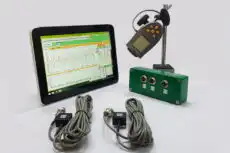
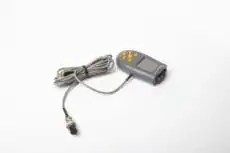
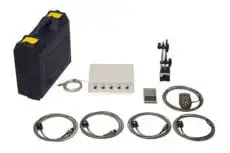
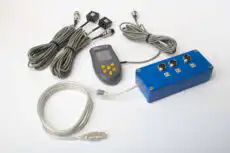
Much diagnostic work happens on running plant, not in a lab. A maintenance engineer arrives with a portable instrument, mounts an accelerometer on each bearing, captures spectra and phase, and forms a diagnosis on site. When the verdict is unbalance, the same visit can resolve it: a two-channel analyzer and field balancer such as the Conjunto de equilíbrio-1a measures the 1× amplitude and phase, computes the influence coefficients, and guides single- or two-plane correction in the machine’s own bearings — diagnosis and cure in one stop. Severity is then judged against an accepted standard such as the modern ISO 20816 series (the successor to ISO 10816), which sorts vibration into acceptance zones by machine type and mounting.
5. The Goal: From Reactive to Proactive
The ultimate goal of vibration diagnostics is to support a proactive maintenance strategy. By identifying the root causes of failure — misalignment, resonance, improper lubrication, structural looseness — organisations can move beyond simply fixing broken machines and begin to eliminate the conditions that cause them to fail in the first place. This underpins a mature manutenção baseada em condições programme, delivering significantly improved reliability, longer asset life, and lower total cost.

