Diagnóstico de vibraciones: Interpretación del lenguaje de las máquinas




Diagnóstico de vibraciones es una forma avanzada de monitorización de condición en la que los datos de vibración no se limitan a recopilarse, sino que se analizan e interpretan en profundidad para determinar el estado de una máquina e identificar la causa raíz de fallos específicos. Es el proceso de convertir señales de vibración en información de mantenimiento procesable. Mientras que la monitorización simple pregunta “¿hay algo mal?”, el diagnóstico formula la pregunta más difícil y valiosa: “¿qué es exactamente lo que falla, qué gravedad tiene y por qué ha ocurrido?”
1. Definición: ¿Qué es el diagnóstico de vibraciones?
Mientras monitorización de vibraciones puede registrar niveles globales y activar una alarma cuando se supera un umbral, el diagnóstico se centra en el “por qué.” Busca responder preguntas como: ¿está causada esta vibración por desequilibrio o desalineación? ¿Está fallando ese rodamiento? ¿Hay un problema con los engranajes, el acoplamiento o la cimentación? El diagnóstico se sitúa, por tanto, un nivel más profundo que la detección: es la capa interpretativa que convierte una lectura de “vibración elevada” en un defecto concreto en un componente concreto.
Esa distinción es importante porque cada fallo exige una acción correctiva diferente. Confundir el desequilibrio con la desalineación, o un defecto de rodamiento con holgura, supone un desperdicio de mano de obra y puede dejar el problema real sin resolver; por ello, un diagnóstico preciso es la diferencia entre una reparación duradera y un fallo recurrente.
2. El proceso de diagnóstico
Un proceso típico de diagnóstico de vibraciones sigue una secuencia estructurada y reproducible:
- Adquisición de datos: recopilando datos de alta calidad con sensores como acelerómetros y un analizador de datos. Esto implica seleccionar el sensor adecuado, montarlo correctamente —según ISO 5348 — y elegir los parámetros apropiados (Fmax, resolución, promediado). Un montaje deficiente o una Fmax incorrecta pueden ocultar precisamente el fallo que se está buscando.
- Procesamiento de señales: convirtiendo la forma de onda temporal bruta en una forma más útil, habitualmente un espectro de frecuencias a través de la FFT (Transformada rápida de Fourier). Análisis de fase y envolvente añaden vistas adicionales.
- Análisis espectral: el núcleo del diagnóstico. El analista examina el espectro en busca de patrones, ya que distintos fallos generan energía a frecuencias predecibles. Por ejemplo:
- Desequilibrio: alta amplitud a 1× la velocidad de funcionamiento, principalmente radiales.
- Desalineación: alta amplitud a 1× y especialmente a 2× la velocidad de giro, a menudo con fuerte vibración axial.
- Defectos de rodamientos: picos no síncronos de alta frecuencia en las frecuencias fundamentales de fallo de los rodamientos (BPFO, BPFI, BSF, FTF).
- Defectos del engranaje: picos en la frecuencia de engrane y su bandas laterales.
- Confirmación de fallo: utilizando múltiples tipos de datos para corroborar un diagnóstico: examinando la forma de la onda temporal en busca de impactos que delaten un fallo en el rodamiento, o utilizando fase para separar el desequilibrio de un eje doblado. Un único pico raramente confirma una avería; una firma completa y coherente, sí.
- Informe y recomendación: comunicar con claridad los hallazgos — el fallo identificado, su gravedad y el curso de acción recomendado — al personal de mantenimiento.
3. Herramientas y técnicas clave
El diagnóstico de vibraciones se apoya en un conjunto de métodos analíticos complementarios, cada uno de los cuales revela aspectos que los demás no detectan:
- Análisis de espectro (FFT): la herramienta principal para identificar qué frecuencias están presentes en una señal.
- Análisis de la forma de onda temporal: útil para observar la forma de la señal, los impactos y los eventos de modulación que pueden pasarse por alto en la FFT.
- Análisis de fase: una herramienta esencial para confirmar el desequilibrio, la desalineación y holgura, y la referencia indispensable para equilibrado.
- Análisis de envolvente (demodulación): una técnica para detectar los impactos repetitivos de muy baja energía asociados con defectos incipientes en rodamientos y engranajes.
- Análisis de órdenes: utilizado en máquinas de velocidad variable, relacionando la vibración con múltiplos (órdenes) de la velocidad de funcionamiento en lugar de con frecuencias fijas.
- Forma de deflexión operativa (ODS): una animación que muestra cómo se mueve realmente una máquina o estructura a una frecuencia determinada, de gran valor para diagnosticar resonancia y debilidad estructural.
4. Diagnóstico en campo — Confirmar y corregir
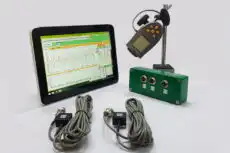
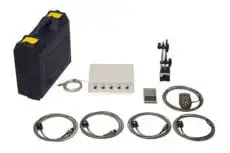
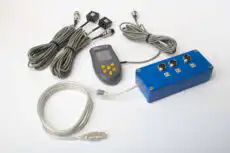
Gran parte del trabajo de diagnóstico se realiza en instalaciones en funcionamiento, no en laboratorio. Un técnico de mantenimiento llega con un instrumento portátil, monta un acelerómetro en cada rodamiento, captura espectros y fase, y establece un diagnóstico in situ. Cuando el veredicto es desequilibrio, la misma visita puede resolverlo: un analizador de dos canales y equilibrador de campo como el Balanset-1A mide la amplitud y la fase en 1×, calcula los coeficientes de influencia y guía la corrección en uno o dos planos en los propios rodamientos de la máquina — diagnóstico y solución en una sola visita. La severidad se evalúa entonces conforme a una norma reconocida, como la actual ISO 20816 serie (sucesora de la ISO 10816), que clasifica la vibración en zonas de aceptación según el tipo de máquina y su montaje.
5. El objetivo: del mantenimiento reactivo al proactivo
El objetivo último del diagnóstico de vibraciones es respaldar una estrategia de mantenimiento proactivo. Al identificar las causas raíz de los fallos — desalineación, resonancia, lubricación inadecuada, holgura estructural — las organizaciones pueden ir más allá de simplemente reparar máquinas averiadas y comenzar a eliminar las condiciones que provocan dichos fallos. Esto sustenta un mantenimiento basado en la condición programa maduro, que proporciona una fiabilidad significativamente mejorada, una mayor vida útil de los activos y un menor coste total.

