← База знания Balanset-1A — всички глави
Реални истории от поддръжката. Всяка с поука.
Казус 1. Рекордът: ротор от 24 тона (Индия, захарна фабрика)
Дефибратор (шредер за тръстика), маса на ротора 24 000 kg, ~750 rpm. Начална вибрация 3.2–5.7 mm/s.
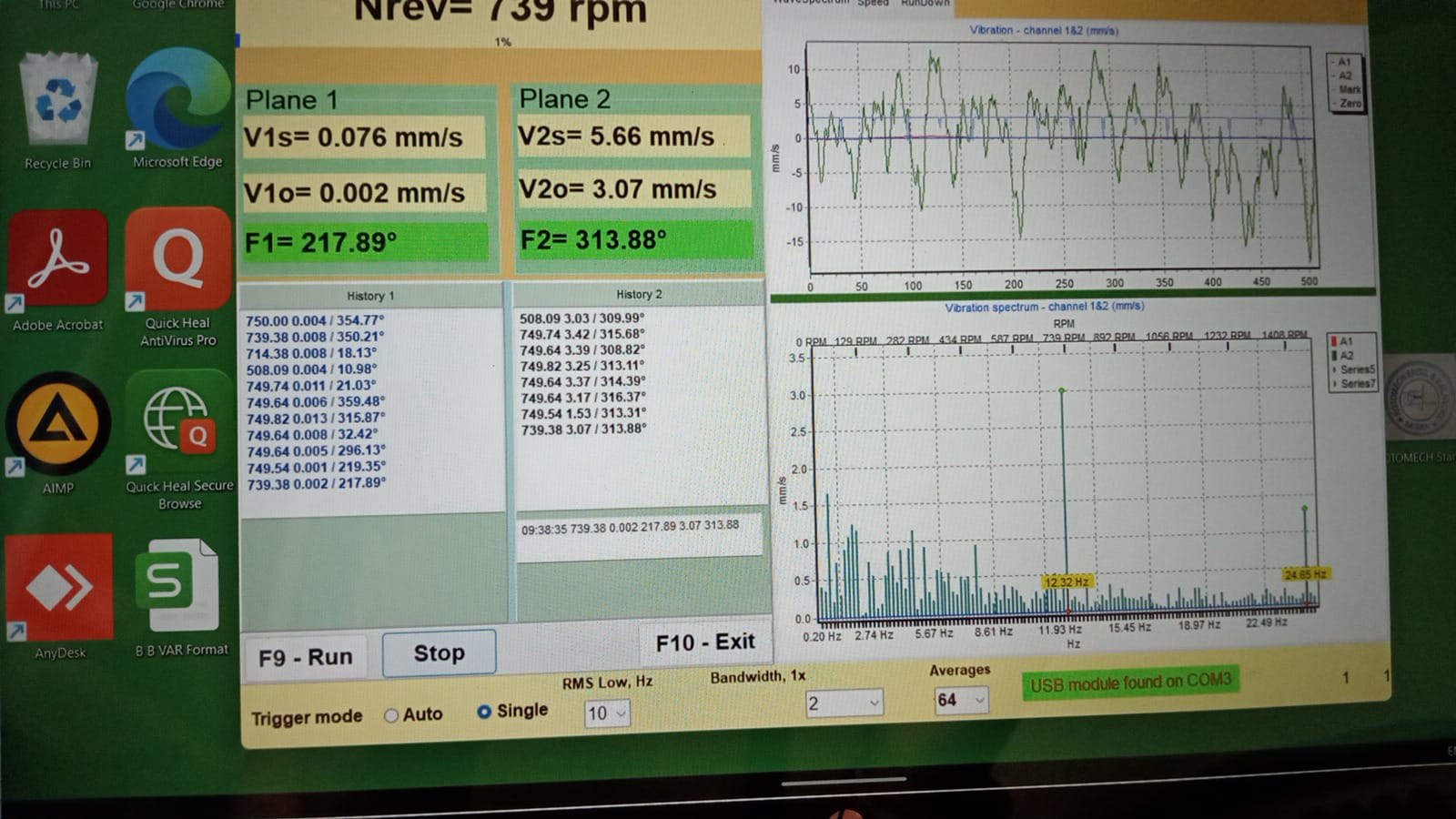
Балансиране по стандартния метод: пробно тегло, изчисление, 7,8 kg монтирани при 270°. Резултат — 0,47 mm/s.
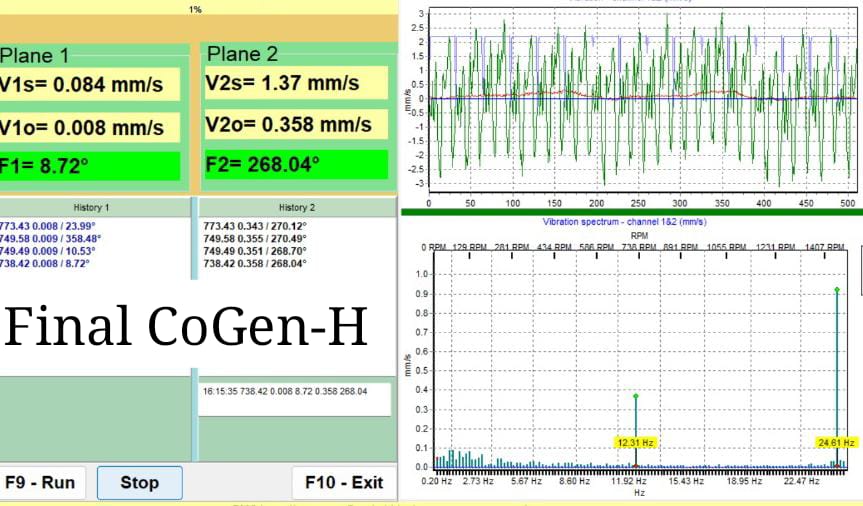
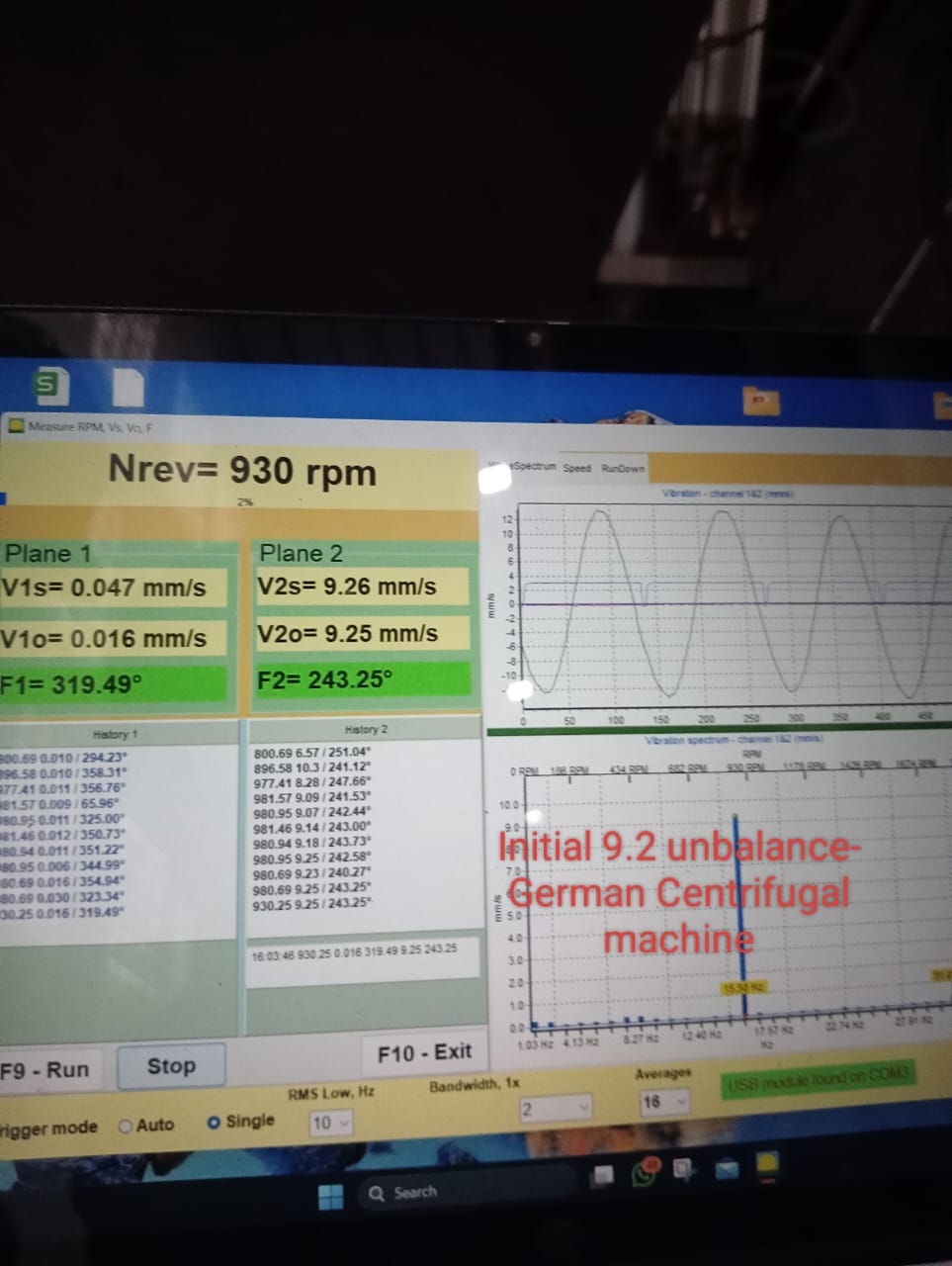
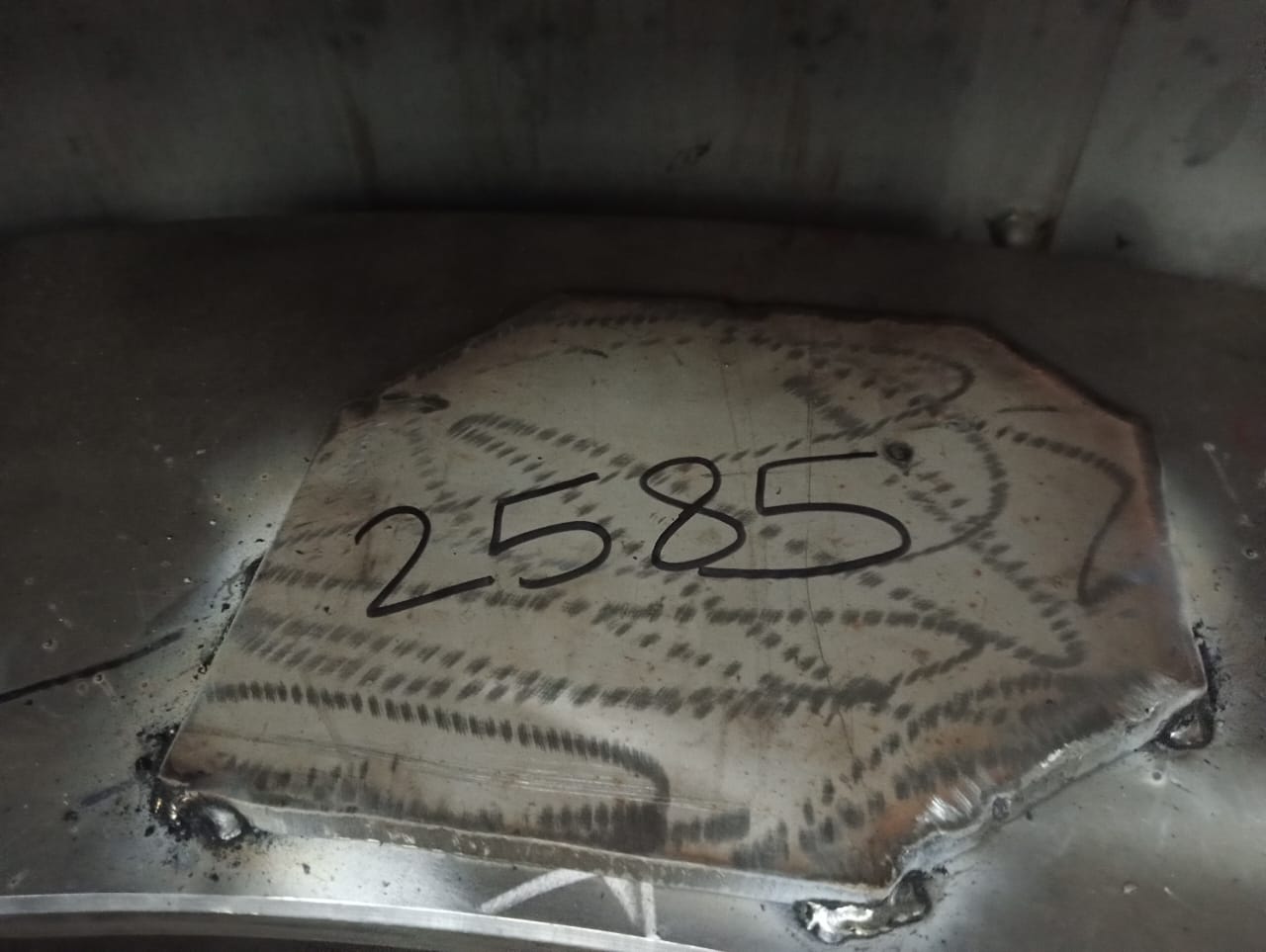
Урок: методът на коефициентите на влияние не ограничава масата на ротора — растат само теглата. Същата мелница балансира немски центрофуги — първоначално 9,26 mm/s, коригирано с плоча от 2585 g вътре в кошницата:
Случай 2. Мулчер Seppi: чекбоксът, който струваше седмица (Германия)
Мулчер Seppi, начална вибрация 83–128 mm/s — краен случай. Програмата изчисли тегла, клиентът ги завари — без успех.
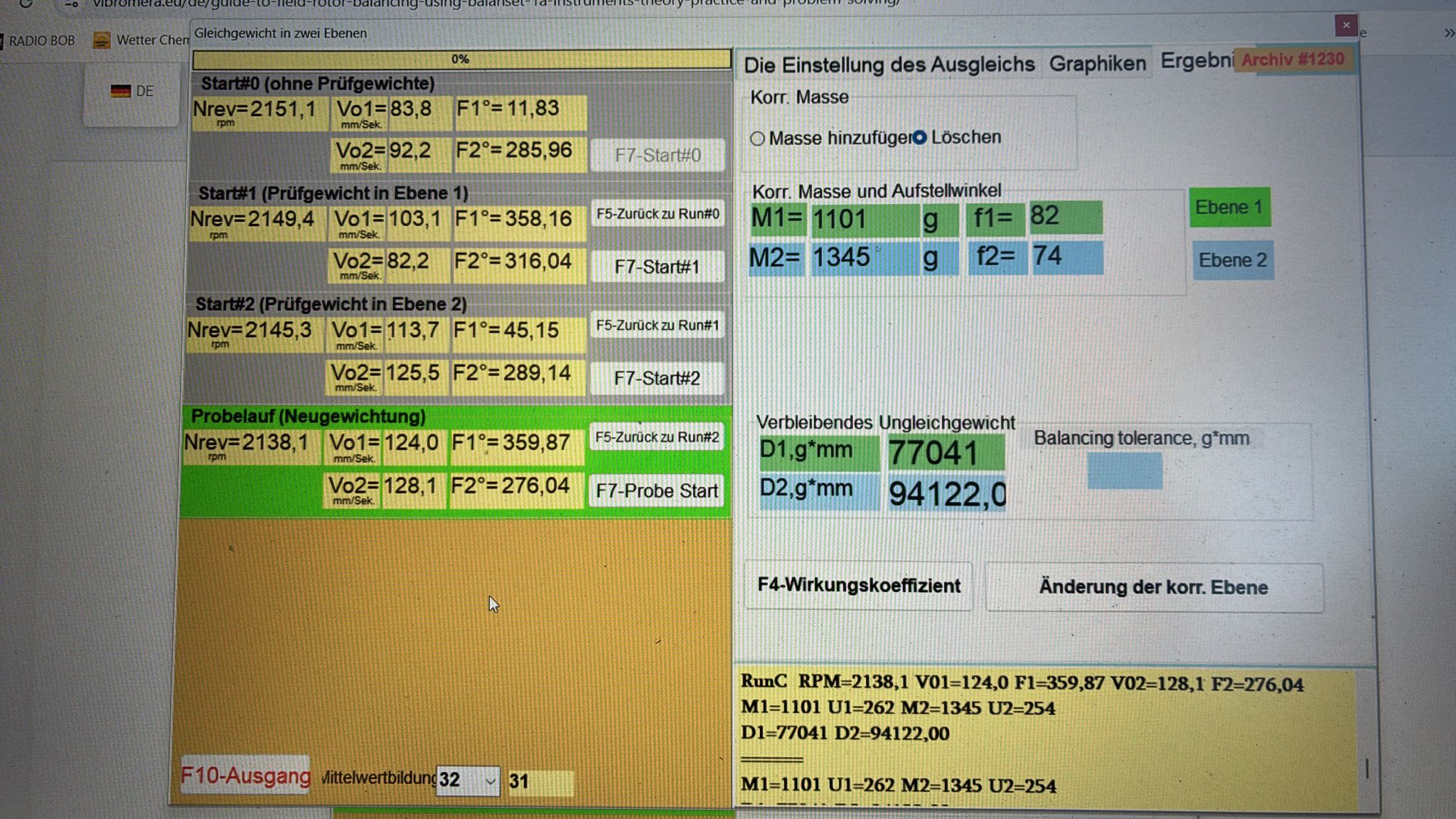
Причината се криеше в настройките: „премахване на маса“ отметката беше сложена, докато клиентът добавяше тегло — знакът беше обърнат.
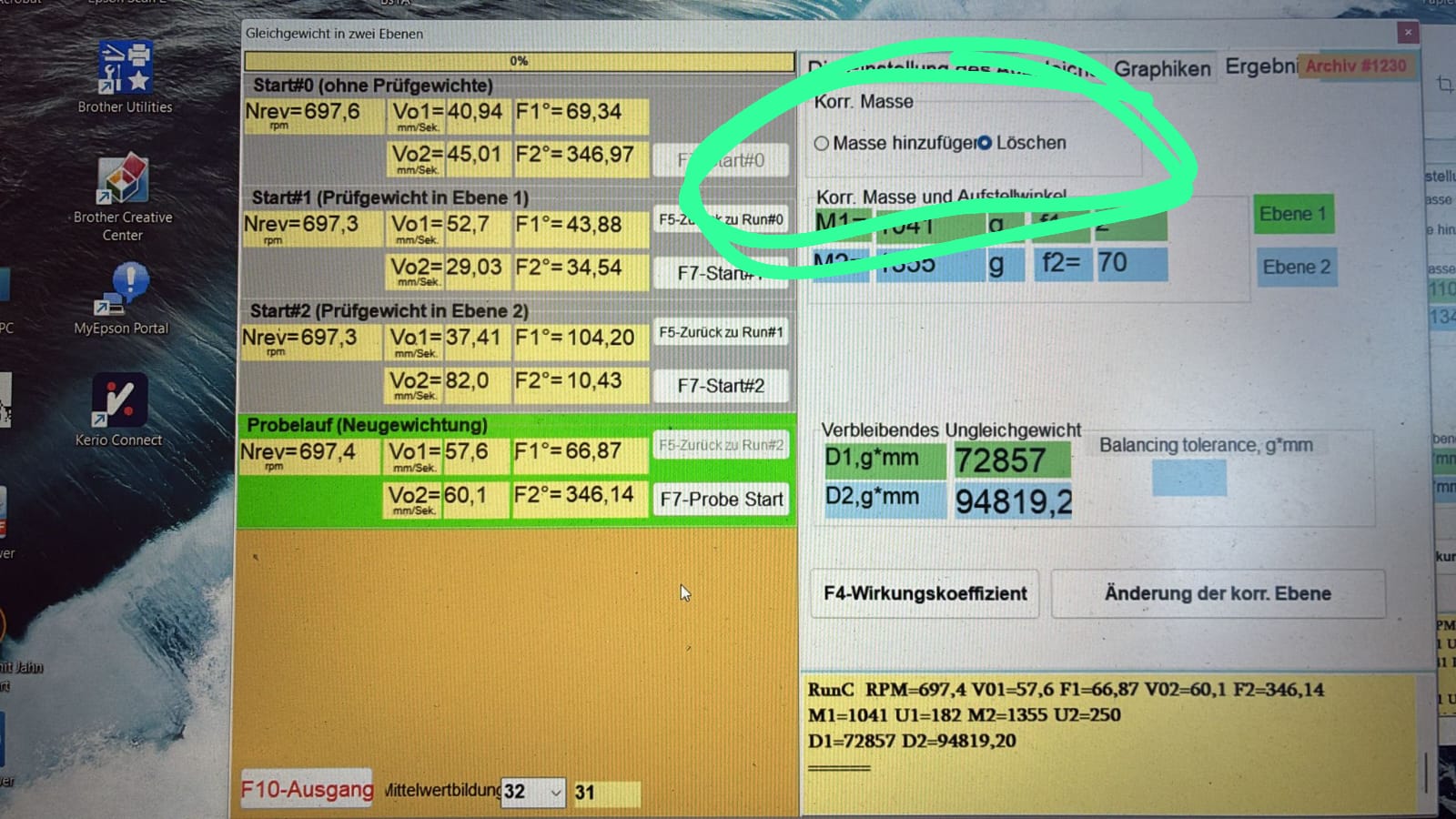
След корекцията: балансиране при 700–900 об/мин, половината от изчислената маса, краен резултат 3,4 / 8,3 mm/s — „Der Mulcher läuft spürbar sehr ruhig“ („Мулчерът работи осезаемо по-спокойно“); и потребителят, и неговият клиент бяха доволни.
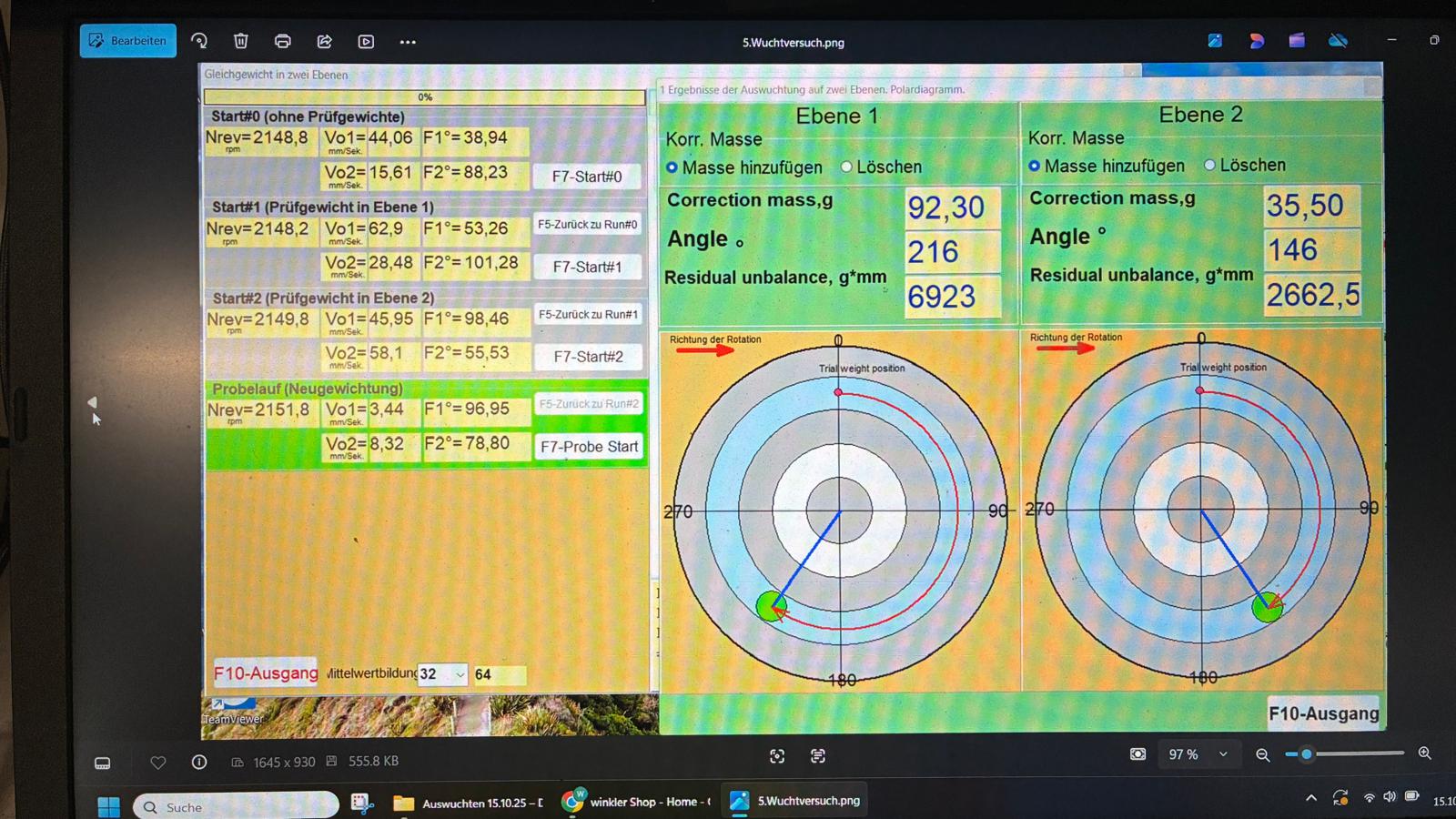
Урок: проверете настройката за метода на корекция преди старт. И: над 50 mm/s — винаги двустепенно балансиране при намалени обороти.
Случай 3. Тахометърът видя две дупки в ремъчната шайба (Швейцария)
Мулчер не се балансираше с месеци: програмата изискваше огромни маси (1466/1494 g), а отчетените обороти бяха около 4000.
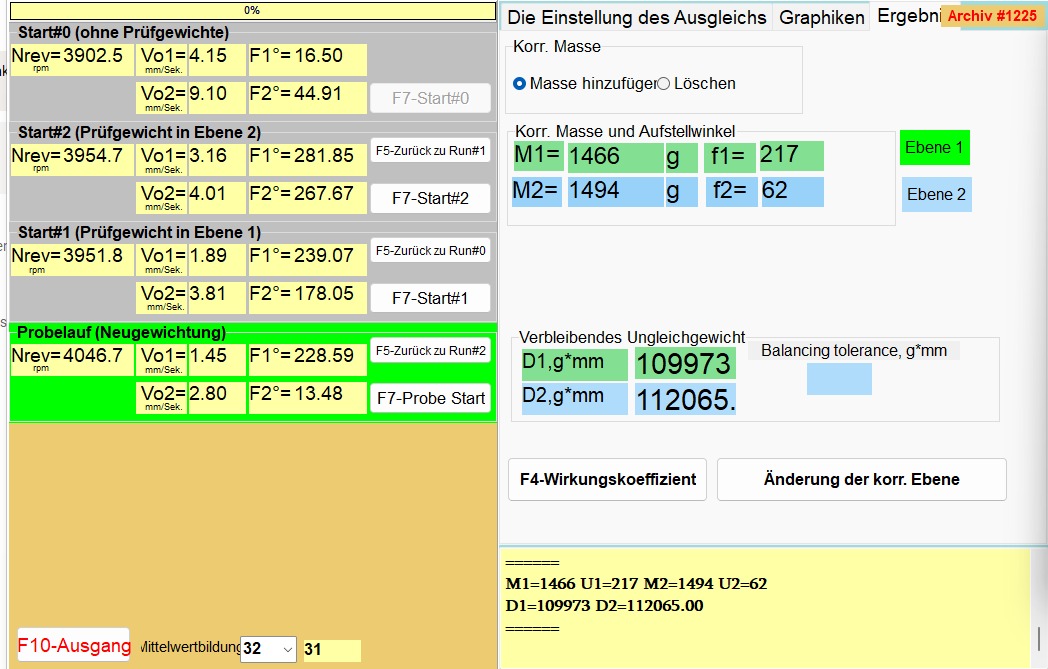
От снимка на монтажа Николай забеляза следното: ролката има две дупки, а тахометърът ги улови като два маркера — оборотите се удвоиха и фазата стана безсмислена.
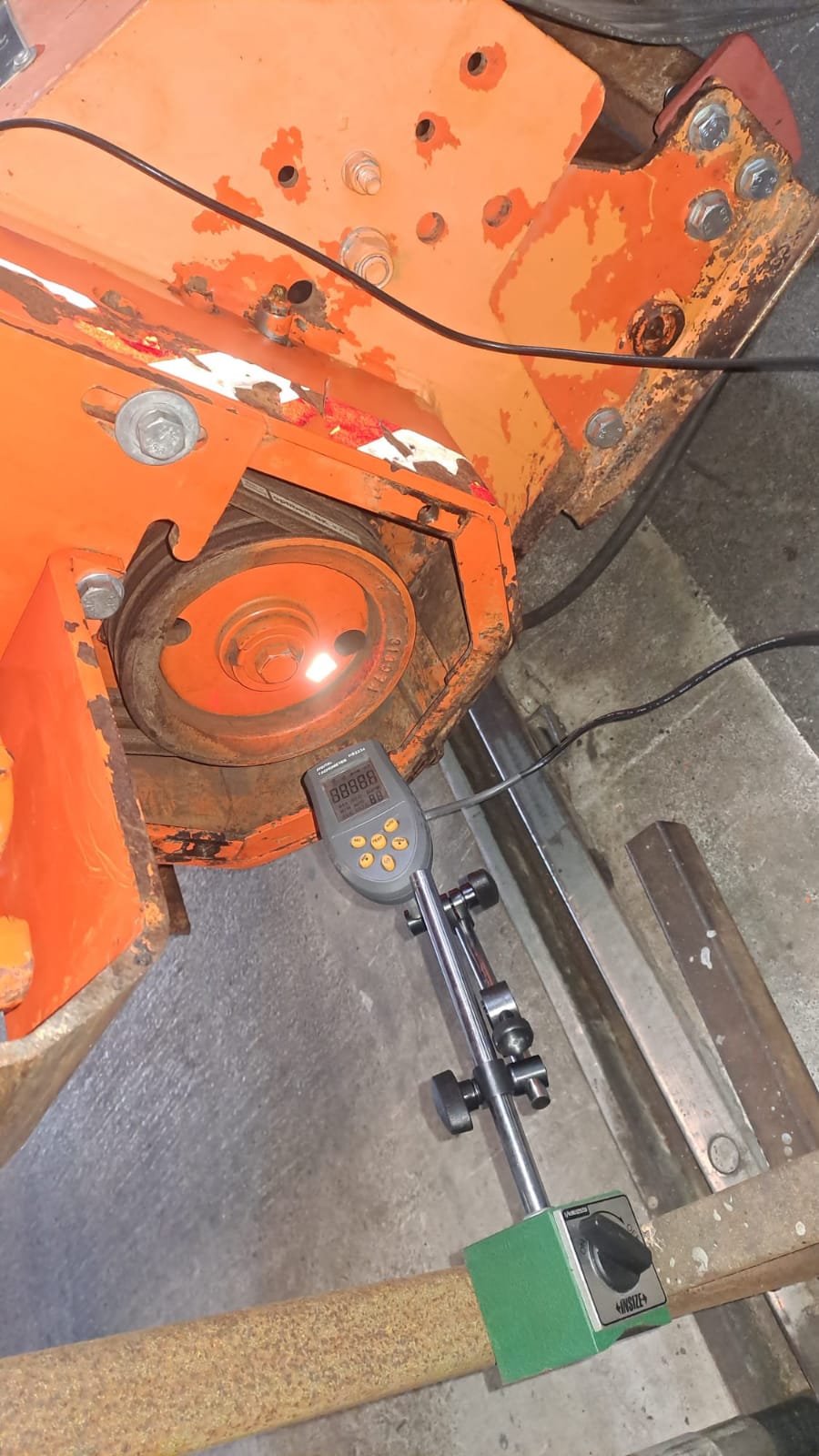
Урок: Ако оборотите в програмата се различават от реалните с цял множител, търсете допълнителни маркери (отвори, отблясъци, перки). Винаги сверявайте показаните обороти с реалните.
Казус 4. Дисбаланс, който се оказа разрушен съединител (САЩ)
Барабан на дробилна машина за дървесина Morbark M15. Първата балансировка на клиента веднага се оказа трудна: нестабилни показания и маси, които не се сближаваха. Спектърът показваше основен пик при ~70 Hz (≈4000 об/мин) при работни 1800 об/мин — източникът не беше роторът.
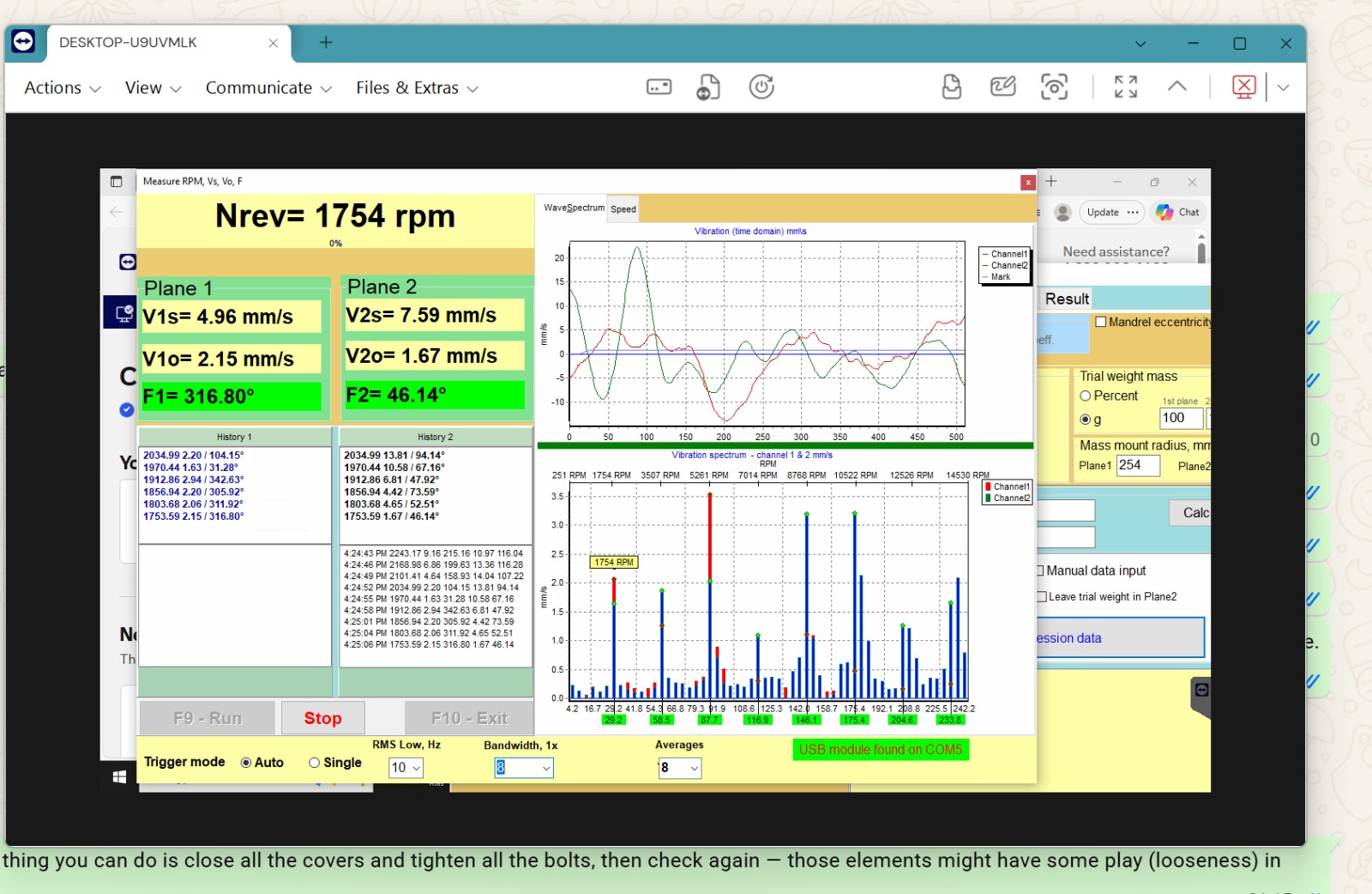
След месец търсене съединителят беше отворен: двойният диск беше разрушен отвътре, невидимо отвън.
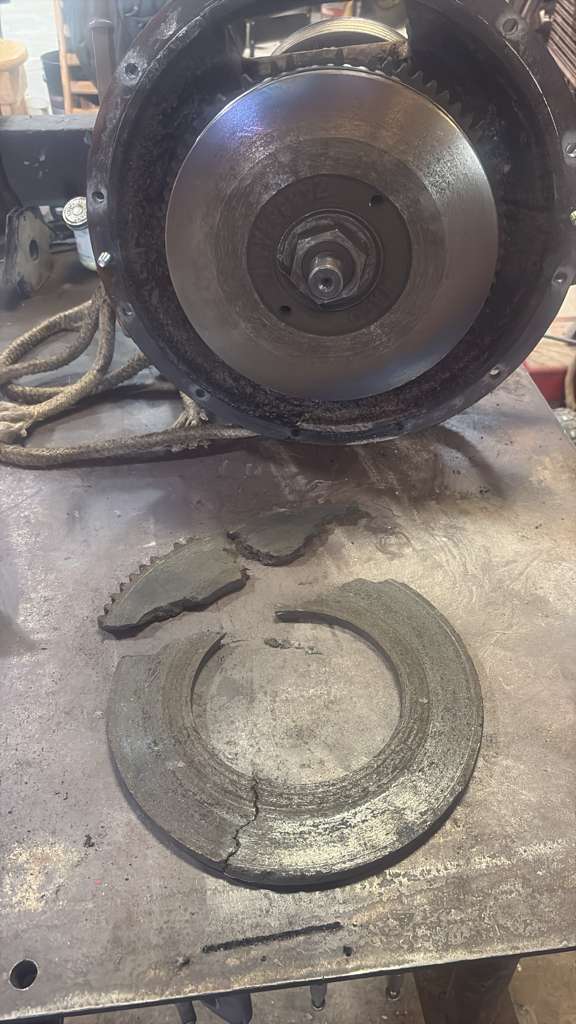
След смяната на съединителя вибрацията спадна от ~14 на 3–4 mm/s дори преди балансиране. Остатъкът беше отчетен от спектъра: 2x над 1x → разцентровка/разхлабване; още е рано за балансиране.
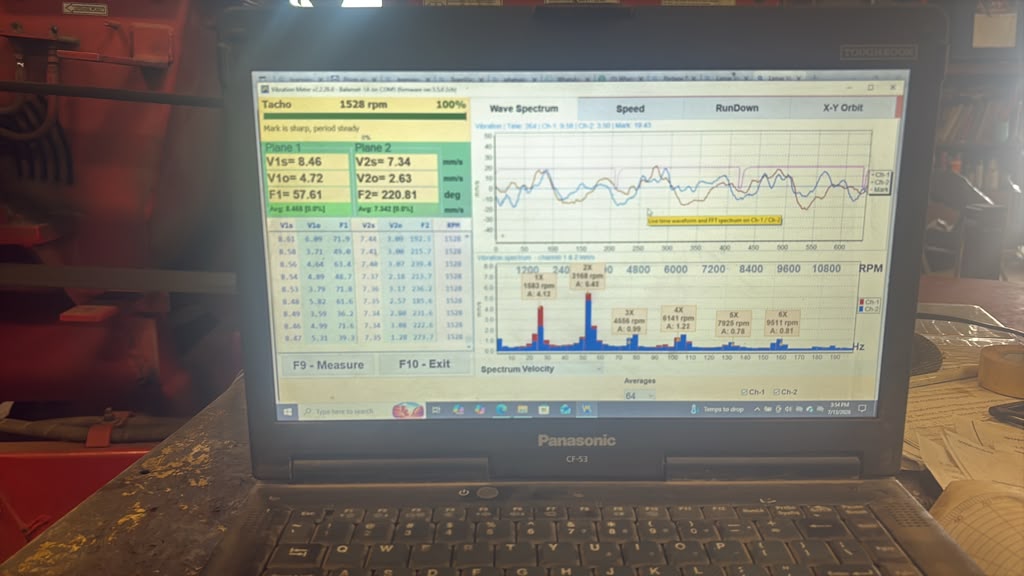
Урок: нестабилни показания = механичен проблем. Спектърът отговаря на въпроса “кой вибрира” преди да заварите първото тегло.
Казус 5. Резонанс на стълба, а не дисбаланс (Белгия, комбайн)
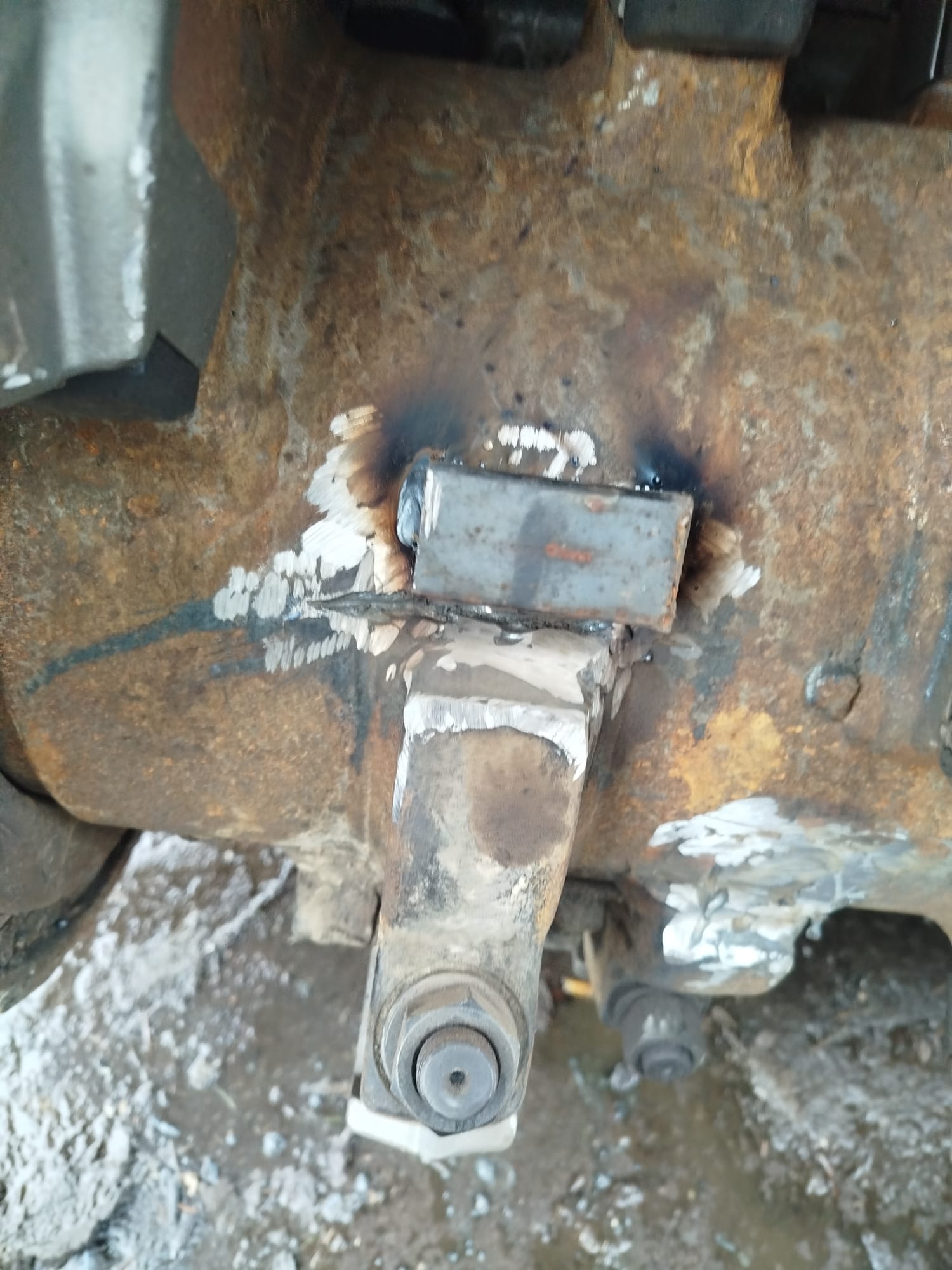
Барабан на силажокомбайн след ремонт на държачите на ножовете (нови заварени държачи, ~500 g дисбаланс). На лагерите на барабана — 0.3–0.5 mm/s (отлично), но на стълбата/кабината — до 9 mm/s.
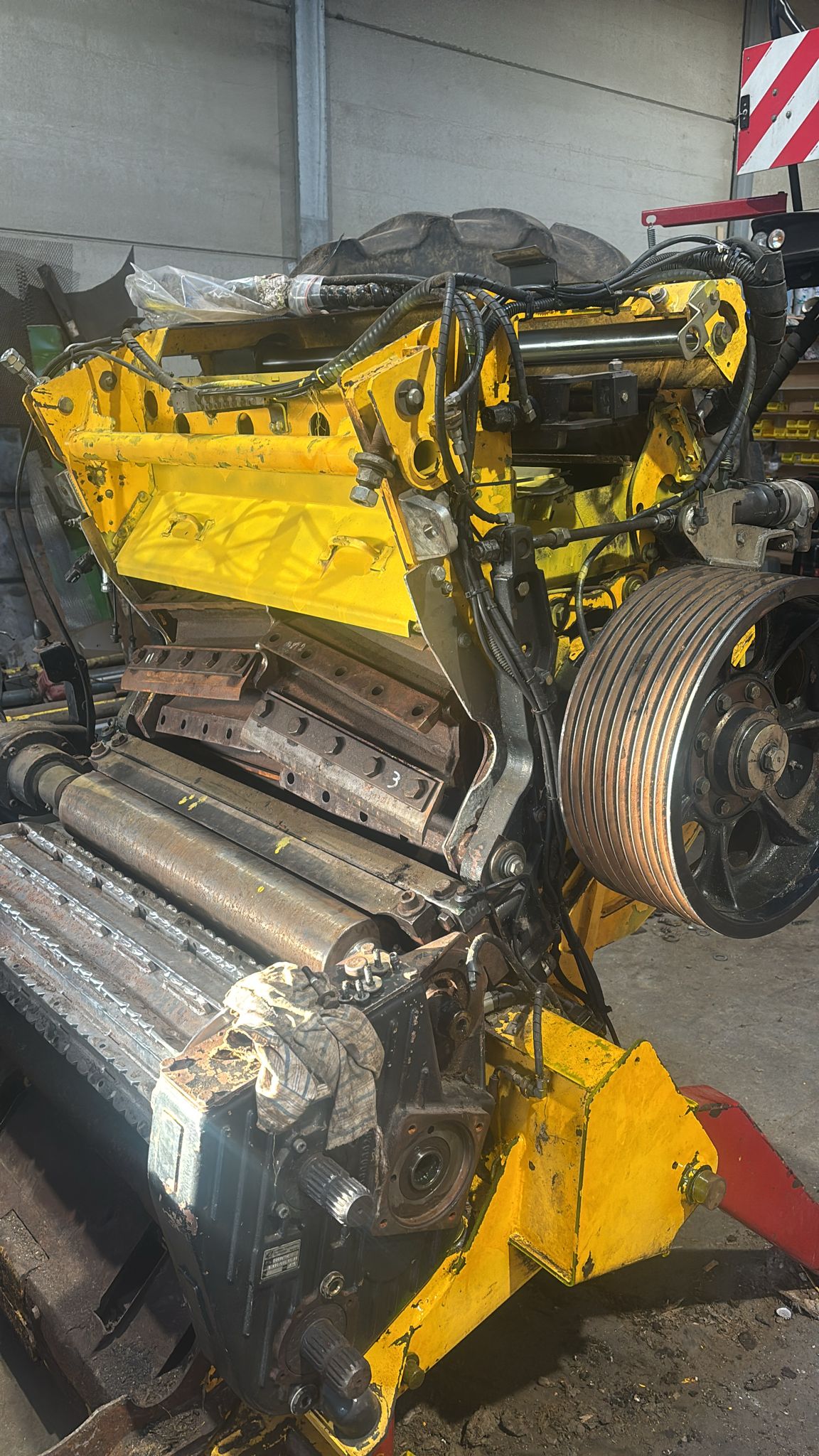
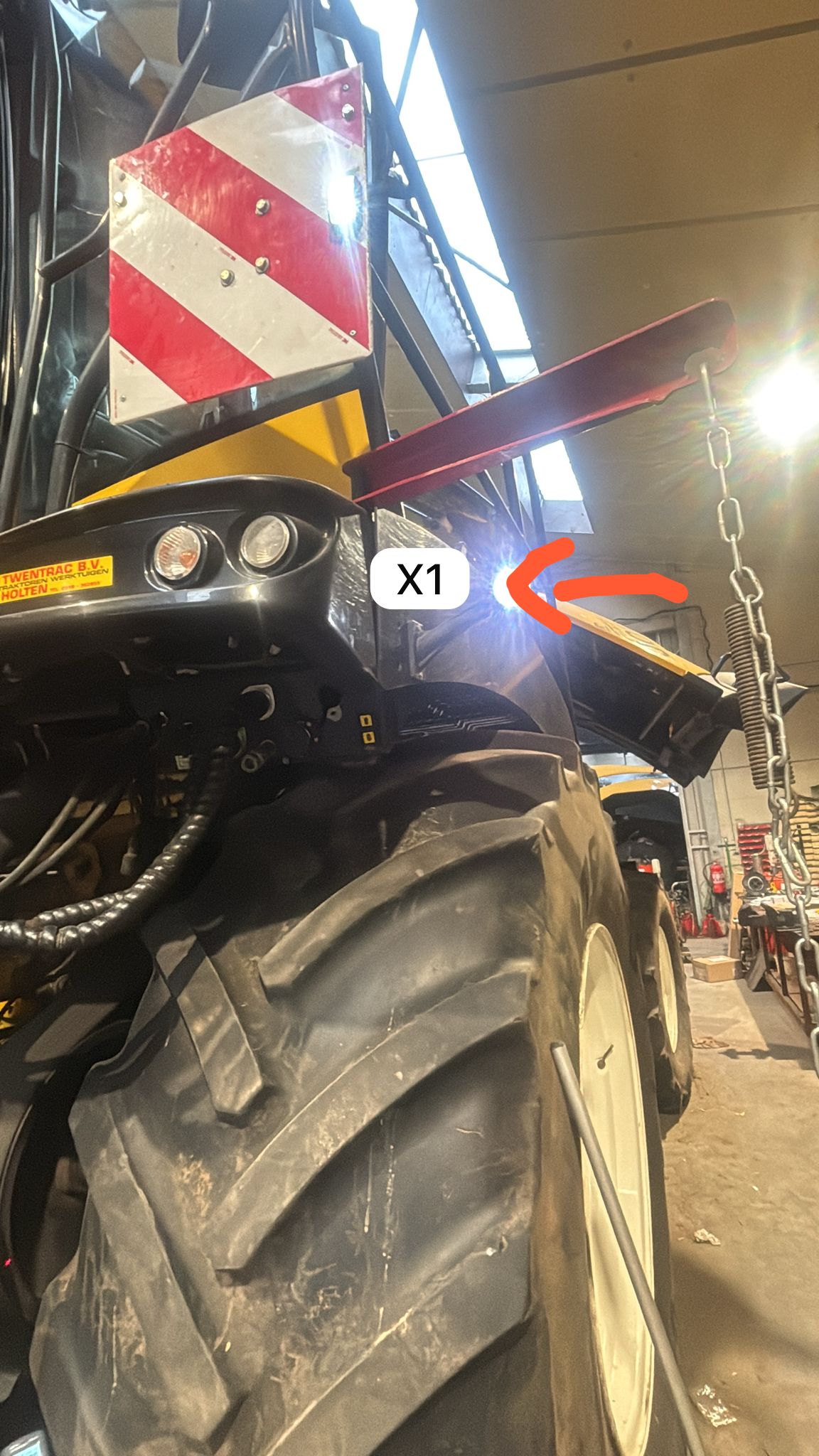
Правилото: вибрацията трябва да затихва с отдалечаването от ротора. Ако нараства, това е конструктивен резонанс. Клиентът откри скъсана тръба и счупени крепежни болтове. След ремонта: 0,9 / 1,6 mm/s.
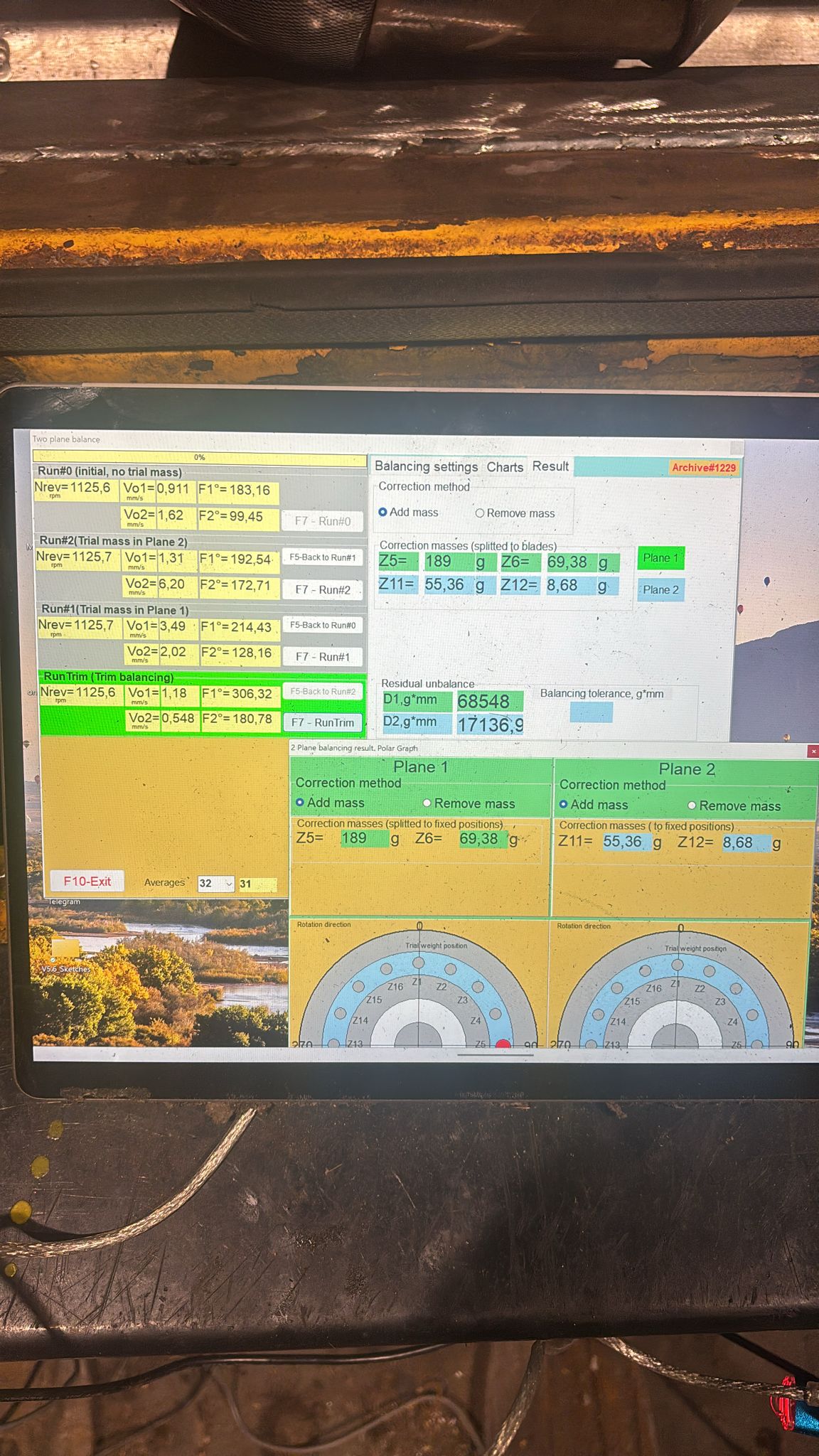
Урок: измервайте на няколко точки. Ако вибрира по-силно далеч от ротора, отколкото на опорите, няма какво да се балансира — търсете конструктивния резонанс.
Казус 6. Огънат вал: балансиране с механично отстъпление (Франция)
Мулчер със силно огънат ротор. Първоначално 25 и 40 mm/s. По подсказка на поддръжката: старт при намалени 600–700 rpm, RunDown за резонанси, сензорите преместени хоризонтално, разхлабеният капак заварен към корпуса. Резултат: 3 и 11 mm/s — таванът за огънат вал; клиентът беше доволен и плати в брой на място.
Урок: Деформиран ротор не може да се балансира напълно — част от дисбаланса е геометрична. Честният резултат е да намалите вибрацията до приемливо ниво и да кажете на клиента истината за вала.
Случай 7. Епопеята със 120 mm/s (Испания)
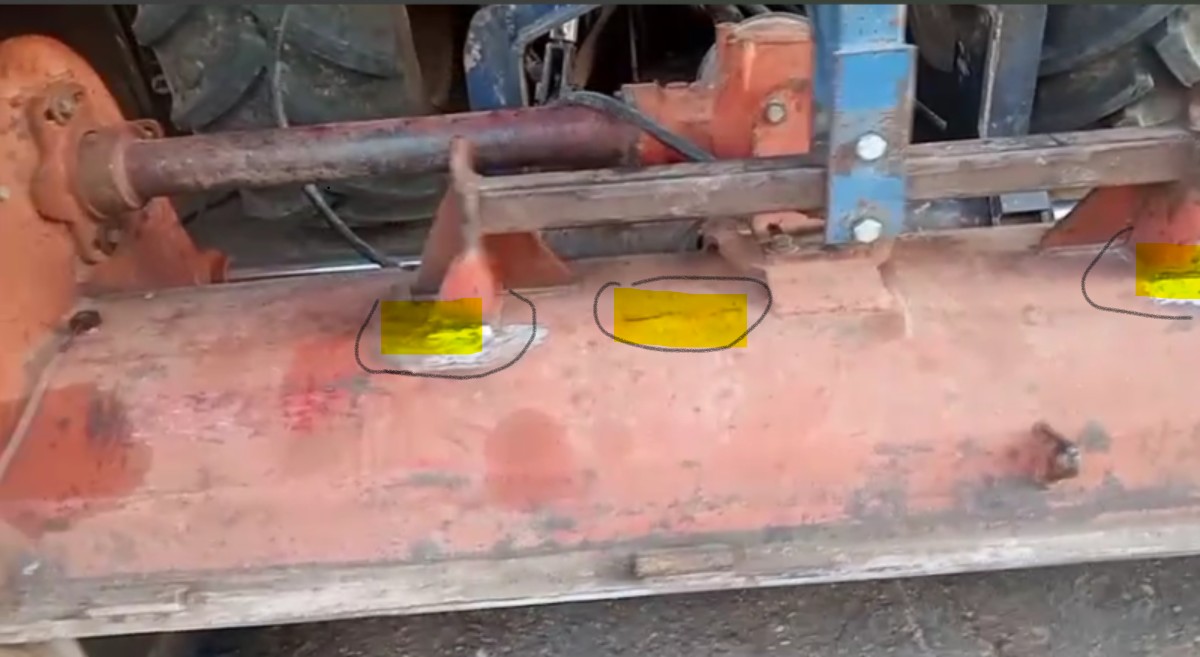
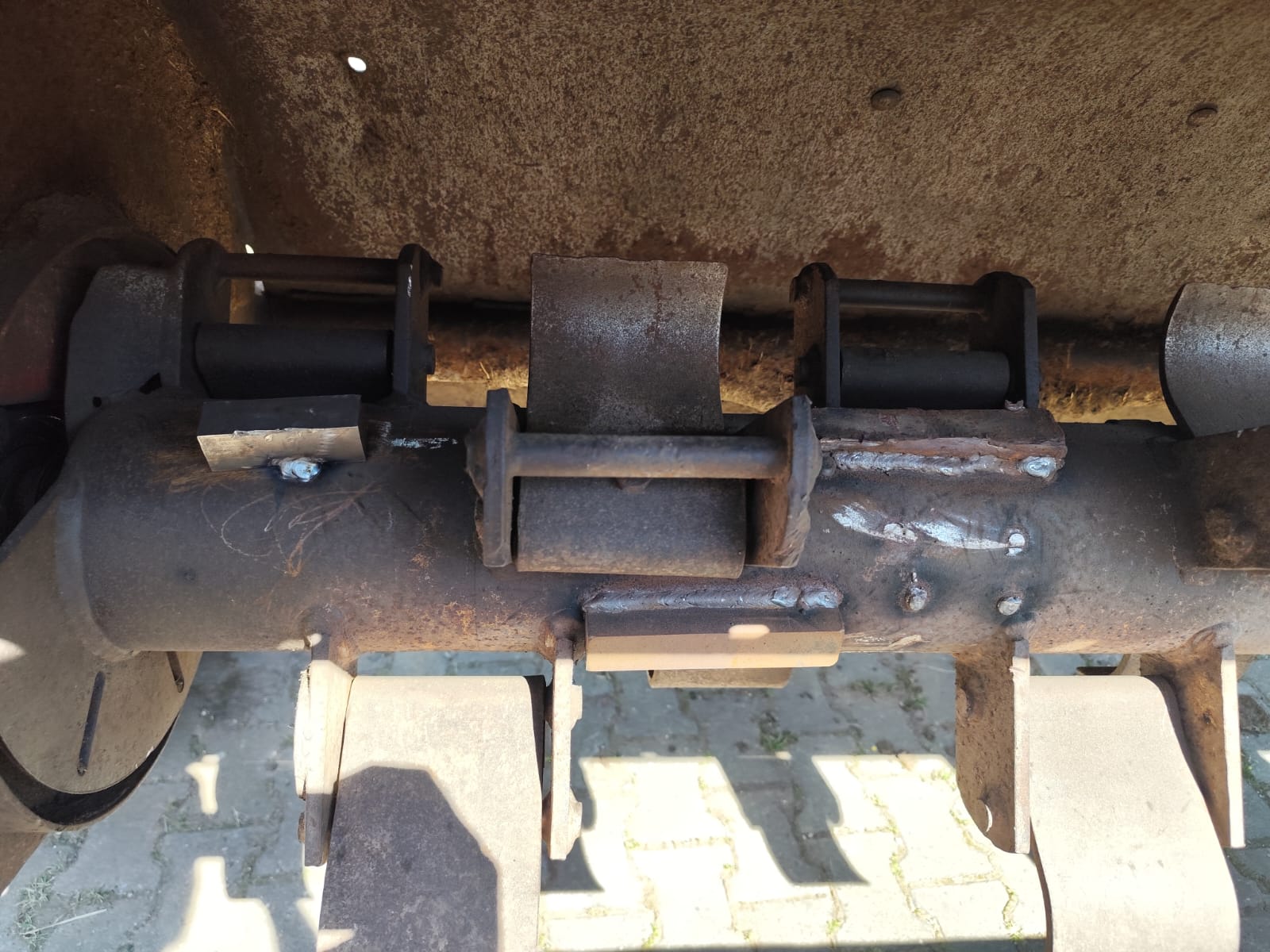
Мулчер от 230 cm: вибрация до 120 mm/s, резонанси почти навсякъде, 2 mm луфт в лагера, износен шиек на вала, пукнатини в корпуса.
Какво беше направено, поред:
- Лагерите бяха подменени (два пъти), шийката на вала беше наварена и преточена.
- Пукнатините заварени, капакът заварен.
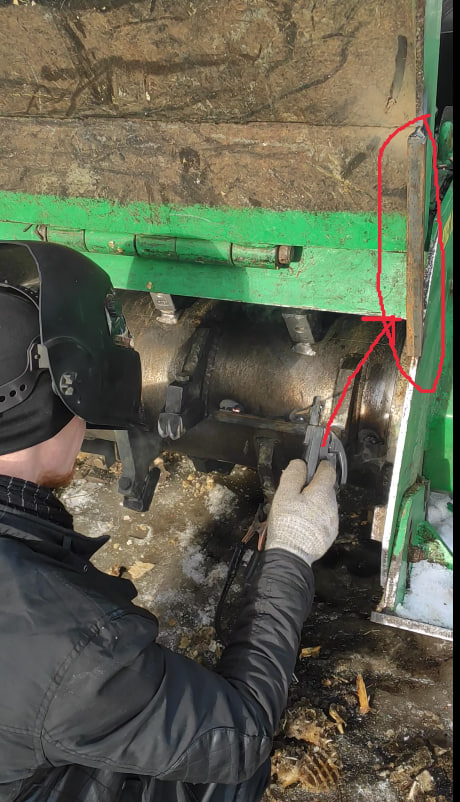
- Балансирано на етапи при 950–1000 rpm, монтирайки 1/3–1/2 от масата.
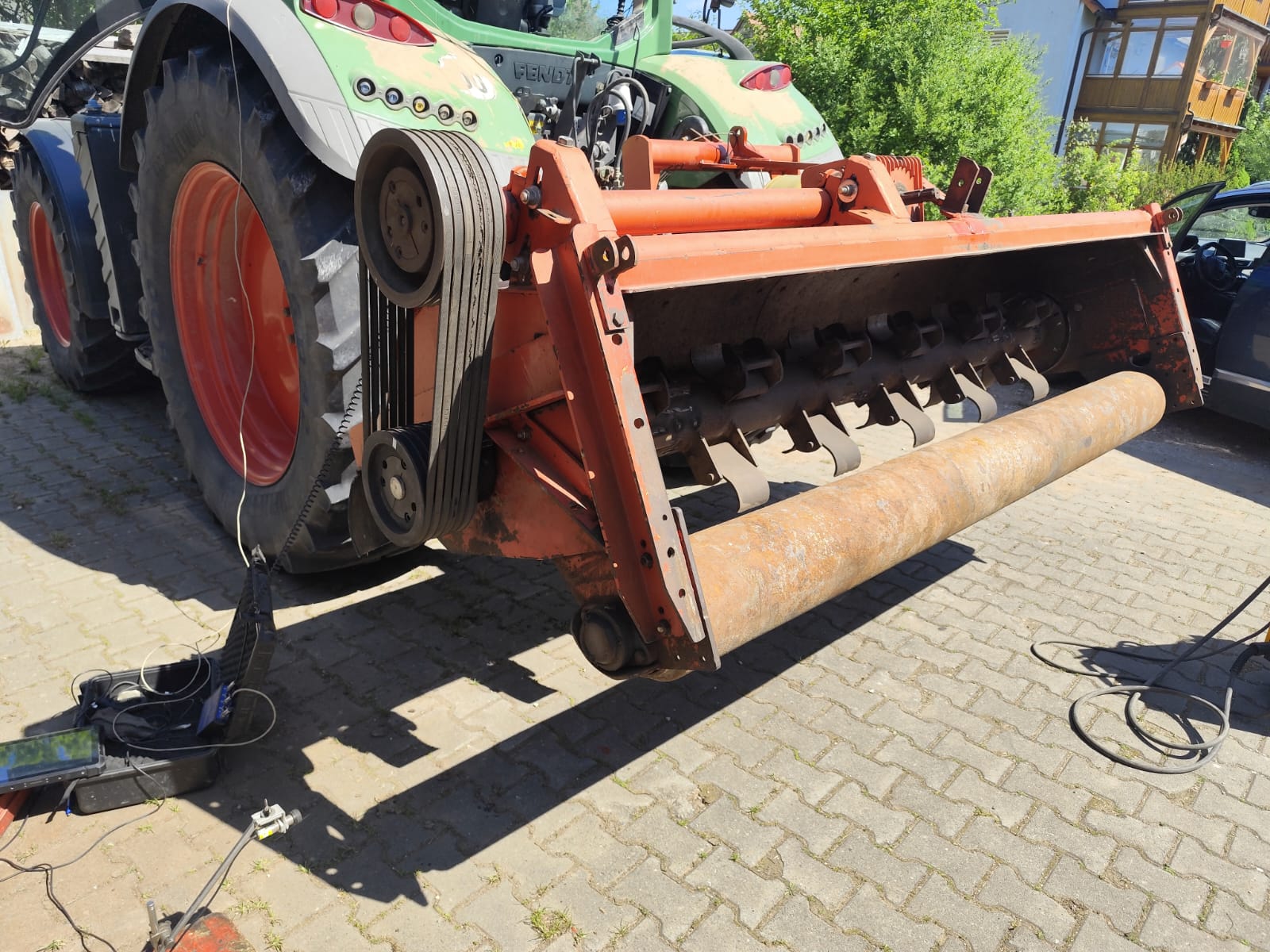
Резултатът при работни 1600 rpm: 16 и 18 mm/s — не идеално, но машината стана работоспособна. Клиентът: “ако не беше вашата помощ, нямаше да се справя”.
Урок от същия разговор: „Практически всеки втори мулчер се балансира едва след смяна на двата комплекта лагери; на второ място са пукнатините в корпуса“.
Казус 8. Ротор на трошачка от 4500 kg за три дни (Франция)
Двудневна битка: ударен ротор се държеше нелинейно; след корекция едната равнина се влоши. Констатациите:
- пробното тегло от ~8 kg беше твърде голямо (оптимумът ~1 kg) — това наруши линейния модел;
- отчетът показа удвоени обороти (713 и 1440) — маркерът беше улавян два пъти на оборот;
- режимът проценти вместо грамове беше включен.
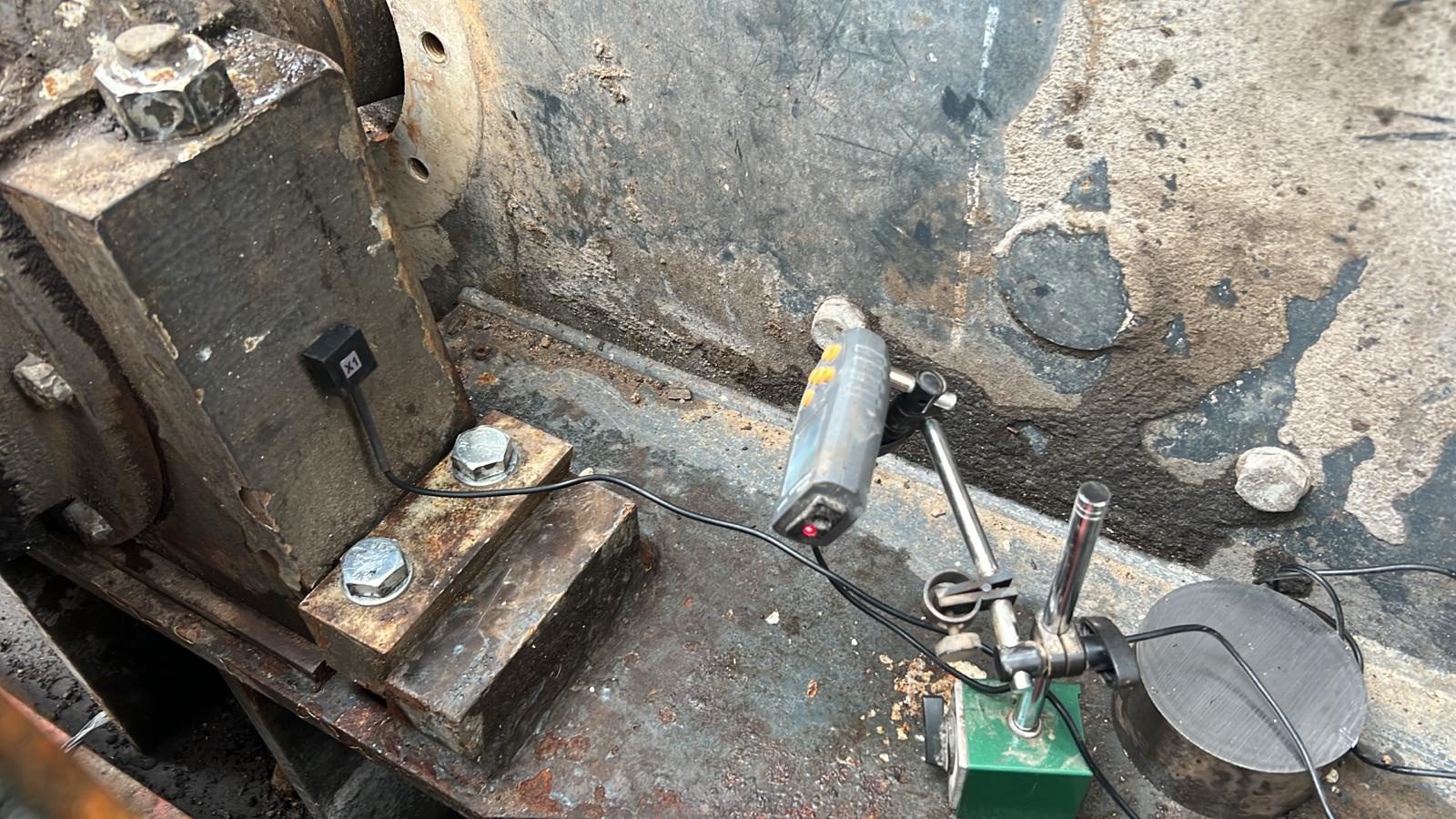
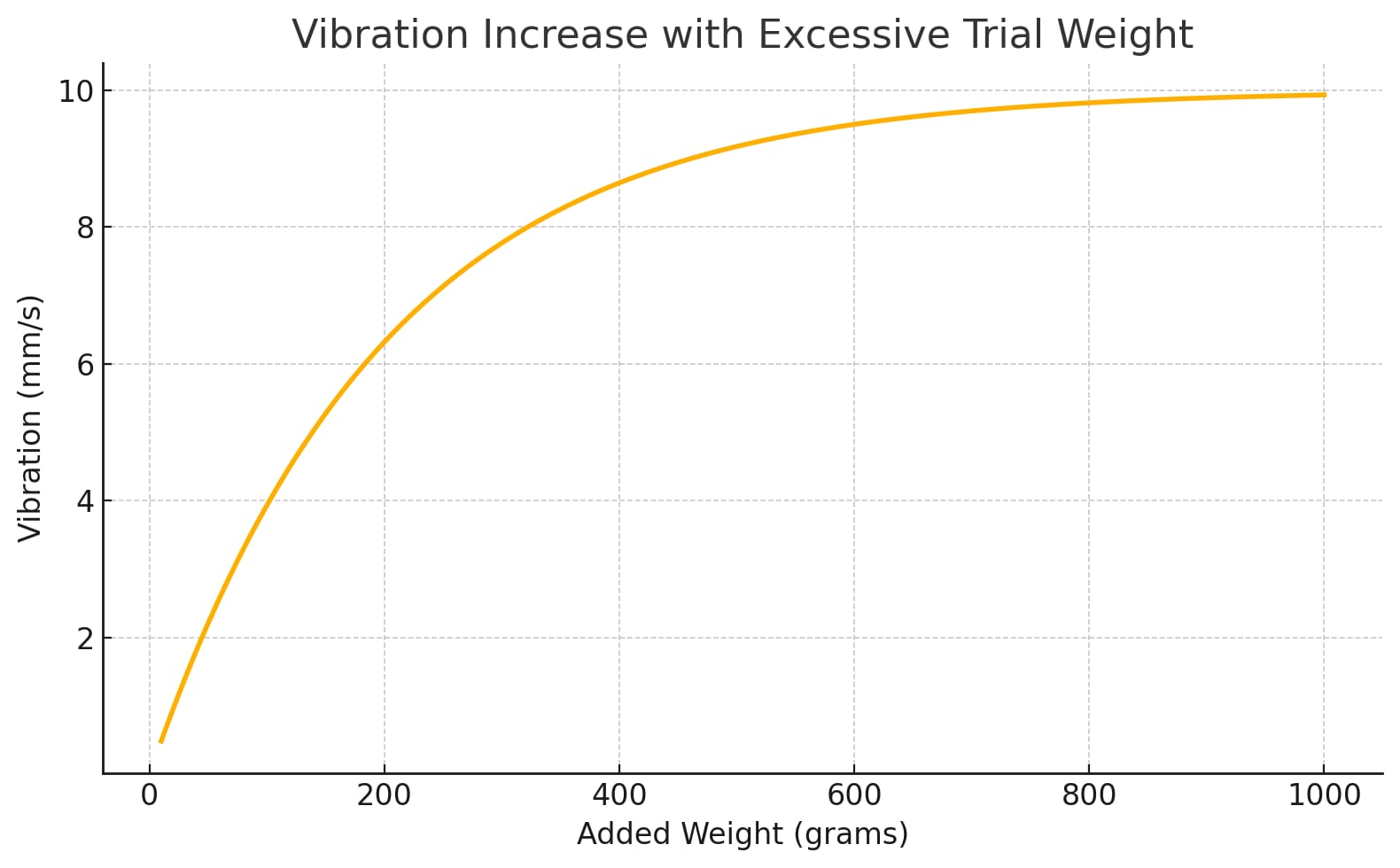
Вторият ротор (4500 kg, 605 rpm), с коригирани грешки: от 6 и 8 → 0,9 и 1,3 mm/s.
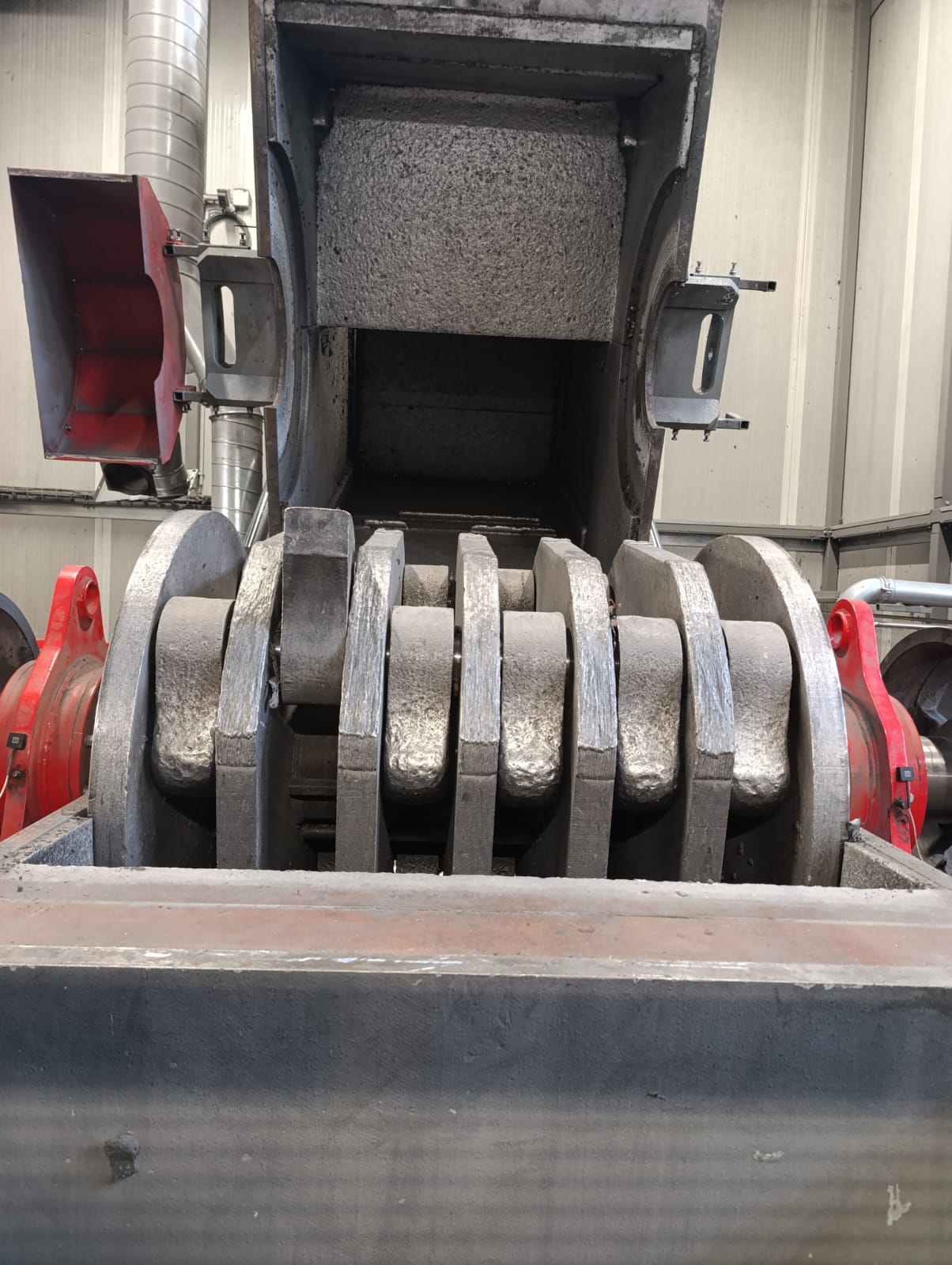
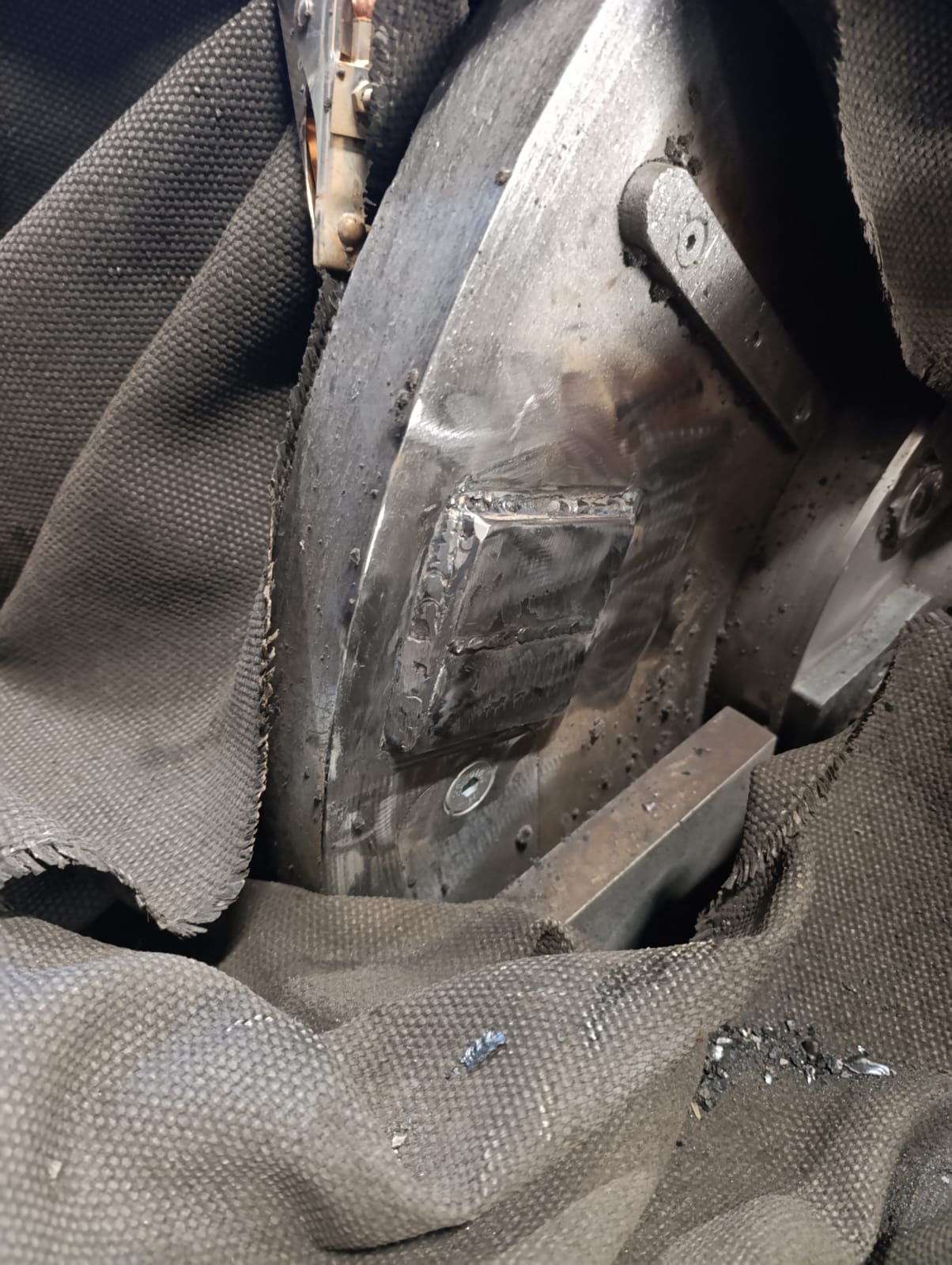
Урок: пробното тегло трябва да промени вибрацията с 20–30%, а не със стотици проценти.
Казус 9. Университетски вентилатор: не всичко се лекува с балансиране (Португалия)
Вентилатор: 4 и 7 mm/s. Балансирането го доведе до 0,5 / 0,6 mm/s, но остана доминираща честота от ~600 rpm (~10 Hz) — не честотата на въртене. Заключение: аеродинамика — засмукване в канала при недостатъчна коравина на корпуса. Препоръки: почистване на филтрите, укрепване на конструкцията. Клиентът получи и резултат, и честна диагностика.
Урок: Остатъчен пик при чужда честота след балансиране е повод за диагностика, а не за добавяне на тежести.
Случай 10. Грешка в отчитането на ъгъла: 70° срещу 290° (Румъния)
Няколко дни мулчерът не се балансираше; вибрацията нарастваше с всяка тежест. Оказа се, че клиентът отчита ъгъла срещу посоката на въртене (монтира при 360−70=290° вместо 70°).
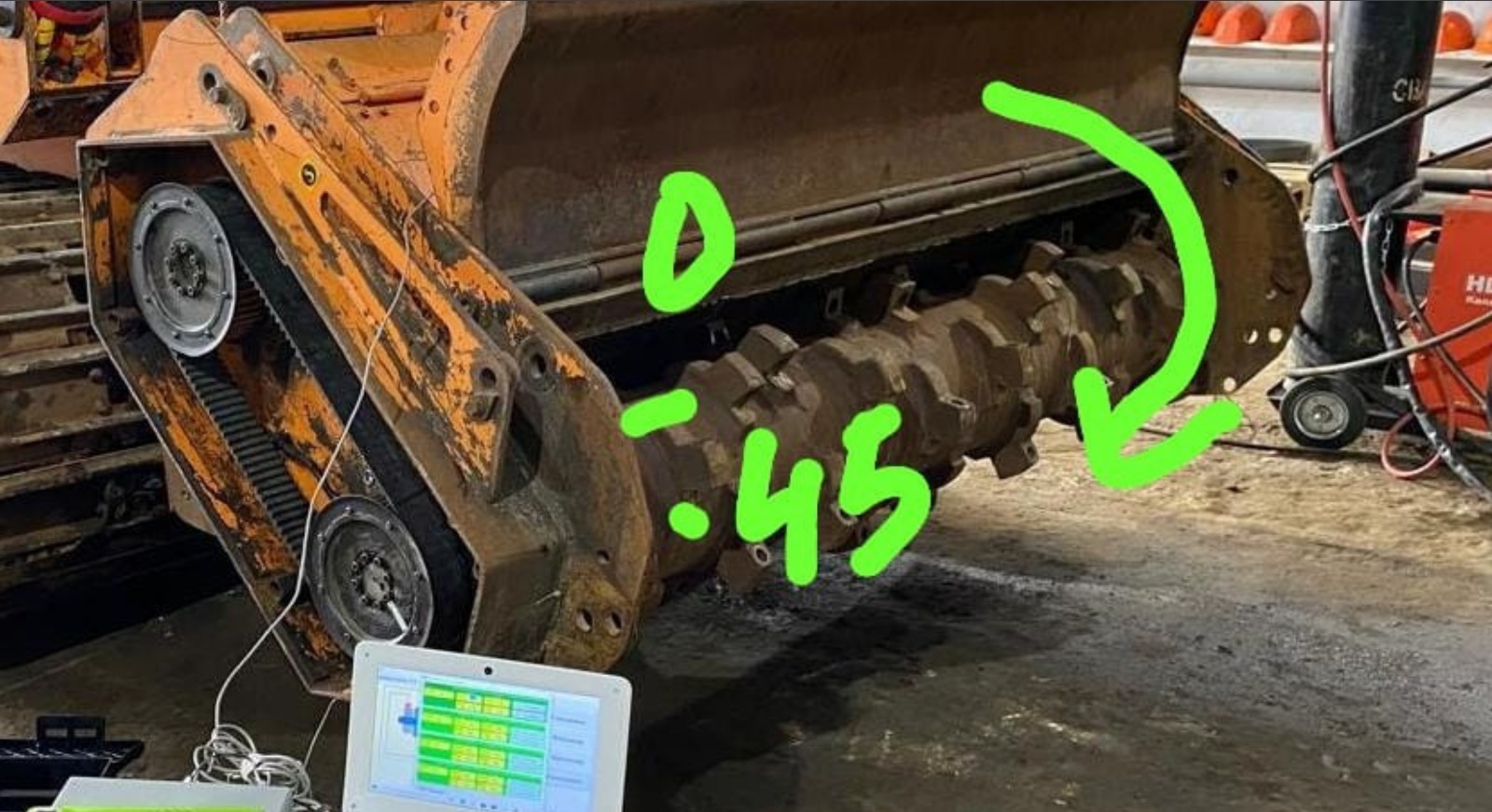
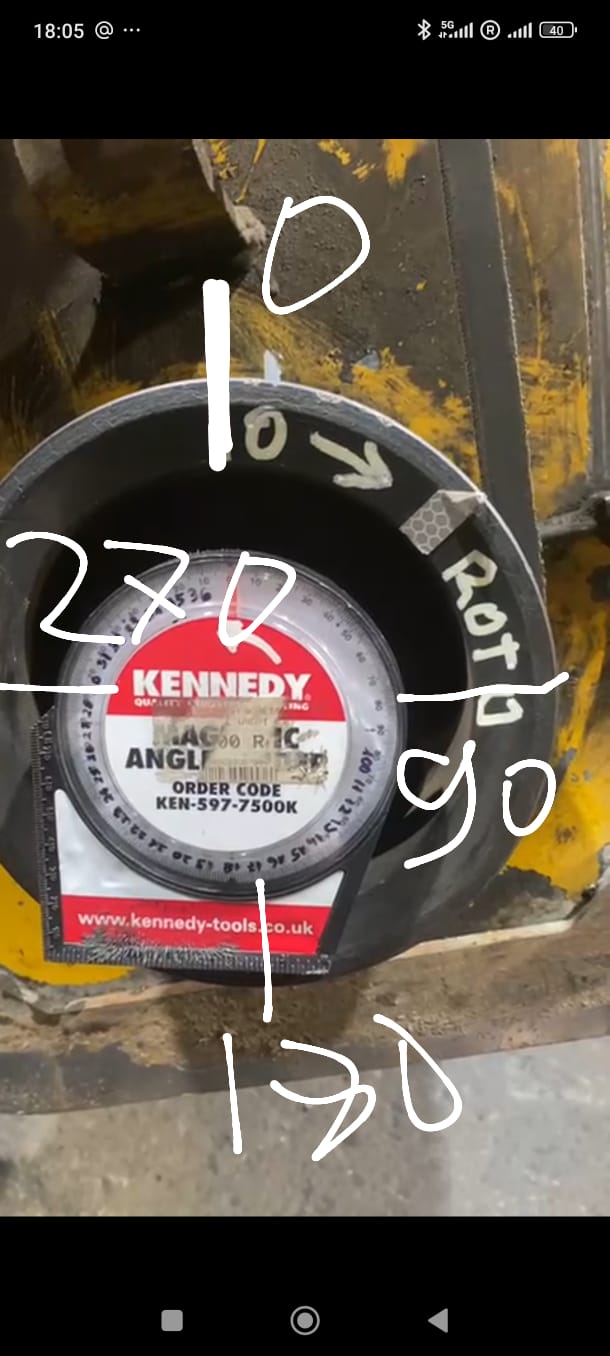
Обяснението, което помогна: „Не вие обикаляте циферблата — той се върти, докато вие стоите неподвижно“. Там откриха и огънат вал, и резонанс при около 755 об/мин.
Урок: ъгълът — от пробното тегло, по посока на въртене. Винаги.
Казус 11. Карданен вал и маркучни скоби (Хърватия)
Карданен вал на автомобил: тежестите са закрепени с маркучни скоби с червячен винт (по-бързо и по-лесно от заваряване; фиксирайте резбата). По време на работата програмата блокираше на COM порта около 10 пъти дневно — това беше решено с експериментална версия на софтуера. Коефициентите на сензорите бяха възстановени от файла econfig на USB флашката (кутията беше изхвърлена). Резултат — 0,5 mm/s.
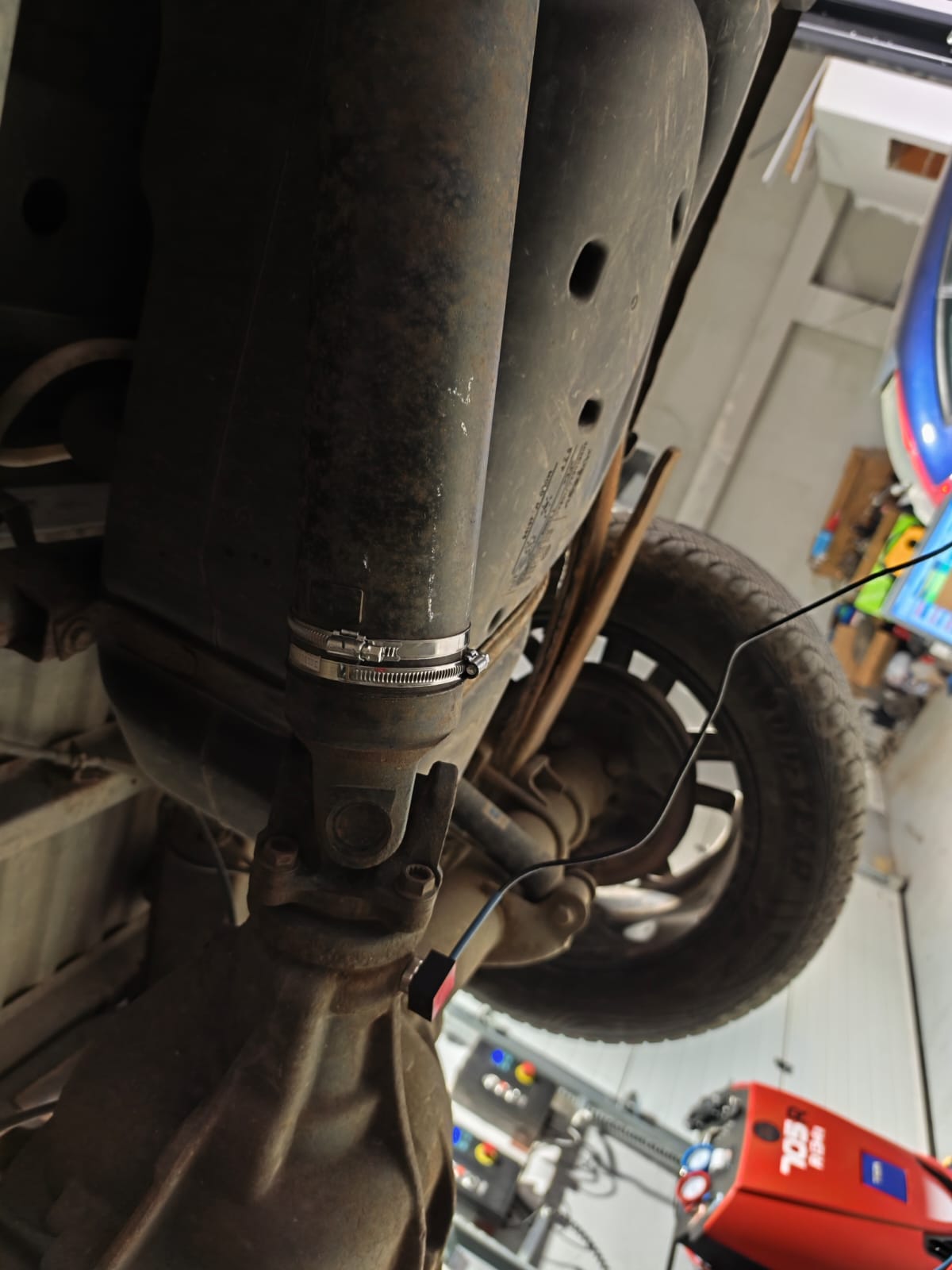
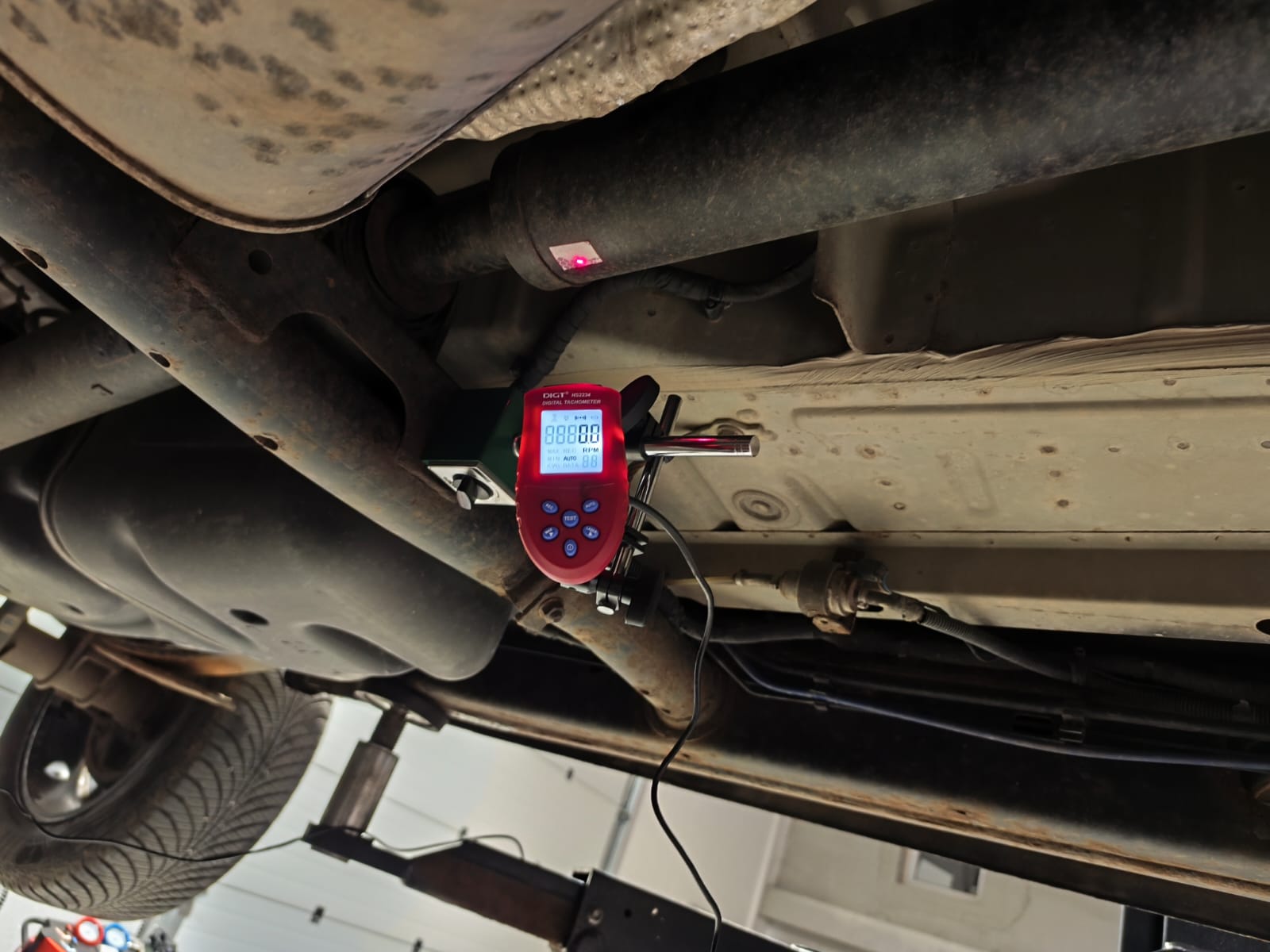
В спектъра остана пик при ~1810 rpm спрямо работни 1189 — “чужд” източник (двигателят).
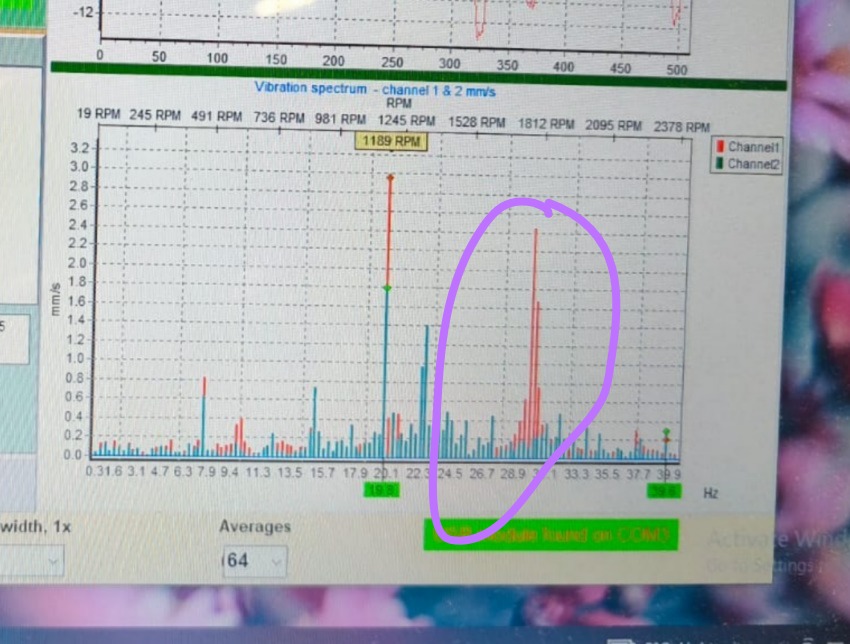
Урок: скобите са легитимен начин за закрепване на тежести на валове; коефициентите се съхраняват на три места — трудно е да се загубят всичките наведнъж.
Казус 12. RunDown открива резонансите на тестовия стенд (Румъния)
Самоделен стенд с работно колело: балансирането не се получаваше. Графиката на избега показа три резонансни зони: ~420, ~644 и над 960 rpm. Решението: балансиране при ~844 rpm (между резонансите) и поставяне на стенда върху пружини.
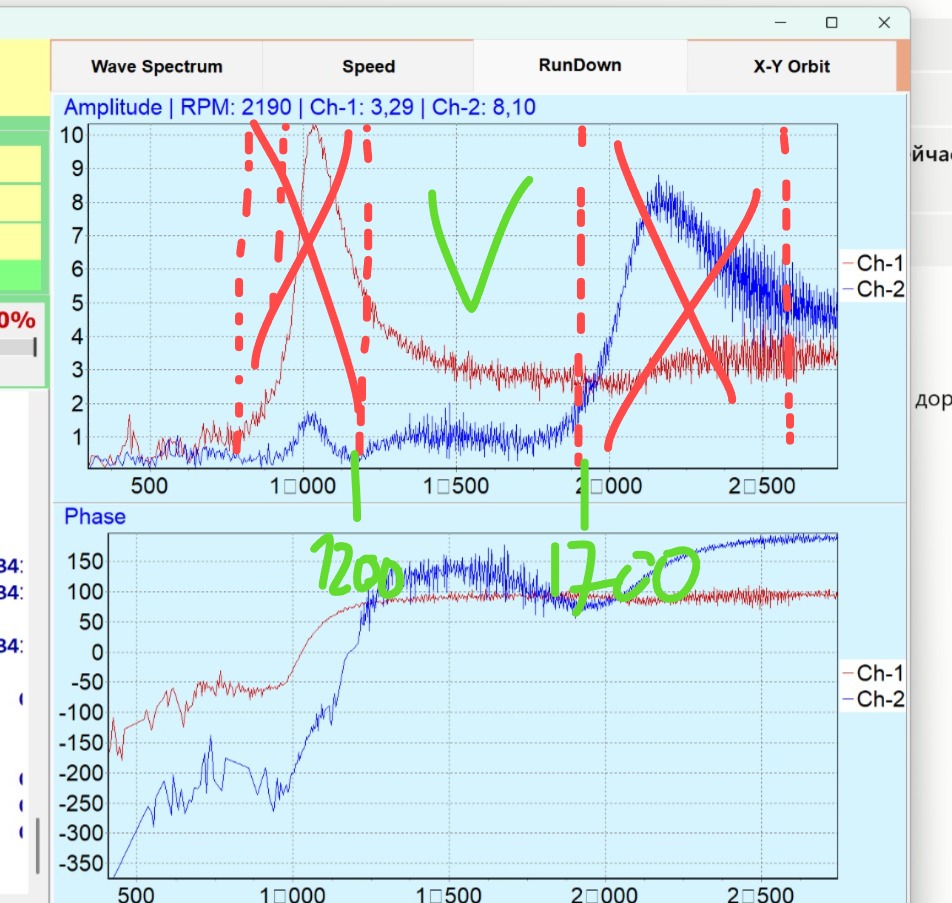
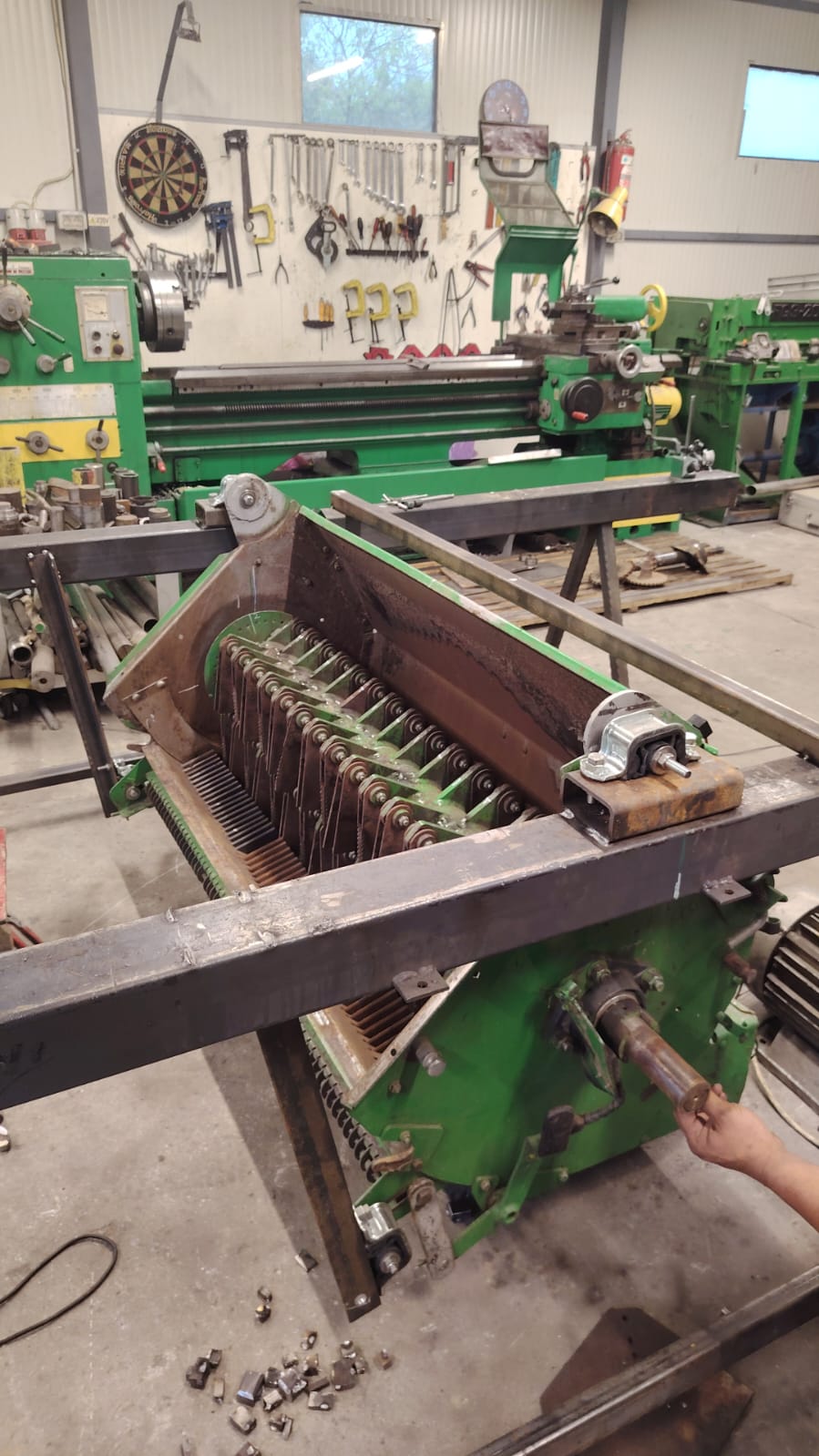
Резултат: 23,26 → 0.905 mm/s.
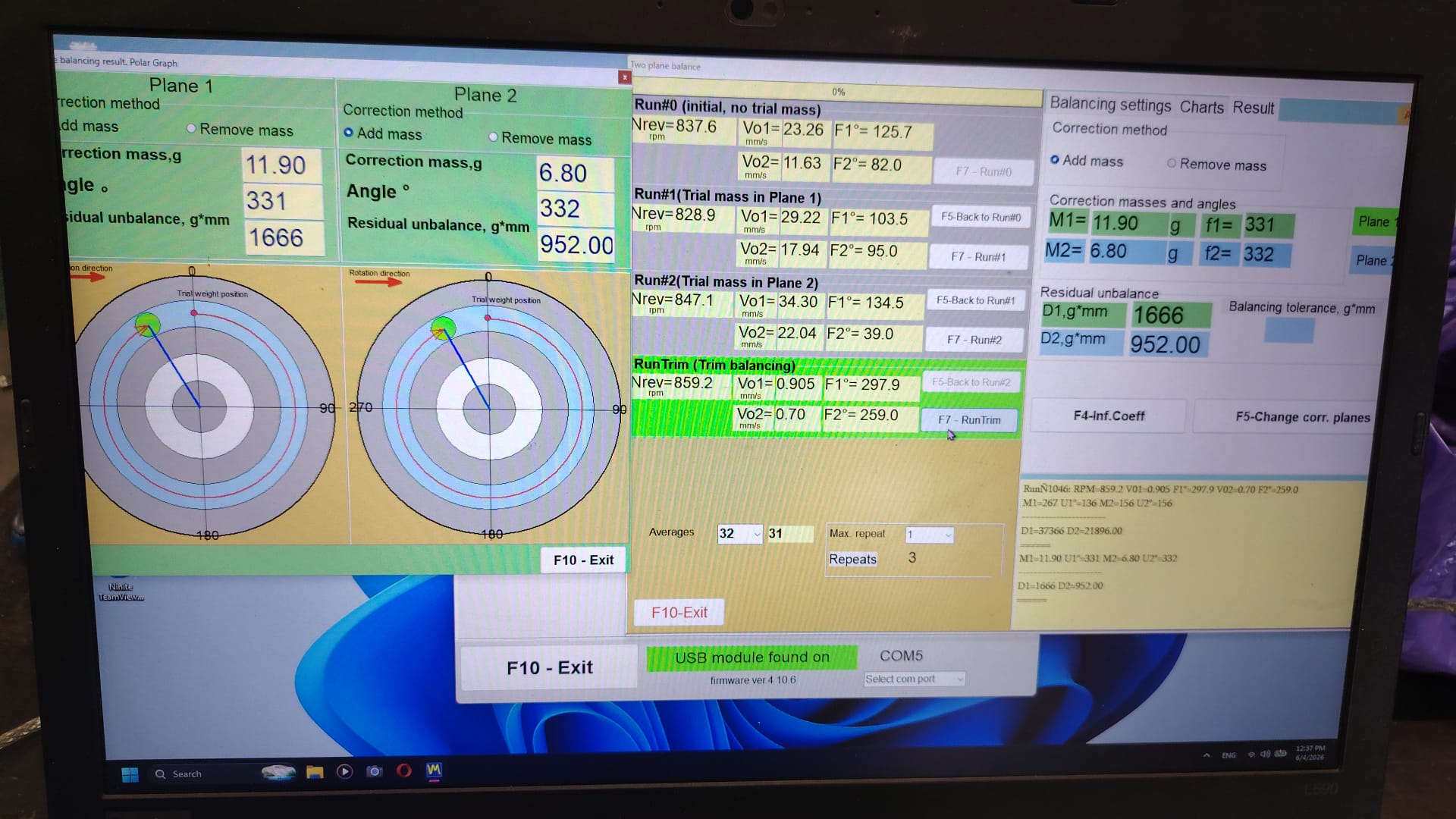
Урок: RunDown е най-бързият начин да изберете обороти извън резонансите. Правилно направеният стенд може да се разлюлее с ръка върху пружините си.
Казус 13. Ротор от ~600 kg, дефектен блок, подмяна за 2 дни (Полша)
Клиентът взе уреда лично; три дни по-късно устройството спря да се разпознава (фабричен дефект в контакт). Замяна беше изпратена с DHL на следващия ден. След това нормална работа: мулчер от ~600 kg, пробно тегло 400–600 g, тежести 494 g при 3° и 486 g при 331°, крайно ~5–6 mm/s (в рамките на допуска от 6–7 mm/s за меки опори).
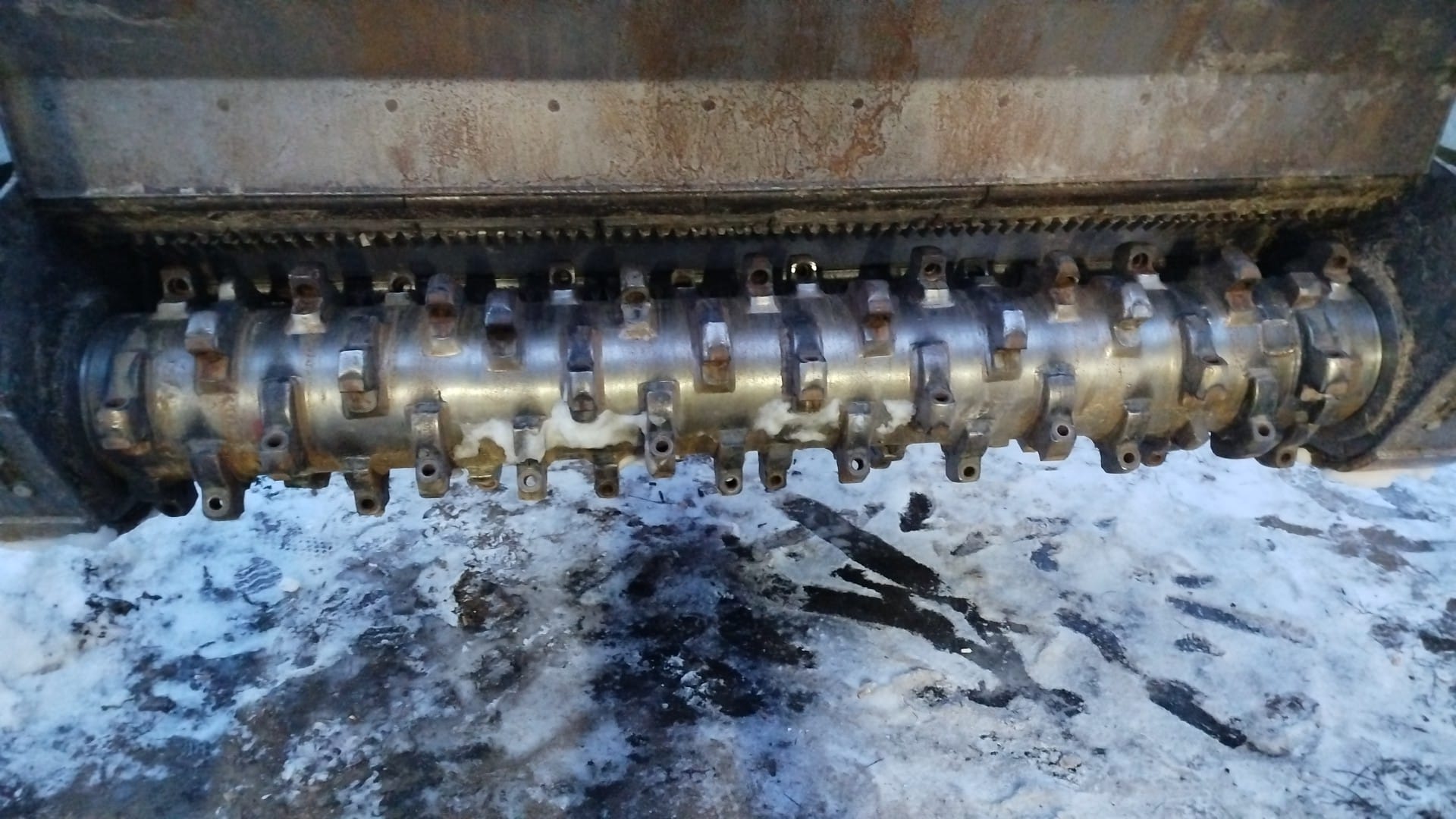
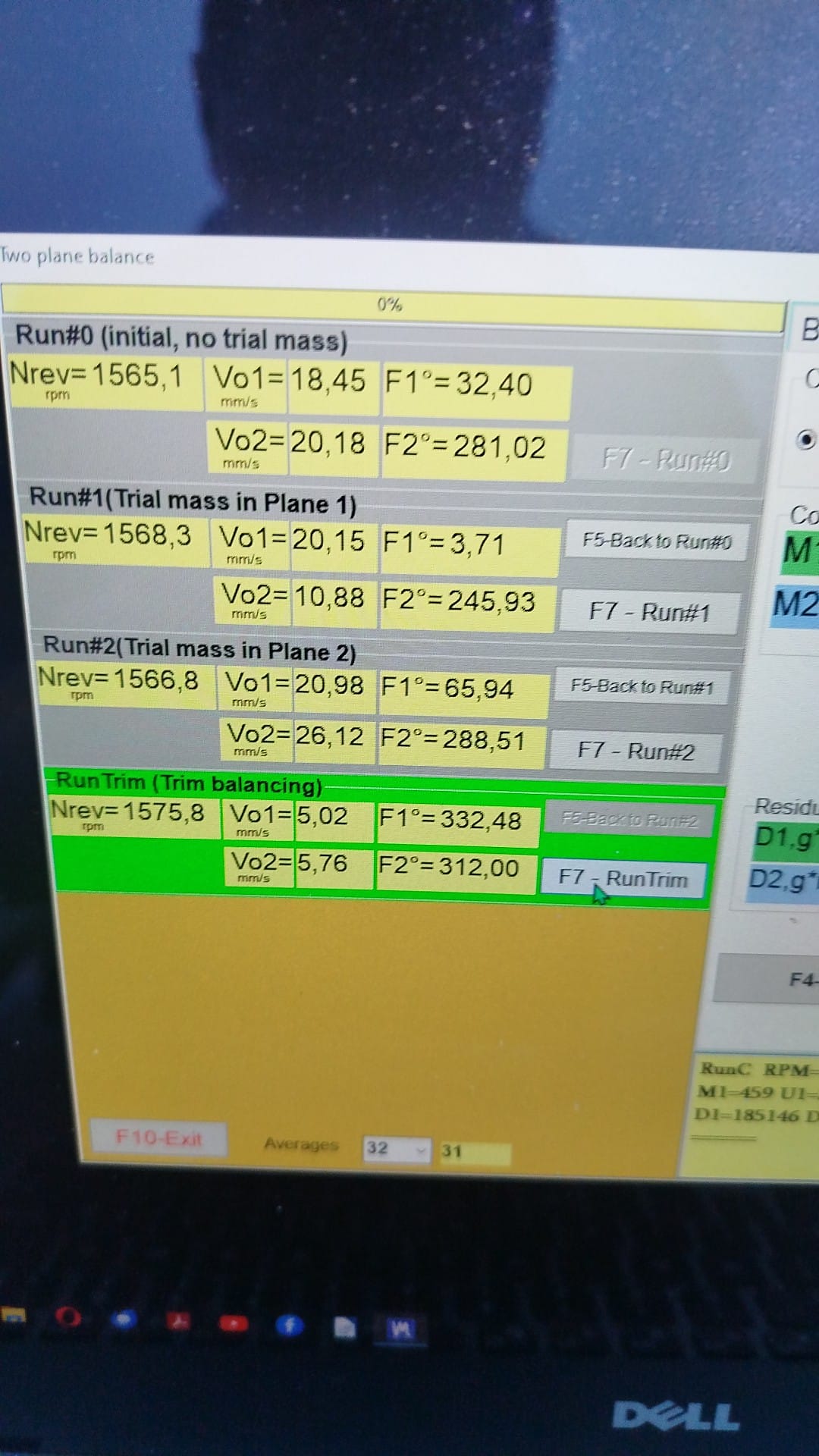
Урок: ето как изглежда пълният цикъл на екрана при реална машина.

