Balansiranje rotora: statička i dinamička neuravnoteženost, rezonancija i praktični postupak
Ovaj vodič objašnjava Balansiranje rotora za kruti rotori: što “neuravnoteženost” znači, kako se statička i dinamička neuravnoteženost razlikuju, zašto rezonancija i nelinearnost mogu spriječiti kvalitetan rezultat, te kako se balansiranje obično izvodi u jednoj ili dvije korekcijske ravnine.




Sadržaj
- Što je rotor i što ispravlja balansiranje?
- Vrste rotora i vrste neuravnoteženosti
- Vibracije mehanizama: što balansiranje može, a što ne može ukloniti
- Rezonancija: faktor koji sprječava balansiranje
- Linearni i nelinearni modeli: kada izračuni prestanu raditi
- Uređaji za balansiranje i balansirni strojevi
- Balansiranje krutih rotora (praktične napomene)
- Kako se izvodi dinamičko balansiranje (metoda s tri prolaza)
- Kriteriji za procjenu kvalitete uravnoteženja
- Standardi i reference
- Česta pitanja
Što je rotor i što ispravlja balansiranje?
Rotor je tijelo koje se okreće oko neke osi i koje je u ležajevima poduprto svojim ležajnim površinama. Ležajne površine rotora prenose opterećenja na ležajeve, a preko njih na potpore. Ležajne površine su površine rukavaca ili površine koje ih zamjenjuju.
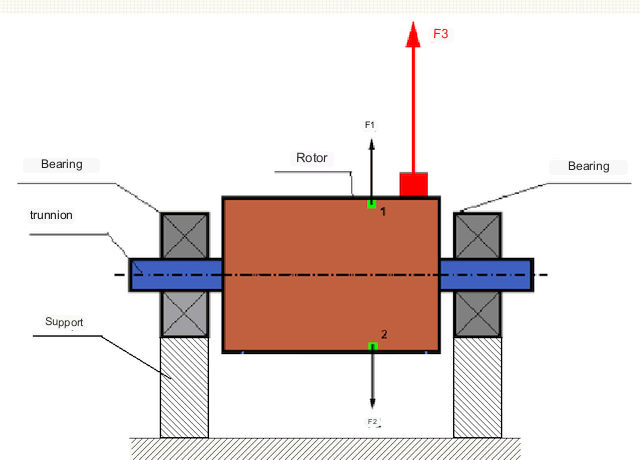
U savršeno uravnoteženom rotoru, njegova masa je simetrično raspoređena oko osi rotacije, tj. bilo koji element rotora može se uskladiti s drugim elementom koji se nalazi simetrično oko osi rotacije. U uravnoteženom rotoru, centrifugalna sila koja djeluje na bilo koji element rotora uravnotežena je centrifugalnom silom koja djeluje na simetrični element. Na primjer, centrifugalne sile F1 i F2, jednake veličine i suprotnog smjera, djeluju na elemente 1 i 2 (označeni zelenom bojom na slici 1). To vrijedi za sve simetrične elemente rotora, te je stoga ukupna centrifugalna sila koja djeluje na rotor jednaka 0 i rotor je uravnotežen.
Ali ako je simetrija rotora narušena (asimetrični element je označen crvenom bojom na slici 1), na rotor djeluje neuravnotežena centrifugalna sila F3. Tijekom rotacije ta sila mijenja smjer zajedno s rotacijom rotora. Dinamičko opterećenje koje proizlazi iz ove sile prenosi se na ležajeve, što dovodi do ubrzanog habanja i trošenja.
Osim toga, pod utjecajem ove sile promjenjivog smjera dolazi do cikličke deformacije oslonaca i temelja na kojima je rotor pričvršćen, odnosno javlja se vibracija. Kako bi se uklonila neravnoteža rotora i prateća vibracija, potrebno je ugraditi balansirne mase koje vraćaju simetriju rotoru.
Balansiranje rotora je postupak ispravljanja neuravnoteženosti dodavanjem balansirnih masa. Drugim riječima, cilj balansiranja je dovesti glavnu središnju os inercije rotora što je moguće bliže njegovoj osi rotacije, tako da preostalo neuravnoteženje bude unutar zadanih granica.
Zadatak uravnoteženja je pronaći veličinu i položaj (kut) jedne ili više masa za uravnoteženje.
Vrste rotora i vrste neuravnoteženosti
Uzimajući u obzir čvrstoću materijala rotora i veličinu centrifugalnih sila koje na njega djeluju, rotori se mogu podijeliti u dvije vrste - krute rotore i fleksibilne rotore.
Kruti rotori neznatno se deformiraju pod djelovanjem centrifugalne sile u radnim režimima, a utjecaj te deformacije u proračunima može se zanemariti.
Deformacija fleksibilnih rotora više se ne može zanemariti. Deformacija fleksibilnih rotora otežava rješavanje problema balansiranja i zahtijeva primjenu drugačijih matematičkih modela u usporedbi s problemom balansiranja krutih rotora. Valja napomenuti da se isti rotor pri niskim brzinama može ponašati kao krut, a pri visokim brzinama kao fleksibilan. Praktični kriterij je radna brzina u odnosu na prvu kritičnu (savojnu) brzinu rotora: rotor se smatra krutim — norma ISO 21940-11 govori o rotoru s „krutim ponašanjem” — kada radi znatno ispod te brzine, u praksi ispod otprilike 50–70% prve kritične brzine. Iznad toga rotor se savija u oblik moda koji se mijenja s brzinom: takav je rotor fleksibilan i mora se balansirati modalnim ili višeravninskim metodama (ISO 21940-12). U nastavku ćemo razmatrati samo balansiranje krutih rotora.
Ovisno o tome kako su neuravnotežene mase raspoređene duž rotora, ISO 21940-2 razlikuje nekoliko stanja neuravnoteženosti:
- statička neravnoteža — glavna os inercije pomaknuta je paralelno s osi vratila; može se otkriti bez rotacije, jer se rotor pod utjecajem gravitacije okreće dok njegova teška točka ne dođe na dno. Jedna korekcijska masa u jednoj ravnini je uklanja;
- spojna (momentna) neuravnoteženost — glavna os inercije siječe os vratila u središtu mase; dvije jednake neuravnoteženosti nalaze se u različitim ravninama i razmaknute su 180°. Pojavljuje se samo tijekom rotacije i zahtijeva dvije korekcijske mase u dvije ravnine;
- dinamička neravnoteža — opći, stvaran slučaj: kombinacija statičke i momentne (couple) neuravnoteženosti. Glavna os inercije nije ni paralelna s osi vratila niti je siječe. Dvije korekcijske ravnine su nužne i dovoljne za kruti rotor.
Stariji naziv "momentna neuravnoteženost" (moment unbalance) sinonim je za momentnu neuravnoteženost (couple unbalance); ne treba je miješati s dinamičkom neuravnoteženošću, koja je zbroj statičke i momentne komponente. Primjer rotora sa statičkom neuravnoteženošću prikazan je na sl. 2.
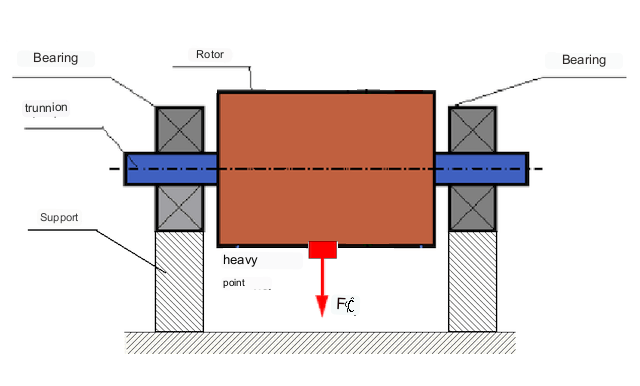
Momentna (couple) neuravnoteženost pojavljuje se samo dok rotor rotira.
Primjer rotora s momentnom (couple) neuravnoteženošću prikazan je na sl. 3.
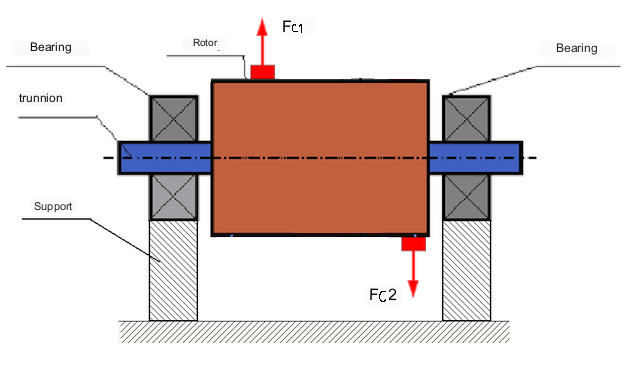
U ovom slučaju neuravnotežene jednake mase M1 i M2 nalaze se u različitim ravninama — na različitim mjestima duž duljine rotora. U statičkom položaju, odnosno kada se rotor ne vrti, na rotor djeluje samo gravitacija i mase se uravnotežuju. U dinamici, kada se rotor vrti, na mase M1 i M2 počinju djelovati centrifugalne sile Fc1 i Fc2. Te su sile jednake po iznosu i suprotne po smjeru. Međutim, budući da djeluju na različitim mjestima duž duljine osovine i nisu na istom pravcu, te se sile međusobno ne poništavaju. Sile Fc1 i Fc2 stvaraju moment koji djeluje na rotor — zato se momentna neuravnoteženost naziva i neravnotežom momenta. Sukladno tome, nekompenzirane centrifugalne sile djeluju na mjesta ležajeva, gdje mogu znatno premašiti izračunate vrijednosti i skratiti radni vijek ležajeva.
Budući da se ova vrsta neravnoteže pojavljuje samo tijekom rotacije rotora, ne može se ispraviti u statičkim uvjetima balansiranjem „na noževima” ili sličnim metodama. Kako bi se uklonila momentna neuravnoteženost, potrebno je ugraditi dva kompenzacijska utega koja stvaraju moment jednak po iznosu, a suprotan po smjeru momentu koji nastaje zbog masa M1 i M2. Kompenzacijske mase ne moraju biti postavljene nasuprotno i jednake po iznosu masama M1 i M2. Bitno je samo da stvaraju moment koji u potpunosti kompenzira moment neravnoteže.
Općenito, mase M1 i M2 ne moraju biti jednake, pa će postojati kombinacija statičke i momentne neuravnoteženosti — upravo taj opći slučaj norma ISO 21940-2 naziva dinamičkom neravnotežom. Teoretski je dokazano da su za kruti rotor dva utega razmaknuta duž duljine rotora potrebna i dovoljna za uklanjanje njegove neravnoteže. Ovi utezi kompenzirat će i moment koji nastaje zbog momentne neuravnoteženosti i centrifugalnu silu koja nastaje zbog asimetrije mase u odnosu na os rotora (statička neravnoteža). Momentna neuravnoteženost tipično je karakteristična za duge rotore, poput osovina, a statička neravnoteža karakteristična je za uske rotore. Međutim, ako je uski rotor iskrivljen u odnosu na os ili deformiran ("osmica"), momentnu će neuravnoteženost biti teško ukloniti (vidi sliku 4), jer je u tom slučaju teško ugraditi korektivne utege koji stvaraju potreban kompenzacijski moment.
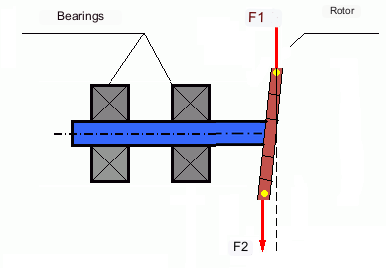
Sile F1 i F2 ne leže na istoj liniji i ne nadoknađuju se međusobno.
Zbog toga što je krak dostupan za stvaranje kompenzacijskog momenta malen, s obzirom na uski rotor, mogu biti potrebni veliki korekcijski utezi. Međutim, to također dovodi do „inducirane neravnoteže” zbog deformacije uskog rotora centrifugalnim silama korekcijskih utega. (vidi, primjerice, Metodološke upute za balansiranje krutih rotora prema GOST 22061-76 — moderni međunarodni ekvivalent je ISO 21940-11, prije ISO 1940-1 — odjeljak 10, "Sustav rotor–oslonci").
Ovo je uočljivo kod uskih rotora ventilatora, gdje se, uz masenu neuravnoteženost, javlja aerodinamička neuravnoteženost također je prisutna: nejednaka geometrija lopatica stvara nejednako opterećenje lopatica i time neto radijalnu silu. Poput centrifugalne sile korekcijskog utega, ova sila raste s kvadratom brzine, ali ovisi i o radnoj točki — gustoći zraka, položaju prigušnice, otporu kanala — pa korekcijski uteg izbalansiran u jednoj radnoj točki neće ostati optimalan u drugoj. Aerodinamičku komponentu stoga treba ispraviti obnavljanjem geometrije lopatica, a ne dodavanjem mase.
Elektromagnetske sile kod električnog stroja (neuravnoteženo magnetsko privlačenje zbog ekscentričnog zračnog raspora, slomljenih šipki, kratko spojenih limova) ponašaju se opet drugačije: njima upravlja tok u zračnom rasporu, a ne brzina vrtnje, i uglavnom pobuđuju stroj na dvostrukoj mrežnoj frekvenciji i na bočnim vrpcama prolaska polova, a ne na 1×. Budući da djeluju na frekvencijama različitim od frekvencije rotacije, balansiranje ih uopće ne može kompenzirati. Ukratko, balansiranje uklanja samo 1× pobudu povezanu s masom — ono ne može ukloniti svaki izvor vibracija u stroju.
Vibracije mehanizama
Vibracija je reakcija konstrukcije mehanizma na učinke cikličke uzbudne sile. Ta sila može biti različitog karaktera.
Centrifugalna sila koja nastaje zbog neuravnoteženog rotora je nekompenzirana sila koja djeluje na "tešku točku". Upravo se ta sila i vibracije uzrokovane njome mogu eliminirati uravnoteženjem rotora.
Interakcijske sile "geometrijske" prirode koje proizlaze iz pogrešaka u proizvodnji i montaži spojnih dijelova. Ove sile mogu, na primjer, nastati kao rezultat nekružnosti vratova vratila, pogrešaka u profilima zuba u zupčanicima, valovitosti staza ležajeva, neporavnatosti spojnih vratila itd. U slučaju nekružnosti rukavaca, os vratila će se pomaknuti ovisno o kutu rotacije vratila. Iako se ova vibracija javlja i pri brzini rotora, gotovo ju je nemoguće eliminirati balansiranjem.
Aerodinamske sile koje nastaju rotacijom lopatica ventilatora i drugih mehanizama s lopaticama. Hidrodinamske sile koje nastaju rotacijom lopatica hidrauličnih pumpi, turbina itd.
Elektromagnetske sile koje nastaju pri radu električnih strojeva, npr. asimetričnih namotaja rotora, kratko spojenih namotaja itd.
Iznos vibracije (npr. njezina amplituda Av) ne ovisi samo o pobudnoj sili Fv koja djeluje na mehanizam kružnom frekvencijom ω, već i o krutosti k mehanizma, njegovoj masi m, kao i koeficijentu prigušenja C, kako pokazuje formula (1) ispod.

Za mjerenje vibracija i mehanizama za balansiranje mogu se koristiti različite vrste senzora, uključujući:
- apsolutni senzori vibracija namijenjeni mjerenju ubrzanja vibracija (akcelerometri) i senzori brzine vibracija;
- senzori relativnih vibracija - senzori vrtložnih struja ili kapacitivni, dizajnirani za mjerenje vibracijskog pomaka;
- U nekim slučajevima (kada to dizajn mehanizma dopušta), senzori sile mogu se koristiti i za procjenu njegovog vibracijskog opterećenja; posebno se široko koriste za mjerenje vibracijskog opterećenja nosača strojeva za balansiranje s tvrdim ležajevima.
Dakle, vibracija je reakcija stroja na djelovanje vanjskih sila. Veličina vibracije ovisi ne samo o veličini sile koja djeluje na mehanizam, već i o krutosti konstrukcije mehanizma. Jedna i ista sila može dovesti do različitih vibracija. U stroju s tvrdim ležajevima, čak i ako je vibracija mala, ležajevi mogu biti izloženi značajnim dinamičkim opterećenjima. Zato se pri balansiranju strojeva s tvrdim ležajevima koriste senzori sile, a ne senzori vibracija (vibracijski akcelerometri).
Senzori vibracija koriste se na mehanizmima s relativno savitljivim osloncima, kada djelovanje neuravnoteženih centrifugalnih sila dovodi do primjetne deformacije oslonaca i vibracija. Senzori sile koriste se za krute oslonce, kada čak ni značajne sile zbog neuravnoteženosti ne dovode do značajnih vibracija.
Rezonancija je faktor koji sprječava balansiranje.
Ranije smo spomenuli da se rotori dijele na krute i fleksibilne. Krutost ili fleksibilnost rotora ne treba miješati s krutošću ili pokretljivošću oslonaca (temelja) na kojima je rotor postavljen. Rotor se smatra krutim kada se njegova deformacija (savijanje) pod djelovanjem centrifugalnih sila može zanemariti. Deformacija fleksibilnog rotora je relativno velika i ne može se zanemariti.
U ovom članku razmatramo samo uravnoteženje krutih rotora. Kruti (neelastični) rotor može biti montiran na krutim ili pokretnim (fleksibilnim) nosačima. Jasno je da je ta krutost/fleksibilnost nosača također relativna, ovisno o brzini rotora i veličini nastalih centrifugalnih sila. Uvjetna granica je frekvencija prirodnih vibracija nosača rotora.
Kod mehaničkih sustava oblik i frekvenciju vlastitih vibracija određuju masa i elastičnost elemenata mehaničkog sustava. Drugim riječima, frekvencija vlastitih vibracija unutarnje je svojstvo mehaničkog sustava i ne ovisi o vanjskim silama. Kad se izmaknu iz ravnotežnog stanja, oslonci zbog elastičnosti teže vratiti se u položaj ravnoteže. No zbog inercije masivnog rotora taj proces ima karakter prigušenih oscilacija. Te su vibracije vlastite vibracije sustava rotor–oslonac. Njihova frekvencija ovisi o omjeru mase rotora i elastičnosti oslonaca, kako pokazuje formula (2) u nastavku.

Kada rotor počne rotirati i frekvencija njegove rotacije se približi frekvenciji prirodnih vibracija, amplituda vibracija naglo raste, što može dovesti do uništenja strukture.
Javlja se pojava mehaničke rezonancije. Blizu rezonancije odziv se pojačava faktorom kvalitete Q = 1/(2ζ), tipično 3–17 za konstrukcije strojeva, a vrh može biti uzak: promjena brzine reda veličine nekoliko posto može promijeniti razinu vibracija nekoliko puta. Kroz rezonanciju fazno kašnjenje mijenja se za 180°, prolazeći kroz 90° u vrhu.
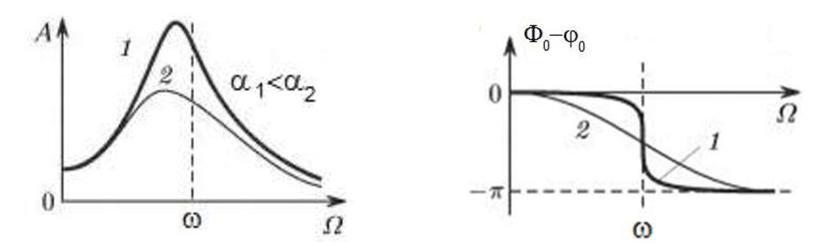
Ako je konstrukcija mehanizma neuspješna i radna frekvencija rotora blizu je frekvencije vlastitih vibracija, rad mehanizma postaje nemoguć zbog nedopustivo visoke vibracije. Balansiranje uobičajenim metodama tada je nemoguće, jer čak i mala promjena brzine drastično mijenja parametre vibracija. Za balansiranje u području rezonancije koriste se posebne metode koje nisu razmatrane u ovom članku.
Moguće je odrediti frekvenciju prirodnih vibracija mehanizma pri slobodnom zaustavljanju (pri isključivanju rotacije rotora) ili metodom udarnog uzbuđenja uz naknadnu spektralnu analizu reakcije sustava na udar.
Za mehanizme čija je radna frekvencija rotacije iznad rezonantne frekvencije, odnosno koji rade u superkritičnom (postrezonantnom) režimu, oslonci se smatraju pokretnima, a za mjerenje se koriste senzori vibracija, uglavnom vibracijski akcelerometri, koji mjere ubrzanje konstrukcijskih elemenata. Za mehanizme koji rade u predrezonantnom režimu, oslonci se smatraju krutima. U tom se slučaju koriste senzori sile.
Linearni i nelinearni modeli mehaničkog sustava. Nelinearnost je čimbenik koji sprječava balansiranje.
Pri balansiranju krutih rotora za izračune balansiranja koriste se matematički modeli nazvani linearnim modelima. Linearni model znači da je u takvom modelu jedna veličina proporcionalna (linearno) drugoj. Na primjer, ako se nekompenzirana masa na rotoru udvostruči, vrijednost vibracija također će se udvostručiti. Za krute rotore može se koristiti linearni model, budući da se ne deformiraju.
Za fleksibilne rotore više se ne može koristiti linearan model. Kod fleksibilnog rotora, ako se masa teške točke povećava tijekom rotacije, nastaje dodatna deformacija, a uz masu se povećava i radijus položaja teške točke. Stoga će se kod fleksibilnog rotora vibracija povećati više od dvostruko, a uobičajene metode izračuna neće raditi.
Drugi izvor nelinearnosti jest promjena krutosti oslonca pri velikim otklonima: pri malim otklonima opterećenje nosi jedan skup konstrukcijskih elemenata, a pri velikim u igru ulaze drugi. Zato nije moguće balansirati mehanizme koji nisu pričvršćeni na temelj, nego su, primjerice, jednostavno postavljeni na pod. Kod značajnih vibracija sila neravnoteže može odignuti mehanizam od poda, čime se znatno mijenjaju karakteristike krutosti sustava. Nožice motora moraju biti čvrsto pričvršćene, vijčani spojevi moraju biti zategnuti, debljina podložaka mora osigurati dovoljnu krutost pričvršćenja itd. Ako su ležajevi oštećeni, moguća su znatna nesuosnost osovine i udari, što također rezultira lošom linearnošću i nemogućnošću izvođenja kvalitetnog balansiranja.
Uređaji za balansiranje i balansirni strojevi
Podsjetimo se da je balansiranje postupak usklađivanja glavne središnje osi inercije s osi rotacije rotora.
Ovaj se proces može izvesti na dva načina.
Prva metoda uključuje obradu rukavaca rotora na način da os koja prolazi kroz središta rukavaca podudara s glavnom središnjom osi inercije rotora. Takva se tehnika rijetko koristi u praksi i neće biti detaljno obrađena u ovom članku.
Druga (najčešća) metoda uključuje pomicanje, postavljanje ili uklanjanje korekcijskih utega na rotoru, koji se postavljaju tako da je os inercije rotora što je moguće bliža njegovoj osi vrtnje.
Pomicanje, dodavanje ili uklanjanje korektivnih utega tijekom balansiranja može se izvesti raznim tehnološkim operacijama, uključujući: bušenje, glodanje, navarivanje, zavarivanje, vijčanje ili odvijanje, lasersko ili elektronskim snopom gorenje, elektrolizu, elektromagnetsko navarivanje itd.
Proces balansiranja može se izvesti na dva načina:
- Terensko balansiranje (in situ) — sastavljeni rotor balansira se u vlastitim ležajevima, na vlastitom temelju, pri vlastitoj radnoj brzini, korištenjem prijenosnog kompleta za balansiranje;
- Balansiranje u radionici — rotor se demontira i balansira na namjenskom stroju za balansiranje.
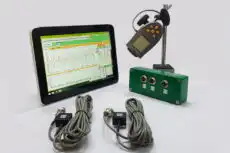
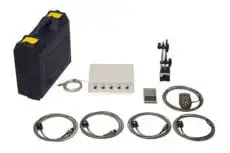
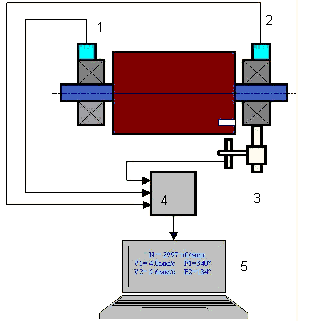
Za balansiranje rotora u vlastitim ležajevima obično se koriste specijalizirani uređaji za balansiranje (kompleti), koji omogućuju mjerenje vibracije balansiranog rotora na njegovoj frekvenciji vrtnje u vektorskom obliku, odnosno mjerenje i amplitude i faze vibracije. Danas se navedeni uređaji izrađuju na temelju mikroprocesorske tehnologije i, osim mjerenja i analize vibracija, omogućuju automatski izračun parametara korektivnih utega koje treba ugraditi na rotor kako bi se kompenzirala njegova neravnoteža.
Ovi uređaji uključuju:
- jedinica za mjerenje i izračunavanje temeljena na računalu ili industrijskom upravljaču;
- dva (ili više) senzora vibracija;
- senzor kuta faze;
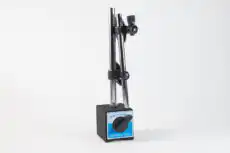
- pribor za montažu senzora na lokaciji;
- specijalizirani softver, dizajniran za izvođenje punog ciklusa mjerenja parametara vibracija rotora u jednoj, dvjema ili više korektivnih ravnina.
Dvije vrste balansirnih strojeva trenutno su najčešće:
- Strojevi s mekim osloncima (s podatljivim osloncima);
- Strojevi s tvrdim ležajevima (s krutim osloncima).
Strojevi s mekim ležajem (nadrezonantni) imaju relativno podatne oslonce, primjerice na bazi ravnih opruga. Frekvencija vlastitih vibracija tih oslonaca obično je 2-3 puta niža od frekvencije vrtnje balansiranog rotora koji je na njih postavljen, pa stroj radi iznad rezonancije. Za mjerenje gibanja oslonaca tih nadrezonantnih strojeva obično se koriste senzori vibracija (akcelerometri, senzori brzine vibracija itd.).
Strojevi s tvrdim ležajem (predrezonantni) koristite relativno krute oslonce, čije prirodne frekvencije vibracija trebaju biti 2-3 puta više od frekvencije rotacije rotora koji se balansira, tako da stroj radi ispod rezonancije. Za mjerenje dinamičkog opterećenja na osloncima predrezonantnog stroja obično se koriste senzori sile.
Prednost predrezonantnih (hard-bearing) strojeva za balansiranje je što se balansiranje na njima može izvoditi pri relativno niskim brzinama rotora (do 400 - 500 rpm), što uvelike pojednostavljuje konstrukciju stroja i njegovog temelja te povećava produktivnost i sigurnost balansiranja.
Uravnoteženje krutih rotora
Važno!
- Balansiranje uklanja samo vibracije uzrokovane asimetričnom raspodjelom mase rotora u odnosu na njegovu os rotacije. Druge vrste vibracija balansiranjem se ne uklanjaju!
- Tehnički mehanizmi čiji dizajn osigurava odsutnost rezonancija na radnoj frekvenciji rotacije, pouzdano pričvršćeni na temelj i ugrađeni u radne ležajeve, podliježu balansiranju.
- Neispravan stroj mora se popraviti prije uravnoteženja. Inače nije moguće postići kvalitetno uravnoteženje.
Uravnoteženje nije zamjena za popravak!
Glavni zadatak balansiranja je pronaći masu i položaj kompenzacijskih utega koji neutraliziraju centrifugalne sile.
Kao što je spomenuto gore, za krute rotore općenito je potrebno i dovoljno ugraditi dva kompenzacijska utega. Time će se ukloniti i statička i momentna (couple) komponenta neuravnoteženosti rotora. Opća shema mjerenja vibracija tijekom balansiranja je sljedeća.
Senzori vibracija postavljaju se na oslonce ležajeva u točkama 1 i 2. Na rotor se postavlja oznaka okretaja, obično reflektirajućom trakom. Oznaku okretaja koristi laserski tahometar za određivanje brzine rotora i faze vibracijskog signala.
Kako se izvodi dinamičko balansiranje (metoda s tri prolaza)
U većini slučajeva dinamičko balansiranje izvodi se metodom tri pokretanja. Metoda se temelji na činjenici da se probni utezi poznate mase redom postavljaju na rotor u ravnini 1 i 2, a masa i položaj balansirnih utega izračunavaju se na temelju rezultata promjena parametara vibracija.
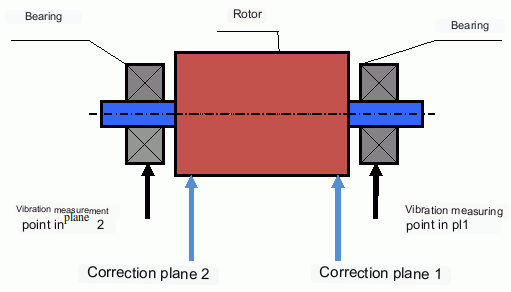
Ravnina u koju se ugrađuje korekcijski uteg naziva se korekcijska ravnina. Korekcijske ravnine nalaze se na samom rotoru — obično na oba kraja tijela rotora, na diskovima ventilatora ili rotora (impelera), ili na posebnim prstenima za balansiranje. Trebaju biti odabrane što je moguće dalje jedna od druge duž vratila, koliko konstrukcija dopušta, tako da umjereni uteg proizvede dovoljan korekcijski moment. Ovo nije isto što i mjerne točke, koji se nalaze na kućištima ležajeva (vidi sl. 6).
Pri prvom pokretanju mjeri se početna vibracija (u softveru Balanset ovo je Run 0). Zatim se na rotor, bliže jednom od ležajeva, postavlja probni uteg poznate mase. Provodi se drugo pokretanje (Run 1) i mjere se parametri vibracija, koji bi se trebali promijeniti zbog ugradnje probnog utega. Zatim se probni uteg u prvoj ravnini uklanja i ugrađuje u drugu ravninu. Izvodi se treći probni hod (Run 2) i mjere se parametri vibracija. Probni uteg se uklanja i softver automatski izračunava mase i kutove ugradnje balansirnih utega.
Izračunati korekcijski utezi zatim se ugrađuju u svoje ravnine i izvodi se kontrolni hod — u softveru Balanset ovo je Run T (Trim). Preostala vibracija uspoređuje se s tolerancijom. Ako je rezultat i dalje iznad ciljne vrijednosti, softver ponovno koristi već određene koeficijente utjecaja, pa nisu potrebni novi hodovi s probnim utegom — izračunava se i ugrađuje samo mala dodatna trim korekcija.
Svrha postavljanja probnih utega jest utvrditi kako sustav reagira na promjene neravnoteže. Masa i položaji probnih utega poznati su, pa softver može izračunati takozvane koeficijente utjecaja, koji pokazuju kako uvođenje poznate neravnoteže utječe na parametre vibracija. Koeficijenti utjecaja karakteristike su samog mehaničkog sustava i ovise o krutosti oslonaca i masi (inerciji) sustava rotor-oslonac.
Za iste vrste mehanizama istog dizajna koeficijenti utjecaja bit će bliski. Mogu se spremiti u memoriju računala i koristiti za balansiranje mehanizama iste vrste bez probnih pokretanja, što značajno povećava produktivnost balansiranja. Imajte na umu da masu probnih utega treba odabrati tako da se parametri vibracija primjetno promijene kada se probni utezi postave. Inače se pogreška u izračunu koeficijenata utjecaja povećava i kvaliteta balansiranja se pogoršava.
Kao što možete vidjeti na slici 1, centrifugalna sila djeluje u radijalnom smjeru, tj. okomito na os rotora. Stoga vibracijski senzori moraju biti postavljeni tako da je i njihova os osjetljivosti usmjerena u radijalnom smjeru. Obično je krutost temelja u vodoravnom smjeru manja, pa su vibracije u vodoravnom smjeru veće. Zato, radi povećanja osjetljivosti, senzore treba postaviti tako da je njihova os osjetljivosti također usmjerena vodoravno. Iako nema bitne razlike. Osim vibracija u radijalnom smjeru, moraju se pratiti i vibracije u aksijalnom smjeru, duž osi vrtnje rotora. Te vibracije obično nisu uzrokovane neuravnoteženošću, već drugim uzrocima, uglavnom povezanima s neporavnatošću vratila spojenih preko spojke.
Ova se vibracija ne može ukloniti balansiranjem, u kojem slučaju je potrebno centriranje. U praksi takvi strojevi obično imaju i neravnotežu rotora i nesuosnost vratila, što znatno otežava zadatak uklanjanja vibracije. U takvim je slučajevima potrebno prvo centrirati stroj, a zatim ga balansirati. (Iako se kod jake momentne neravnoteže vibracija javlja i u aksijalnom smjeru zbog „uvijanja” konstrukcije temelja.)
Povezani članci (primjeri balansirnih postolja)
Kriteriji za procjenu kvalitete mehanizama uravnoteženja
Kvaliteta balansiranja rotora (mehanizama) može se ocijeniti na dva načina. Prva metoda uključuje usporedbu iznosa preostalog neuravnoteženja utvrđenog tijekom postupka balansiranja s tolerancijom za preostalo neuravnoteženje. Te tolerancije za različite klase rotora navedene su u ISO 21940-11 (ranije ISO 1940-1).
Kako se izračunava tolerancija (ISO 21940-11). Norma propisuje klasu kvalitete balansiranja G, koja je umnožak dopuštenog specifičnog neuravnoteženja eper i radne kutne brzine ω, izraženo u mm/s:
- ω = 2π·n / 60 [rad/s], gdje je n radna brzina u rpm;
- eper = G · 1000 / ω [g·mm/kg] (brojčano jednako µm pomaka središta mase) — ekvivalentno eper = 9549 · G / n;
- Uper = eper · m [g·mm], gdje je m masa rotora u kg.
Riješeni primjer. Rotor m = 50 kg, radna brzina n = 3000 rpm, klasa G 6.3 (ventilatori, pumpe, standardni elektromotori): ω = 2π·3000/60 = 314.2 rad/s; eper = 6.3 · 1000 / 314.2 = 20.1 g·mm/kg (unakrsna provjera: 9549 · 6.3 / 3000 ≈ 20.1); Uper = 20.1 · 50 ≈ 1000 g·mm za cijeli rotor.
Podjela tolerancije između dvije ravnine. Za rotor čije se težište nalazi između korekcijskih ravnina, ukupna tolerancija dijeli se obrnuto proporcionalno udaljenosti težišta od svake ravnine; za simetričan rotor to je jednostavno polovica u svakoj ravnini — otprilike 500 g·mm po ravnini u gornjem primjeru. Nijednoj ravnini ne smije se dodijeliti više od 70% ni manje od 30% od Uper.
Tipične ocjene: G 0.4 — žiroskopi, vretena preciznih brusilica · G 1 — vretena brusnih strojeva, precizne armature · G 2.5 — turbine, turbogeneratori, pogoni alatnih strojeva · G 6.3 — opće strojarstvo: ventilatori, rotori pumpi, zamašnjaci, standardni elektromotori · G 16 — kardanska vratila s posebnim zahtjevima, poljoprivredni strojevi, drobilice · G 40 — automobilski kotači, pogonska vratila (kardanska vratila) · G 100 — pogoni radilice brzohodnih dizelskih motora.
Međutim, poštivanje navedenih tolerancija ne može u potpunosti jamčiti operativnu pouzdanost mehanizma, povezanu s postizanjem minimalne razine njegove vibracije. To se objašnjava činjenicom da se amplituda vibracija mehanizma ne određuje samo silom povezanom s preostalim disbalansom njegovog rotora, već ovisi i o nekoliko drugih parametara, uključujući: krutost k strukturnih elemenata mehanizma, njegovu masu m, faktor prigušenja, kao i frekvenciju rotacije. Stoga se, za procjenu dinamičkih svojstava mehanizma (uključujući kvalitetu njegove uravnoteženosti), u nizu slučajeva preporučuje procjena razine preostale vibracije mehanizma, koja je regulirana nizom standarda.
Najrašireniji standard za dopuštene razine vibracija industrijskih strojeva jest ISO 20816-3 (prijašnji ISO 10816-3). Obuhvaća strojeve snage iznad 15 kW koji rade pri 120–15 000 o/min, a klasificira ih u dvije dimenzije: prema skupini snage (Skupina 1 — iznad 300 kW; Skupina 2 — 15 do 300 kW) i prema vrsti oslonca (kruti ili fleksibilni). Svaka kombinacija ima vlastite granice zona A/B, B/C i C/D izražene u mm/s RMS. Strojevi izvan ovog opsega imaju namjenske dijelove serije (turbinski agregati — ISO 20816-2, hidraulički strojevi, klipni strojevi, pumpe) ili proizvodne standarde poput ISO 14694 za industrijske ventilatore.
Za opće strojeve ocjenjivane na nerotirajućim dijelovima, klasična ISO 10816-1 zone (sada dio ISO 20816-1) daju sljedeće granice brzine vibracija, mm/s RMS:
| Razred | A/B | B/C | CD |
|---|---|---|---|
| Klasa I (mali strojevi, do 15 kW) | 0.71 | 1.80 | 4.50 |
| Klasa II (srednji strojevi, 15–75 kW) | 1.12 | 2.80 | 7.10 |
| Klasa III (veliki strojevi, kruti temelj) | 1.80 | 4.50 | 11.20 |
| Klasa IV (veliki strojevi, fleksibilni temelj) | 2.80 | 7.10 | 18.00 |
Zona A odgovara vibracijama novih strojeva; zona B je prihvatljiva za neograničen dugotrajan rad; zona C dopušta samo ograničen rad; zona D ukazuje na vibracije dovoljno ozbiljne da uzrokuju štetu.
Standardi i reference
- ISO 21940-11:2016 — Mehaničke vibracije — Balansiranje rotora — 11. dio: Postupci i tolerancije za rotore s krutim ponašanjem. (Zamjenjuje ISO 1940-1, koja je povučena.) G-klase i kalkulator tolerancije →
- ISO 21940-2 — Mehaničke vibracije — Balansiranje rotora — 2. dio: Rječnik. (Definicije statičke, momentne, kvazistatičke i dinamičke neuravnoteženosti.)
- ISO 20816-1:2016 — Mehaničke vibracije — Mjerenje i procjena vibracija strojeva — 1. dio: Opće smjernice. (Zamjenjuje ISO 10816-1 i ISO 7919-1.) Zone ocjenjivanja →
- ISO 20816-3:2022 — Mehaničke vibracije — Mjerenje i procjena vibracija strojeva — 3. dio: Industrijski strojevi nazivne snage iznad 15 kW i nazivnih brzina između 120 r/min i 15 000 r/min. (Zamjenjuje ISO 10816-3:2009.)
- ISO 14694:2003 — Industrijski ventilatori — Specifikacije za kvalitetu balansiranja i razine vibracija.
Česta pitanja
Uklanja li balansiranje sve vibracije?
Ne. Balansiranje uklanja vibracije uzrokovane asimetričnom raspodjelom mase rotora u odnosu na njegovu rotacijsku os. Vibracije uzrokovane neusklađenošću, nedostacima ležajeva, aerodinamičkim/hidrodinamičkim silama, elektromagnetskim silama i drugim uzrocima zahtijevaju zasebnu dijagnostiku i korektivne radnje.
Zašto balansiranje može propasti blizu rezonancije?
Blizu rezonancije, male promjene brzine mogu uzrokovati velike promjene amplitude vibracija i fazni pomak od 180°. U takvim uvjetima rezultati mjerenja postaju nestabilni, a konvencionalni postupci balansiranja možda neće konvergirati bez posebnih metoda.
Kada vam je potrebno balansiranje u jednoj ravnini u odnosu na balansiranje u dvije ravnine?
Jedna ravnina dovoljno je za diskaste rotore, kod kojih je aksijalna duljina rotora mala u odnosu na promjer — kao okvirno pravilo L/D < 0,5 — a radna brzina znatno je ispod prve kritične brzine. Tipični primjeri: brusna ploča, jednodiskasni rotor ventilatora, remenica, automobilski kotač. Takav rotor ima gotovo isključivo statičku neravnotežu.
Dvije ravnine potrebne su za izdužene rotore (L/D ≥ 0.5), za svaki rotor s dva ili više rotora (impelera) ili diskova raspoređenih duž vratila, te kad god se faza vibracija na dva ležaja znatno razlikuje — znak momentne (couple) komponente. Krutom rotoru nikada nije potrebno više od dvije ravnine.
Kada ste u nedoumici, mjerite oba ležaja: ako korekcija u jednoj ravnini smanjuje vibraciju na jednom ležaju, a povećava je na drugom, rotor ima momentnu (couple) komponentu i potrebno mu je balansiranje u dvije ravnine.
Što treba učiniti prije balansiranja?
Provjerite je li stroj ispravan: pouzdano pričvršćivanje na temelj, ispravni ležajevi, bez ozbiljnih labavosti i bez očitih izvora nelinearnosti. Balansiranje nije zamjena za popravak.
Ključni zaključci
- Balansiranjem se ispravlja pobuda povezana s masom (centrifugalna pobuda); ne rješava neusklađenost, oštećenje ležaja ni elektromagnetske/aerodinamičke izvore.
- Rezonancija i nelinearnost mogu učiniti konvencionalno balansiranje neučinkovitim ili nesigurnim.
- Za krute rotore, dvoravninsko balansiranje opće je rješenje za dinamičku neuravnoteženost (kombinaciju statičke + momentne).

Nikolai Shelkovenko
Nikolai Shelkovenko inženjer je analize vibracija te osnivač i izvršni direktor tvrtke Vibromera. Više od 15 godina balansira rotacijsku opremu na terenu, a ne na ispitnom stolu: malčere, industrijske ventilatore, drobilice, centrifuge, vratila i vretena. Upravo je iz tog rada nastala oprema Balanset — osmišljena je kao alat koji stručnjak može ponijeti do stroja i sam njime raditi na licu mjesta, a ne kao laboratorijska oprema. Vibromera je osnovana 2017. godine, a od 2023. sjedište joj je u Portu u Portugalu. Ovdje se odvijaju razvoj, sklapanje i podrška za liniju Balanset. Vodeći instrument je Balanset-1A, prijenosni analizator za balansiranje u jednoj i dvije ravnine te za dijagnostiku vibracija. Nikolai je osobno uključen u podršku korisnicima, u rješavanje složenih slučajeva balansiranja i u razvoj programske podrške. Radi s korisnicima diljem svijeta, na bilo kojem jeziku.

