Forstå elektrisk ubalanse




Elektrisk ubalanse - også kalt fase-ubalanse, fase-ubalanse, spenningsubalanse eller strømubalanse — er en tilstand i et trefasesystem der spenningene eller strømmene i de tre fasene er ulike i størrelse, eller ikke er atskilt med nøyaktig 120 elektriske grader. Denne asymmetrien, enten den oppstår i forsyningen eller inne i motor viklingene, gir ubalanserte elektromagnetiske krefter, overdreven oppvarming av viklingene, negativ-sekvensstrømmer, dreiemomentssvingninger og en karakteristisk vibrasjon ved det dobbelte linjefrekvens.
Det som gjør elektrisk ubalanse så villedende, er den forsterkningseffekten som er involvert: selv en liten spenningsubalanse på 2–3 % kan gi en strømubalanse seks til ti ganger større, og stille og rolig tære på motorvirkningsgrad, varmemargin og isolasjonslevetid. Det er ett av de vanligste — og mest oversette — problemene i industrielle anlegg, og oppstår som følge av problemer i kraftforsyningen, dårlig intern fordeling i anlegget eller feil inne i selve motoren. Fordi vibrasjonssignaturen deler frekvenser med flere genuint mekaniske feil, er det også en av de tilstandene et vedlikeholdsteam oftest feildiagnostiserer.
1. Hva er faseubalanse? Spennings-, strøm- og fasevinkelubalanse
“Faseubalanse” er det dagligdagse gulvbetegnelsen for samme tilstand, og den forekommer i tre distinkte men sammenkoblede former. Det er viktig å vite hvilken du måler: spenningsubalanse er årsaken som forsyningen påfører motoren, mens strømubalanse er den forsterkede effekt responsen motoren lider under.
Spenningsubalanse
Spenningsubalanse er ulikheten mellom de tre linje-til-linje- (eller linje-til-nøytral-) spenningene. Den måles ved å lese spenningen mellom hvert fasepar — AB, BC og CA — og uttrykkes som en prosent etter NEMA-definisjonen: % spenningsubalanse = (maksimalt avvik fra gjennomsnittet ÷ gjennomsnittet) × 100. Som et regneeksempel: faser på 477 V, 480 V og 483 V gir et gjennomsnitt på 480 V; maksimalt avvik er 3 V, noe som gir 0,625 % ubalanse. NEMA MG-1 anser alt under 1 % som akseptabelt, mens IEC-praksis tolererer opptil ca. 2 %. Spenningsubalanse er parameteren som bør trende først, fordi den er den overordnede drivkraften bak nesten alt som følger.
Strømubalanse
Strømubalanse er ulikheten mellom de tre fasestrømmene (IA, IB, IC), målt med en tangamperemeter og beregnet med den samme formelen for maksimalt avvik. Det sentrale faktum om strømubalanse er følsomheten: fordi motorens negativ-sekvensimpedans er lav, forstørres en beskjeden spenningsubalanse til en strømubalanse omtrent seks til ti ganger større. En knapt merkbar spenningsubalanse på 1 % kan derfor vise seg som en strømubalanse på 6–10 % — noe som er nøyaktig grunnen til at strøm er den mer følsomme tidligvarselmålingen, og til at en stigende strømubalanse på en ellers stabil forsyning peker mot en utviklende feil inne i motoren.
Fasevinkelubalanse
Den tredje formen er vinkelmessig: de tre faseviserne er ikke lenger atskilt med nøyaktig 120°, selv om størrelsene er like. Dette er mindre vanlig enn størrelsesubalanse og kan ikke ses med et enkelt voltmeter — det krever en effektkvalitetsanalysator som løser opp fasevisernes innbyrdes forhold. Vinkelubalanse gir de samme pulserende dreiemomentene og ekstra oppvarmingen som størrelsesubalanse, og de to forekommer ofte samtidig.
2. Hvordan elektrisk ubalanse skaper vibrasjon i motorer
Sammenhengen mellom en elektrisk asymmetri og en mekanisk vibrasjon går gjennom det magnetiske feltet i luftgapet. I en balansert maskin er det roterende feltet jevnt og de radielle magnetiske kreftene summerer seg til et jevnt, symmetrisk trekk. Ubalanse bryter denne symmetrien og introduserer en negativ sekvens komponent — et felt som roterer bakover i forhold til hovedfeltet — som slår mot det og modulerer den magnetiske kraften.
Det dominerende resultatet er en vibrasjon ved dobbel linjefrekvens: 100 Hz ved 50 Hz forsyning, eller 120 Hz ved 60 Hz forsyning. Denne 2× linjekomponenten er rent elektromagnetisk i opprinnelse — det er den pulsserende tiltrekkingskraften over luftspalte, ikke en mekanisk kraft fra den roterende massen. Amplituden skalerer med graden av ubalanse, slik at en forverret forsyning eller en utviklende viklingsfeil vises som en jevnt stigende 100/120 Hz-topp i spektrum.
Et annet, mer subtilt signal vises ved 1× driftshastighet, modulert av slipp-polpassfrekvensen (antall poler multiplisert med slippfrekvensen). Denne polpassmodulasjonen skaper sideband rundt kjørehastighetstoppen og er det klassiske kjennetegnet på rotorrelaterte elektriske problemer som ødelagte rotorstenger. Å lese disse sidebandene korrekt er det som lar en analytiker skille en forsyningssideubalanse fra en feil innbakt i rotoren.
3. Å skille elektrisk fra mekanisk ubalanse
Fordi den elektromagnetiske 2× linjefrekvenskomponenten sitter svært nær det dobbelte av kjørehastigheten på en topols motor, forveksles den rutinemessig med mekaniske feil som feiljustering eller løshet, som også genererer 2× akselhastighetsenergi. Å skille dem fra hverandre er den enkelt mest nyttige diagnostiske ferdigheten for motorvibrasjon, og det finnes to pålitelige tester.
Den første er frekvenstilfølgelighet. En elektrisk komponent er låst til nettet ved nøyaktig 100 Hz eller 120 Hz, mens en mekanisk 2× sitter ved det dobbelte av den faktiske kjørehastigheten — som, på grunn av induksjonsmotor-slipp, alltid er litt under det dobbelte av synkronhastigheten. Med tilstrekkelig spektraloppløsning skiller toppene seg: en linjefestet topp som ikke beveger seg med last er elektrisk; en topp som følger akselhastigheten er mekanisk.
Den andre — og mest avgjørende — er avstengningstest. Se den mistenkte toppen i sanntid og kutt strøm til motoren. En ekte elektrisk komponent forsvinner øyeblikkelig ved strømbrudd, fordi den magnetiske påkjøringen forsvinner i det øyeblikket strømmen stopper, mens en mekanisk komponent avtar gradvis etter hvert som rotoren bremser ned. Denne testen for øyeblikkelig forsvinning er den klassiske, entydige måten å bekrefte en elektrisk opprinnelse på, og den krever ikke mer enn en live spektrumvisning og stoppknappen.
4. Årsaker til elektrisk ubalanse
Kildene til ubalanse faller naturlig inn i tre lag, som beveger seg fra nettet innover mot maskinen.
Problemer med strømforsyning
På forsyningssiden kommer ubalansen vanligvis fra ubalanserte distribusjonstransformatorer, store enfaselaster tilkoblet én fase av en trefaseinstallasjon, ulik impedans mellom lange overføringslinjer, eller bredere nettfeil. Disse gir en spenningsubalanse som er til stede før strømmen engang kommer inn i bygningen, og de diagnostiseres ved å måle ved innmatingspunktet.
Fasilitetsdistribusjon
Inne i anlegget er de vanligste synderne en enkelt høyohmig forbindelse i én fase, en smeltsikring som delvis mister en fase, ulike kabellengder som gir lederne forskjellig impedans, eller — i ekstreme tilfeller — enfasing, det fullstendige tapet av én fase. En løs eller korrodert klemme er den hyppigste og lettest utbedrbare av disse, og den viser seg ofte som en ubalanse som forverres under last etter hvert som skjøten varmes opp.
Årsaker knyttet til motoren
Når forsyningen er verifisert som balansert, men strømmen ikke er det, sitter feilen inne i motoren. Spir-til-spir-kortslutninger reduserer det effektive antallet viklinger i én fase; produksjonsvariasjoner kan etterlate viklingmotstandene litt ulike; klemforbindelser forringes; og delvise kortslutninger eller åpne kretser i en skadet vikle skaper sterk asymmetri — alt overlappende med bredere feil i statorviklingen. Luftspalteekssentrisitet — en rotor som ikke er sentrert i boringen — er en relatert elektromagnetisk årsak som skaper sin egen ubalanserte magnetiske trekkraft og ofte ledsager vikleproblemer.
5. Virkninger på motorytelse
Overoppheting
Overoppheting er den alvorligste konsekvensen og mekanismen som gjør at ubalanse ødelegger motorer. Asymmetrien skaper negativsekvensstrømmer som avgir ekstra varme, mens én fase ender opp med å bære langt mer strøm enn den er dimensjonert for. Temperaturøkningen er uforholdsmessig stor i forhold til årsaken: en tommelfingerregel sier at 3 % spenningsubalanse kan gi 18–25 % økning i viklingtemperatur. Siden isolasjonslevetiden omtrent halveres for hver 10 °C ekstra temperatur, er resultatet rask isolasjonsaldring og for tidlig havari — 3 % spenningsubalanse kan halvere motorens levetid.
Virkningsgrad, effektfaktor og energikostnad
Ubalanse senker virkningsgraden gjennom sirkulerende strømmer og negativsekvensstrømmer som ikke utfører nyttig arbeid, reduserer effektfaktoren og øker det totale energiforbruket — en typisk moderat ubalanse koster 1–2 % i virkningsgrad. Ekstraforbruket er lett å undervurdere over et år med kontinuerlig drift; Trefasemotoreffektkalkulator hjelper med å tallfeste den ekstra inngangeffekten som ubalansen sløser bort.
Dreiemomentpulseringer og vibrasjon
Elektrisk sett produserer negativsekvensfeltet et pulserende dreiemoment ved dobbel nettfrekvens som forårsaker torsjonsvibrasjon i kraftoverføringen og kan eksitere torsjonell resonanser. Radialt opptrer den samme påkjenningen som 100/120 Hz-vibrasjonen beskrevet ovenfor, hvis amplitude er proporsjonal med graden av ubalanse, og som lett forveksles med statorfeil eller magnetisk drag fordi de alle befinner seg ved de samme elektriske frekvensene.
Redusert levetid og nedrating
Samlet sett forkorter termisk belastning isolasjonslevetiden og tvinger motoren til å drives under dens merkeskiltrating. NEMA tar direkte opp dette med en nedtrappingskurve: over 1 % spenningsubalanse må motorens brukbare kapasitet reduseres, og ved 5 % ubalanse faller nedratingsfaktoren til omtrent 0,75 — det vil si at en fjerdedel av motorens nominelle ytelse ofres bare for å holde den innenfor termiske grenser.
6. NEMA- og IEC-grenser for spennings- og strømubalanse
To standarder definerer de akseptable grensene, og de bruker litt forskjellige definisjoner, så det er verdt å være nøyaktig med hvilken en måling følger.
NEMA MG-1 definerer spenningsubalanse som maksimalt avvik fra gjennomsnittet dividert med gjennomsnittet (formelen som brukes gjennom hele denne artikkelen) og anbefaler å drive motorer på forsyninger med ikke mer enn 1 % spenningsubalanse. Over det krever NEMA at motoren nedrates langs sin publiserte kurve; den fraråder eksplisitt mot å kjøre en motor der spenningsubalansen overstiger 5 %.
IEC bruker symmetrisk-komponent-definisjonen — forholdet mellom negativsekvensspenningen og positivsekvensspenningen — og tolererer generelt opp til omtrent 2% ved kontinuerlig drift. For de små ubalansene man ser i praksis gir de to definisjonene lignende tall, men ved rapportering og akseptansetesting er det viktig hvilken som oppgis.
For strøm finnes det ingen enkelt universell grense, men en mye brukt feltretningslinje er å holde strømubalansen under omtrent 10%, undersøke over det nivået, og behandle alt utover det som en utviklende feil. På grunn av seks-til-ti-gangers forsterkning er det å holde spenningsubalansen under NEMA-målet på 1 % den mest effektive måten å holde strømubalansen innenfor dette båndet. Motorens navneskiltstrømskalkulator gir den forventede fullaststrømmen å sammenligne hver fase mot.
7. Deteksjon og måling
Spennings- og strømavlesninger
Begynn med de elektriske målingene, tatt med motoren i gang under normal last. Les de tre linje-til-linje-spenningene ved motorklemmer — ikke fordelingstavlen — slik at spenningsfallet langs mateledningene fanges opp, beregn deretter gjennomsnittet og prosentavviket. Følg opp med en tang-amperemetri-avlesning av hver fasestrøm, sammenlign mot den forventede navneskiltets fullaststrøm, og beregn strømubalansen. Å dokumentere og følge trenden for begge verdier over tid er det som gjør en engangsavlesning om til en tidlig-varsel-indikator.
Vibrasjonsanalyse
Vibrasjonsmåling bekrefter om den elektriske ubalansen faktisk når strukturen, og med hvilken alvorlighetsgrad. Mål spektrum ved motorrammmen og se etter en forhøyet topp på nøyaktig 100 Hz eller 120 Hz, sammenlign amplituden mot maskinens referanseverdi, og bruk frekvenspresjons- og strømbrudds-testene i avsnitt 3 til å skille den fra en mekanisk 2× forårsaket av feiljustering. Et to-kanals vibrasjonsanalysator med fin spektraloppløsning er det rette verktøyet, fordi å skille en 100 Hz linjetopp fra en 98–99 Hz mekanisk topp krever en oppløsning som et enkelt totalniåmåler ikke kan gi.
Termisk overvåking
Mål til slutt viklings- eller rammetemperaturer og se etter temperaturubalanse mellom fasene, eller en samlet temperatur høyere enn lasten tilsier. Siden varme er mekanismen der ubalanse gjør sin skade, opptrer en termisk anomali ofte samtidig med — eller til og med før — de elektriske symptomene.
8. Diagnose med en vibrasjonsanalysator
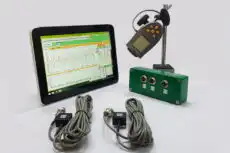
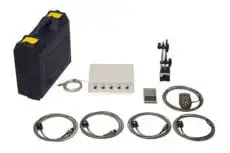
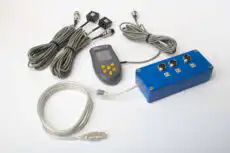
I felten kjennetegnes den elektriske signaturen til ubalanse av sin presise, nettfrekvens-låste frekvens, og å løse den tydelig er oppgaven for en bærbar analysator. Et to-kanals instrument som Balanset-1A måler vibrasjon ved motorrammmen og viser om den dominerende toppen treffer den nettlåste 100 Hz eller 120 Hz — som peker mot en elektrisk årsak — eller på 2× driftshastighet, som i stedet ville peke mot feiljustering. Den avgjørende bekreftelsen er fortsatt strømbrudds-testen: med det levende spekteret på skjermen, kutt strømmen og observer om den mistenkte toppen forsvinner umiddelbart dersom den er elektrisk, eller om den avtar med rotoren dersom den er mekanisk. Kalkulator for motorens elektriske defektfrekvens lister opp de eksakte nettrelaterte frekvensene — 2× nett, polpasserings-sideband og glidningsrelaterte komponenter — å søke etter, og gjør et forvirrende lavfrekvensspekter om til en sjekkliste.
9. Korreksjon, forebygging og overvåking
Korreksjon av tilførselssideubalanse
Når ubalansen er til stede ved innmatingspunktet, kontakt netteieren; ellers er feilen i bygningen. Kontroller og stram alle tilkoblinger i fordelingssystemet, verifiser at sikringer og automatsikringer er intakte, fordel enfaselaster jevnt over de tre fasene, og kontroller transformatorens tappinnstillinger. En overraskende stor andel av ubalanse i anlegget er ikke annet enn én løs eller oksidert terminal som bærer høyere motstand enn naboene.
Korreksjon av motorsidefeil
Dersom forsyningen er bekreftet balansert, men strømmen ikke er det, rengjør og stram motorterminalen og kabeltilkoblingene først, og test deretter for viklingsfeil ved hjelp av isolasjonsmotstands- og strømsignaturanalyse. En bekreftet intern viklingsfeil betyr omvikling eller utskifting av motoren — det finnes ingen feltreprasjon for en tur-til-tur-kortslutning.
Nedrating, installasjon og løpende overvåking
Der ubalansen ikke kan elimineres, følg NEMA-nedratingskurven og reduser lasten for å beskytte viklingene, og overvåk temperaturen nøye. Forebygg gjentakelse ved installasjon ved å verifisere spenningsbalansen ved motorterminalene før du setter strøm på, dimensjonere ledere for å minimere spenningsfallet, og bekrefte riktig stjerne-versus-trekant-tilkobling. I drift, ta periodiske spennings- og strømmålinger, innarbeid dem i en bredere tilstandsovervåking rutine med trendanalyse, vær oppmerksom på blåste sikringer eller utløste automatsikringer, og gjennomfør en strømkvalitetsundersøkelse der motorproblemer gjentar seg. Å behandle ubalanse som en parameter som skal følges over tid — snarere enn en feil som jages etter havari — er det som hindrer den i å stille og rolig forkorte levetiden til en hel motorbestand.
10. Ofte stilte spørsmål
Hva er forskjellen mellom spenningsubalanse og strømubalanse?
Spenningsubalanse er ulikheten mellom de tre forsyningsspenningene og er vanligvis årsaken; strømubalanse er ulikheten mellom de tre fasestrømmene og er den forsterkede effekten. Fordi motorens negativ-sekvens-impedans er lav, gir en liten spenningsubalanse en strømubalanse som er seks til ti ganger større – det er grunnen til at strøm er det mer sensitive målet for tidlig varsling.
Ved hvilken frekvens viser elektrisk ubalanse seg i vibrasjoner?
Ved dobbel nettfrekvens — 100 Hz ved 50 Hz forsyning eller 120 Hz ved 60 Hz forsyning — fordi negativ-sekvens-feltet modulerer magnetkraften i luftgapet med denne hastigheten. Rotorrelaterte elektriske feil gir sideband rundt 1× driftshastighet ved slipp-pol-passasjefrekvensen.
Hvordan skiller jeg elektrisk ubalanse fra mekanisk ubalanse eller feiltilpasning?
Bruk avstrømningstesten: kutt strømmen til motoren som er i drift mens du følger med på spektrumet. En ekte elektrisk komponent forsvinner øyeblikkelig, mens en mekanisk komponent avtar mens rotoren bremser ned. En nettsynchronisert topp på nøyaktig 100/120 Hz som ikke flytter seg med belastning, er også en pålitelig elektrisk indikator.
Hvilket nivå av spenningsubalanse er akseptabelt?
NEMA MG-1 anbefaler å holde spenningsubalansen under 1 % og krever nedrating over dette, og fraråder drift over 5 %. IEC, som bruker en symmetrisk-komponent-definisjon, tolererer opptil ca. 2 %. Å holde spenningsubalansen under 1 % er den mest effektive måten å holde strømubalansen innenfor den vanlig brukte feltgrensen på 10 %.
Hvorfor forårsaker en liten spenningsubalanse så mye oppvarming?
Asymmetrien skaper negativ-sekvens-strømmer som flyter gjennom motorens lave negativ-sekvens-impedans og avgir ekstra varme, mens én fase overbelastes. En spenningsubalanse på 3 % kan øke viklingtemperaturen med 18–25 % og omtrent halvere isolasjonslevetiden.
Kan en bærbar vibrasjonsanalysator oppdage elektrisk ubalanse?
Ja. En to-kanals analysator som Balanset-1A kan skille ut den nettsynchroniserte toppen på 100/120 Hz, la deg utføre avstrømningstesten og lese pol-passasje-sidebandene som skiller ubalanse på forsyningssiden fra en rotorfeil — alt uten et separat instrument for strømkvalitet.

