Entendendo os Sistemas de Proteção de Máquinas





Proteção de máquinas - também designada por proteção de equipamentos ou salvaguarda de máquinas - refere-se aos sistemas de monitorização e controlo que detectam automaticamente condições de funcionamento perigosas (vibração ultrapassando os limites de segurança, temperaturas excessivas, pressões anormais) e executam acções de proteção (alarmes e, em seguida, paragens automáticas) para evitar danos catastróficos no equipamento, riscos de segurança ou libertações para o ambiente. Na sua conceção, estes sistemas dão prioridade à prevenção de danos em detrimento da manutenção da produção e são construídos à prova de falhas: uma falha do sensor ou uma perda de energia conduz a máquina a uma paragem segura, em vez de permitir que continue a funcionar às cegas.
A proteção das máquinas é deliberadamente distinta da monitorização de condições. A monitorização do estado do equipamento acompanha o estado do equipamento para planear a manutenção, emitindo avisos precoces ao longo de semanas ou meses. Em contrapartida, um sistema de proteção fornece uma resposta de emergência imediata, executando uma paragem automática em segundos quando um limiar crítico é ultrapassado. Os dois são complementares - um ganha tempo de planeamento, o outro evita o estrondo - mas respondem a requisitos diferentes.
1. Componentes do sistema de proteção
Sensores (instalados de forma permanente)
- Sondas de proximidade medição do deslocamento do veio em relação à chumaceira.
- Acelerómetros montados nas caixas de rolamentos.
- Sensores de temperatura (RTDs e termopares).
- Transmissores de pressão e de caudal.
- Sensores de posição axial que observam a extremidade de impulso.
- Normalmente redundante - dois ou três sensores por parâmetro medido.
Hardware de monitorização
- Um processador dedicado ao sistema de proteção.
- Processamento de sinais em tempo real.
- Lógica de votação (2 em 2 ou 2 em 3).
- Saídas de relé que comandam a desativação.
- Separado do DCS/PLC para que a sua integridade não dependa da rede de controlo de processos.
Lógica de encerramento e actuadores
- Circuitos de disparo com ligações físicas (hardwired) — não apenas software.
- Válvulas solenóides para disparo de turbinas.
- Disjuntores para disparos de motores.
- Conceção à prova de falhas: a perda de energia provoca um disparo.
2. A norma API 670
Requisitos para as turbomáquinas
API 670 é o padrão da indústria para sistemas de proteção de máquinas:
- Efetivamente obrigatório para turbomáquinas acima de aproximadamente 10.000 HP.
- Especifica os tipos e quantidades de sensores.
- Define a lógica de votação e a redundância.
- Define os tempos de atraso do alarme e do disparo.
- Requer que o sistema seja independente do controlo do processo.
Configuração típica do sensor de acordo com a API 670
- Vibração radial: dois conjuntos de sondas de proximidade XY — quatro sondas por rolamento — que captam a vibração radial.
- Posição axial: duas sondas de deslocação axial.
- Keyphasor: dois referência de fase sensores.
- Temperatura da chumaceira: dois sensores de temperatura por rolamento.
- Total: normalmente 12-20 canais por máquina.
3. Proteção vs. Monitorização do estado
| Aspecto | Monitorização de Condição | Sistema de proteção |
|---|---|---|
| Propósito | Detecção precoce de falhas para planeamento | Prevenir danos catastróficos |
| Tempo de resposta | Horas a semanas | Segundos |
| Limiares | Menor (alerta antecipado) | Maior (perigo imediato) |
| Ações | Notificações, ordens de serviço | Desligamento automático |
| Foco na fiabilidade | Precisão | Funcionamento à prova de falhas |
| Redundância | Opcional | Obrigatório |
Integração
- As instalações modernas combinam ambas as funções numa única plataforma.
- Os mesmos sensores podem servir simultaneamente para proteção e monitorização do estado.
- Cada função utiliza o seu próprio processamento e níveis de alarme.
- As vias de proteção mantêm-se independentes e ligadas por cablagem física, em qualquer caso.
4. Parâmetros de proteção
Vibração
- Deslocação do veio: medição por sonda de proximidade, com um disparo típico de cerca de 25 mils (635 µm) pico a pico.
- Velocidade da caixa de rolamentos: um disparo de aproximadamente 0,5-0,6 in/s (12-15 mm/s) é típico.
- Aceleração: utilizados para proteção de alta frequência.
Estabelecer esses números de forma sensata significa relacioná-los com zonas de severidade reconhecidas; a orientação geral moderna, ISO 20816-1 (que substituiu a ISO 10816-1), enquadra a lógica de alarme e disparo, enquanto os limites específicos de cada máquina se encontram nas partes correspondentes da série ISO 20816 — por exemplo, a ISO 20816-3 (anteriormente ISO 10816-3) para máquinas industriais comuns, e para turbinas a vapor e geradores uma dedicada Calculadora de limites de vibração ISO 20816-2 transforma essas zonas em valores concretos.
Posição
- Posição axial: dispara com o movimento excessivo do veio, a assinatura clássica de chumaceira axial falha.
- Expansão diferencial: crescimento do rotor em relação ao crescimento do invólucro.
- Excentricidade: posição do rotor dentro do folga do rolamento, útil para detetar um arco térmico em marcha lenta.
Temperatura
- Temperatura do metal da chumaceira (normalmente um disparo de 110-120°C).
- Temperatura do óleo de drenagem da chumaceira.
- Temperaturas de enrolamento em motores e geradores - a monitor de temperatura da chumaceira do gerador ajuda a estabelecer limites realistas.
5. Votação e redundância
2-out-of-2 (lógica AND)
- Ambos os sensores têm de estar de acordo antes de a máquina disparar.
- Impede deslocamentos indevidos devido à falha de um único sensor.
- Risco: ambos os sensores têm de estar a funcionar - não há proteção se ambos falharem.
2 em 3 (votação por maioria)
- A concordância de dois ou três sensores provoca um disparo.
- A melhor fiabilidade, uma vez que tolera um sensor avariado.
- Mais caro (três sensores).
- Preferencialmente para máquinas críticas.
Bypass e testes
- Os canais individuais podem ser ignorados para testes ou manutenção.
- Os canais de proteção nunca podem ser desviados simultaneamente.
- Os controlos de bypass estão bloqueados com chave.
- Os bypasses são reiniciados automaticamente após um período de tempo definido.
6. Ensaios e manutenção
Ensaios funcionais
- Ensaios periódicos de todo o sistema, trimestrais a anuais.
- Simular condições de disparo.
- Verificar o encerramento é efetivamente executada.
- Exercitar todos os canais redundantes.
- Documentar os resultados.
Calibração do sensor
- Anualmente, ou de acordo com a especificação do equipamento.
- Verificar o ponto de ajuste de disparo.
- Testar o tempo de resposta global do sistema.
- Manter calibração registos.
Manutenção do sistema
- Manter os sensores limpos e funcionais.
- Verificar as fontes de alimentação.
- Verificar o funcionamento do relé e do atuador.
- Atualizar o software e o firmware conforme necessário.
7. Onde se enquadram os diagnósticos portáteis a par da proteção
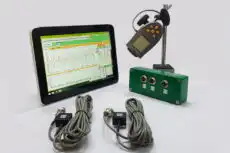
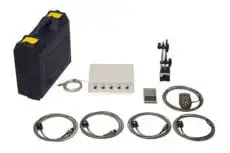
Um sistema de proteção instalado de forma permanente diz-lhe que uma máquina está em perigo e a desarma; raramente o informa por que. A resposta a essa questão da causa raiz é dada com diagnósticos portáteis. Quando um disparo de proteção assinala um aumento da deslocação do veio ou da vibração da chumaceira, um engenheiro faz o seguimento com um analisador portátil de dois canais, como o Balanset-1A, medindo 1× deslocamento, a amplitude e a fase nas próprias chumaceiras da máquina para distinguir o desequilíbrio do desalinhamento ou da folga — e, quando o desequilíbrio é a causa, corrigi-lo no local e verificar o resultado antes de a unidade voltar ao serviço. Desta forma monitorização de vibração, A proteção e o equilíbrio portátil formam um contínuo: a proteção previne a falha, a monitorização do estado prevê a falha e o diagnóstico no terreno corrige-a.
Os sistemas de proteção de máquinas são a rede de segurança que evita falhas catastróficas, desligando automaticamente o equipamento quando surgem condições perigosas. Enquanto a monitorização das condições fornece os avisos precoces que conduzem à manutenção planeada, os sistemas de proteção fornecem a resposta de emergência imediata que os torna obrigatórios em turbomáquinas críticas e equipamento rotativo de elevado valor, onde uma falha pode ter graves consequências operacionais, de segurança ou ambientais.

