Aylanuvchi Mashinalardagi Val Yoriqlarini Tushunish


A shaft crack aylanuvchi valda charchash, stress konsentratsiyasi yoki material nuqsonidan kelib chiqqan sinish yoki uzilishdir. Yoriqlar deyarli har doim sirtda boshlanib, ichkariga qarab tarqaladi, maksimal tortish stressiga perpendikulyar yo'nalishda rivojlanadi. Aylanuvchi mashinalarda ular eng xavfli nuqsonlar qatoriga kiradi, chunki yoriq bir necha soat yoki kun ichida ko'rinmas soch yo'liga aylangan holdan to'liq val sinishiga o'tishi mumkin, bu esa halokatli, hayot uchun xavfli nosozlikka olib kelishi mumkin. Yagona ijobiy tomoni shundaki, rivojlanayotgan yoriq o'zini vibration signalida — eng xarakterli tarzda ortib boruvchi 2× (har bir aylanishda ikki marta) komponenti orqali — namoyon qiladi, shu sababli intizomli tebranish tahlili uni uzilishidan oldin aniqlash uchun haqiqiy imkoniyat beradi.
1. Ta'rif: Val Yoriqi Nima?
Mexanik jihatdan, yoriq — bu val o'z uzluksizligini va shu bilan birga qattiqligini yo'qotgan mintaqadir. Val aylanganda, yoriq eguvchi stressning o'zgarishi ostida navbat bilan ochiladi va yopiladi, va bu “nafas olish” valning qattiqligini burchak holatiga qarab o'zgartirishiga olib keladi. Ushbu assimetriya quyida muhokama qilinadigan tashxis belgilarining asosi bo'lib, u haqiqiy ko'ndalang yoriqni doimiy shaft bow or a simple unbalancedan ajratib turadi. Keng qamrovli hodisa, yoriq butun rotorning xatti-harakatini o'zgartirish darajasiga yetganda, ba'zan cracked rotor.
2. Val Yoriqlarining Keng Tarqalgan Sabablari
Tsiklik stresslardan kelib chiqqan charchash
Aylanuvchi mashinalardagi asosiy sabab bo'lib, charchash har bir stress tsiklida zarar to'playdi:
- Egilish charchoqi: notekis qattiqlikka ega yoki markazdan siljigan yuklamalarga ega aylanuvchi val to'liq teskari tsiklli eguvchi stressni boshdan kechiradi.
- Torsion charchashi: quvvat uzatish vallarida tebranuvchi moment haydaydi burmalama tebranishni and fatigue.
- Yuqori tsiklli charchash: millionlab tsikllar yillar davomida to'planadi, shuning uchun hatto kichik stresslar ham vaqt o'tishi bilan yoriqni boshlashi mumkin.
- Stress konsentratsiyasi: kalit uyalari, ko'ndalang teshiklar, yoy bo'ylama o'tishlar va boshqa geometrik uzilishlar stressni mahalliy ravishda kuchaytiradi va odatda yoriq boshlanish joylari hisoblanadi.
Ish sharoitlari
- Haddan tashqari muvozanatsizlik: yuqori markazdan qochma kuch davriy egilish kuchlanishini oshiradi.
- Misalignment: dan kelib chiqadigan egilish momentlari misalignment charchoq jarayonini tezlashtiradi.
- Rezonans rejimida ishlash: rezonans chastotasida yoki unga yaqin ishlash critical speed katta og'ishlar va kuchlanishlarga olib keladi.
- Overload: loyiha chegaralaridan tashqari ishlash.
- Issiqlik kuchlanishi: tez qizish yoki sovish va keskin harorat gradientlari, bu esa o'tish davridagi thermal bow.
Material va ishlab chiqarish nuqsonlari
- Materialdagi qo'shimchalar: val materialida shlak, bo'shliqlar yoki begona moddalar.
- Noto'g'ri termik ishlov berish: yetarli darajada qattiqlashtirilmagan yoki bo'shatilmagan.
- Mexanik ishlov berish nuqsonlari: kuchlanish o'chog'i sifatida ta'sir etuvchi asbob izlari, chuqurchalar yoki tirnalishlar.
- Korroziyadan chuqurchalar hosil bo'lishi: yoriq hosil bo'lish joyi bo'lib xizmat qiluvchi yuzadagi chuqurchalar.
- Fretting: press-o'tirg'ich ulanish yuzalarida yoki pazlarda, bu yerda mikro-harakatlar yuzani shikastlaydi.
Ish jarayonidagi hodisalar
- Haddan tashqari tezlanish hodisalari: yuqori kuchlanishlarni keltirib chiqaruvchi favqulodda yoki tasodifiy haddan tashqari tezlanish.
- Severe rubs: rotor rub aloqa issiqlik hosil qiladi va mahalliy kuchlanish konsentratsiyasiga olib keladi.
- Zarba yuklanishi: texnologik buzilishlar yoki mexanik zarbalardan kelib chiqadigan to'satdan yuklamalar.
- Avvalgi ta'mirlash ishlari: qoldiq kuchlanishlarni qoldiradigan payvandlash yoki mexanik ishlov berish.
3. Darz ketgan valning tebranish belgilari
Xarakterli 2× komponenti
Ko'ndalang val darzining asosiy belgisi — yaqqol ko'zga tashlanadigan 2× (ikkinchi garmonik) komponenti bo'lib, uning orqasidagi mexanizm aniq tushunishga arziydi:
- Val aylanganda darz har bir to'liq aylanishda ikki marta ochiladi va yopiladi.
- Darz siqilish tomonida bo'lganida (aylanishning pastki qismida), u yopiladi va val qattiqroq bo'ladi.
- U tortilish tomoniga (aylanishning yuqori qismiga) o'tganda, darz ochiladi va val egiluvchanligi ortadi.
- Qattiqlikdagi bu har aylanishda ikki martali o'zgarish o'zi 2× majburlovchi funksiya hisoblanadi.
- 2× amplitudasi darz chuqurlashgan sari va qattiqlik assimetriyasi oshgan sari o'sib boradi — shuning uchun trend mutlaq darajasi kabi muhim ahamiyat kasb etadi.
Qo'shimcha tebranish ko'rsatkichlari
- 1× changes: o'zgargan qattiqlik va qoldiq egilish rivojlanishi natijasida 1× komponentining asta-sekin ko'tarilishi.
- Yuqori garmoniklar: 3× and 4× may appear as severity grows.
- Phase shifts: the phase ishga tushirish yoki to'xtash paytida va turli tezliklarda faza burchagining o'zgarishi.
- Tezlikka bog'liq xatti-harakat: tebranish tezlik bilan chiziqsiz tarzda o'zgarishi mumkin.
- Harorat sezuvchanligi: ko'rsatkichlar yoriq ochilgani yoki yopilgani sayin issiqlik kengayishini kuzatishi mumkin.
Ishga tushirish va to'xtatish paytidagi xatti-harakat
- 2× komponent o'tish jarayonlarida g'ayritabiiy xatti-harakat namoyon etadi.
- A Bode plot 2× qo'zg'alish kritik tezliklarning yarmidan o'tganda ikkita rezonans cho'qqisini ko'rsatishi mumkin.
- 1× komponentining faza o'zgarishi odatiy muvozanatsizlik javobidan sezilarli darajada farq qilishi mumkin.
4. Aniqlash usullari
Tebranishni monitoring qilish va dala o'lchovlari
Ogohlantirish spektral va bosqichma-bosqich bo'lgani uchun muntazam o'lchov mudofaaning birinchi chizig'i hisoblanadi:
- Trending: watch the 2×/1× ratio over time; a steady climb is a warning, and a ratio above roughly 0.5 warrants investigation. Sudden pattern changes are equally suspicious.
- Spektral tahlil: routine FFT tarixiy ma'lumotlar bilan taqqoslangan o'lchovlar baseline, 2× cho'qqining paydo bo'lishini yoki o'sishini aniqlaydi.
- O'tkinchi tahlil: sharsharasimon diagrammalar hamda ishga tushirish va to'xtatish paytidagi Bode grafiklari kritik tezlikdan o'tishda g'ayritabiiy xatti-harakatni aniqlaydi.
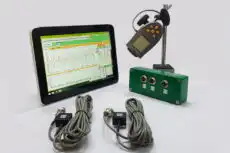
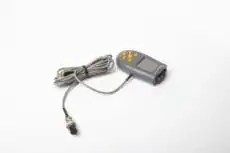
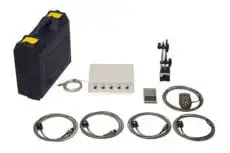
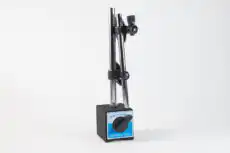
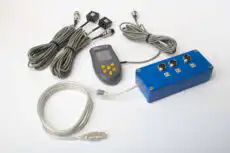
Capturing amplitude and phase of the 1× and 2× components is exactly the measurement a portable two-channel analyser makes routine. With a phase-referenced instrument such as the Balanset-1A, a technician can log the 1× and 2× vectors at the bearings during normal running and on each coastdown, building the trend that distinguishes a benign 2× from one that is marching upward — the difference between a planned shutdown and an unplanned wreck.
Tebranishsiz usullar
Shubhali tebranish tendentsiyasi doimo bevosita tekshirish orqali tasdiqlanishi kerak noyovlovchi sinov:
- Magnit zarrachalar bilan tekshirish (MPI): kirish mumkin bo'lgan ferromagnit vallardagi sirt va sirt yaqinidagi yoriqlarni yuqori ishonchlilik bilan aniqlaydi; muntazam rejalashtirilgan texnik ko'riklar uchun standart usul.
- Ultratovush bilan sinash (UT): ichki va sirt yoriqlarini aniqlaydi va tebranish belgilari paydo bo'lishidan oldin ham topishi mumkin; maxsus uskunalar va malakali xodimlarni talab qiladi, muhim vallar uchun tanlangan usul hisoblanadi.
- Bo'yoqli penetrant bilan tekshirish: tozalash va sirt tayyorlashni talab qiladigan oddiy sirt-yoriq aniqlash usuli; rejalashtirilgan to'xtash davrida kirish mumkin bo'lgan joylarda foydali.
- Eddy-tok bilan sinash: kontaktsiz sirt yorig'ini aniqlash, avtomatlashtirilgan tekshiruvga mos keladi va magnit hamda magnit bo'lmagan materiallarda ishlaydi.
5. Munosabat va tuzatuvchi choralar
Aniqlanganida zudlik bilan ko'rilishi lozim chora-tadbirlar
- Monitoring chastotasini oshiring: oylik rejimdan haftalik yoki kunlik rejimga o'ting.
- Ish og'irligini kamaytiring: imkon bo'lsa tezlik yoki yuklamani pasaytiring.
- To'xtatishni rejalashtiring: eng yaqin xavfsiz imkoniyatda ta'mirlash yoki almashtirish ishlarini jadvalga kiriting.
- Perform NDE: yoriq mavjudligini tasdiqlang va uning jiddiyligini bevosita baholang.
- Xavfni baholash: ishlatishni davom ettirishning xavfsizligini rasman hal qiling.
Uzoq muddatli yechimlar
- Valani almashtirish: tasdiqlangan yoriq uchun eng ishonchli chora.
- Ta'mirlash (cheklangan hollarda): ba'zi yoriqlarni mexanik yo'l bilan olib tashlash va payvandlash bilan to'ldirish mumkin, lekin faqat mutaxassis baholashidan so'ng.
- Ildiz sababini tahlil qilish: yoriq nima sababdan paydo bo'lganini aniqlang, shunda u qaytarilmaydi.
- Konstruktiv o'zgartirishlar: stress kontsentratsiyalarini kamaytiring, material tanlovini yaxshilang yoki ish rejimini o'zgartiring.
6. Profilaktika strategiyalari
Design phase
- O'tkir burchaklar va kuchlanish to'planishlarini bartaraf eting.
- Diametr o'zgarish joylarida katta radius bo'yicha yumaloqlashlardan foydalaning.
- Kuchlanish darajasi va ish muhitiga mos materiallarni belgilang.
- Muhim geometriya uchun chekli elementlar usulida kuchlanish tahlili o'tkazing.
- Charchoqqa chidamlilikni oshirish uchun droblash bilan ishlov berish yoki nitratsiyalash kabi sirt ishlovlarini qo'llang.
Ishlab chiqarish bosqichi
- Maintain good balanslashtirish sifati tsiklik egilish kuchlanishlarini minimallashtirish uchun.
- Aniq o'rnatishni ta'minlang.
- Kritik aylanish tezliklarida uzoq muddatli ishlashdan saqlaning.
- Haddan tashqari tezlashish hodisalarining oldini oling.
- Isitish va sovitish tartib-qoidalariga rioya etib, issiqlik kuchlanishlarini nazorat qiling.
Texnik xizmat ko'rsatish bosqichi
- Tegishli noyoviy tekshirish usullaridan foydalanib muntazam tekshirib turing.
- Tebranishni kuzatish trending dastturini dastlabki alomatlarni aniqlash uchun o'tkazing.
- Charchoq kuchlanishlarini past ushlab turish uchun davriy ravishda balanslovka qiling — bevosita ob'ektda field balancing bu rotorni demontaj qilmasdan amalga oshirishni amaliy imkon beradi.
- Korroziyadan himoya va qoplamalarni saqlang.
Val yoriqlar aylanadigan mexanizmlardagi eng og'ir nosozlik turlaridan biri bo'lib, ularni o'tkazib yuborish aktivlarning yo'q bo'lib ketishi va odamlar hayotining xavf ostiga qo'yilishi bilan o'lchanadi. Birgalikda qo'llaniladigan usullar ishlaydi: xarakterli 2× imzoni erta aniqlash uchun tebranishlarni monitoring qilish va tebranish faqat ko'rsatmalar bergan narsani tasdiqlash va o'lchamlash uchun davriy noyoviy tekshirish. Birgalikda ular rejalashtirilgan va nazorat ostidagi texnik xizmat ko'rsatishga imkon beradi — va tinch sochiq yoriqlari to'satdan kuchli parchalanishga aylanishining oldini oladi.

