Home → Rotor Balancing as a Business
Rotor Balancing as a Business: Service Prices, Equipment, DIY Machines and ROI
The complete business guide to field balancing and vibration diagnostics: what on-site balancing services actually cost, when owning an instrument beats hiring a contractor, what equipment you need to start a balancing service, how to build or retrofit a balancing machine, and how workshops and technicians turn a portable balancer into a steady income stream. Based on 10+ years of Vibromera support experience with service companies, workshops and farmers in 50+ countries.


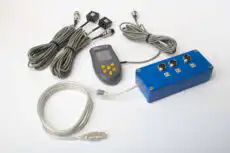
- Who pays for balancing — and why
- On-site balancing service: prices
- Instrument vs contractor: the ROI math
- Rent or buy a portable balancer?
- Equipment to start a balancing service
- Balancing software for Windows
- Training: how to learn field balancing
- DIY balancing machine: what to build it from
- Sensors & measuring system for a DIY machine
- Retrofitting an old balancing machine
- How to make money on vibration diagnostics
- Real numbers from the field
- FAQ
1. Who Pays for Balancing — and Why the Demand Is Steady
Every rotating machine develops unbalance over its life: blades wear unevenly, repairs and welding add mass, dirt cakes on, hammers and knives get replaced, shafts are re-machined. The result is always the same — vibration that destroys bearings, cracks welds, loosens bolts and shakes operator cabins. Balancing is not a one-time factory operation; it is recurring maintenance, and that is exactly what makes it a service market.
The customers who generate steady demand for field balancing:
- Farmers and agricultural contractors — mulchers, flail mowers, choppers, combine harvester rotors. Rotors meet stones and stumps, knives and hammers wear constantly. In Vibromera’s support statistics, agricultural machinery is the single largest category of balancing jobs worldwide.
- HVAC and industrial fans — ventilation systems in factories, commercial buildings, ships, mines and grain dryers. A fan that vibrates gets shut down by maintenance; someone has to balance it in place, because dismounting the impeller costs far more than the balancing.
- Sawmills, wood and biomass processing — chippers, shredders, planer heads, crushers. Heavy rotors, brutal duty cycles, expensive downtime.
- Repair workshops — driveshaft (cardan) shops, electric motor rewinders, pump repair shops, machining businesses that re-build rotors and need to hand them back balanced.
- Plants with rotating equipment — crushers, centrifuges, separators, pulp and sugar mills, quarries. Some outsource balancing; the smarter ones eventually bring it in-house.
Two facts define the economics of this market. First, vibration problems stop production, so customers pay quickly and value response time over price. Second, the machine usually cannot travel — a 3-tonne mulcher or a rooftop fan will not be shipped to a balancing shop, so the service must come to the machine. That is why field (on-site, in-situ) balancing with a portable instrument — not a stationary balancing machine — is the core of this business.
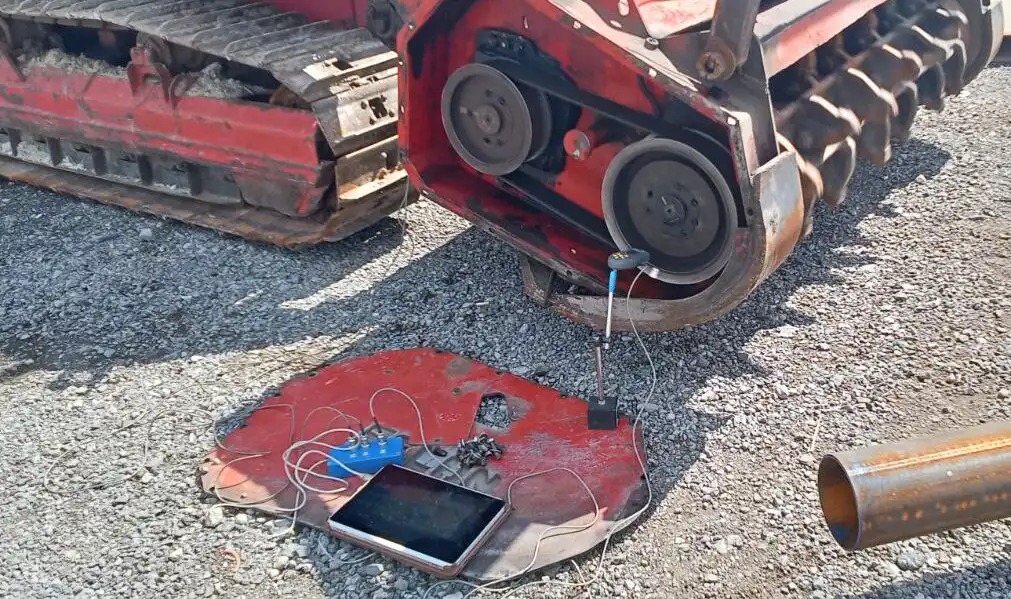
2. How Much Does On-Site Rotor Balancing Cost?
If you are deciding whether to hire a contractor or offer the service yourself, start with what the market charges. Prices vary by country, but the structure is remarkably consistent: a call-out fee (travel), a per-machine or per-hour rate, and a surcharge for urgency, size and access difficulty.
| Job type | Typical price (EU) | Typical price (US) | Time on site |
|---|---|---|---|
| Mulcher / flail mower rotor (2 planes, on-site) | €350 – 850 | $500 – 1,100 | 2 – 4 h |
| Industrial fan, in place | €350 – 950 | $500 – 1,200 | 1.5 – 3 h |
| Driveshaft / cardan (on the vehicle or on a stand) | €180 – 480 | $240 – 600 | 1 – 2 h |
| Crusher / shredder / chipper rotor | €600 – 1,800 | $850 – 2,400 | 3 – 8 h |
| Vibration measurement + written report (no correction) | €180 – 480 | $240 – 600 | 0.5 – 1.5 h |
| Specialist day rate (complex or multiple machines) | €700 – 1,800 / day | $950 – 2,400 / day | — |
| Travel | €0.5 – 1.5 per km, or a fixed call-out fee | — | |
These are indicative market ranges compiled from what Vibromera customers — both service providers and their clients — report across Europe and North America; your local market may sit above or below them. Emergency and weekend call-outs commonly run 1.5–2× the standard rate.
What drives the price up within those ranges:
- Rotor size and mass — heavier correction weights, more welding, sometimes staged balancing at several speeds;
- Mechanical condition — in roughly 90% of “it won’t balance” cases the real problem is bearing play, cracks or resonance, and the specialist first has to diagnose that (see the diagnostic tree). Honest contractors bill diagnostics; dishonest ones bill endless “balancing”;
- Access — rooftop fans, confined ducts, machines that must be partially dismantled;
- Urgency — a stopped production line pays whatever gets it running today.
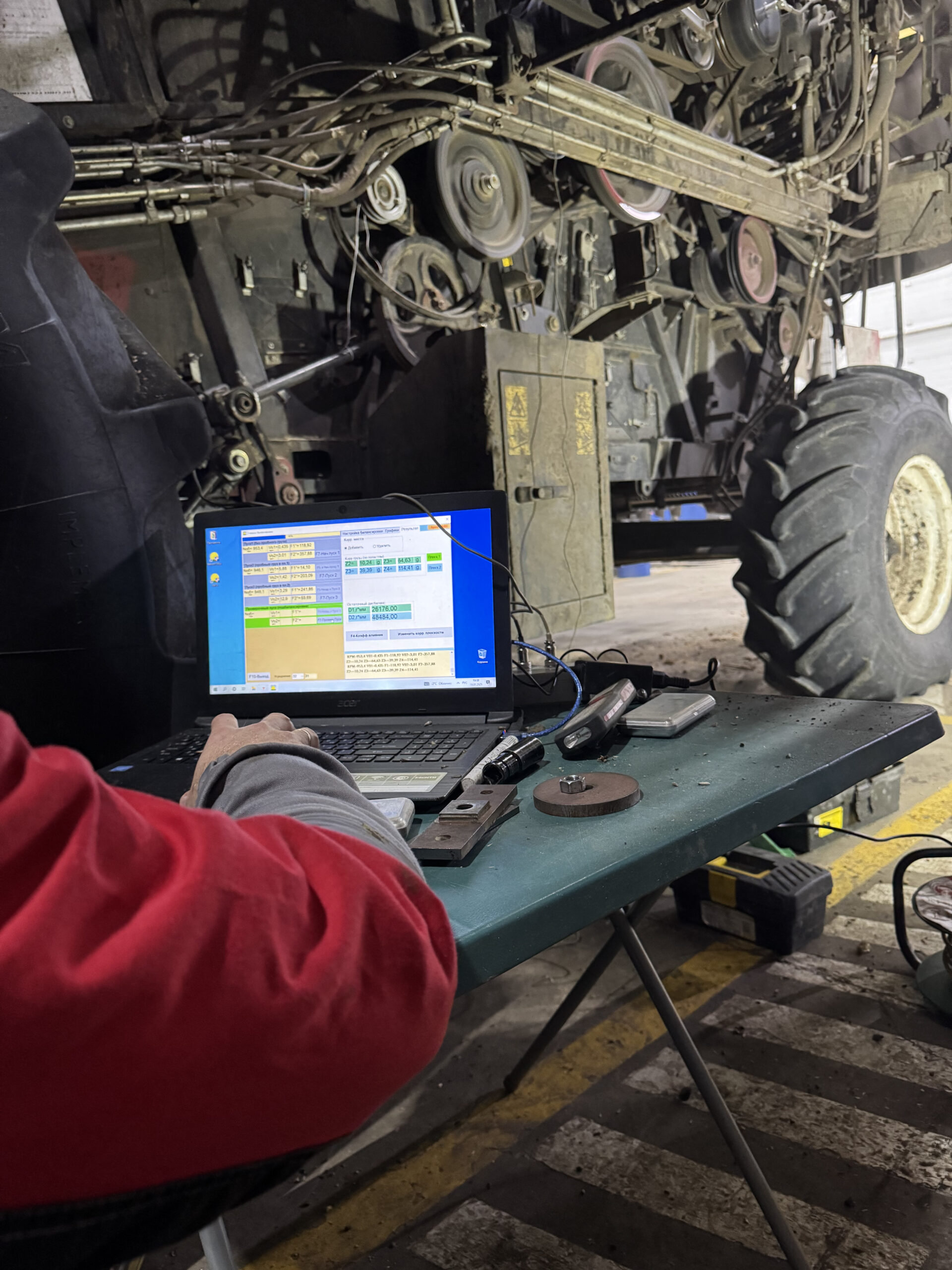
3. Buying an Instrument vs Hiring a Contractor: The ROI Math
The question “is it worth buying a balancing instrument instead of paying a contractor?” has a numerical answer. Take real numbers:
- Contractor visit: €500–850 per machine (mid-range from the table above, before travel);
- Portable two-plane balancer (Balanset-1A, full kit with sensors, tachometer, scales and software): €1,975, one-time. No subscriptions, free software updates, no annual calibration requirement;
- Consumables per job: steel plate for weights, cutting/welding — negligible, typically under €10.
| Scenario | Jobs per year | Contractor cost / year | Own instrument | Break-even |
|---|---|---|---|---|
| Farmer, 2 mulchers, seasonal balancing | 2 – 4 | €1,000 – 3,400 | €1,975 once | Season 1 – 2 |
| Agricultural contractor, machinery fleet | 6 – 12 | €2,900 – 10,000 | €1,975 once | First 3 – 4 jobs |
| Repair workshop (motors, driveshafts, pumps) | 20 – 100+ | not viable to outsource | €1,975 once | First month |
| Plant with fans/crushers + annual vibration audit | 4 – 10 | €2,000 – 8,500 | €1,975 once | Year 1 |
Three costs that the simple table hides — and that usually tip the decision further toward owning:
- Waiting time. A contractor comes when the contractor can. A mulcher that shakes itself apart in mowing season loses working days waiting; the repair bill for destroyed bearings, cracked housings and torn mounts routinely exceeds the balancing fee several times over.
- Repeat visits. Balancing is needed after every significant repair: new hammers, a welded crack, a replaced bearing, a straightened shaft. With your own instrument a check run takes 15–30 minutes; with a contractor it is another invoice.
- Diagnostics you now get for free. A two-channel instrument with FFT spectrum is also a vibrometer and vibration analyzer. You see bearing condition, misalignment signatures and resonances on every machine you check — before they become breakdowns.
When the contractor is still the right answer: if you expect one or two balancing jobs in the machine’s whole life, if your rotors require 3–4 correction planes with intermediate supports (that is specialist territory with a multi-plane instrument such as the Balanset-4), or if nobody on your team is willing to spend a few days learning the procedure. Owning an instrument means owning the skill; the tool calculates the weights, but a human still welds them on.
4. Renting a Portable Balancer vs Buying One
The rental question comes up constantly and deserves a straight answer: a meaningful rental market for portable balancers barely exists. There are three practical reasons:
- The skill travels with the operator, not the box. A first-time user with a rented instrument and no support faces the same learning curve as an owner — trial-weight selection, angle counting, resonance traps — but under time pressure, on the one machine that is already in trouble. Most “rented balancer” stories end as expensive lessons in why readings would not stabilize (usually a mechanical fault, not the instrument — see the 13 classic mistakes).
- The economics are upside down. Where rentals exist, a week of rental plus deposit typically costs €350–700 — up to a third of the purchase price of an instrument you keep forever. Two or three rentals equal ownership.
- Calibration and trust. A rental unit’s sensors and cables have lived hard lives in unknown hands. With your own kit you know the calibration coefficients are right and the cables are whole.
The honest decision tree: one-off need → hire a balancing service. Recurring need → buy the instrument. Renting occupies the narrow middle where you want to try the workflow before committing — and even that is better served by the money-back evaluation practice common among instrument vendors (Vibromera included: if the instrument does not fit your task, that is a support conversation, not a sunk cost).
Run the numbers on your own machines
Tell us what you balance — rotor type, mass, RPM, how often it needs correction — and we will tell you honestly whether a €1,975 Balanset-1A pays off in your case, or whether a contractor is the cheaper path. Real engineering advice, drawn from hundreds of customer setups; no pressure.
5. Equipment to Start a Balancing Service: The Complete List
A field balancing and vibration diagnostics service is one of the cheapest industrial services to enter. There is no workshop, no lift, no stock of spare parts — the entire toolset fits in two cases. Here is the complete starter list with realistic budgets:
| Item | Purpose | Budget |
|---|---|---|
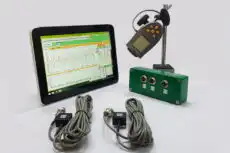
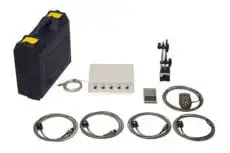
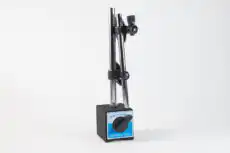
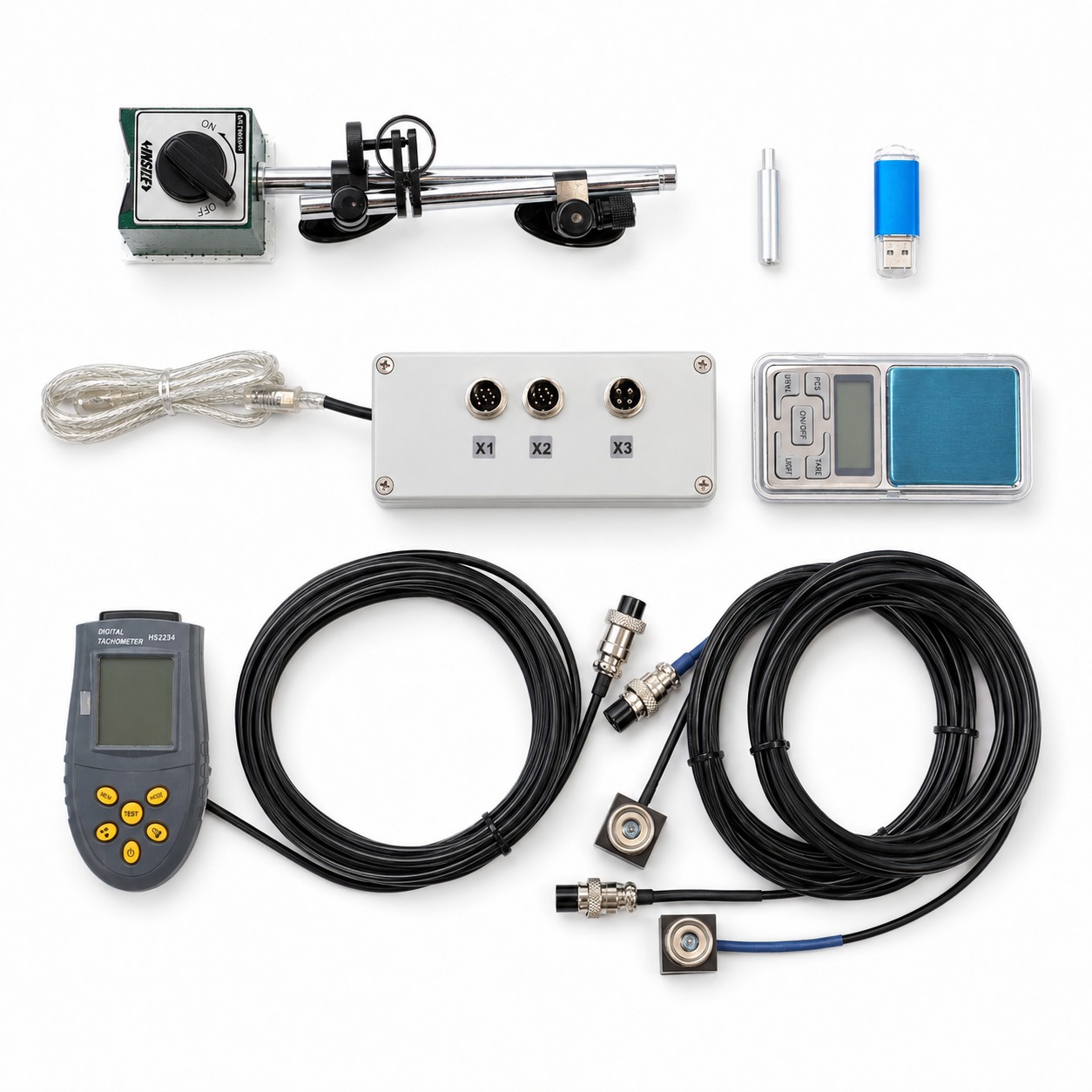
| Portable two-plane balancer (measuring unit, 2 vibration sensors, laser tachometer, magnetic stand, scales, reflective tape, software) | The core: measurement, calculation, reporting | €1,975 (Balanset-1A Full Kit) |
| Windows laptop | Runs the software; any office-grade machine (i3 / 4 GB) is enough | €0 – 400 (an existing one works) |
| Angle gauge or protractor, chalk/markers, tape measure | Marking correction angles on the rotor | €20 – 50 |
| Steel plate / bar stock assortment | Material for trial and correction weights | €30 – 60 |
| Scales up to 2 kg (if you serve mulchers) | Mulcher correction weights often exceed the stock 500 g scales | €20 – 40 |
| Angle grinder + portable welder (or the customer’s welder) | Cutting and fixing weights; farms and plants usually have their own | €0 – 400 |
| Hose clamps, bolts, washers, threadlocker | Weight fixing on shafts and thin impellers where welding is not an option | €20 – 40 |
| Cardboard shade / 3D-printed tachometer hood | Field work in sunlight — the laser tachometer needs shade (details) | €0 – 10 |
| PPE: glasses, gloves, hearing protection | You work next to running machinery | €30 – 60 |
Total: roughly €2,100–3,000 all-in — recovered, at market service rates, within the first 4–5 invoiced jobs. Compare that with almost any other industrial service trade: a diagnostics-grade vibration analyzer alone (Adash, Pruftechnik class) runs $6,000–50,000 before you have measured anything.
What you deliberately do not need to start: an office, a stationary balancing machine, a truck full of tooling, or certification in most jurisdictions (balancing to ISO 21940 / ISO 10816 tolerances is a competence, not a licensed activity in most countries — check your local rules for work at industrial sites, which usually means basic site-safety induction rather than a balancing license).
6. Balancing Software for Windows: What It Must Do
Searching for “rotor balancing software for Windows” usually means one of two things: software to pair with a measuring instrument, or software to drive a DIY machine. Either way, the checklist is the same. Good field-balancing software must:
- Measure two channels simultaneously plus a tachometer channel — two-plane rotors cross-affect each other, so sequential single-channel measurement does not work;
- Show amplitude and phase of the 1× component (the part balancing actually removes) separately from overall vibration;
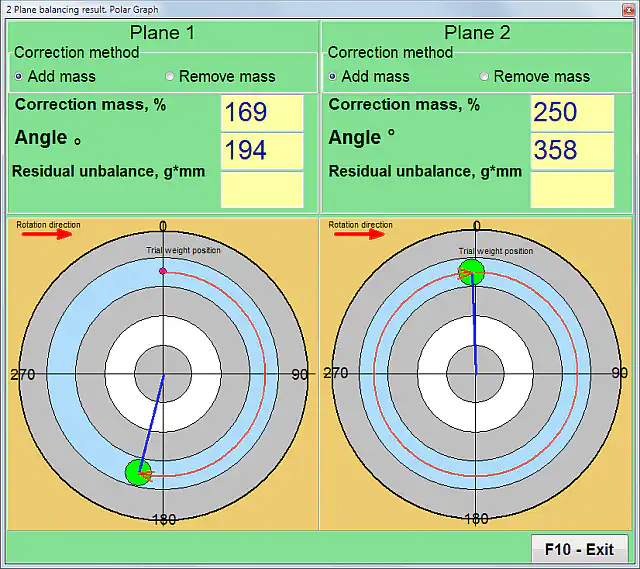
- Calculate correction masses and angles by the influence-coefficient method, in grams at your radius — including split onto fixed positions (blades, bolt holes);
- Display an FFT spectrum — so you can tell unbalance from misalignment, looseness and bearing damage before you weld anything;
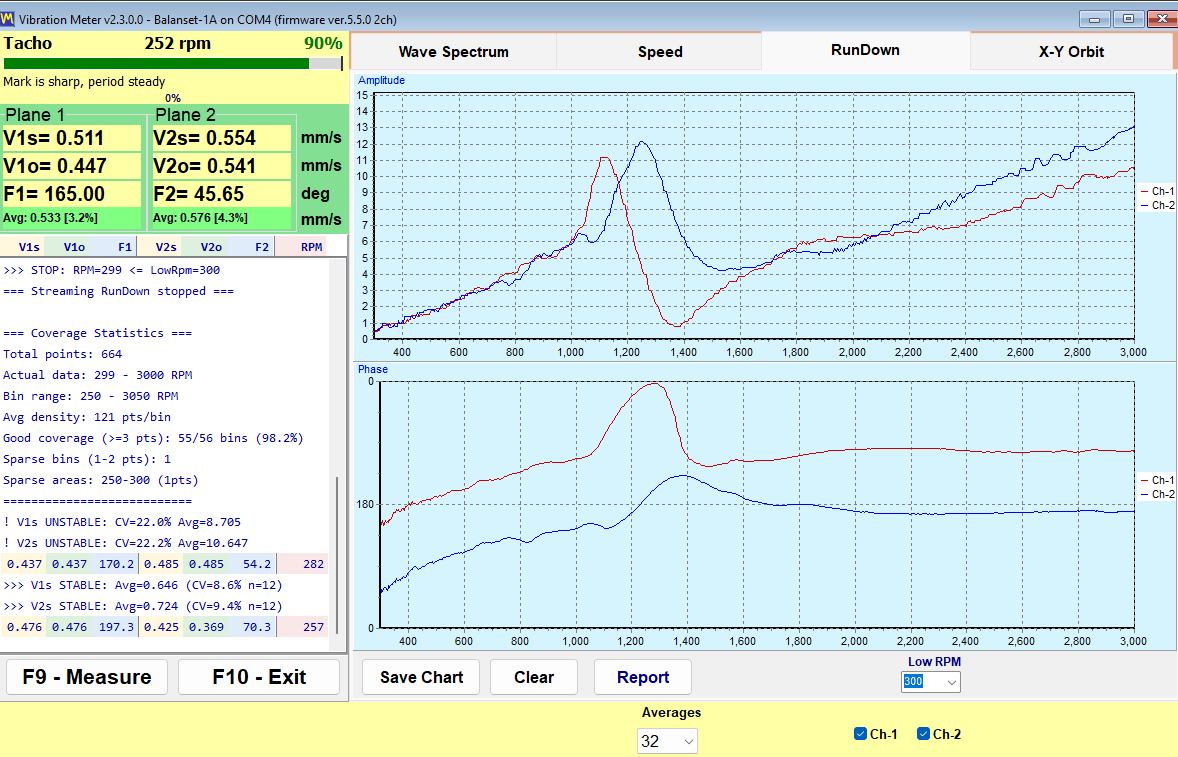
- Record a coast-down (RunDown) chart — amplitude and phase versus RPM — to find resonance zones and pick a safe balancing speed;
- Keep a rotor database (influence coefficients per machine make repeat jobs a single run) and generate a customer-ready report;
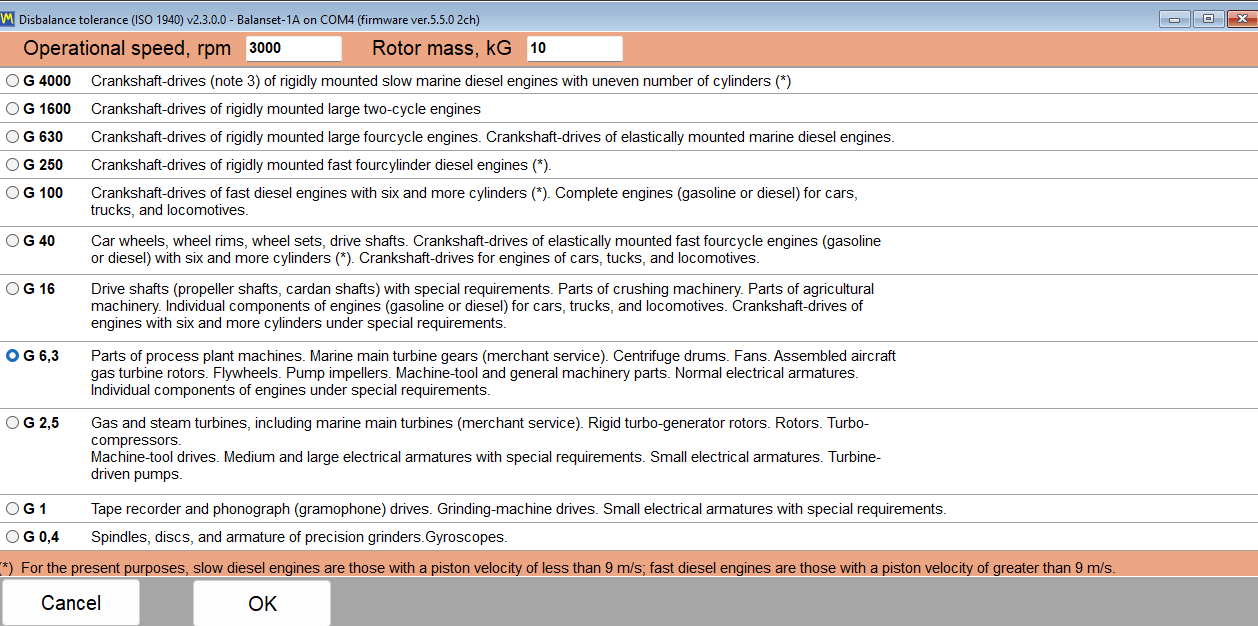
- Check results against ISO 21940-11 (G grades) and ISO 10816 vibration zones with a built-in tolerance calculator.
The Balanset-1A software ticks that entire list and runs on any Windows 7/8/10/11 laptop or full-Windows tablet (Android and iOS are not supported — a deliberate choice: field work needs a physical USB connection, stable drivers and a screen you can read in sunlight next to a welder). Software updates are free for life, install on any number of laptops, and require no subscription; the update server delivers both software and instrument firmware in one click. Reports are template-based (HTM/RTF), so you can put your own company letterhead on the document your customer receives.
7. Training: How to Learn Field Balancing (and How Long It Takes)
There is no university degree for field balancing, and none is needed. The skill decomposes into three layers, and honest timelines look like this:
-
The procedure itself — one day
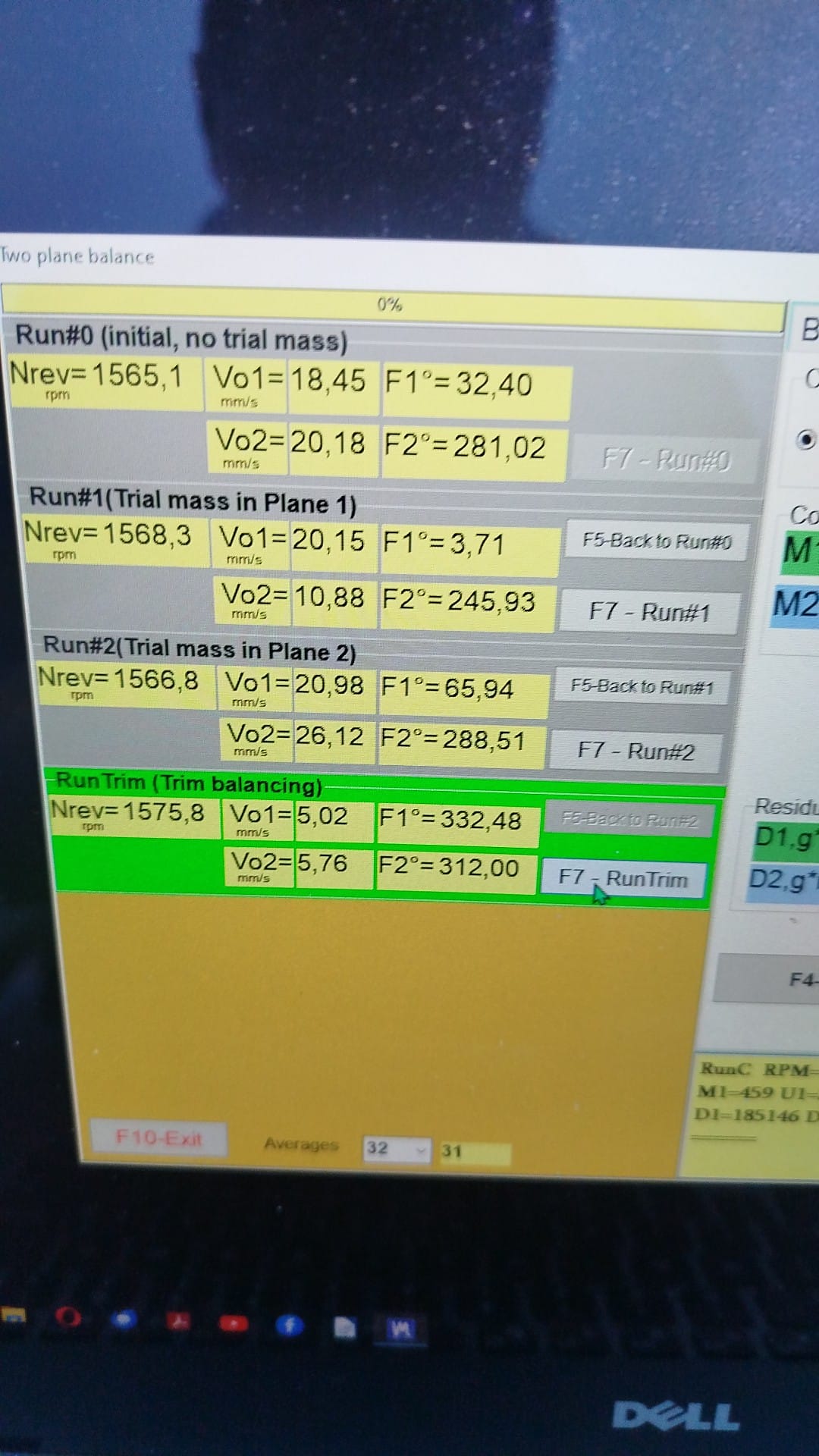
Run #0 → trial weight in plane 1 → trial weight moved to plane 2 → install calculated weights → trim run. The workflow is mechanical and the software leads you through it. Practice on a shop fan or an electric motor with a deliberately added bolt as “unbalance”: most first-timers get a severalfold vibration drop on their first evening. The full procedure with screenshots is in the knowledge base: Balancing Step by Step.
-
The judgment layer — first 5–10 real jobs
Choosing a trial weight that moves amplitude or phase by 20–30%; counting the correction angle from the trial-weight position in the direction of rotation; installing half the calculated mass on nonlinear machines; keeping RPM constant between runs; never moving the tachometer mark mid-series. Every one of these rules exists because real users broke it — they are catalogued, with photos, in Common Mistakes.
-
Diagnostics — the profitable layer, ongoing
Reading the FFT spectrum (1× = unbalance; 2× and harmonic “forests” = misalignment or looseness; high-frequency carpet = bearings), hunting resonances with a coast-down chart, and — the most valuable professional skill of all — telling a customer “your machine needs a bearing, not balancing” before wasting a day. In ~90% of “it won’t balance” calls the culprit is mechanical. The full decision tree: Vibration Won’t Go Down.
Learning resources that come free with the instrument ecosystem — no paid courses required:
- The operation manual in 20+ languages;
- The 12-chapter knowledge base distilled from hundreds of real support conversations — including 13 case studies with photos and a support playbook of verbatim explanations you can reuse with your own customers;
- The Vibromera YouTube channel with machine-specific walkthroughs;
- The user forum and free e-mail support — real support engineers who have talked users through 24-tonne rotors and first-ever fan jobs alike. Priority WhatsApp support exists as an optional subscription for service companies that live on response time.
8. DIY Balancing Machine: What to Build It From
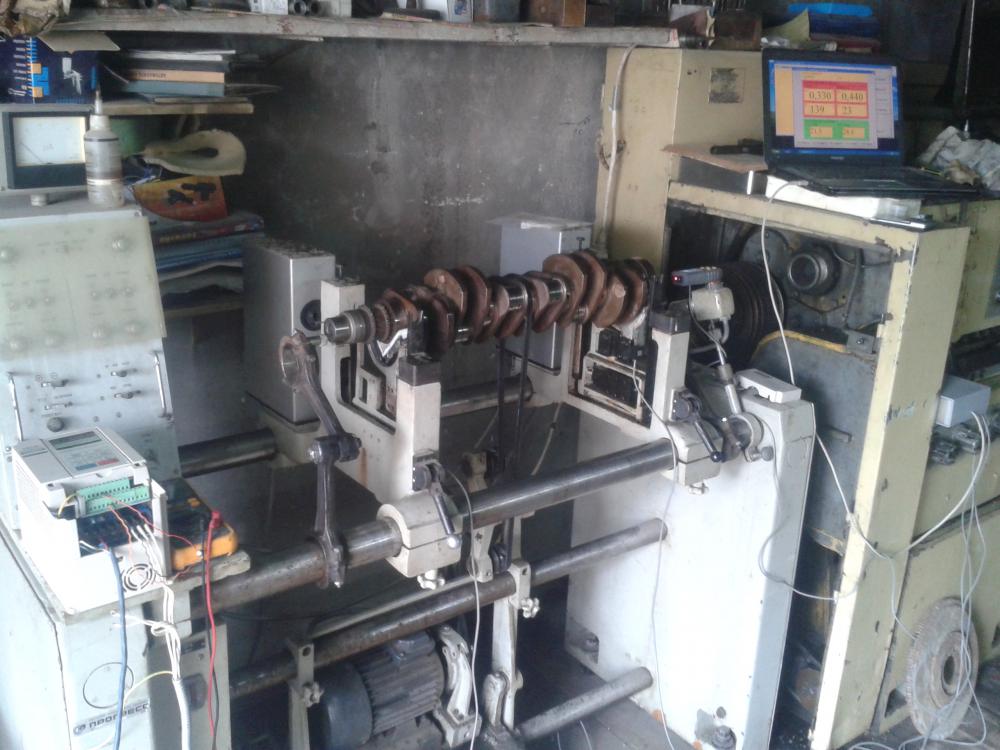
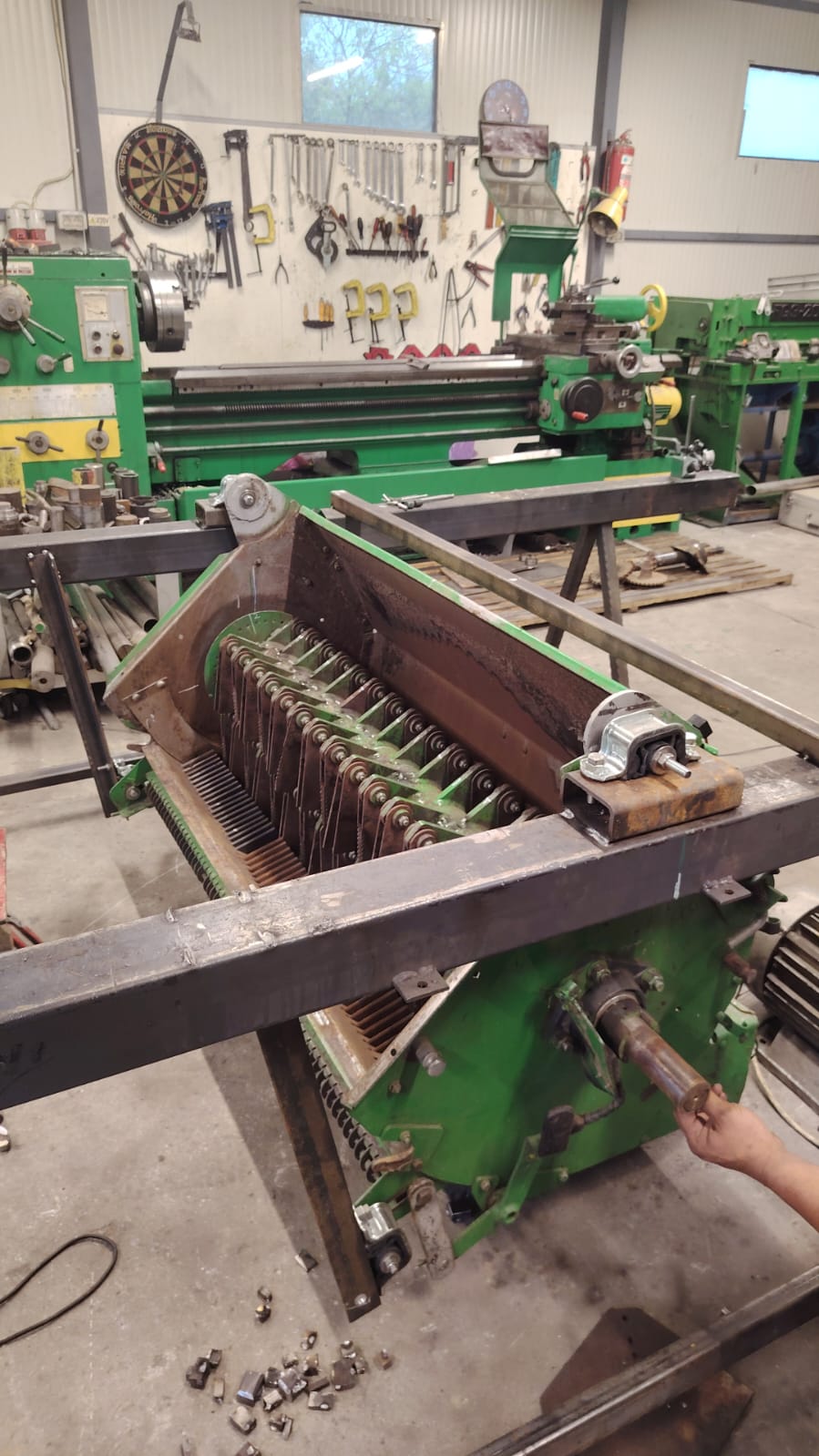
A field instrument covers machines balanced in their own bearings. But workshops that repair driveshafts, electric motor rotors, fan impellers or crusher rotors need to balance parts off the machine — and a commercial balancing machine costs from €15,000 to well over €100,000. The practical alternative, proven by hundreds of Vibromera customers, is a DIY soft-bearing (below-resonance) balancing machine: a simple mechanical stand plus a professional measuring system.
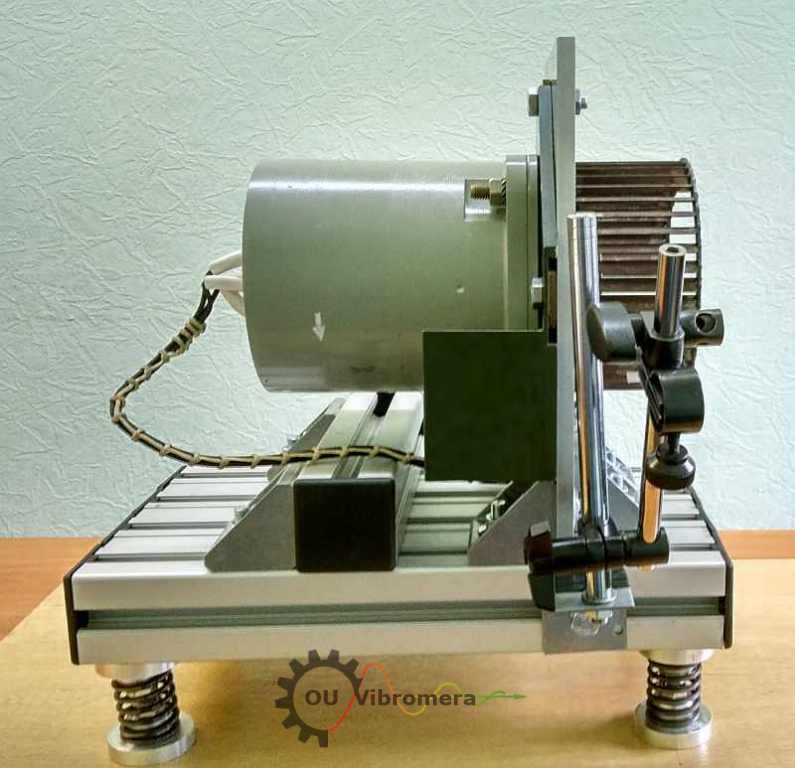
What the mechanical part consists of — and why it is genuinely simple:
- A rigid frame or bed — welded steel profile, or steel on a concrete block. One real customer stand: ~1,450 kg of concrete and steel, built in-house. Mass is your friend: the heavier the bed, the cleaner the measurement;
- Two supports on soft suspension — the defining feature. Each support (a pillow block or V-rollers carrying the rotor journal) sits on flat springs, coil springs or leaf springs. The support must visibly rock by hand — that softness places the stand’s natural frequency far below the balancing speed, which is what makes the measurement sensitive and linear;
- A drive — belt drive from a motor with a VFD, a friction roller, or even a controlled air jet for light rotors. The only requirements: stable RPM (within ~100 rpm between runs) and the ability to spin the rotor at a speed well above the stand’s natural frequency — the classic rule for a below-resonance stand is a working speed 2–3× the natural frequency;
- Rotor interface — V-blocks, rollers or centers matched to your typical journals; for driveshafts, a headstock and tailstock with the shaft’s own flanges.
Two design rules save DIY builders weeks of frustration:
- Map your stand’s resonances before the first job. Spin a rotor up, cut the drive, and record the coast-down (RunDown) chart — the peaks are your stand’s natural frequencies. Balance at a speed between them, never on them. One real rig had resonances at ~420 and ~644 rpm; balancing at ~844 rpm made it work perfectly.
- Fit springs, not hopes. When a customer builds a rig, support’s standing recommendation is: choose springs so the rig settles slightly under the rotor and can be rocked by hand. That single choice eliminates most of the resonance problems that block balancing on rigid home-made frames.
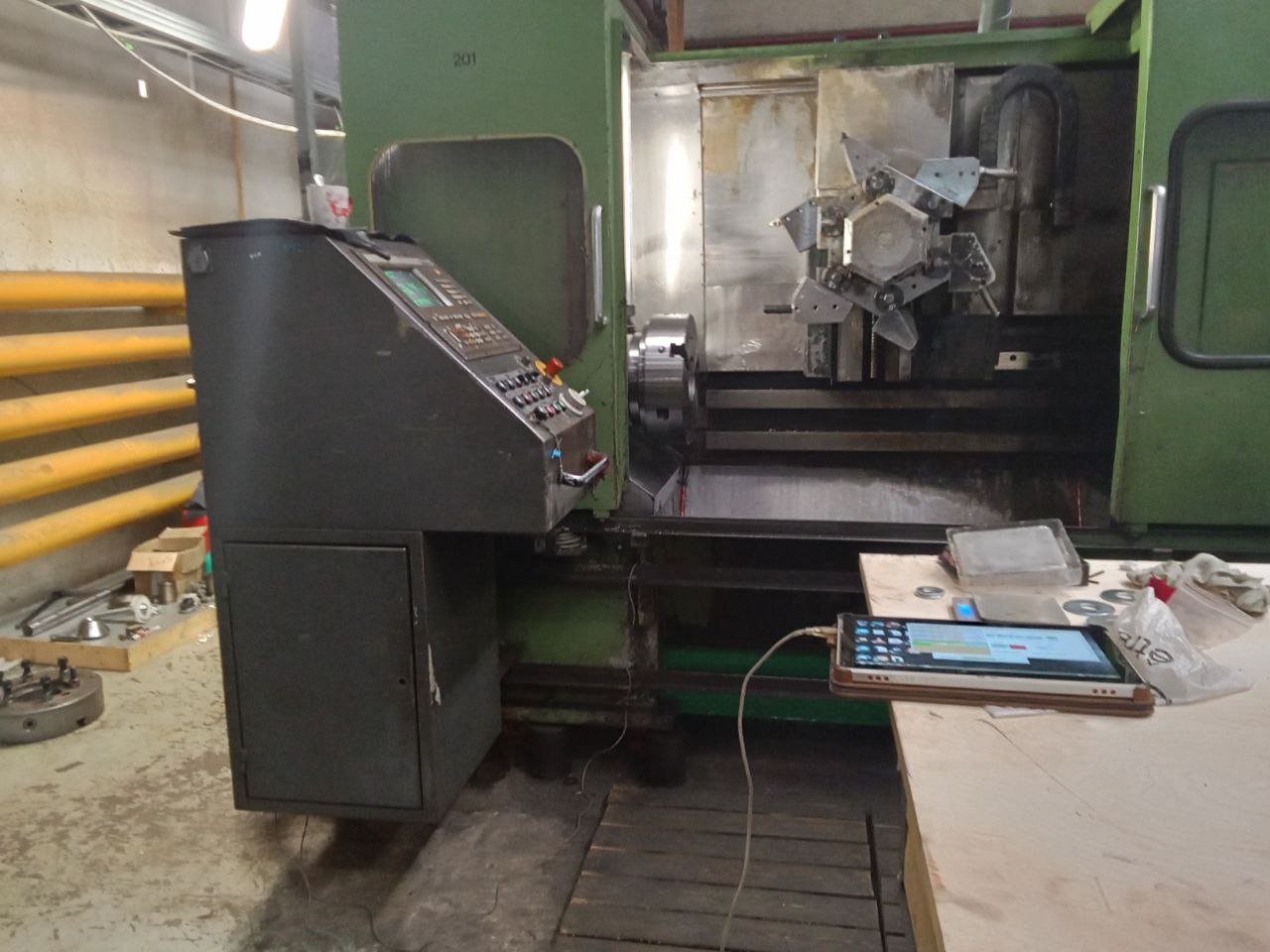
The zero-construction shortcut: use a lathe you already own. Many workshops skip the dedicated stand entirely for flanged rotors and impellers: clamp the rotor in the lathe chuck, let the lathe spindle provide the stable-RPM drive, put the vibration sensor on the headstock and aim the laser tachometer at a mark on the chuck — the portable instrument does the rest. Chuck and arbor eccentricity is handled by the classic 180° index method (the software’s “Mandrel” mode): balance, rotate the rotor half a turn relative to the chuck, re-measure, and the fixture’s own error cancels out.

A dedicated article with more customer-built examples: DIY balancing machines. And an honest caveat: a hard-bearing (rigid, force-measuring) machine of the type factories use for high-volume production is not a realistic DIY project — the stock accelerometer-based measuring systems are designed for soft supports and in-situ work. If your rotors are small, rigid and identical by the thousand, buy a production machine; for a repair workshop’s mixed diet, the soft-bearing DIY stand is the right tool.
9. Sensors and the Measuring System for a Homemade Balancing Machine
The mechanical stand is a welding weekend. The part you should not improvise is the measuring chain: sensors → synchronized two-channel acquisition → phase reference → influence-coefficient calculation. People who try to assemble it from an oscilloscope, a phone accelerometer or an Arduino discover the hard parts quickly: phase-accurate simultaneous sampling of two channels against a once-per-revolution trigger, vibration-velocity conversion, averaging synchronized to the tacho mark, and the two-plane cross-effect solution. That is precisely the layer a ready measuring system provides.
What the measuring system of a DIY machine needs:
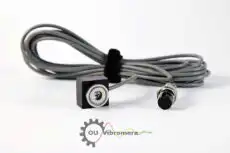
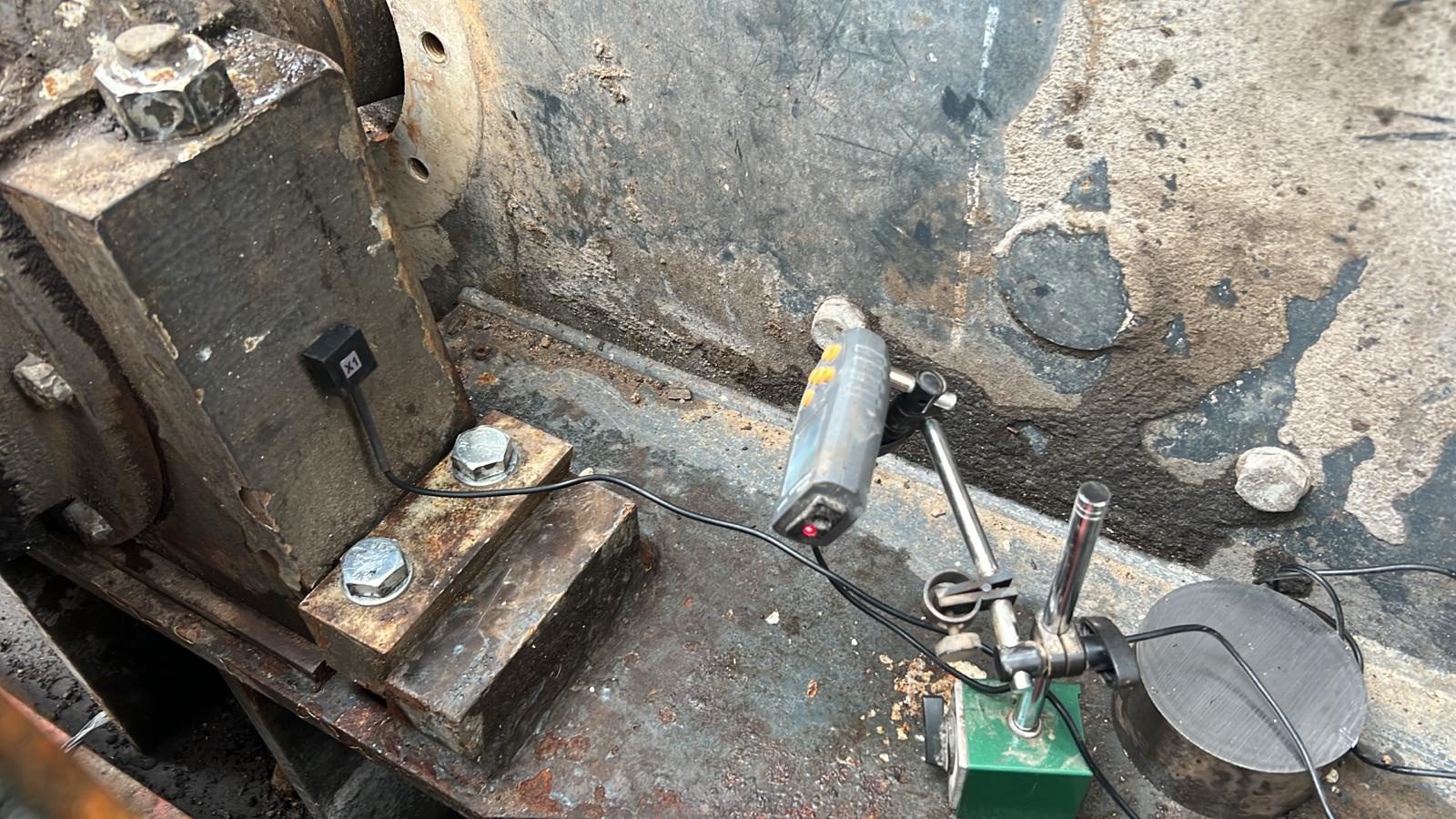
- Two vibration sensors — accelerometers with magnetic mounts, one per support, measuring radially. Cable length matters on a big stand: stock cables are 5 m, extendable to 10 m (shielded);
- A phase reference — a laser tachometer reading a reflective mark on the rotor, one pulse per revolution. This single channel is what turns “how much it shakes” into “where the heavy spot is”;
- A two-channel measuring unit — USB-powered, sampling both supports simultaneously with ±1° phase accuracy;
- Software that does the influence-coefficient math for one and two planes, stores each rotor type’s coefficients (repeat rotors then balance in a single run without trial weights), and prints the report.
This is exactly the role the Balanset-1A plays on hundreds of home-built machines: the stand provides the mechanics, the instrument provides metrology. The same €1,975 kit therefore does double duty — it is the measuring head of your workshop machine and the field instrument you take to on-site jobs. For builders integrating deeper, the tachometer input’s pinout is documented (GND / VCC / Z-OUT), and an encoder’s once-per-revolution index pulse can serve as the phase reference on motorized stands — details in the device chapter of the knowledge base.
10. Retrofitting an Old Balancing Machine with a New Measuring System
Thousands of Soviet-era, East-German, Czech and older Western balancing machines (Schenck, Hofmann, K&D and their licensed copies) still stand in workshops with perfectly good mechanics — beds, supports, drives — and dead or hopelessly obsolete electronics: burnt amplifier racks, CRT indicators, stroboscopes, missing documentation. Scrapping such a machine because its electronics died is like scrapping a lathe because the DRO failed.
The retrofit recipe that Vibromera customers apply:
-
Assess the mechanics
Supports intact, journals/rollers serviceable, drive turns and holds speed? Then the machine is worth reviving. Play in the supports or a drive that hunts RPM must be fixed first — no measuring system compensates for mechanics.
-
Identify the support type
Soft-bearing machines (supports on springs or flexible strips, free to oscillate) retrofit directly with accelerometer-based systems — this is the common case for driveshaft and general-purpose machines. Hard-bearing machines (rigid supports measuring force) are a poorer match for accelerometer kits: the vibration signal on a rigid support is small. The workaround support recommends where it must be done: balance at reduced speed below the structure’s resonance, or convert the supports to sprung (soft) operation.
-
Mount the new measuring chain
One accelerometer per support (radial, on a clean machined pad), reflective mark on the spindle or rotor, laser tachometer on the magnetic stand. Connect to the two-channel unit and laptop. Total installation time is typically an afternoon, and the old machine’s dead console simply stays out of the loop.
-
Characterize and calibrate the machine
Run a coast-down chart to map the stand’s resonances and choose the working speed band. Balance a known rotor with trial weights once — the software stores the influence coefficients, and from then on identical rotors balance in a single measurement run. Check achievable residual unbalance against the ISO 21940-11 tolerance calculator to know which G grades you can honestly promise customers.
The result: a workshop machine with modern two-plane measurement, FFT diagnostics, a rotor database and printable reports — for the price of the measuring kit instead of the price of a new machine. The same economics apply to stands that came from a bankrupt shop without their electronics cabinet: mechanics are durable and cheap second-hand; metrology is what you add.
11. How to Make Money on Vibration Diagnostics: Services, Pricing, First Customers
Balancing gets you in the door, but the instrument in your case is a two-channel vibration analyzer with FFT — which means the service list (and the invoice) can be longer than “balancing”. What providers actually sell:
| Service | What you deliver | Typical pricing |
|---|---|---|
| Field balancing (1–2 planes) | Before/after vibration figures + report with masses, angles, residual unbalance vs ISO tolerance | €350 – 1,100 per machine |
| Vibration measurement & assessment | Readings at each bearing, ISO 10816 zone verdict, spectrum screenshots, recommendations | €35 – 70 per point, or €180 – 480 per machine with report |
| Troubleshooting “it still vibrates” | Spectrum diagnosis: unbalance vs misalignment vs looseness vs bearings vs resonance; coast-down resonance mapping | hourly, €70 – 140/h |
| Periodic condition monitoring (route) | Quarterly/monthly measurements of a fan/pump/crusher fleet, trend log, early-warning calls | retainer, €250 – 950 per site visit |
| Workshop balancing on your own stand | Driveshafts, motor rotors, impellers balanced off-machine with a certificate | €100 – 350 per rotor |
| Post-repair verification | Balancing + vibration sign-off after bearing/shaft repairs, for repair shops that want to guarantee their work | bundled with the shop’s invoice |
Notes from the field on making this work commercially:
- The report is the product. A farmer feels the difference in the tractor seat, but industrial customers pay for the document: before/after numbers, ISO zone, spectrum, what was done, what to fix next. The software generates it; put your logo on the template. Every report left with a customer is an advertisement to the next visitor who sees it;
- Diagnose first, and say no honestly. The fastest reputation builder in this trade is refusing to “balance” a machine with a failed bearing and telling the customer what to repair instead. In support’s 10-year statistics, roughly nine of ten problem machines have a mechanical fault or resonance, not just unbalance. The specialist who identifies a destroyed clutch or a cracked housing in an hour earns more trust (and repeat work) than one who welds weights for two days;
- Anchor to seasons and dealers. Mulcher and mower balancing peaks before and during the mowing season — agricultural dealers and repair shops are natural referral partners who see shaking machines every day and have no instrument. HVAC contractors are the equivalent channel for fan work;
- Price call-outs, not hours, for standard jobs. Customers accept “€450 per mulcher, on-site, report included” more easily than an open hourly meter. Keep hourly billing for genuine troubleshooting;
- The second instrument is the growth stage. A one-person operation saturates at what one calendar can hold; the equipment cost is so low relative to the day rate that adding a second kit for an employee is a trivial decision once demand exists.
12. Real Numbers from the Field
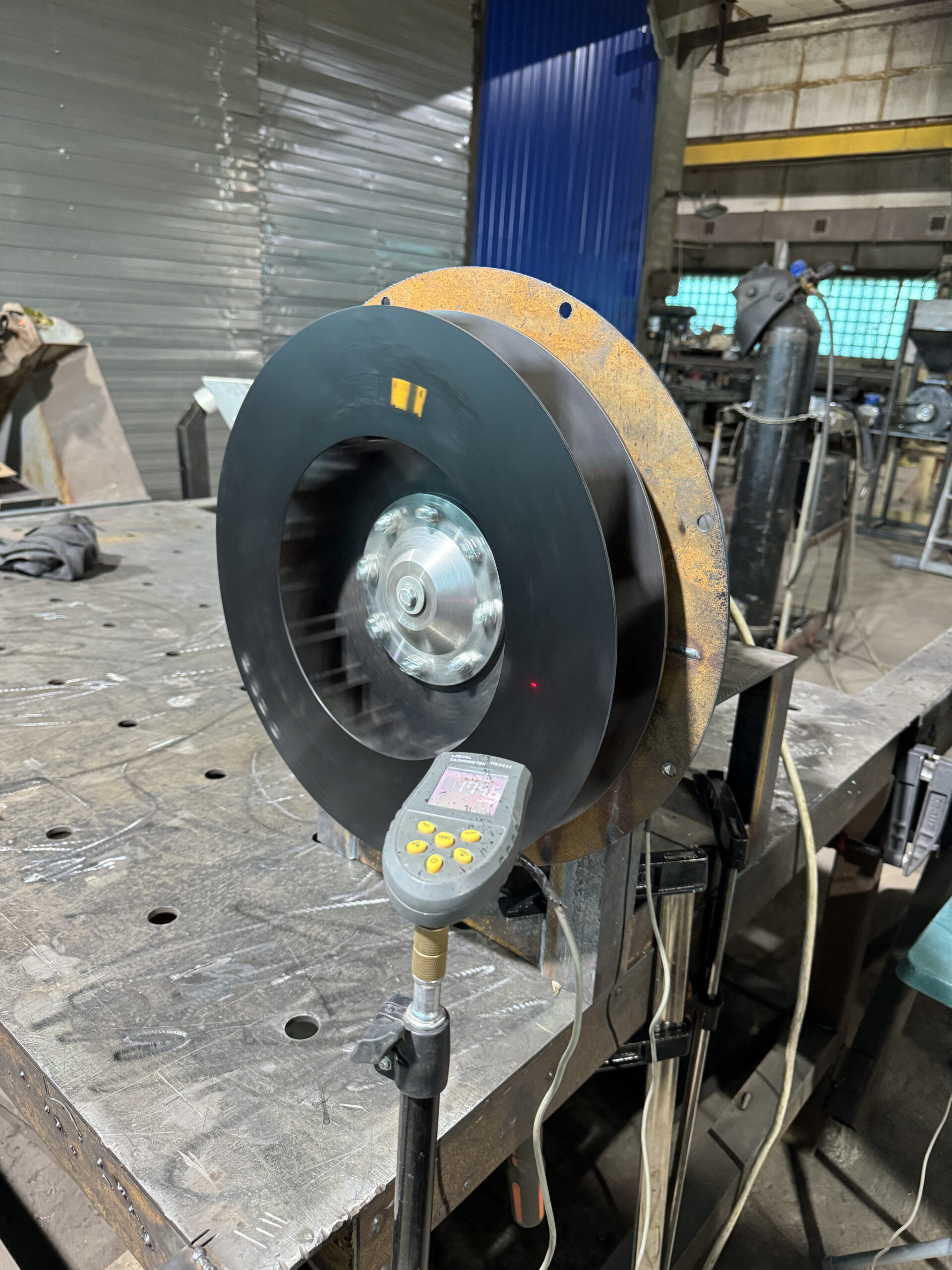
All of these are documented customer jobs from the case-study chapter of the knowledge base — the kind of results a competent operator with a portable instrument delivers:
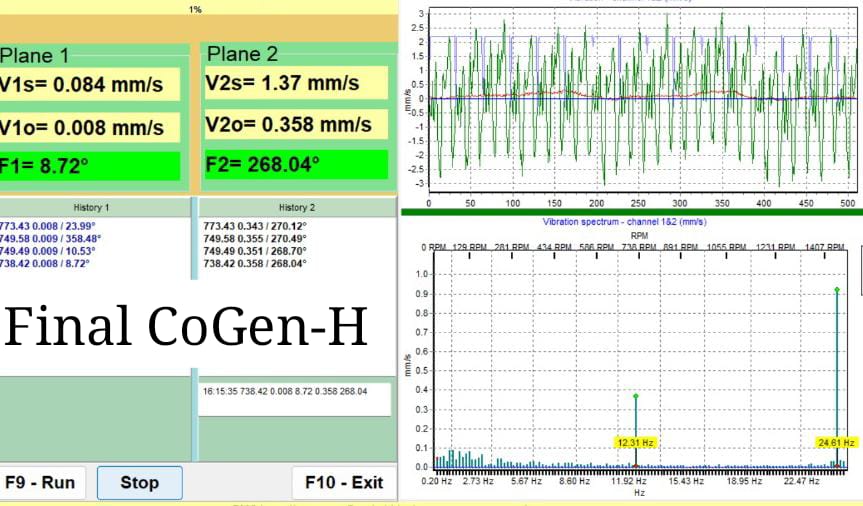
- 24,000 kg sugar-mill fiberizer rotor (India) — balanced in place by the standard two-run method: 7.8 kg of correction mass at 270°, vibration down from 3.2 to 0.47 mm/s. The influence-coefficient method does not limit rotor mass;
- 4,500 kg crusher rotor (France) — from 6–8 mm/s to 0.9–1.3 mm/s once the trial weight was right-sized; the same visit diagnosed and fixed a doubled-RPM tachometer trap;
- Seppi forestry mulcher (Germany) — from an extreme 83–128 mm/s to 3.4–8.3 mm/s; the blocker turned out to be a single software checkbox, found over WhatsApp support;
- 600 kg mulcher rotor (Poland) — a textbook Run 0 → trim cycle: 494 g and 486 g weights, final ~5–6 mm/s, inside the soft-support tolerance;
- Car driveshaft (Croatia) — balanced on the vehicle with hose-clamp weights to a final 0.5 mm/s;
- University ventilation fan (Portugal) — 4 and 7 mm/s down to 0.5 and 0.6 mm/s, plus an honest diagnosis that the remaining low-frequency peak was duct aerodynamics, not unbalance.
A short video overview of the instrument this guide is built around — from sensor setup to the trim run (more machine-specific videos on the YouTube channel):
Start with the instrument professionals actually use
Balanset-1A Full Kit — €1,975: two-channel measuring unit, 2 vibration sensors, laser tachometer with magnetic stand, scales, reflective tape and Windows software with free lifetime updates. One-plane and two-plane balancing, FFT spectrum, coast-down charts, ISO tolerance calculators, customer-ready reports. Backed by the free 12-chapter knowledge base and support engineers who have walked users through everything from lawn-mower blades to 24-tonne rotors.
13. Frequently Asked Questions
How much does an on-site rotor balancing service cost?
Typical market rates are €350–1,100 per machine in Europe ($500–1,400 in the US) plus travel, depending on rotor size, condition and access. A driveshaft runs €180–480; a large crusher rotor €600–1,800; a specialist day rate is €700–1,800. Urgent and weekend call-outs commonly cost 1.5–2× more. A measurement-plus-report visit without correction is typically €180–480.
What equipment do I need to open a rotor balancing service?
The complete starter set is: a portable two-plane balancing instrument with two vibration sensors, laser tachometer and software (Balanset-1A Full Kit, €1,975), a Windows laptop, scales, an angle gauge and marking tools, steel stock for weights, an angle grinder, and weight-fixing hardware (clamps, bolts, threadlocker). Total investment is roughly €2,100–3,000 — typically recovered within the first 4–5 paid jobs. No workshop premises or licenses are required for field work in most jurisdictions.
Is it worth buying a balancing instrument instead of paying a contractor?
Count your jobs per year. At contractor rates of €500–850 per machine, an instrument costing €1,975 breaks even at 3–4 jobs — one season for a farmer with two mulchers, the first month for a repair workshop. Add the hidden costs of waiting for a contractor (downtime, consequential bearing and housing damage) and repeat visits after every repair. A contractor remains the right choice if you expect only one or two balancing jobs ever, or if your rotors need 3–4 correction planes.
Should I rent a portable balancer or buy one?
Buy, in almost every real scenario. Rental offers for portable balancers are rare, and where they exist a week’s rental typically costs €350–700 — up to a third of the purchase price. More importantly, the skill travels with the operator: a first-time user under time pressure on a rented unit faces the full learning curve with no support history. One-off need → hire a balancing service; recurring need → own the instrument.
What can I build a DIY balancing machine from?
A working soft-bearing (below-resonance) machine consists of: a heavy rigid bed (welded steel profile or steel plus concrete), two rotor supports mounted on springs soft enough that the support rocks by hand, a drive with stable RPM (belt drive from a motor with a VFD is the usual choice), and a professional measuring system — two accelerometers, a laser tachometer and two-channel software. Map the stand’s resonances with a coast-down chart and balance at a speed between them, ideally 2–3× above the stand’s natural frequency.
What sensors does a homemade balancing machine need?
Two accelerometer-type vibration sensors (one per support, mounted radially on magnets) and a laser tachometer reading a reflective mark for the once-per-revolution phase reference. The critical part is not the sensors alone but the synchronized two-channel acquisition and influence-coefficient software behind them — which is why most DIY builders use a complete measuring kit such as the Balanset-1A (€1,975) as the “brains” of the machine rather than assembling electronics from scratch.
Can I upgrade an old balancing machine with a modern measuring system?
Yes — if the mechanics (supports, journals, drive) are sound, a dead old machine is revived by mounting two accelerometers on the supports, a laser tachometer on the spindle, and connecting them to a modern two-channel measuring unit with software. Soft-bearing machines retrofit directly; hard-bearing (rigid, force-measuring) machines are a poorer match for accelerometer kits — there the workaround is balancing at reduced speed or converting the supports to sprung operation. Installation typically takes an afternoon plus one calibration run with trial weights.
What software is used for rotor balancing on Windows?
Field balancing software runs on ordinary Windows 7/8/10/11 laptops (an i3 with 4 GB RAM is enough) and must provide: simultaneous two-channel measurement with a tachometer reference, 1× amplitude and phase, influence-coefficient calculation of correction masses and angles, FFT spectrum, coast-down (RunDown) resonance charts, a rotor database, ISO 21940-11 tolerance calculators and printable reports. The Balanset software includes all of this with free lifetime updates and no subscription; Android and iOS are not supported.
How do I learn field balancing, and is there training?
The two-run procedure itself is learnable in a day of practice on a shop fan; competent independent work comes after 5–10 real jobs. Free resources cover the whole path: the operation manual, a 12-chapter knowledge base built from real support cases, case studies with photos, a YouTube channel and an active user forum, plus direct e-mail support from Vibromera engineers. There are no mandatory paid courses — the practical skill is the procedure plus spectrum-reading judgment, both documented openly.
How do you make money on vibration diagnostics beyond balancing?
The same two-channel instrument sells four more services: vibration assessment against ISO 10816 zones with a written report (€180–480 per machine), spectrum-based troubleshooting at hourly rates (€70–140/h), periodic condition-monitoring routes for fan/pump/crusher fleets on retainer, and workshop balancing on your own stand (€100–350 per rotor). The deliverable that customers actually pay for is the report — before/after numbers, ISO verdict and recommendations on your letterhead.
Does one instrument really cover machines from lawn mowers to multi-tonne rotors?
Yes — the influence-coefficient method measures the supports’ response, not the rotor itself, so rotor mass is not a limiting factor. Documented Balanset-1A jobs range from sub-kilogram fan impellers to a 24,000 kg sugar-mill fiberizer balanced to 0.47 mm/s. The practical limits are speed-related instead: balancing below ~300 rpm is difficult, and shafts needing 3–4 correction planes require a four-channel instrument (Balanset-4).


0 Comments