ನಿಜವಾದ ಪೀಕ್ ಕಂಪನವನ್ನು ಅರ್ಥಮಾಡಿಕೊಳ್ಳುವುದು





True peak ಗರಿಷ್ಠ ಕ್ಷಣಿಕ amplitude reached by a vibration signal over a measurement period — the single highest positive or negative excursion away from the zero baseline. For a ಸ್ಥಳಾಂತರ signal it is the maximum shaft position; for ವೇಗ, the maximum velocity; for ತ್ವರಣೆ, the maximum acceleration, including short, sharp high-frequency impacts. It is usually quoted either as a single magnitude or, when the signal swings symmetrically about zero, as ಪೀಕ್-ಟು-ಪೀಕ್. True peak answers a question that average measures cannot: how far did the machine actually move at its worst instant?
1. Definition: Why the Extreme Matters
True peak is essential wherever the worst-case excursion — not the average — determines whether damage occurs. It tells you whether a shaft will touch a seal or stator, how hard a defect is hammering a bearing, and whether a brief transient is overstressing a component even though the RMS level looks comfortable. Note the word true: a true peak is the genuine highest sampled value, as distinct from a peak estimated by multiplying RMS by a fixed factor, which is only valid for a clean sine wave and badly understates an impacting signal.
2. True Peak vs. Other Amplitude Measures
True peak vs. RMS
- True peak is a single maximum value; RMS is the root-mean-square, which represents the average energy of the signal.
- For a pure sine wave, Peak = √2 × RMS (≈ 1.414 × RMS).
- For an impacting signal, true peak can be 5–10× RMS or more.
- Use RMS for energy and fatigue assessment; use true peak for clearance and impact assessment.
True peak vs. peak-to-peak
- True peak is the maximum excursion from zero in one direction; ಪೀಕ್-ಟು-ಪೀಕ್ is the total range from the maximum positive to the maximum negative.
- For a symmetric signal, Peak-to-Peak = 2 × True Peak.
- Displacement is conventionally reported peak-to-peak, while velocity and acceleration are usually reported as true peak.
True peak vs. crest factor
- ದಿ ಕ್ರೆಸ್ಟ್ ಫ್ಯಾಕ್ಟರ್ is the ratio of peak to RMS (Peak ÷ RMS).
- It is about 1.414 for a sine wave and rises to 3–5 for an impacting signal.
- A high crest factor is a direct flag for impacting or transients, which is why true peak and crest factor read together reveal the signal’s character far better than either alone.
3. Where True Peak Is Used
Clearance assessment
This is the classic use, and it leans on ಪ್ರಾಕ್ಸಿಮಿಟಿ-ಪ್ರೋಬ್ displacement. Peak displacement is the maximum shaft excursion, which must be compared with the physical clearance to seals and labyrinths to avoid a ರಬ್. A common rule keeps the peak below about 50 % of the available clearance — if the clearance is 1 mm, keep the peak under 0.5 mm.
Impact severity
Peak acceleration is a measure of impact force. High peaks (above roughly 50–100 g) signal severe impacting, typically from ಮೂಲಕೋಶ ಪ್ರಮುಖದೋಷಗಳು, ಯಾಂತ್ರಿಕ ಸಂಸ್ಥೋಲನ, or a foreign object, and the damage potential scales with peak impact level.
Low-speed machinery
Below about 300 RPM, RMS velocity becomes very small and loses diagnostic resolution, so peak displacement is the more meaningful measurement — which is why many standards specify peak or peak-to-peak limits for low-speed equipment.
Alarm setting
Peak limits protect clearances and prevent shaft contact with stationary parts, complementing rather than replacing RMS-based alarms. The two together — one watching energy, one watching extremes — give a fuller picture of machine health.
4. Measurement Considerations
Capturing a true peak correctly is harder than capturing an RMS value, because a peak is a single instant that is easy to miss.
- Sample rate: the instrument must sample fast enough to land on the peak. The ನೈಕ್ವಿಸ್ಟ್ criterion requires a sample rate above 2× the highest frequency, but in practice 5–10× is used so the true peak is not undersampled and reported lower than it really is.
- Measurement duration: a longer window is more likely to catch a high transient peak, but it can also blur the picture of typical operation; 10–60 seconds suits routine work, with longer captures for intermittent faults.
- ಸಿಗ್ನಲ್ ಸಮನ್ವಯ: anti-aliasing filters prevent false peaks, the sensor must have the bandwidth to follow the real peak, and ಸೆನ್ಸರ್ ಮೌಂಟಿಂಗ್ must be solid because peaks are very sensitive to mounting resonances.
5. Interpretation Guidelines
Displacement peak
- Acceptable is typically below 50 % of the available clearance.
- Low-speed machines: roughly 25–75 µm (1–3 mils) peak.
- High-speed machines: roughly 12–25 µm (0.5–1 mil).
- Measured with proximity probes directly on the shaft.
Velocity peak
- For a normal machine, peak velocity ≈ 1.4–2.0× RMS velocity.
- Higher ratios (3–5×) indicate impacting or transients.
- Used less often than RMS velocity, but valuable as a cross-check.
Acceleration peak
- The most common peak measurement.
- Normal industrial equipment: roughly 5–20 g peak.
- Impacting: 20–100 g+ peak, pointing to bearing defects or mechanical impacts.
- Extreme: above 100 g suggests severe impacting needing immediate attention.
6. Diagnostic Use
Peak-to-RMS ratio (crest factor)
- 1.4–2.0: normal, relatively smooth vibration.
- 2.0–4.0: some impacting — investigate the source.
- Above 4.0: severe impacting; bearing defects or mechanical problems are likely.
ಪ್ರವೃತ್ತಿ ವಿಶ್ಲೇಷಣೆ
A rising true peak while RMS stays flat is a textbook early sign of developing impacting. Because the peak climbs before the RMS does, tracking it through ಪ್ರವೃತ್ತಿ ವಿಶ್ಲೇಷಣೆ against your baseline buys extra lead time over RMS alone — a precursor to the RMS increase that follows. Note, however, that ಕರ್ಚೋಸಿಸ್ and ಎನ್ವಲಪ್ ವಿಶ್ಲೇಷಣೆ are often even more sensitive to the earliest bearing impacts.
Waveform inspection
Always examine the time waveform at the location of a peak. The waveform shows what created it — a discrete impact, a one-off transient, or a sustained oscillation — and gives the peak value its diagnostic context.
7. Standards, Specifications, and Field Practice
Several standards lean on peak quantities. ISO 7919 expresses shaft-vibration limits in peak-to-peak displacement, while ISO 20816 (the modern successor to ISO 10816) works in RMS velocity but still cares about peak values where clearances are concerned. Equipment-specific and turbomachinery specifications routinely state peak limits, and proximity-probe protection systems are commonly alarmed on peak displacement, with critical clearances defined as peak-displacement margins.
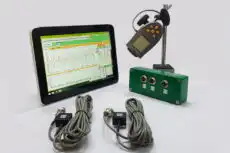
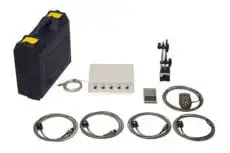
In the field, the same portable instrument that handles routine balancing also reports these values. A two-channel analyser such as the ಬ್ಯಾಲೆನ್ಸೆಟ್-1ಎ captures the time waveform and overall levels at operating speed, so an engineer can read true peak and crest factor alongside the 1× ವೈಶಾಲ್ಯ ಮತ್ತು ಹಂತ used for ಸಮತೋಲನ — confirming on the spot whether a high reading is harmless rotor vibration or a genuinely damaging impact. In short, true peak reveals the maximum excursions and impact severity that average measures hide; less common than RMS for routine trending, it is indispensable for clearance protection, impact evaluation, and spotting the high-crest-factor signals that mark impacting and transient faults.

