ವೋಲ್ಟೇಜ್-ಮೋಡ್ ಆಕ್ಸೆಲರೋಮೀಟರ್ಗಳನ್ನು ಅರ್ಥಮಾಡಿಕೊಳ್ಳುವುದು
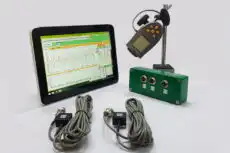
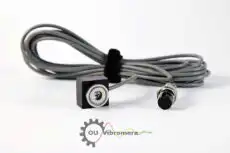
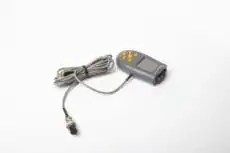
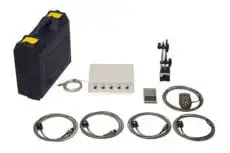

A ವೋಲ್ಟೇಜ್-ಮೋಡ್ ಪ್ರವೇಗಮಾಪಕ ಒಂದು ಪೈಜೋವಿದ್ಯುತ್ ವರ್ಧಕ with built-in signal-conditioning electronics that convert the high-impedance electrical charge from the piezoelectric crystal into a low-impedance voltage output. The term is essentially synonymous with the IEPE ವೇಗವರ್ಧಕ (Integrated Electronics Piezo-Electric) and with ICP® (Integrated Circuit Piezoelectric, a trademark of PCB Piezotronics). The “voltage-mode” label simply emphasises that the sensor delivers a voltage (typically millivolts per g) rather than a charge (picocoulombs per g), setting it apart from the older charge-mode design. Recognising that voltage-mode, IEPE and ICP all describe fundamentally the same ಟ್ರಾನ್ಸ್ಡ್ಯೂಸರ್ makes product datasheets and technical literature far easier to navigate.
Voltage-mode units have become the overwhelming standard in industrial vibration measurement — well over 95% of applications — thanks to their simplicity (no external amplifier required), their ease of use (a plain two-wire connection), and their low cost. They are the workhorse sensors behind most modern ಕಂಪನ ಮೇಲ್ವಿಚಾರಣೆ and diagnostics.
1. How the Built-In Electronics Work
The defining feature is a microelectronic amplifier integrated inside the sensor housing, sitting immediately downstream of the piezoelectric element:
- Charge-to-voltage conversion: a FET or small IC amplifier converts the crystal’s high-impedance charge into a low-impedance voltage right at the source, before the signal ever travels down a cable.
- Constant-current power: the amplifier is energised by a constant current supplied by the measurement instrument — the same two wires carry both the DC power in and the AC signal out.
- Bias and signal together: ಆ ತ್ವರಣೆ signal rides as an AC voltage on top of a DC bias voltage on that single output.
Because the impedance conversion happens inside the sensor, the long, fragile, charge-carrying cable that plagued earlier designs is eliminated — and with it most of the noise and handling sensitivity that came with it.
2. Output Format and Power Requirements
Output format
- ಸೂಕ್ಷ್ಮತೆ: typically 10–1000 mV/g.
- Common value: 100 mV/g is the industry standard.
- Signal type: AC voltage proportional to acceleration.
- Output impedance: low, generally under 100 ohms.
Power requirements
- Constant current: 2–20 mA typical, with 4 mA the common default.
- Supply voltage: 18–30 VDC.
- Bias voltage: 8–12 VDC sitting on the output.
- Two-wire scheme: power and signal share one coaxial cable.
3. ಪ್ರಯೋಜನಗಳು
System simplicity
- ಯಾವುದೇ ಬಾಹ್ಯ ಚಾರ್ಜ್ ವರ್ಧಕವೋ ಅಗತ್ಯವಾಗಿದೆ.
- The sensor connects directly to the instrument.
- Lower total system cost.
- Fewer components, and therefore fewer failure points.
Cable capability
- The low output impedance can drive long cable runs — up to about 300 m.
- Standard, inexpensive coaxial cable can be used.
- Good immunity to electrical noise picked up along the run.
- Flexible, forgiving installation.
Ease of use
- Simple plug-and-play operation.
- Minimal setup.
- A standardised, widely supported interface.
- Broadly compatible across instruments and data collectors.
4. Comparison With Charge-Mode Accelerometers
The trade-off between voltage-mode and charge-mode designs comes down to operating environment.
| ಅಂಶ | Voltage-Mode (IEPE/ICP) | Charge-Mode |
|---|---|---|
| System complexity | Simple — no external amplifier | ಬಾಹ್ಯ ಚಾರ್ಜ್ ಆಂಪ್ಲಿಫೈಯರ್ ಅಗತ್ಯವಿದೆ |
| ವೆಚ್ಚ | ಕಡಿಮೆ | ಹೆಚ್ಚು |
| Cable | Long runs, standard coax, good noise immunity | Short, special low-noise cable |
| Max temperature | To ~175°C (electronics limit) | To ~650°C |
| Special environments | ಸೀಮಿತ | Radiation-hard (nuclear); no active electronics to fail |
In short, voltage-mode covers 95%+ of industrial applications, while charge-mode is reserved for the niche where the operating temperature exceeds about 175°C or ionising radiation is present and would destroy the built-in electronics.
5. Common Specifications
Sensitivity options
- 10 mV/g: high vibration and shock (about ±500 g range).
- 50 mV/g: general purpose (about ±100 g range).
- 100 mV/g: industry standard (about ±50 g range).
- 500–1000 mV/g: low-vibration, precision work (about ±5–10 g range).
The right value depends on the amplitudes you expect; converting between an output voltage and a physical acceleration for a given device is exactly what a ಕಂಪನ ಸಂವೇದಕ ಸೂಕ್ಷ್ಮತೆ ಕ್ಯಾಲ್ಕುಲೇಟರ್ is for, and it ties directly back to the sensor’s stated ಸಂವೇದನಾಶೀಲತೆ.
Frequency response
- Low-frequency limit: roughly 0.5–5 Hz at the −3 dB point (AC-coupled).
- High-frequency limit: rises toward the mounted resonance, which lies anywhere from 10 to 70 kHz depending on sensor size.
- Usable band: up to about one-fifth (20%) of the mounted resonance frequency for few-percent amplitude accuracy (per ISO 5348); one-third of the resonance is only a rough screening limit, with roughly 10–12% amplitude error.
Temperature rating
- ಮಾನದಂಡ: −50 to +120°C.
- ವಿಸ್ತರಿತ: −50 to +150°C.
- High-temp: −50 to +175°C.
- Above 175°C a charge-mode sensor is required.
6. Variants, Packaging and Equivalent Terms
Design variations
- Compression-mode IEPE (most common, economical).
- ಶಿಯರ್-ಮೋಡ್ IEPE (premium, with better immunity to base strain and thermal transients).
- Differential output (improved common-mode rejection).
- Low-noise variants (ultra-low noise floor for precision measurement).
Package types
- Industrial (hermetically sealed and rugged).
- Miniature (for space-limited locations).
- Triaxial (three orthogonal axes in one body).
- Subminiature (under 10 grams, for light structures).
Equivalent terms you will encounter
- Voltage-mode: the generic descriptor.
- IEPE: Integrated Electronics Piezo-Electric — the standard generic term.
- ICP®: Integrated Circuit Piezoelectric — PCB Piezotronics trademark.
- CCLD: Constant Current Line Drive — Brüel & Kjær terminology.
- Deltatron®: a Brüel & Kjær brand name.
- All of the above: fundamentally the same technology — a piezoelectric element plus built-in electronics, run on constant-current power.
7. Best Practice in the Field
For day-to-day rotating-machinery work, a 100 mV/g industrial-grade, hermetically sealed sensor is the sensible default; choose the temperature rating to suit the location, and a sealed body for contaminated or wet environments. Mounting matters enormously, because how the sensor is attached sets the usable upper frequency:
- ಸ್ಟಡ್ ಮೌಂಟ್ for the highest-frequency, most repeatable measurements.
- ಅಂಟುವ for semi-permanent installations.
- Magnetic base for quick route surveys — convenient, but it lowers the resonance and so the usable bandwidth.
- ಸರಿಯಾದದು ಸೆನ್ಸರ್ ಮೌಂಟಿಂಗ್ ಪ್ರತಿ ISO 5348 is critical; you can estimate how a given mounting method shifts the ಸ್ಥಾಪನೆ ಪ್ರತಿಧ್ವನಿತ ಆವೃತ್ತಿ with an ತೆರನಾದ ಸೇಂಟ್ರೋಡ ಅನುರಣನ ಕ್ಯಾಲ್ಕುಲೇಟರ್.
Keep the sensor in calibration — annually for critical machines — inspect cables, verify the mounting, and run a quick function check before any important measurement; periodic ಕ್ಯಾಲಿಬ್ರೇಷನ್ is what keeps readings traceable. Note that not every portable instrument is an IEPE readout: the ಬ್ಯಾಲೆನ್ಸೆಟ್-1ಎ, for example, is supplied with two analog MEMS accelerometers rather than IEPE/ICP units, and compatibility with third-party IEPE/ICP sensors is not a published capability of that instrument — check with the manufacturer before planning such an integration.
Voltage-mode accelerometers (IEPE/ICP) are the workhorse sensors of modern industrial vibration monitoring, marrying the high performance of piezoelectric transduction with integrated electronics for simplicity and reliability. Their dominance reflects the optimal balance of performance, cost and ease of use across the vast majority of rotating-machinery condition-monitoring and diagnostic applications.

