Using Balanset-1A as a measurement and computing system in balancing machines
Extent of Usage in Stationary Measurement Systems
Statistics on the consumption structure of balancing devices manufactured by Vibromera reveal that approximately 30% of these devices are purchased for stationary measurement and computational systems in balancing machines or stands.
Softbearing Machine Design Essentials
The design illustration indicates a mobile frame affixed to stationary stands using ribbon springs. Influenced by the centrifugal force generated by the rotor’s imbalance, the trolley can undergo horizontal oscillations relative to the stationary stand. These oscillations are measured with a vibration sensor.
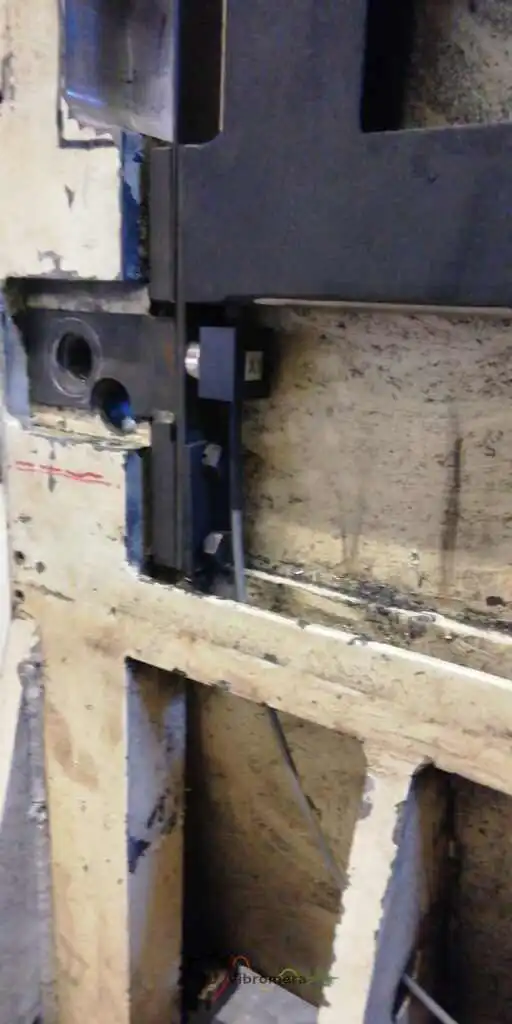
Using the Balanset-1A as a measurement and computing system in balancing machines.
Key Features of Softbearing Machines
The design of the support system achieves a low natural frequency for the trolley oscillations, ranging between 1-2 Hz. This allows for rotor balancing across a broad frequency range, starting from 200 RPM. The relative ease of manufacturing such supports makes this design highly appealing to our customer base, who often build their own specialized balancing machines.
Parameters to Consider in Support Design
One of the most critical parameters to consider in the design and manufacture of these supports is their natural oscillation frequencies. These frequencies are crucial for the accurate measurement of vibration amplitude and phase. In instances where the support’s natural oscillation frequency coincides with the rotor’s rotational frequency (resonance), precise measurements become virtually impossible.
Implications of Resonance
During the balancing of any mechanism in the resonance zone, even minor frequency changes can lead to significant instability in measurement results. This affects the accuracy of corrective weight parameters and ultimately compromises the quality of balancing. For softbearing machines, the lower limit of permissible working frequencies for the balanced rotor should exceed the support’s natural oscillation frequency by at least 2-3 times.
This article aims to shed light on the advanced applications and critical parameters to consider when utilizing Vibromera equipment in softbearing balancing machines.
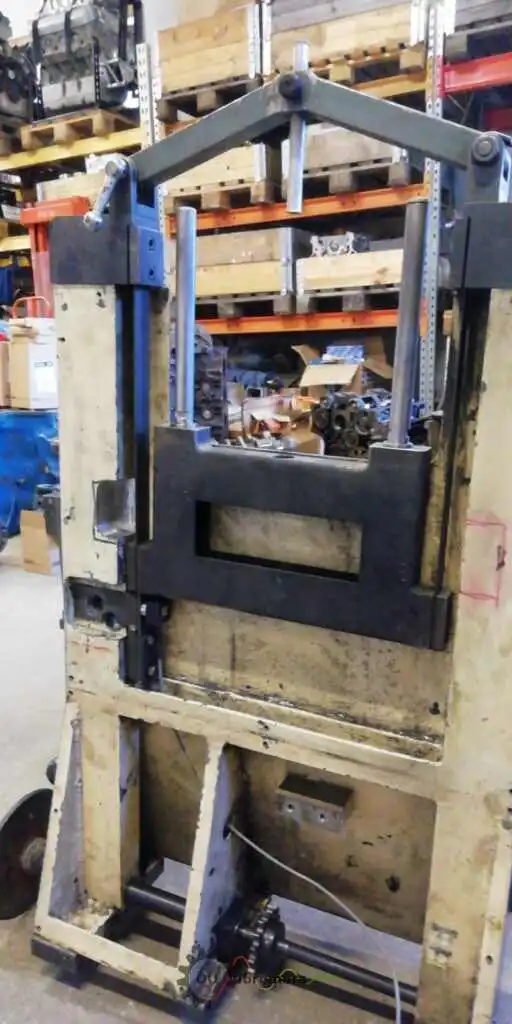
Using Balanset-1A as a measurement and computing system in balancing machines

Nikolai Shelkovenko
Nikolai Shelkovenko is a vibration analysis engineer and the founder and CEO of Vibromera. For more than 15 years he has balanced rotating equipment in the field rather than on a test bench: mulchers, industrial fans, crushers, centrifuges, shafts and spindles. That work is what the Balanset instruments grew out of — they were designed as a tool a specialist can carry to the machine and use alone, on site, not as laboratory equipment. Vibromera was founded in 2017 and has been based in Porto, Portugal, since 2023. Development, assembly and support of the Balanset line all happen here. The flagship instrument is the Balanset-1A, a portable analyser for single- and two-plane balancing and for vibration diagnostics. Nikolai is personally involved in customer support, in working through difficult balancing cases and in the development of the software. He works with customers worldwide, in any language.

