Understanding the API 670 Standard






API 670 (American Petroleum Institute Standard 670: “Machinery Protection Systems”) is the globally recognised industry standard specifying minimum requirements for the vibration, temperature, and position monitoring systems that provide automatic alarming and shutdown protection for critical rotating machinery in the petroleum, chemical, and power-generation industries. It defines sensor types and quantities, alarm and trip functionality, redundancy requirements, testing procedures, and system-design criteria — all aimed at reliable ಯಂತ್ರ ಸುರಕ್ಷೆ against catastrophic failures. Where general guidance such as ISO 20816 tells you how to evaluate vibration severity, API 670 tells you how to build the permanently installed system that watches the machine and trips it before it destroys itself.
API 670 is commonly specified by purchasers for critical turbomachinery in hydrocarbon service — its applicability is defined by the purchaser, the machine’s criticality and the project specification rather than by any universal power threshold — and it is widely adopted as best practice well beyond the petroleum industry. It represents the consensus approach to protecting ನಿರ್ಣಾಯಕ ಯಂತ್ರೋಪಕರಣ, weighing safety and reliability against practical implementation.
1. ಗುರಿ ಮತ್ತು ಅನ್ವಯಿಕತೆ
The standard targets the machines whose unplanned failure would be most dangerous or most expensive — typically large, high-speed, single-train equipment with no installed spare.
ಒಳಗೊಂಡಿರುವ ಉಪಕರಣಗಳು
- ಆವಿ ಮತ್ತು ಅನಿಲ ಟರ್ಬೈನ್ಗಳು
- ಸೆಂಟ್ರಿಫ್ಯೂಗಲ್ ಮತ್ತು ಅಕ್ಷೀಯ ಕಂಪ್ರೆಸರ್ಗಳು
- ಮಹತ್ವದ ಸೇವೆಯಲ್ಲಿರುವ ಸೆಂಟ್ರಿಫ್ಯೂಗಲ್ ಪಂಪ್ಗಳು
- Large generators and motors in critical service
- ಎಕ್ಸ್ಪ್ಯಾಂಡರ್ಗಳು ಮತ್ತು ಬ್ಲೋವರ್ಗಳು
- Generally, critical turbomachinery across petroleum and power
When It Is Required
- Wherever the purchaser or project specification invokes it — typically large, unspared, high-consequence machine trains
- Critical service (no backup, high consequence of failure)
- Contractual requirements between purchaser and vendor
- Corporate engineering standards
- Often applied voluntarily as recognised best practice
2. Key Requirements
API 670 prescribes ಏನು to measure, how many sensors to use, and how the alarm and trip functions must behave. The actual setpoint values are not fixed by the standard — they are established for each machine by the purchaser and OEM, based on the machine’s design, bearing clearances and rotor-dynamic behaviour. The headline measurements are radial vibration, axial position, a phase reference, and bearing temperature.
ರೇಡಿಯಲ್ ಕಂಪನ ಮೇಲ್ವಿಚಾರಣೆ
- ಸೆನ್ಸರ್ಗಳು: XY ಪ್ರಾಕ್ಸಿಮಿಟಿ ಪ್ರೋಬ್ pairs at each bearing (a minimum of four probes per machine, two per bearing).
- ಮಾಪನ: shaft ಸ್ಥಳಾಂತರ relative to the bearing — the non-contact eddy-current probes watch the shaft itself, not the housing.
- ಅಲಾರ್ಮ್/ಟ್ರಿಪ್: setpoints in ಪೀಕ್-ಟು-ಪೀಕ್ displacement are machine-specific — defined by the purchaser and OEM from the bearing clearances and rotor-dynamic analysis, not fixed as universal values by the standard.
- ಪ್ರತಿಕ್ರಿಯಾ ಸಮಯ: under 1 second from trip detection to shutdown initiation.
ಅಕ್ಷೀಯ ಸ್ಥಿತಿ ಮೇಲ್ವಿಚಾರಣೆ
- ಸೆನ್ಸರ್ಗಳು: two axial displacement probes (redundant).
- ಉದ್ದೇಶ: monitor ಥ್ರಸ್ಟ್-ಬೇರಿಂಗ್ condition and axial rotor position.
- ಅಲಾರ್ಮ್/ಟ್ರಿಪ್: set according to the available axial clearance.
ಹಂತ ಉಲ್ಲೇಖ (Keyphasor)
- ಸೆನ್ಸರ್ಗಳು: two keyphasor probes (redundant).
- ಉದ್ದೇಶ: once-per-revolution timing for phase and speed measurement.
- ಅವಶ್ಯಕತೆ: mandatory for complete rotor analysis — without it, plots such as Bode, polar and orbit cannot be produced.
ಬೇರಿಂಗ್ ತಾಪಮಾನ
- ಸೆನ್ಸರ್ಗಳು: two RTDs per bearing (redundant).
- ಅಲಾರ್ಮ್: typically 95–105 °C.
- ಟ್ರಿಪ್: typically 110–120 °C.
3. Redundancy and Voting
A protection system is only useful if it trips for real faults and stays quiet for false ones. API 670 achieves this balance through redundant sensors feeding voting logic.
ಸೆನ್ಸರ್ ರಿಡಂಡೆನ್ಸಿ
- A minimum of two sensors for each critical parameter.
- Prevents a single-point sensor failure from disabling protection.
- Enables voting logic to discriminate genuine events from sensor faults.
ವೋಟಿಂಗ್ ಲಾಜಿಕ್
- 2-out-of-2 (AND): both sensors must agree before a trip is issued.
- 2-out-of-3: any two of three sensors trigger action — the preferred arrangement for the most critical machines.
- ಉದ್ದೇಶ: balance nuisance-trip prevention against the need for dependable failure protection.
ಮಾನಿಟರ್ ರಿಡಂಡೆನ್ಸಿ
- Dual monitor racks are sometimes specified.
- Independent power supplies for each channel.
- Fail-safe design throughout the chain.
4. System Features and Testing
ಅಗತ್ಯ ಕಾರ್ಯಗಳು
- Real-time displays of all monitored parameters.
- Alarm and trip functions with configurable time delays.
- Alarm acknowledgement and reset.
- Bode and ಕಕ್ಷೆ plots for diagnostics.
- Event recording and historical archiving.
- Diagnostic software tools.
ಡೇಟಾ ದಾಖಲೆ
- Continuous trending of all parameters.
- Capture of startup and shutdown transients, where many problems first reveal themselves.
- Alarm-event data snapshots.
- Long-term historical archiving.
Acceptance and Periodic Testing
API 670 specifies a structured test programme so that the protection is proven before commissioning and stays proven through life:
- Factory Acceptance Test (FAT): the complete system is tested before shipment — all functions verified, calibration confirmed, documentation provided.
- Site Acceptance Test (SAT): after installation, a full functional test verifies every sensor channel, exercises the alarm and trip functions, and validates the system against its specification.
- Periodic testing: quarterly or annual functional tests confirm the trip circuits still operate, recheck sensor calibration, and keep the documentation current.
5. Revisions, Related Standards, and Field Balancing
ದಿ 5ನೇ ಆವೃತ್ತಿ (2014) modernised the standard for digital systems, added cyber-security requirements, updated sensor specifications, and improved the testing procedures; it is the version most widely implemented today. API 670 also sits within a family of related documents:
- API 617: axial and centrifugal compressors.
- API 610: centrifugal pumps.
- API 684: rotor-dynamics analysis.
- ISO 7919: shaft-vibration limits (the shaft-relative counterpart to housing measurements).
- ISO 20816: bearing-housing vibration limits (formerly ISO 10816).
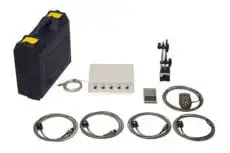
It is worth being clear about what API 670 does not do: it protects a machine, but it does not correct one. When the permanent system flags a rising 1× peak from unbalance, the fix is still a balancing job, usually performed on site. A portable two-channel analyser such as the ಬ್ಯಾಲೆನ್ಸೆಟ್-1ಎ complements an API 670 installation in exactly this gap — measuring 1× amplitude and phase in the machine’s own bearings, computing the correction weights, and verifying the ಉಳಿದ ಅಸಮತೋಲನ after the repair, without disturbing the fixed protection probes.
In sum, API 670 is the cornerstone standard for machinery-protection systems in the petroleum, chemical, and power industries. By specifying sensor configurations, redundancy, alarm and trip functionality, and testing, it ensures consistent, reliable protection across facilities worldwide, preventing catastrophic turbomachinery failures through proven monitoring and automatic shutdown.

