उत्पादने
-
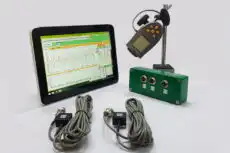 पोर्टेबल बॅलन्सर & व्हायब्रेशन अॅनालायझर Balanset-1A
€1,975.00 + VAT (लागू असल्यास)
पोर्टेबल बॅलन्सर & व्हायब्रेशन अॅनालायझर Balanset-1A
€1,975.00 + VAT (लागू असल्यास)
-
 डायनामिक बॅलन्सर “Balanset-1A” OEM
€1,735.00 + VAT (लागू असल्यास)
डायनामिक बॅलन्सर “Balanset-1A” OEM
€1,735.00 + VAT (लागू असल्यास)
-
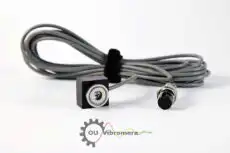 कंपन संवेदक
€90.00 + VAT (लागू असल्यास)
कंपन संवेदक
€90.00 + VAT (लागू असल्यास)
-
 ऑप्टिकल सेन्सर (लेझर टॅकोमीटर)
€124.00 + VAT (लागू असल्यास)
ऑप्टिकल सेन्सर (लेझर टॅकोमीटर)
€124.00 + VAT (लागू असल्यास)
-
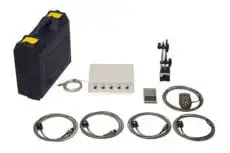 Balanset-4
€6,803.00 + VAT (लागू असल्यास)
Balanset-4
€6,803.00 + VAT (लागू असल्यास)
Hydraulic Pump Balancing with the Balanset-1A Device
A practical guide for maintenance engineers and technicians, covering dynamic balancing technology using the portable Balanset-1A device
1. उद्देश आणि कार्यतत्त्व
हायड्रॉलिक पंप संतुलन ही फिरणाऱ्या भागांतील असंतुलन दूर करून कंपन कमी करण्याची आणि उपकरणाचे सेवा आयुष्य वाढवण्याची प्रक्रिया आहे.
The balancing process involves measuring the rotor’s vibration and phase, then adding or removing small correction weights on the impeller or shaft. By counteracting the uneven mass distribution, this procedure significantly reduces the centrifugal forces that cause vibration and potential damage.
असंतुलनाची मुख्य कारणे:
- impeller आणि shaft मधील उत्पादनातील अचूकतेचा अभाव
- कार्यान्वयनादरम्यान झीज आणि नुकसान
- गंज आणि cavitation मुळे नुकसान
- दुरुस्तीनंतर चुकीची assembly
असंतुलनाचे परिणाम:
- वाढलेले कंपन आणि आवाज
- bearings आणि seals ची वेगवान झीज
- पंप कार्यक्षमता कमी होणे
- आपत्कालीन बिघाडाचा धोका
2. Balanset-1A चे तांत्रिक वर्णन
Balanset-1A is a portable dual-channel device for dynamic balancing of rotors directly at the workplace (in-situ).
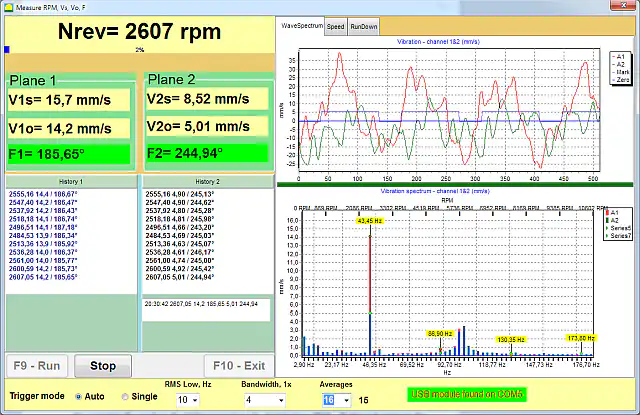
Balanset-1A प्रणाली रचना
तांत्रिक वैशिष्ट्ये
| परिमाण | मूल्य | एकक |
|---|---|---|
| कंपन वेग मापन श्रेणी (RMS) | 0.02 - 80 | mm/s |
| वारंवारता श्रेणी | 5 - 1000 | Hz |
| फिरणाऱ्या वेगाच्या मापनाची श्रेणी | 100 - 100,000 | rpm |
| अवस्था मापन अचूकता | ±1 | degree |
| correction planes ची संख्या | 1 किंवा 2 | - |
| ऑपरेटिंग तापमान | +5...+50 | °C |
उपकरण पॅकेजमधील सामग्री
preamplifiers आणि ADC सह USB interface
magnetic mounting सह 2 accelerometers
magnetic stand सह phase sensor
पंप shaft वर स्थापनेसाठी
अचूक वजन मापनासाठी
सूचनांसह USB drive वर
3. संतुलनासाठी तयारी
सेंसर स्थापना
हायड्रॉलिक पंपावर सेन्सर स्थापनेचे चित्र
- Install vibration sensors on the pump housing near the bearings, oriented perpendicular to the shaft axis
- Attach reflective tape on the pump shaft or coupling
- Mount the laser tachometer on a magnetic stand opposite the reflective tape
- Connect the sensors to the measuring unit
- Connect the measuring unit to the laptop via USB
4. संतुलन प्रक्रिया
The balancing procedure with Balanset-1A typically follows a three-run method (influence coefficient method) using trial weights. Below is a step-by-step outline of the process, from measuring initial vibration to installing correction weights and verifying the results.
प्रारंभिक कंपन मापन
- Balanset-1A सॉफ्टवेअर सुरू करा
- single-plane किंवा two-plane balancing mode निवडा
- Start the pump at operating speed
- Press "Run#0" in the software to measure initial vibration
- Record the vibration amplitude and phase values
ट्रायल वेट बसवणे
- पंप थांबवा
- Weigh a suitable trial weight using the electronic scales
- Install the weight on the rotor in the first correction plane
- Enter the weight’s mass and installation radius into the software
- Restart the pump and perform the "Run#1" measurement
दुसऱ्या plane चे मापन (two-plane balancing साठी)
- Stop the pump and remove the trial weight from the first plane
- Attach the trial weight to the second correction plane
- Start the pump and perform the "Run#2" measurement
- The software will automatically calculate the required correction weights
सुधारण्याचे वजन स्थापन
- Stop the pump and remove any trial weights
- Manufacture or select the correction weights as per the software’s calculation
- Secure the weights by welding, bolting, or using clamps
- The installation angle for each weight is measured from the trial weight position in the direction of rotation
सत्यापन मापन
- Run the pump at operating speed
- Perform a control measurement ("RunTrim")
- Verify that vibration has been reduced to acceptable levels
- Adjust weight masses and repeat measurement if necessary
5. संतुलन गुणवत्तेचे मूल्यमापन निकष
स्वीकार्य अवशिष्ट कंपन मूल्ये
| Pump category (ISO 10816-7) | Acceptable for long-term operation (zone B limit), mm/s RMS | Risk of damage (zone D), mm/s RMS |
|---|---|---|
| Category I (high-reliability duty), up to 200 kW | ≤ 4.0 | > 6.6 |
| Category I (high-reliability duty), over 200 kW | ≤ 5.0 | > 7.6 |
| Category II (general duty), up to 200 kW | ≤ 5.1 | > 8.5 |
| Category II (general duty), over 200 kW | ≤ 6.1 | > 9.5 |
यशस्वी संतुलनाची चिन्हे
- 70–90% reduction in vibration at the 1× rotational frequency
- Stable and consistent vibration phase readings
- Absence of unusual noise
- Smooth, uniform pump operation
6. व्यावहारिक शिफारसी
संतुलनाची वारंवारता
नियोजित संतुलन
- New equipment – after initial run-in period
- After major repairs – mandatory
- महत्त्वाच्या उपकरणांसाठी दरवर्षी
- When vibration levels double from baseline
अनियोजित संतुलन
- Upon noticing unusual vibration or noise
- After any impeller replacement
- If vibration exceeds acceptable levels
- After an emergency shutdown
दर्जेदार संतुलनासाठी आवश्यकता
- Ensure the pump is in good mechanical condition
- Verify the pump is firmly mounted on a stable foundation
- Check that bearings have no excessive play
- Confirm proper alignment between pump and driver
- Maintain stable operating speed during balancing
निकालांचे दस्तऐवजीकरण
- Keep a log of all balancing work performed
- Save the Balanset-1A software reports for each balance job
- Document the mass and position of installed correction weights
- Record the final vibration levels after balancing (control measurements)
निष्कर्ष
The portable Balanset-1A device provides effective balancing of hydraulic pumps directly at the workplace. Proper application of this technology allows users to:
- Reduce equipment vibration by a factor of 3–10
- Increase bearing service life by 2–5 times
- Lower energy consumption by 5–15%
- Prevent emergency breakdowns
- Decrease overall maintenance costs
Regular balancing of hydraulic pumps is an important part of the planned preventive maintenance system for industrial equipment.
वारंवार विचारले जाणारे प्रश्न (FAQ)
What is hydraulic pump balancing?
Hydraulic pump balancing is the process of correcting the uneven distribution of mass in a pump’s rotating components (such as the impeller and shaft). By adding or removing small weights, the goal is to eliminate excessive vibration and noise, improving performance and extending the pump’s service life.
Why is balancing a hydraulic pump important?
Balancing a pump is crucial because an imbalanced pump can cause excessive vibration and noise, leading to accelerated wear of bearings and seals, reduced efficiency, and an increased risk of sudden failure. Proper balancing helps ensure smooth, efficient, and reliable pump operation.
How do you balance a hydraulic pump?
Hydraulic pump balancing is typically done by using a device like the Balanset-1A. The process involves measuring the pump’s vibration and phase, adding a trial weight to the rotor, measuring the change, and then calculating and installing a correction weight at a specific location. After installing the correction weight, the pump is run again to verify that vibration levels have dropped to acceptable limits.
What equipment is used for pump balancing?
Pump balancing requires a vibration measurement and balancing system. The Balanset-1A kit, for example, includes a USB interface module, two vibration sensors (accelerometers), a laser tachometer (phase reference sensor), reflective tape for the rotor, electronic scales for weighing trial and correction weights, and specialized software running on a laptop to guide the balancing procedure.
How often should a pump be balanced?
Pumps should be balanced whenever there is significant vibration or after events that could cause imbalance. It’s recommended to balance new pumps after an initial run-in period, after major repairs or impeller replacements, and as part of annual maintenance for critical pumps. Unscheduled balancing is advised if unusual vibration or noise appears or after any emergency shutdown.
What are acceptable vibration levels for a balanced pump?
Acceptable vibration levels depend on the pump category and power. ISO 10816-7 (rotodynamic pumps above 1 kW) sets zone B limits — acceptable for unrestricted long-term operation — of 4.0 mm/s (RMS) for Category I (high-reliability) pumps up to 200 kW and 5.0 mm/s above 200 kW; for general-duty Category II pumps the limits are 5.1 mm/s up to 200 kW and 6.1 mm/s above 200 kW. Vibration above the zone C/D boundary (6.6–9.5 mm/s depending on category and power) indicates a risk of damage and needs immediate attention.
Does balancing fix all vibration issues?
No. Balancing addresses vibration caused by rotor mass imbalance. It will significantly reduce vibrations at the rotational frequency, but it cannot fix other sources of vibration such as misalignment, worn bearings, bent shafts, or other mechanical problems. Those issues must be diagnosed and repaired separately.