وائبریشن کیا ہے؟





کمپن, in the context of machinery, is the mechanical oscillation — the repetitive back-and-forth motion — of a machine or its components about an equilibrium position. Some level of vibration is inherent in any operating equipment, but a تبدیلی in the vibration pattern is often the first and most reliable sign of a developing problem. Because of this, vibration is the cornerstone of کمپن کی تشخیص and پیشن گوئی کی دیکھ بھال: it lets an engineer “listen” to a machine and read its mechanical health long before a fault becomes visible or audible.
1. تعریف: کمپن کا جوہر
Every vibration is a response to a force. A rotating machine continuously generates small periodic forces, and the structure responds by oscillating; the size and character of that oscillation depend on the exciting force and on the machine’s stiffness, mass, and نم کرنا. Vibration is therefore never the problem itself — it is a symptom whose pattern encodes the underlying cause. The art of کمپن تجزیہ is decoding that pattern.
2. کمپن کی کلیدی خصوصیات
To be analysed, vibration must be quantified. Four characteristics describe it completely:
- تعدد: how often the motion repeats, measured in hertz (Hz) or cycles per minute (CPM). Frequency identifies the ذریعہ of the vibration — unbalance, misalignment, a bearing defect — because each fault generates energy at characteristic frequencies relative to چلانے کی رفتار.
- طول و عرض: how severe the motion is, indicating the seriousness of a fault. Amplitude can be expressed three ways:
- نقل مکانی: the total distance moved (micrometres or mils), most useful at low frequencies.
- رفتار: the speed of the motion (mm/s or in/s) — the metric most commonly used to judge overall machine health.
- سرعت: the rate of change of velocity (in g), especially sensitive to high-frequency events such as gear and bearing faults.
- مرحلہ: a timing measurement describing where a vibrating part is in its cycle relative to another part or to a fixed reference such as a کیفاسور pulse. Phase is essential for diagnosing misalignment and bent shafts, and it is the foundation of rotor توازن.
- سمت: vibration occurs in all directions, so readings are taken horizontally, vertically, and axially to build a complete picture of how the machine moves.
3. مشین وائبریشن کے ذرائع
A handful of mechanical conditions account for the large majority of vibration in industry, and most reveal themselves through a distinctive frequency and phase signature:
- عدم توازن: uneven mass distribution about the rotating centreline — a “heavy spot” — producing a strong 1× response.
- غلط ترتیب: the centrelines of two coupled shafts are not collinear, typically raising 1× and 2× components.
- مکینیکل ڈھیلا پن: worn or loose bolts, bearings, or foundation mounts, often generating multiple ہارمونکس.
- بیئرنگ نقائص: faults on the races or rolling elements, appearing at بیئرنگ فالٹ فریکوئنسی.
- Gear defects: worn, chipped, or misaligned teeth, exciting the گیئر-میش تعدد اور اس کے سائیڈ بینڈز۔.
- گونج: a forcing frequency coinciding with a component’s قدرتی تعدد, dramatically amplifying motion.
- Electrical issues: motor faults such as broken rotor bars or an eccentric air gap.
4. Why Measuring Vibration Matters
Systematically measuring and analysing vibration delivers four concrete benefits for industrial maintenance:
- ابتدائی خرابی کی شناخت: problems are caught long before they become visible, audible, or cause secondary damage.
- جڑ وجہ کا تجزیہ: the frequency content pinpoints the exact mechanism, enabling a targeted repair rather than guesswork.
- حفاظت: مانیٹرنگ کمپن تباہ کن ناکامیوں کو روکنے میں مدد کرتی ہے جو اہلکاروں اور ماحول کو خطرے میں ڈال سکتی ہے۔
- کارکردگی: smooth-running machines draw less energy and produce higher-quality output.
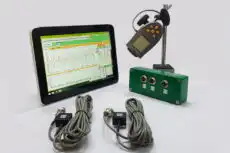
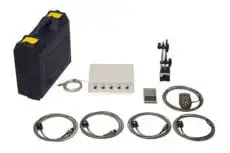
5. Measuring and Judging Vibration in the Field
In the field, an ایکسلرومیٹر is attached to the bearing housing and its signal is transformed by an ایف ایف ٹی into a سپیکٹرم, separating the overall reading into the individual frequencies that betray each fault. The measured شدت is then compared against acceptance zones in آئی ایس او 20816 (the modern successor to ISO 10816). When the dominant component is 1× unbalance, the same instrument that measures it can also correct it: a portable two-channel analyser such as the بیلنسیٹ -1 اے captures amplitude and phase in the machine’s own bearings and guides a balancing correction on-site, then re-measures to confirm the vibration has dropped within tolerance — closing the loop from diagnosis to verified repair.

