Balanslashtirish xizmatlari › Balanslashtirish mashinasini yangilash
Eski balanslashtirish mashinasini yangilash — Balanset-1A bilan modernizatsiya
Balanslashtirish mashinangizning mexanik asosi, kalibrlab o'rnatilgan tayanch tirgovichlari va haydovchi o'qi hali o'n yillar davomida ishga yaroqli. Eskirgan qism — bu o'lchov elektronikasi: eski analog blok, floppy-disk kompyuter, qo'llab-quvvatlanmaydigan sensor kartalar. Butun o'lchov va hisoblash tizimini quyidagi qurilma bilan almashtiring: Balanset-1A OEM to'plami €1 735 narxida va mavjud mashinangizni zamonaviy ikki kanalli raqamli o'lchov, FFT tahlili, ISO 21940-11 hisobotlari bilan ishlating — hech qanday davomiy litsenziya to'lovlarisiz.
In short: Retrofitting an old balancing machine means replacing only its measuring electronics — sensors, signal-conditioning unit and software — while keeping the proven mechanical structure intact. The Balanset-1A OEM set (unit + 2 vibration accelerometers + laser tachometer + software, €1,735) installs in one day on any hard- or soft-bearing machine, adds two-plane dynamic balancing, FFT vibration analysis and printable ISO 21940-11 reports, and costs roughly 10–60× less than a new machine.
Balansirovka mashinangiz o'lchov tizimini yangilashga muhtoj ekanligining belgilari
Qattiq yoki yumshoq tayanch balansirovka mashinasining mexanik qismi ko'pincha birinchi bo'lib eskirib qolmaydi — elektronika bundan oldin ishdan chiqadi. Quyidagi alomatlar o'lchov tizimining to'siq ekanligini ko'rsatadi, mashinaning o'zi emas:
To'liq almashtirish va maqsadli modernizatsiya xarajatlarini solishtirish
Qattiq tayanch balansirovka mashinasi asosan aniqlikdagi mexanik konstruksiyadir: qattiq rig'bat, kalibrlangan tayanch pedesatallar va barqaror haydovchi mil. Bu komponentlar oddiy texnik xizmat ko'rsatish bilan ko'p o'n yillar davom etadi. O'lchov tizimi — sensorlar, signal konditsionerlash, ADC va dasturiy ta'minot — iste'mol elektronikasining hayot davrini takrorlaydi: platforma qo'llab-quvvatlanmay qolgunicha va qismlar kamyob bo'lgunicha besh-o'n yil.
When the electronics fail, scrapping the entire machine is not the rational response. A full replacement is a capital project: €15,000 to €100,000+ for hardware, plus installation, commissioning and staff retraining. The Balanset-1A OEM measuring-system set at €1,735 installs into your existing machine in a single working day, connects to your existing bearing pedestals and picks up from your current sensor mounting positions (using the new vibration sensors supplied), and runs on any modern Windows laptop. The mechanical accuracy you paid for remains; only the obsolete electronics are replaced.
Balanset-1A modernizatsiyasi eski mashinangizga nima qo'shadi
Zamonaviy ikki kanalli o'lchov. Balanset-1A USB interfeys bloki eski bir kanalli analog elektronikangizni 24-bitli ikki kanalli ADC bilan almashtiradi. Ikkala podshipnik poydevori bir vaqtning o'zida o'lchanadi — bu keng rotorlarning ikki tekislikda dinamik balanslashtirilishi uchun zaruriy shartdir.
FFT spektri va faza ko'rsatgichi. Har bir o'lchov qilishda to'liq chastota sohasidagi spektr hosil bo'ladi, shunda siz muvozanatsizlikni (1×RPM), noto'g'ri tekislashni (2×RPM) va strukturaviy rezonansni farqlay olasiz. Faza burchagi har bir o'lchov uchun ko'rsatiladi va qayd etiladi.
Ta'sir koeffitsientlari dasturiy ta'minoti. Balanset dasturiy ta'minoti operatorni ta'sir koeffitsientlari usuli bo'yicha tizimli 3 qadamli jarayondan o'tkazadi: boshlang'ich o'lchov, sinov yuki bilan o'lchov, tuzatish hisob-kitobi. Qo'lda vektor arifmetikasi talab etilmaydi. Bir tekislikli va ikki tekislikli rejimlarni qo'llab-quvvatlaydi.
Chop etish mumkin bo'lgan ISO 21940-11 hisobotlari. Har bir balanslashtirish seansidan so'ng dasturiy ta'minot g·mm da boshlang'ich va qoldiq muvozanatsizlikni, G-daraja solishtirishini va to'liq o'lchov tarixini o'z ichiga olgan hisobot yaratadi. Sifatni boshqarish yozuvlari va mijoz hujjatlari uchun mos.
Lazerli taxometr mexanik trigger zanjirlarini almashtiradi. Optik faza sensori magnit shtativga o'rnatiladi va aks ettiruvchi lenta chizig'ini o'qiydi, eski mashinalardagi eskirgan yoki ishonchsiz mexanik faza-trigger qurilmalarini almashtiradi.
Balanset-1A ni mashinangizga modernizatsiya qilish — bosqichma-bosqich
- Mavjud mexanik tuzilmani baholash. Confirm that the machine’s bearing pedestals, drive and runout compensation still meet specification. If they do, the mechanical side needs no work. Document the existing sensor mounting positions on the bearing pedestals — the vibration sensors supplied with the Balanset unit will be installed at the same measurement points.
- Sensorlarni yangi blokka ulang. Mount the two supplied vibration accelerometers on the bearing pedestal housings in the standard orientation and plug them into the Balanset-1A interface unit using their attached cables. The unit is designed to work with its own matched sensors; if you would like to reuse the machine’s existing sensors instead, check compatibility with us first.
- Faza triggerini o'rnating. Lazerli taxometrni rotor yoki shpindelga yopishtirilgan aks ettiruvchi lentaga yo'naltiring. Lazer tayanchi magnit asosli bo'lib, burg'ulashsiz mashinaning ramiga mahkamlanadi. Bu barcha eskirgan mexanik yoki optik trigger qurilmalarini almashtiradi.
- Dasturiy ta'minotni sozlang. Balanset dasturiy ta'minotini Windows noutbukga (Windows 7 dan Windows 11 gacha) yuklab oling. Sensor sezuvchanliklari, mashinaning dastlabki kalibrlash hujjatidagi podshipnik qo'yish joyi qattiqlik konstantalari hamda balansirovka qilmoqchi bo'lgan rotor massasi diapazonini kiriting. Mashina profili sifatida saqlang.
- Kalibrlash rotorini ishga tushiring. O'lchangan balanslanmaslik ma'lum qiymatga mos kelishini tekshirish uchun massasi aniq ma'lum bo'lgan kalibrlash rotoridan (yoki aniq tortilgan sinov og'irligi bilan jihozlangan birinchi ishlab chiqarish rotoringizdan) foydalaning. Ta'sir koeffitsiyenti usuli har bir rotor turi uchun o'z-o'zini kalibrlaydi; tashqi kalibrlash xizmatiga ehtiyoj yo'q.
- ISO 21940-11 ga muvofiq tekshiruv o'tkazing. Balansirovka sikli o'tkazilgandan keyin qoldiq balanslanmaslik rotor sinfingiz uchun talab etiladigan G-daraja toleransidan oshmashligini tasdiqlash maqsadida nazorat rotorini ishga tushiring. Natijani ishga tushirish yozuvi sifatida chop eting va arxivlang.
Oldin va keyin: eski analogli mashina va Balanset bilan modernizatsiya qilingan mashina
| Capability | Eski analogli tizim | Balanset-1A retrofit |
|---|---|---|
| O'lchov kanallari | 1 (faqat bir tekislikda) | 2 (bir & ikki tekislikda) |
| FFT chastota spektri | Yo'q — faqat analogli o'lchov qurilmasi | Ha — to'liq spektr ko'rinishi |
| Faza burchagi ko'rsatkichi | Stroboskop lampasiga asoslangan taxminiy baholash | Raqamli, har bir ishga tushirishda qayd etiladi |
| ISO 21940-11 hisoboti | Not possible | Har bir seans yakunida chop etiladi |
| Qoldiq muvozanatsizlik g·mm da | Not calculated | Hisoblanadi va ko'rsatiladi |
| PKga ulanish | Disketa / yo'q | USB, Windows 7–11 |
| Saqlangan ishga tushirishlar tarixi | Qog'oz tasma chop etish | Raqamli fayl, chop etish mumkin |
| Spare parts | Discontinued | Ishlab chiqarishda, 2 yil kafolat |
| Upgrade cost | — | €1 735 OEM to'plami |
Asl mashinaning mexanik aniqligi — yotqiziq qattiqligʻi, poydevor barqarorligi, haydovchi millining yugurib chiqishi — to'liq saqlanib qoladi. Faqat o'lchov va hisoblash uskunasi almashtiriladi.
Balanset-1A — eski elektronikangizni almashtiruvchi o'lchov tizimi
The Balanset-1A is a two-channel dynamic balancer and vibration analyser designed to replace the measuring electronics of any existing hard- or soft-bearing balancing machine. It connects to your machine’s bearing pedestals via the supplied vibration accelerometers and to the rotor via a laser tachometer, then runs the 3-run influence-coefficient method in software — calculating exact correction mass and angle and saving a full ISO 21940-11 report. The OEM set (blok + 2 ta sensor + lazerli taxometr + dasturiy ta'minot — transport qutisi, raqamli tarozi va magnit shtativ yo'q) — mavjud muvozanatlash mashinasiga o'lchov tizimini o'rnatuvchi integratorlar uchun maqsadli konfiguratsiya.
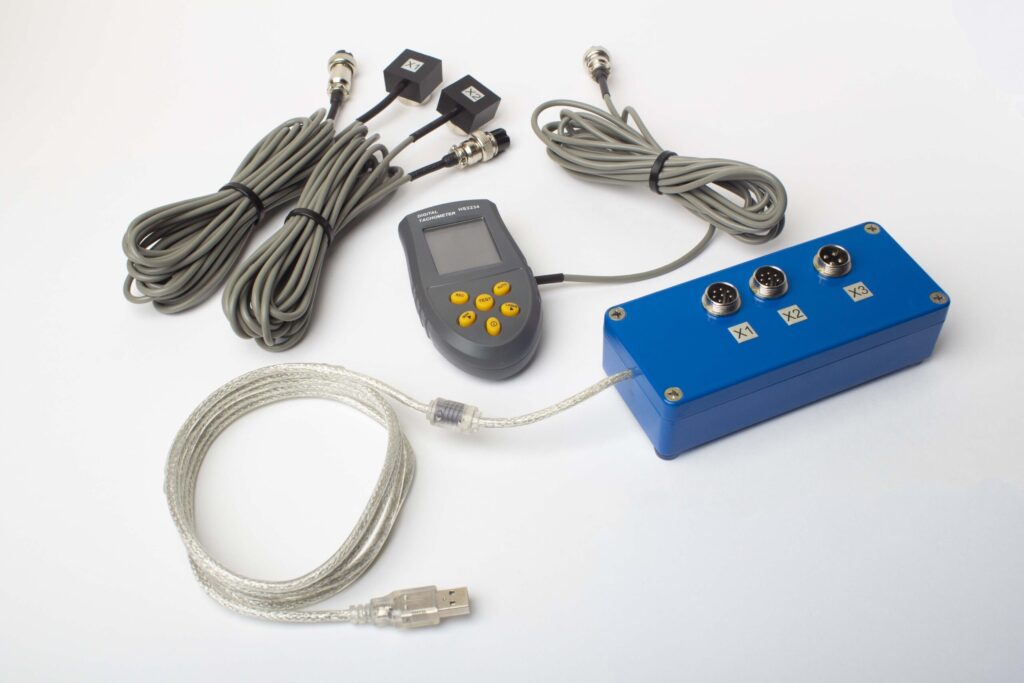
To'liq to'plamga nima kiradi
€1,975 · To'liq to'plam, omborda mavjud, QQS hisob-fakturasi
- Interfeys o'lchov bloki (USB, 2 kanal)
- Ikki ta vibratsiya akselerometri (4 m kabel, 10 m ixtiyoriy)
- Lazerli taxometr / optik faza sensori (50–500 mm)
- Sensor uchun magnit shtativ
- Sinov & tuzatish og'irliklari uchun raqamli tarozi
- Windows muvozanatlash va tahlil dasturi
- Plastik transport qutisi
Full Kit
Qurilma · 2 ta sensor · lazerli taxometr · magnit stend · raqamli tarozilar · dastur · transport qutisi. Muvozanatlashni darhol boshlash uchun zarur bo'lgan hamma narsa.
OEM to'plami — mashinani yangilash uchun
Blok · 2 ta sensor · lazerli taxometr · dasturiy ta'minot — transport qutisi, raqamli tarozi va magnit shtativ yo'q. Mavjud muvozanatlash mashinasiga o'lchov tizimini joylashtiruvchi integratorlar uchun mo'ljallangan. €1 735. Maqsadli yangilash konfiguratsiyasi.
| Parameter | Value |
|---|---|
| O'lchov kanallari | 2 (bir tekislikda & ikki tekislikda muvozanatlash) |
| Tebranish tezligi diapazoni | 0.2–80 mm/s RMS |
| Chastota diapazoni | 5–1000 Hz (≤10% amplitude error above 550 Hz) |
| O'lchov aniqligi | ±5% to'liq shkaladan |
| Method | 3 o'tishli ta'sir koeffitsienti usuli (1 yoki 2 tekislik) |
| Analysis | 1× garmonikada amplituda & faza, FFT spektri & to'lqin shakli, saqlanadigan hisobotlar |
| Standards | ISO 21940-11 bo'yicha qoldiq muvozanatsizlik hisoboti |
| Laptop | Kiritilmagan (Windows 7–11, so'rov asosida taqdim etiladi) |
Haqiqiy modernizatsiya va yangilash holatlari
Qattiq tayanch mashinasi modernizatsiya qilindi
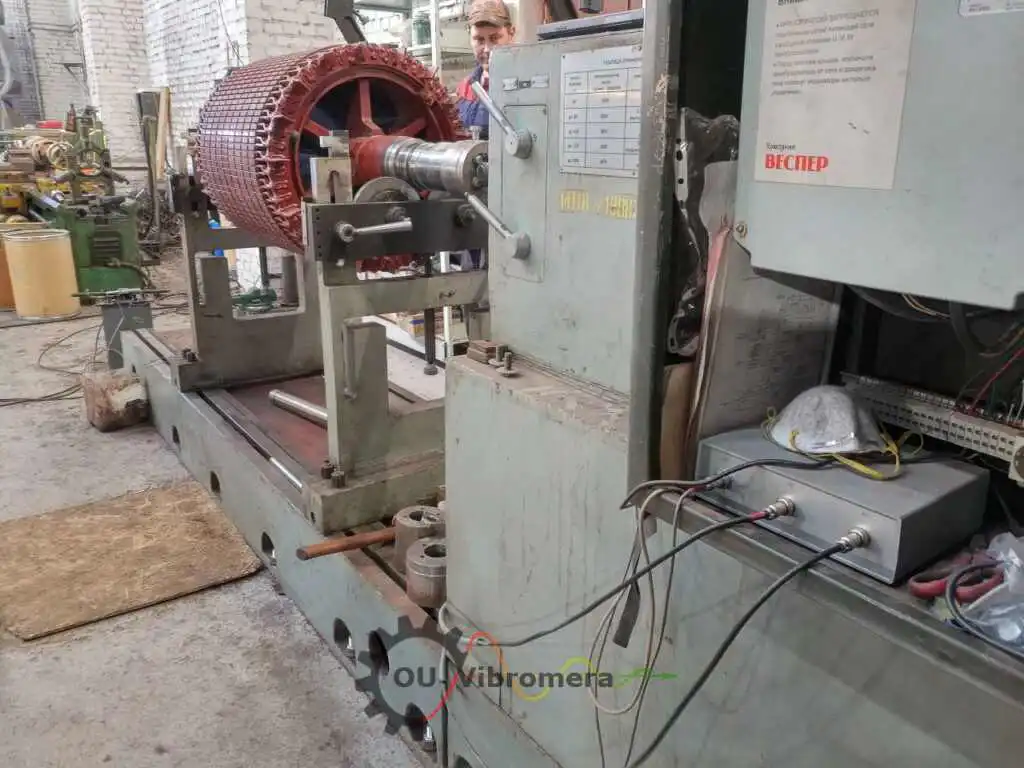
Full retrofit of an old hard-bearing balancing machine: new vibration sensors, new Balanset measuring unit, modern software — mechanical structure unchanged.
Balanset OEM o'lchov tizimi sifatida
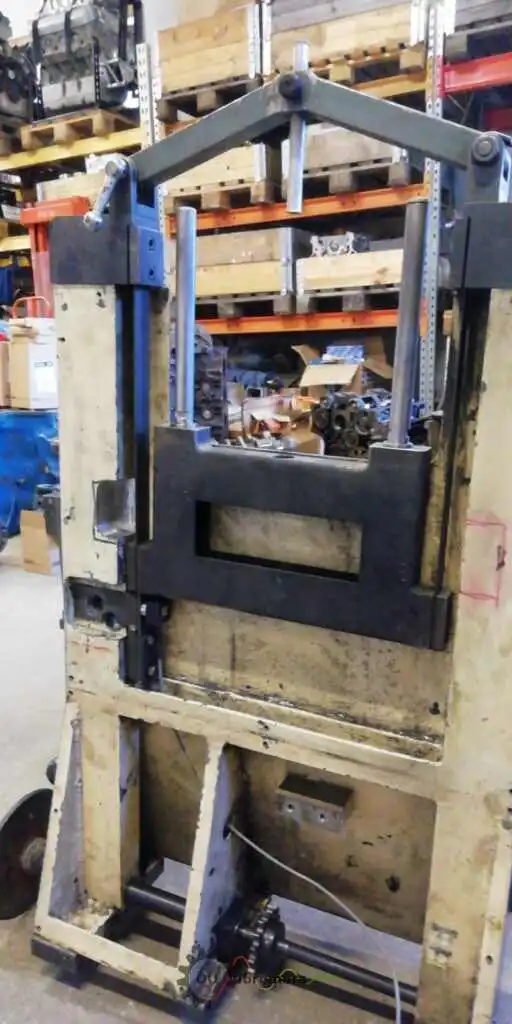
Balanset OEM blokining mavjud ishlab chiqarish balanslashtirish mashinasiga doimiy o'lchov va hisoblash tizimi sifatida integratsiya qilinganligini ko'rsatuvchi video namoyish.

O'z qo'li bilan yasalgan balanslashtirish mashinalari
Muhandislar Balanset o'lchov blokini elektron o'zak sifatida ishlatib, o'zlari podshipnik tayanch qoziqlari va yuritma tizimlarini yasadilar — bu yangilash bilan bir xil yondashuv.
Toleranslar & standartlar
Bepul yangilash kalkulyatorlari
Modernizatsiya & yangilash bo'yicha tez-tez so'raladigan savollar
Balanset bloki mavjud sensorlarim bilan ishlaydimi?
Yumshoq tayanch hamda qattiq tayanch mashinasidagi elektronikani ham almashtira oladimi?
OEM to'plami va standart To'liq to'plam o'rtasidagi farq nima?
Balanslashtirish mashinasida biron-bir mexanik ish talab etiladi?
Odatdagi retrofit o'rnatish qancha vaqt oladi?
Balanset OEM to'plami avtomatlashtirilgan yoki yarim avtomatlashtirilgan ishlab chiqarish liniyasiga integratsiya qilinishi mumkinmi?
Nazariyani o'rganish
Yaxshi mashinani chiqitga chiqarmang — uni bugun modernizatsiya qiling
Balanset-1A OEM to'plami mavjud balanslashtirish mashinangizni €1,735 ga to'liq zamonaviy darajaga ko'taradi — ikki tekislikda raqamli o'lchov, FFT tahlili, faza ko'rsatkichi va ISO 21940-11 hisoboti. Mexanik investitsiyangizni saqlang; faqat eskirgan elektronikani almashtiring.

