Siquvchi Yog' Plyonkali So'ndirgichlarni Tushunish


A siquvchi yog' plyonkali so'ndirgich (SFD) passiv damping tebranish energiyasini so'rish va boshqarish uchun aylanuvchi mexanizmlarda qo'llaniladigan qurilma vibration amplitudalar — ayniqsa kritik aylanish tezliklarini. U podshipnik korpusini o'rab turgan tor halqasimon bo'shliqda mahkam tutilgan yupqa yog' plyonkasidan iborat. Podshipnik va unga biriktirilgan rotor tebranganda, korpus o'sha bo'shliq ichida tebranadi va yog' plyonkasini siqadi; siqilishga qarshilik ko'rsatadigan yopishqoqlik energiyani so'radi va sezilarli qattiqlik qo'shmasdan rotor tizimini so'ndiradi. Siquvchi yog' plyonkali so'ndirgichlar samolyot dvigatellarida, sanoat gaz turbinalarida va boshqa yuqori tezlikli mexanizmlarda — rezonansni jilovlash va rotor beqarorliklari.
1. Fizik Ishlash Prinsipi
Siqish harakati
Unlike a sirpanma podshipniki, uning yog' plyonkasi doimiy radial yukni ko'taradigan, siquvchi yog' plyonkali so'ndirgich statik yuk ko'tarmaydigan plyonkaning siklik siqilishi orqali ishlaydi:
- Rotor tebranishi: muvozanatsizlashgan yoki boshqa tarzda qo'zg'atilgan rotor podshipnikka tebranma kuchlar ta'sir qiladi.
- Korpus harakati: podshipnik korpusi so'ndirgich bo'shliq ichida radial yo'nalishda orbitada aylanadi yoki tebranadi.
- Yog' plyonkasini siqish: korpus ichkariga siljigan sari yog' qatlami siqiladi; tashqariga siljigan sari esa kengayadi.
- Yopishqoqlik qarshiligi: yog' tirqishdan siqib chiqarilishga qarshilik ko'rsatib, tezlikka mutanosib so'ndiruv kuchini hosil qiladi.
- Energiyaning tarqalishi: tebranish energiyasi yog'da issiqlikka aylanadi va uzatish oqimi orqali chiqarib yuboriladi.
Qarshilik kuchi ko'chishga emas, balki tezlikka mutanosib bo'lganligi sababli, so'ndiruvchi motion prujina kabi harakat qilmasdan — bu so'ndiruvni qattiqlikdan ajratib turadigan asosiy xususiyatdir.
Radial qafas podshipnikdan farqi
- Radial qafas podshipnik: gidrodinamik yog' qatlami bosimi orqali statik va dinamik yuklamalarni ko'tarib, ham qattiqlik, ham so'ndirish ta'minlaydi.
- Siqiluvchi yog' qatlami so'ndiruvchi (SFD): minimal qattiqlik bilan so'ndirish ta'minlaydi va doimiy yuklamani ko'tarmaydi.
- Combination: yumalanuvchi element podshipnik (yukni ko'tarish uchun) va SFD (so'ndirish ta'minlash uchun) kombinatsiyasi ko'plab yuqori tezlikdagi konstruksiyalar uchun ideal juftlik hosil qiladi, chunki yumalanuvchi podshipniklar o'z-o'zidan deyarli hech qanday so'ndirish ta'minlamaydi.
2. Konstruksiya va loyiha
Asosiy komponentlar
- Ichki halqa (podshipnik korpusi): yumalanuvchi element podshipnik korpusining radial siljishga erkin tashqi yuzasi.
- Tashqi halqa (so'ndiruvchi korpus): aniq silindrli teshikli statsionar korpus.
- Halqasimon bo'shliq: ichki va tashqi halqalar orasidagi radial bo'shliq, odatda 0,1–0,5 mm.
- Oil supply: bo'shliq maydoniga purkab beriladigan bosimli moy.
- End seals: moyni o'qiy yo'nalishda ushlab turadigan O-halqalar yoki shunga o'xshash zichlagichlar.
- Markazlashtiruvchi elementlar: ortiqcha siljishning oldini oluvchi va jurnal podshipnikni tinch holatda markazda ushlab turadigan prujinalar yoki ushlagich elementlar.
Konstruktiv parametrlar
- Radial bo'shliq (c): so'ndirish koeffitsiyentini belgilaydi — kichikroq bo'shliq ancha kuchli so'ndirish beradi.
- Length (L): so'ndiruvchining o'qiy uzunligi — uzunroq bo'lsa so'ndirish kuchliroq bo'ladi.
- Diameter (D): kattaroq diametr so'ndirish kuchini oshiradi.
- Moy yopishqoqligi (µ): yuqoriroq yopishqoqlik kuchliroq so'ndirish beradi.
- End-seal type: o'qiy yo'nalishdagi moy oqishini va shu bilan birga samarali so'ndirish darajasini boshqaradi.
3. So'ndirish koeffitsiyenti
Siqiluvchi yog' pardasi so'ndiruvchi hosil qiladigan so'ndirish kuchi, birinchi yaqinlashuvda:
Fdamping = C × velocity, where the damping coefficient C ∝ (µ · D · L³) / c³.
Bo'shliqqa kub darajali bog'liqlik asosiy faktdir: koeffitsiyent 1/c³ nisbatida o'zgaradi, ya'ni bo'shliqni ikki barobar kamaytirish so'ndirish kuchini taxminan sakkiz barobar oshiradi. Bu haddan tashqari sezuvchanlik ikki tomonlama qilichdir — konstruktorga kuchli imkoniyat beradi, biroq bu ishlab chiqarish toleranslari, issiqlik kengayishi va rozbur yeyilishining real ishlashga sezilarli ta'sir ko'rsatishini ham anglatadi. Shuning uchun optimal yog' pardasi qalinligini tanlash markaziy konstruktiv qarordir va u rotorning oldindan hisoblangan ’ mode shapes.
Markazlashtiruvchi prujinalar
- Purpose: harakatlar katta bo'lganda so'ndiruvchining metal-metallga tegib “tiqilib qolishi”ning oldini olish uchun.
- Qattiqlik tanlash: amortizator harakatlanib o'z vazifasini bajarishi uchun yetarlicha yumshoq, shu bilan birga podshipnik o'qi tortishish kuchi va statik yon yuklar ostida markazda ushlab turilishi uchun yetarlicha qattiq.
- Common types: "squirrel-cage" prujinasi (çevresel nur elementlaridan iborat halqa), spiral prujinalar va elastomer elementlar.
Yog' ta'minoti va drenaji
- Bo'shliqni yog' bilan to'ldirib turish uchun odatda 1–5 bar bosimli ta'minot.
- Yog' pardasi hosil qiladigan issiqlikni olib chiqib ketish uchun yetarli oqim.
- Yog' toshib ketishi va ortiqcha bosimlanishning oldini olish uchun to'g'ri drenaj.
- Havo chiqarish teshigi — oldini olish uchun cavitation parda ichida.
4. Siquvchi yog' parda amortizatorlarining afzalliklari
- Qattiqliksiz so'ndirishni ta'minlaydi: rotorning kritik aylanish tezliklarini sezilarli darajada siljitmasdan energiya dissipatsiyasini oshiradi.
- Kritik tezlikdagi tebranishni kamaytiradi: holds resonance amplitudalarni xavfsiz darajaga tushiradi.
- Beqarorliklarning oldini oladi: helps suppress oil whirl, shaft whip va boshqa o'z-o'zidan qo'zg'aladigan tebranishlar.
- Uzatiladigan kuchni izolyatsiya qiladi: poydevor va atrofdagi konstruksiyaga o'tkazilayotgan tebranishni kamaytiradi.
- O'tish jarayonlarini boshqaradi: ishga tushirish, to'xtatish va yuklanish o'zgarishlari paytidagi tebranishni jilovlaydi.
- Modernizatsiya imkoniyati: mavjud mashinalarga katta qayta loyihalashsiz qo'shish mumkin.
- Passiv ishlash: boshqaruv tizimi yoki tashqi quvvat manbaiga ehtiyoj yo'q — faqat moy ta'minoti talab qilinadi.
5. Qo'llanish sohalari
Aircraft gas turbines
- Zamonaviy aerokosmik dvigatellarda deyarli universal tarzda qo'llaniladi.
- Ishga tushirish paytida kritik tezlikdan o'tishda tebranishni boshqarish uchun muhim ahamiyatga ega.
- Yumalanma podshipniklarni juda yuqori aylanish tezligidagi ilovalarda qo'llash imkonini beradi.
- Kompakt, engil konstruksiya — aerokosmik soha uchun hal qiluvchi ustunlik.
Sanoat gaz turbinalari
- Yumalanma yoki qiya podshipniklar bilan birgalikda ishlatiladi.
- Tez-tez ishga tushirish va to'xtatish jarayonlarida tebranishni nazorat qiladi.
- Tayanchli konstruksiyaga uzatiladigan tebranishni kamaytiradi.
Yuqori tezlikli kompressorlar
- Podshipniklarning o'zi ta'minlay oladigan so'ndirishdan tashqari qo'shimcha so'ndirish imkonini beradi.
- Yengil yuklamalarda beqarorlikning oldini oladi.
- Foydalanish mumkin bo'lgan ish diapazonini kengaytiradi.
Modernizatsiya ilovalari
- Ortiqcha kritik tezlik tebranishidan aziyat chekayotgan mavjud mashinalarga o'rnatiladi.
- Balanslashtirish va to'g'rilash yolg'iz tebranishni yetarlicha kamaytirolmagan holatlarda muammo yechimi.
- Qimmatbaho rotorni yoki podshipnikni qayta loyihalashga alternativa.
6. Qiyinchiliklar va cheklovlar
Loyihalash muammolari
- Cavitation: yog' qavati kavitatsiyaga — bug' pufakchalari hosil bo'lishiga — olib kelishi mumkin, bu esa samarali so'ndirishni kamaytiradi.
- Air ingestion: kirib kelgan havo yog' qavatini yumshatadi va so'ndirishni kamaytiradi.
- Chastotaga bog'liqligi: so'ndirish samaradorligi tebranish chastotasiga qarab o'zgaradi.
- Chiziqsiz xatti-harakat: ishlash ko'rsatkichi amplitudaga qarab o'zgaradi, bo'shliq chegarasiga yaqinlashuvchi katta orbitalar esa juda chiziqsiz tarzda namoyon bo'ladi.
Ishlatishdagi muammolar
- Harorat sezuvchanligi: harorat ko'tarilishi bilan yog' yopishqoqligi pasayadi va bu bevosita so'ndirishni kamaytiradi.
- Cleanliness: ifloslanish ta'minot kanalini to'sib qo'yishi yoki aniqlik talab qiladigan yuzalarni shikastlashi mumkin.
- Yog' ta'minotiga bog'liqligi: yog' bosimi yo'qolishi so'ndirishni butunlay bartaraf etadi.
- Seal wear: oxirgi zichlagichlar vaqt o'tishi bilan yeyiladi va samaradorlik asta-sekin pasayadi.
Texnik xizmat ko'rsatish talablari
- Yog' ta'minoti bosimi va haroratini nazorat qiling.
- Oxirgi zichlagichlarni davriy ravishda tekshiring.
- Ta'mirlash ishlari paytida bo'shliqlarni tekshiring.
- Markazlashtiruvchi prujinalar holatini tekshiring.
- Yog' kanallarini va filtrlarni tozalang.
7. Ilg'or konstruksiyalar
Pistonli halqa so'ndirgichlari
- O-halqa muhrlar o'rnida pistonli halqalardan foydalaniladi.
- Bosimni bir tekis taqsimlash uchun nazorat ostidagi yog' sizib chiqishiga yo'l qo'yiladi.
- Kavitatsiyaga moyillikni kamaytiradi.
Ochiq uchli so'ndirgichlar
- Uchlarida muhrlash yo'q — yog' o'q yo'nalishida erkin oqadi.
- Muhrlash yeyilishi muammolari bo'lmagan soddaroq konstruksiya.
- Yuqoriroq yog' sarfi talab qilinadi.
- Yanada barqaror va bashorat qilinadigan so'ndirish ta'minlanadi.
Integral so'ndirgichlar
- So'ndiruvchi plyonka to'g'ridan-to'g'ri podshipnik orqa qismi bilan korpus o'rtasida hosil bo'ladi.
- Alohida so'ndirgich komponenti talab qilinmaydi.
- Ixcham, ammo ta'minlay oladigan so'ndirish darajasi cheklangan.
8. Samaradorlik va ishlash ko'rsatkichlari
Tebranishni kamaytirish
- Kritik tezlikdagi tebranishni 50–80% ga kamaytirish mumkin.
- Rezonansni nazorat qilishda ayniqsa samarali.
- Kritik tezlik cho'qqisini kengaytirib, uni kamroq o'tkirlashtiradi.
- Kritik tezliklardan xavfsizroq va tinchroq o'tish imkonini beradi — bu grafik ustida tekisroq cho'qqi sifatida ko'rinadi Bode plot during run-up.
Barqarorlikni oshirish
- Qo'zg'alish (chegara) tezligini oshiradi instabilities.
- Can prevent oil whirl dumalanuvchi podshipniklar bilan birgalikda ishlatilganda.
- Beqarorlashtiruvchi chog'ishtirilgan kuchlarga qarshi turadigan ijobiy so'nishni ta'minlaydi.
9. Loyihalash, Tahlil va Dala Tekshiruvi
Siqiluvchan yog' plyonkali so'ndiruvchini to'g'ri loyihalash butun tizimni kompleks o'rganishni talab qiladi: rotor-podshipnik tizimi:
- Rotorning dinamik tahlili: reaktsiya va barqarorlikni bashorat qilish uchun rotor, podshipniklar va so'ndiruvchi birgalikda modellashtirish.
- Suyuqlik plyonkasini tahlil qilish: plyonkadagi bosim taqsimotini hisoblash uchun Reynolds tenglamasining yechimlari.
- Chiziqsiz tahlil: kavitatsiya va amplitudaga bog'liq xulq-atvorni hisobga olish.
- Issiqlik tahlili: moy haroratining ko'tarilishi va issiqlikni tarqatish.
- Maxsus dasturiy ta'minot: DyRoBeS va XLTRC kabi rotordinamika paketlarida SFD modellari mavjud.
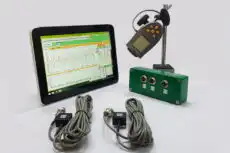
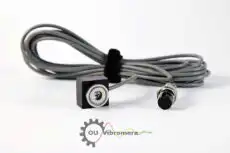
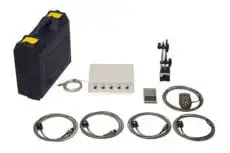
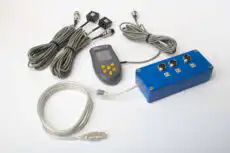
Loyiha qanchalik yaxshi bo'lmasin, uning asosiy vazifasi o'lchangan tebranishni maqbul chegaralar doirasida ushlab turishdir va bu ishlab turgan mashinada, qog'ozda emas, tasdiqlanadi. Buning uchun amaliy vosita — Balanset-1A bu tekshiruv uchun amaliy quroldir: akselerometrlar podshipnik korpuslarida amplituda va phase through a ishga tushirish yoki to'xtatish jarayoni, muhandisga so'ndirilgan kritik tezlik cho'qqisining qanchalik keng va past ekanligini kuzatish va rotorning rezonansdan xavfsiz o'tishini tasdiqlash imkonini beradi. Agar qoldiq unbalance rezonansni qo'zg'atayotgan bo'lsa, xuddi shu asbob field-balance rotorni — chunki hatto eng yaxshi so'ndiruvchi ham o'ziga ta'sir qiluvchi kuch avval minimallashtirilganda yaxshiroq ishlaydi.
10. Qachon Qo'llash — va Qachon Qo'llamaslik
Tavsiya etilgan qo'llanish sohalari
- Yuqori tezlikli mexanizmlar: kritik tezlikka yaqin yoki undan yuqori tezlikda ishlovchi.
- Dumalanish elementli podshipnik tizimlari: bu yerda podshipniklarning o'zi kam so'ndirish ta'minlaydi.
- Egiluvchan rotorlar: birinchi kritik tezlikdan yuqorida ishlovchi.
- Barqarorlik muammolari: rotor beqarorligi haqiqiy xavf tug'diradigan holatlarda.
- O'tish jarayonlarini boshqarish: ishga tushirish va to'xtatish vaqtidagi tebranishni kamaytirish.
Tavsiya etilmaydi, qachon
- Ish past tezlikda olib borilib, so'ndirish muhim emas.
- O'rnatish uchun joy yetarli emas.
- Ishonchli yog' ta'minoti tizimi mavjud emas.
- Texnik xizmat ko'rsatish resurslari cheklangan — so'ndiruvchilar texnik xizmat talab qiladigan yog' tizimini qo'shadi.
- Oddiyroq chora-tadbirlar, masalan, aniq muvozanatlash or alignment, allaqachon o'z vazifasini bajaradi.
Siqiluvchi plyonkali so'ndirgich — yuqori tezlikda aylanadigan mashinalardagi tebranishlarni boshqarishning mukammal yechimi. U deyarli qo'shimcha qattiqlik yaratmasdan katta so'ndirish ta'mini qo'llab, kritik tezliklardan xavfsiz o'tishga imkon beradi, halokatli beqarorliklarni bostiradi va ish diapazonini kengaytiradi — bularning barchasini kichik, passiv, faqat toza va barqaror yog' ta'minotini talab qiladigan qurilmada amalga oshiradi.