



Meet Vibromera.com — our new international website. Visit Vibromera.com →

理解多平面動平衡

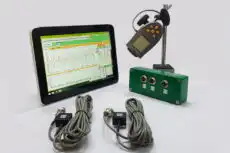
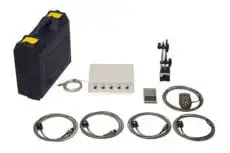
便攜式平衡機 & 振動分析儀 Balanset-1A

振動感測器

光學感測器(雷射轉速計)

Balanset-4

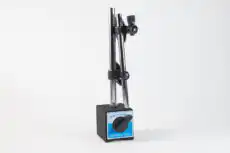
磁吸支架 Insize-60-kgf

反光膠帶

動平衡機「Balanset-1A」OEM

多平面動平衡 是一種先進的 動平衡校正 是一種使用三個或更多 校正平面 沿轉子長度分佈,以將振動降至可接受水平。此技術專為 柔性轉子 — 運轉時會顯著彎曲的軸,因為它們在一個或多個 臨界轉速。當 雙面動平衡 完全校正剛性轉子的靜態與 力偶不平衡時,多平面動平衡將相同的 影響係數 邏輯延伸至控制複雜的彎曲形狀 — 即 模態振型 — 柔性轉子在運轉時呈現的形狀。

1. 定義與基本概念

剛性轉子的不平衡僅存在於兩個獨立分量中,因此兩個校正平面即可完整描述。柔性轉子則不同:隨著彎曲,會出現新的 離心力 分佈,兩個平面無法代表。轉子經過的每個彎曲模態都有其獨特的撓曲形狀,並需要特定的校正配重模式。增加平面 — 三個、四個或更多 — 為分析師提供足夠的獨立「控制點」,以塑造適用於多個模態及整個運轉速度範圍的校正,而不僅限於單一軸承或單一速度。

2. 何時需要多平面動平衡?

幾種特定情況需要超過兩個平面:

在臨界速度以上運轉的柔性轉子

經典案例是細長的 柔性轉子 ,其運轉速度高於第一 — 有時甚至高於第二或第三 — 臨界速度。典型範例包括:

  • 汽輪機與燃氣渦輪機轉子
  • 高速壓縮機軸
  • 造紙機輥
  • 大型發電機轉子
  • 離心機轉子
  • 高速主軸

這些轉子在運轉時會顯著彎曲,且撓曲形狀會隨速度及被激發的模態而變化。兩個校正平面根本無法在所有運轉速度下將振動控制在可接受範圍內。

極長的剛性轉子

即使是名義上的 剛性轉子,若其長度相對於直徑極長,也可透過三個或更多平面來最小化軸上多個軸承位置的振動。

質量分佈複雜的轉子

在不同軸向位置承載多個盤片、輪轂或葉輪的轉子,可能需要對每個元件個別進行動平衡,這自然成為多平面程序。

當雙平面動平衡證明不足時

若雙平面嘗試使軸承符合規格,但中間點的振動仍高 — 通常為軸承之間的中間跨距撓度過大 — 此未校正的彎曲即為需要額外平面的訊號。

3. 挑戰:柔性轉子動力學

三種交織效應使多平面動平衡真正困難。

模態形狀

當柔性轉子通過臨界速度時,會以稱為模態形狀的特徵模式振動。第一模態將軸彎成單一平滑弧線;第二模態形成帶有 節點 的 S 形曲線,位於中間跨距附近;更高模態變得日益複雜。每個模態需要其自身的校正配重分佈,這就是為何單純的單速校正往往失敗。

速度依賴行為

柔性轉子的不平衡響應會隨速度劇烈變化。在某速度下使轉子平靜的校正,在另一速度下可能無效 — 甚至有害。因此,多平面動平衡必須考慮整個運轉速度範圍,通常透過 波德圖 掃過每個共振來確認。

交叉耦合效應

任何一個平面中的配重都會影響 每個 測量位置的振動。當有三個、四個或更多平面時,互動網絡遠比雙平面工作中整齊的 2×2 關係更為密集,且簿記工作遠遠超出人工計算的範疇。

4. 多平面動平衡程序

此程序是直接延伸自 影響係數法 用於雙平面的方法。

步驟 1 — 初始測量

在轉子沿線的幾個位置測量振動 — 通常在各軸承處,有時在中間點 — 在感興趣的運轉速度下。對於柔性轉子,讀數通常在多個速度下取得,以捕捉每個模態。

步驟 2 — 定義校正平面

識別 N 個可添加配重的校正平面,沿轉子分佈於可及特徵處,如聯軸器法蘭、輪轂邊緣或專用平衡環。

步驟 3 — 順序試重運轉

執行 N 次 試重運轉,每次僅在一個平面中放置單一 試重 。以四個平面為例:

  • 運轉 1:僅在平面 1 放置試重
  • 運轉 2:僅在平面 2 放置試重
  • Run 3: trial weight in Plane 3 only
  • Run 4: trial weight in Plane 4 only

At each run, vibration is recorded at all sensor locations, building a complete influence coefficient matrix that describes how each plane affects each measurement point.

Step 4 — Calculate the corrections

The software solves a system of N simultaneous complex equations for the optimal 校正配重 in every plane. This calls for matrix algebra that is far beyond hand calculation — specialised software is essential.

Step 5 — Install and verify

Fit all calculated weights at once and verify the result. For flexible rotors, verification should span the full operating speed range to prove acceptable vibration at every speed, with a final check that 剩餘不平衡 meets the relevant tolerance.

5. Modal Balancing: An Alternative Approach

對於高度柔性轉子, 模態動平衡校正 is often more effective than the conventional influence-coefficient route. Instead of targeting specific speeds, it targets specific vibration modes: by computing weight sets that match the rotor’s natural mode shapes, it can achieve good results with fewer trial runs. The trade-off is that it demands sophisticated analysis tools and a deep grasp of rotor dynamics. In practice the two philosophies are often blended — the so-called N+2 法 combines modal insight with influence-coefficient corrections, using N planes to address the modes of interest plus two more for the rigid-body (static and couple) content.

6. Complexity and Practical Considerations

Multi-plane balancing is markedly more demanding than two-plane work on every front.

Number of trial runs

The number of trial runs rises in step with the number of planes. A four-plane balance needs four trial runs plus the initial and verification runs — six starts and stops in all — which adds cost, time, and wear on the machine and its bearings.

Mathematical complexity

Solving for N weights means inverting an N×N matrix, which is computationally heavy and can turn numerically unstable when the data are noisy or the planes are poorly placed.

測量精度

Because the answer rests on many simultaneous equations, measurement error and noise bite harder than in two-plane balancing. High-quality sensors, clean mounting and careful data collection are not optional.

Correction-plane accessibility

Finding N accessible, effective plane locations can be a struggle, especially on machines never designed with multi-plane balancing in mind.

7. Equipment and Software Requirements

A multi-plane job requires:

  • Advanced balancing software: able to handle N×N influence-coefficient matrices and solve systems of complex vector equations.
  • Multiple vibration sensors: ideally at least N 加速規, one per measurement location, though some instruments make do with fewer by repositioning them between runs.
  • A tachometer or 鍵相器: indispensable for accurate 相位 測量至關重要。
  • Experienced personnel: the complexity demands technicians with advanced training in 轉子動力學振動分析.

8. Where Portable Two-Plane Work Fits In

It is worth being clear about the boundary. The overwhelming majority of industrial rotors are rigid and are fully served by single- or two-plane 現場動平衡 — exactly the task a portable two-channel instrument such as the Balanset-1A handles on site, in the machine’s own bearings, without disassembly. Multi-plane balancing is the specialised escalation for genuinely flexible rotors running above critical speed. A sound field strategy is to start with a correct two-plane balance and a clean diagnosis; only when residual mid-span vibration proves that the rotor is flexing — not merely unbalanced or misaligned — does the extra cost and complexity of additional planes become justified.

9. Typical Applications

Multi-plane balancing is routine in industries built around high-speed machinery:

  • 發電: large steam and gas turbine-generator sets.
  • 石化: high-speed centrifugal compressors and turboexpanders.
  • Pulp and paper: long dryer rolls and calender rolls.
  • 航空航太: aircraft engine rotors and turbomachinery.
  • 製造業: high-speed machine-tool spindles.

In every case the investment in multi-plane balancing is justified by the criticality of the equipment, the severe consequences of failure, and the efficiency gained by running with the lowest possible vibration.


← 返回主索引

WhatsApp
Balanset-1A · €1975Ask engineer

