現場動平衡
第一部分:動平衡的理論與法規基礎
現場動平衡校正是振動調試和狀態維護中的關鍵作業之一,目的在於延長工業設備的使用壽命並預防緊急事故。使用Balanset-1A這類便攜式儀器,可以直接在運行現場完成這些作業,將停機時間以及與拆卸相關的成本降到最低。然而,成功的平衡校正不僅需要熟練操作儀器的能力,還需要對振動背後的物理過程有深刻理解,並熟悉規範作業品質的相關標準體系。
該方法論原理基於安裝試重並計算不平衡影響係數。簡而言之,儀器測量旋轉轉子的振動(振幅和相位),隨後使用者在特定校正平面中依次添加小型試重,以「校準」附加質量對振動的影響。根據振動振幅和相位的變化,儀器自動計算消除不平衡所需的校正配重質量及安裝角度。
此方法實施了所謂的 三步法 雙平面動平衡校正:初始測量與兩次試重運轉(每個平面各一次)。對於單平面動平衡校正,通常兩次運轉即足夠——一次無配重,一次加裝單一試重。在現代儀器中,所有必要計算均自動執行,大幅簡化流程並降低操作人員資格要求。
第 1.1 節:不平衡的物理學:深入分析
旋轉設備中任何振動的核心皆為不平衡(imbalance 或 unbalance)。不平衡是指轉子質量相對於其旋轉軸分佈不均的狀態。這種不均勻分佈會產生離心力,進而導致支撐結構及整台機器結構產生振動。未處理的不平衡可能帶來災難性後果:從軸承的早期磨損與破壞,到基礎與機器本身的損壞。為有效診斷並消除不平衡,必須清楚區分其類型。
不平衡類型
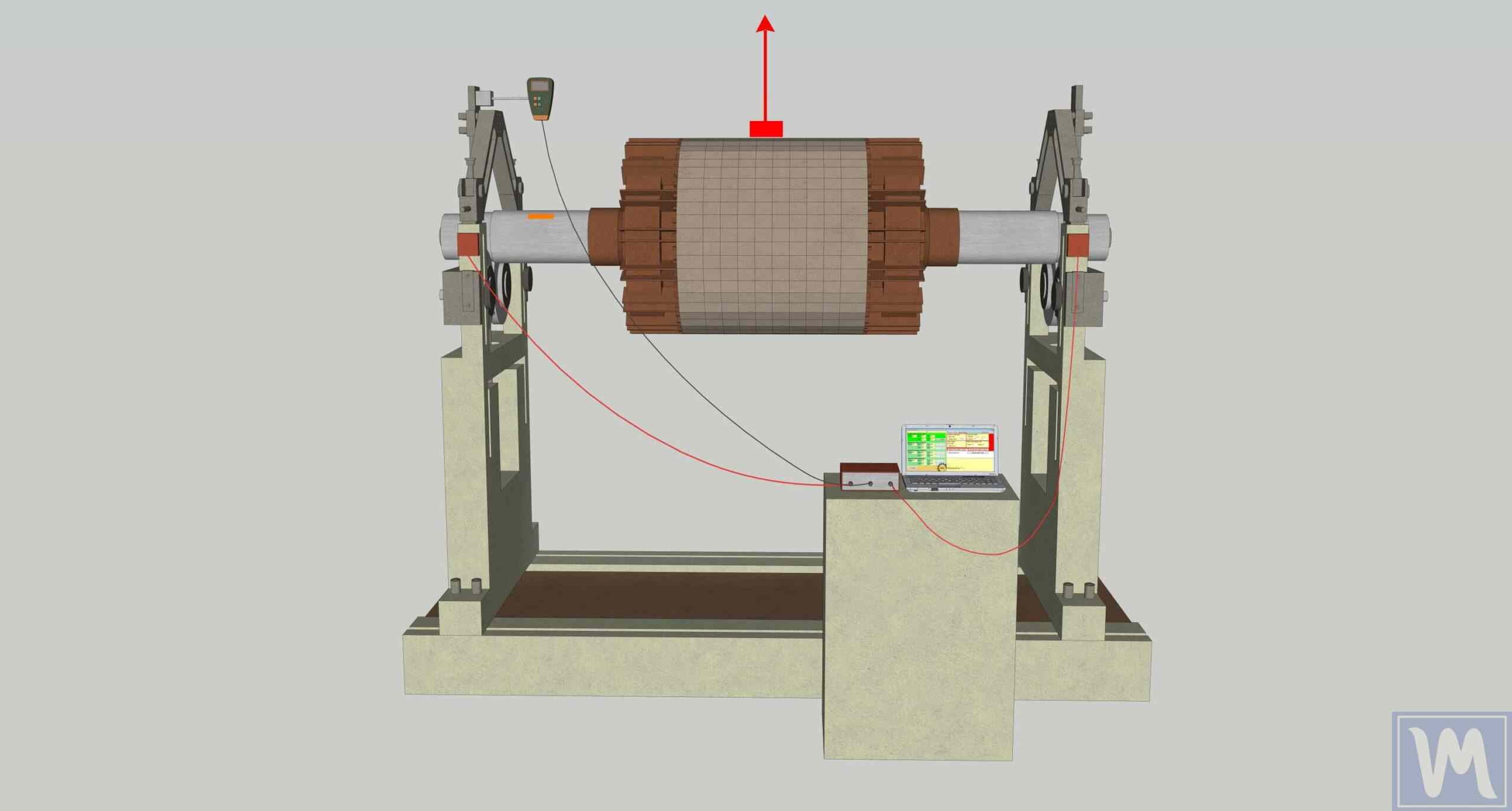
靜態不平衡(單平面): 在這種類型的不平衡當中,轉子的中心主慣性軸,是與旋轉軸保持平行、但發生了錯位——也就是說,轉子的質心相對於旋轉軸,發生了徑向方向上的偏移。在靜態條件下,這樣的轉子如果安裝在水平的刀口(也就是平行導軌)上,就總是會以較重的一側朝下的方式轉動、停下來。對於薄的盤狀轉子而言——也就是長徑比(L/D)低於大約0.5的轉子,例如砂輪,或者是窄型的風機葉輪——靜態不平衡往往佔據主導地位。要消除這種靜態不平衡,可以採取的作法是:在一個校正平面之內,於與重點位置徑向相對的地方,安裝一個校正配重——這是一種單平面的處理方法,適用於中等轉速的場合(大致是轉速低於1000轉/分的情況);而對於高速運轉的窄型圓盤來說,則仍然需要採用雙平面動平衡校正的方法。
力偶(力矩)不平衡: 此類情況發生於轉子的慣性主軸與旋轉軸在質心處相交但不平行時。力偶不平衡可表示為位於不同平面中、大小相等但方向相反的二個不平衡質量。在靜態下,此類轉子處於平衡狀態,不平衡僅在旋轉時以「搖晃」或「擺動」形式顯現。為補償此不平衡,需在二個不同平面中安裝至少二個校正配重,以產生補償力矩。
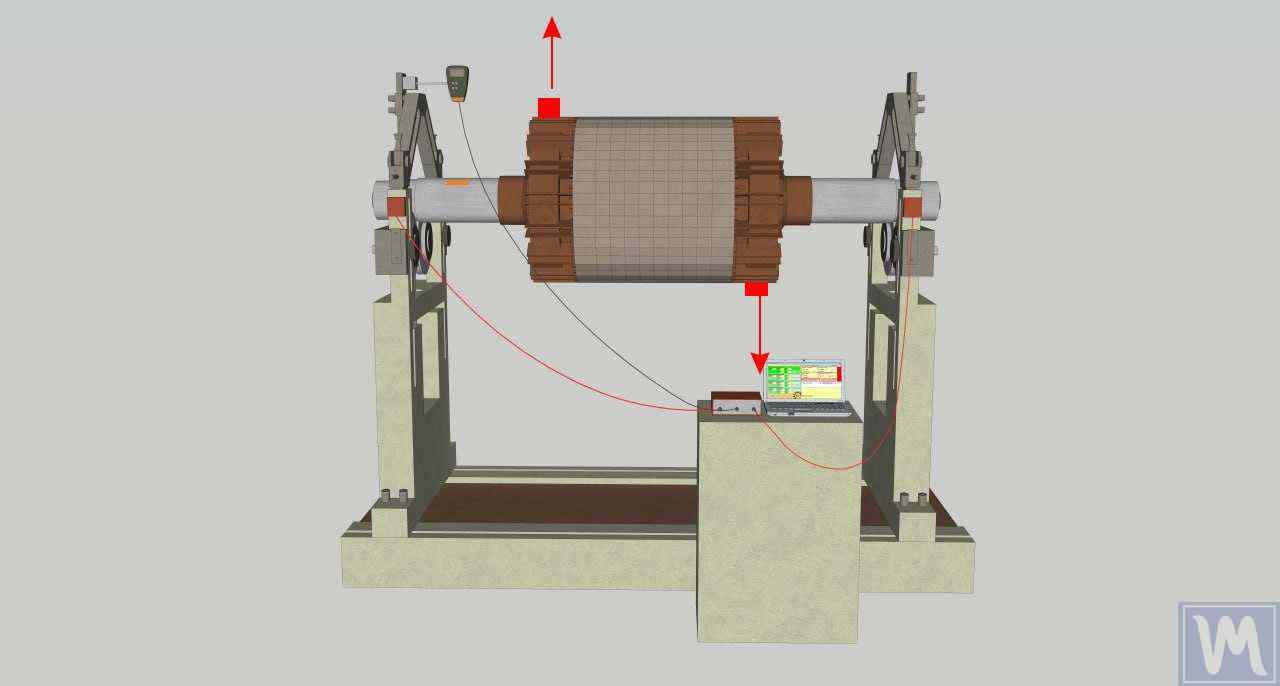
動態不平衡: 這是實際條件中最常見的不平衡類型,為靜態不平衡與力偶不平衡的組合。在此情況下,轉子的主中心慣性軸與旋轉軸不重合,且不在質量中心處相交。為消除動態不平衡,必須在至少兩個平面進行質量校正。Balanset-1A 等雙通道儀器正是為解決此問題而設計。
準靜態不平衡: 這是動態不平衡的一種特殊情況,其中慣性主軸與旋轉軸相交,但不在轉子質心處。這是診斷複雜轉子系統時微妙但重要的區別。
剛性轉子與柔性轉子:關鍵區別
動平衡中的一個基本概念是剛性轉子與柔性轉子的區別。此區別決定了成功平衡的可能性與方法。
剛性轉子: 如果轉子的工作轉動頻率明顯低於其第一臨界頻率,且在離心力作用下不產生明顯的彈性變形(撓曲),則該轉子被視為剛性轉子。此類轉子的平衡通常可在兩個校正平面中順利完成。
柔性轉子: 若轉子在接近或超過其某一臨界頻率的旋轉頻率下運轉,則視為柔性轉子。在此情況下,軸的彈性撓度與質量中心位移相當,並對整體振動產生顯著貢獻。
嘗試用剛性轉子的方法(兩平面)來平衡柔性轉子,往往會導致失敗。安裝校正重塊或許能在低於共振的轉速下補償振動,但當轉速升高到工作轉速、轉子發生彎曲時,這些同樣的重塊反而可能因激發某一彎曲振動模態而使振動增大。這正是儘管儀器操作全部正確,平衡卻“不起作用”的關鍵原因之一。
在開始作業前,務必先將轉子的工作轉速與已知(或計算得出)的臨界頻率相互對照,藉此判定轉子的類型,這一點極為重要。若無法避開共振,建議在動平衡校正期間暫時改變機組的安裝條件,以移動共振點。
第 1.2 節:法規框架:ISO 標準
平衡領域的標準發揮著幾項關鍵作用:它們建立統一的技術術語,界定品質要求,並且重要的是,作為技術必要性與經濟可行性之間折衷的依據。
ISO 21940-11(前 ISO 1940-1):剛性轉子動平衡品質要求
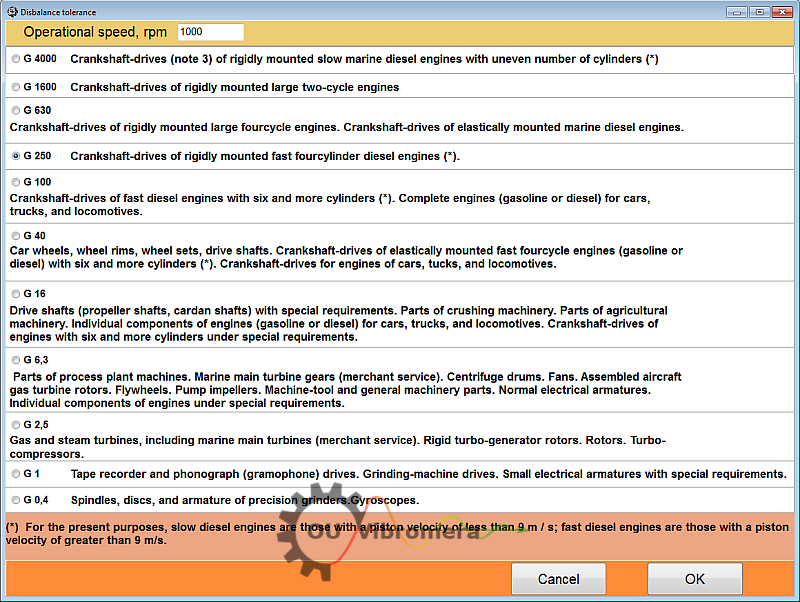
該標準是確定容許殘餘不平衡量的基礎文件。它引入了平衡品質等級(G)的概念,該等級僅依機器類型選定。轉速則是稍後才被納入考量——當等級被換算為容許比不平衡量時:eper = (G × 9549) / n.
品質等級 G: 每一類設備都對應一個特定的品質等級,該等級不隨轉速而改變。例如,風機、泵浦與通用電動機建議採用G6.3等級,破碎機與農業機械採用G16等級,渦輪機與渦輪壓縮機則採用G2.5等級。
允許殘餘不平衡(Uper): 該標準允許計算出一個特定的允許不平衡值,作為動平衡校正過程中的目標指標。計算分為三個階段進行:
- 確定允許比不平衡(eper)使用公式:
eper = (G × 9549) / n
其中 G 為平衡品質等級(例如 2.5),n 為運轉旋轉頻率,rpm。eper 的測量單位為 g·mm/kg 或 μm。 - 確定整個轉子的允許殘餘不平衡(Uper):
Uper = eper × M
其中 M 為轉子質量,kg。Uper 的測量單位為 g·mm。 - U 的分配per 分配於兩個校正平面之間。對於對稱轉子,按 50/50 分配(如下例中:每個平面 19.9 g·mm)。對於軸承間非對稱轉子:Uleft = Uper × (b/L), Uright = Uper × (a/L),其中a和b分別是質心到左、右軸承的距離,L = a + b。懸臂轉子需要基於力矩進行重新分配計算,並對懸臂平面採用更嚴格的公差。Balanset-1A會自動完成這一分配,並在Result(結果)選項卡中,將各平面的殘餘不平衡量(D1、D2)與平衡公差一併顯示。
範例: 對於質量為 5 kg、以 3000 rpm 運轉且品質等級為 G2.5 的電動機轉子:
eper = (2.5 × 9549) / 3000 ≈ 7.96 μm
Uper = 7.96 × 5 = 39.8 g·mm
這表示動平衡校正後,殘餘不平衡量不應超過 39.8 g·mm - 對於這個對稱轉子而言,兩個校正平面各約為 19.9 g·mm。
ISO 20806:2009:中型與大型轉子原位動平衡的標準與安全措施
此標準直接規範現場平衡過程。
優勢: 現場動平衡校正的主要優點在於,轉子是在真實的運作條件下——即在其自身支承上、承受實際工作負載時——完成動平衡校正的。這自然而然地涵蓋了支承系統的動態特性,以及相連傳動系元件的影響。
缺點與限制:
- 有限的接近性: 通常難以接近已組裝機器上的校正平面,限制了安裝配重的可能性。
- 需要試運轉: 動平衡校正過程需要機器進行多次「啟動-停止」循環。
- 嚴重不平衡的困難: 在初始不平衡非常大的情況下,對平面選擇和校正配重質量的限制可能無法達到所需的動平衡品質。
第二部分:使用 Balanset-1A 儀器進行動平衡的實用指南
平衡工作能否成功,很大程度上取決於前期準備是否到位。大多數失敗並非源於儀器故障,而是因為忽視了影響測量重複性的各種因素。前期準備的核心原則,是排除所有其他可能的振動源,使儀器只測得不平衡本身產生的影響。
第 2.1 節:成功之基礎:動平衡前診斷與機器準備
步驟 1:初步振動診斷(真的是不平衡嗎?)
在進行動平衡校正之前,先以振動計模式進行初步振動測量會有所助益。Balanset-1A軟體具備「Vibration Meter」(振動計)模式(F5按鈕),可在安裝任何配重前,測量總振動以及旋轉頻率(1×)分量。
典型不平衡徵兆: 振動頻譜應以轉子旋轉頻率處的峰值為主(1x RPM 頻率處的峰值)。該分量在水平和垂直方向的振幅應可比較,且其他諧波的振幅應顯著較低。
其他缺陷的徵兆: 如果頻譜在其他頻率(例如2x、3x轉速)或非倍頻處存在明顯峰值,則表示存在其他問題,必須在平衡之前先予以排除。
步驟 2:綜合機械檢查(檢查清單)
- 轉子: 徹底清除轉子所有表面的污垢、鏽蝕和積聚的沉積物(結塊物料)。即使只是在較大半徑處有少量污垢,也會產生顯著的不平衡。檢查是否存在破損或缺失的部件。
- 軸承: 檢查軸承組件是否有過度游隙、異響和過熱。磨損的軸承將無法獲得穩定讀數。
- 基礎與機架: 確保設備安裝在剛性基礎上。檢查地腳螺栓的鎖緊扭矩,並確認機架上沒有裂紋。
- 驅動: 對於皮帶傳動,檢查皮帶張力與狀況;對於聯軸器連接,檢查軸對中情況。
- 安全性: 確保所有防護罩均已安裝且功能正常。
第 2.2 節:儀器設置與配置
硬體安裝
振動感測器(加速規):
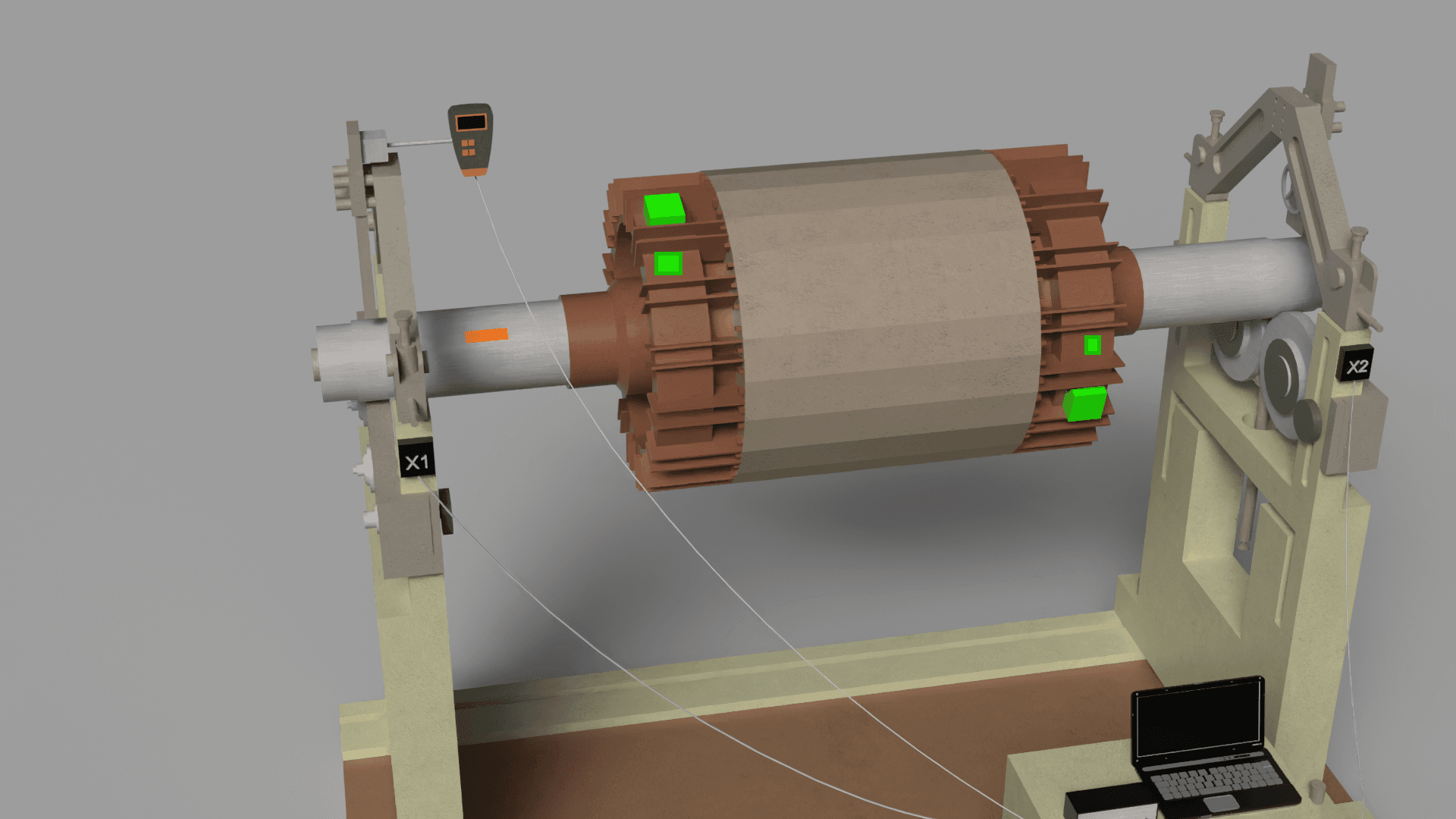
- 將感測器纜線連接至對應的儀器接頭(例如 Balanset-1A 為 X1 與 X2;較新版本的接頭標示為 Ch-1 與 Ch-2)。
- 將感測器安裝在軸承座上,盡可能靠近轉子。
- 關鍵實務: 為取得最大訊號,感測器應安裝於振動最大的方向。使用強力磁座或螺紋安裝座以確保剛性接觸。
相位感測器(雷射測速儀):
- 將感測器連接到專用輸入埠(Balanset-1A為X3;新版標示為Tacho)。
- 在轉子的軸或其他旋轉部位貼上一小片反光貼。
- 安裝轉速計,確保雷射光束在整個旋轉週期內穩定照射到標記點。
軟體配置(Balanset-1A)
- 啟動軟體並連接USB介面模組(不需要管理員權限)。
- 進入平衡模組(F6 - Balancing)。為待平衡的機組建立新記錄。
- 選擇動平衡校正類型:窄轉子選用單平面(靜態,F2 - Single-plane 分頁),大多數其他情況選用雙平面(動態,F3 - Two-plane 分頁)。
- 定義校正平面:選擇轉子上可安全安裝校正配重的位置。
第 2.3 節:動平衡程序:逐步指南
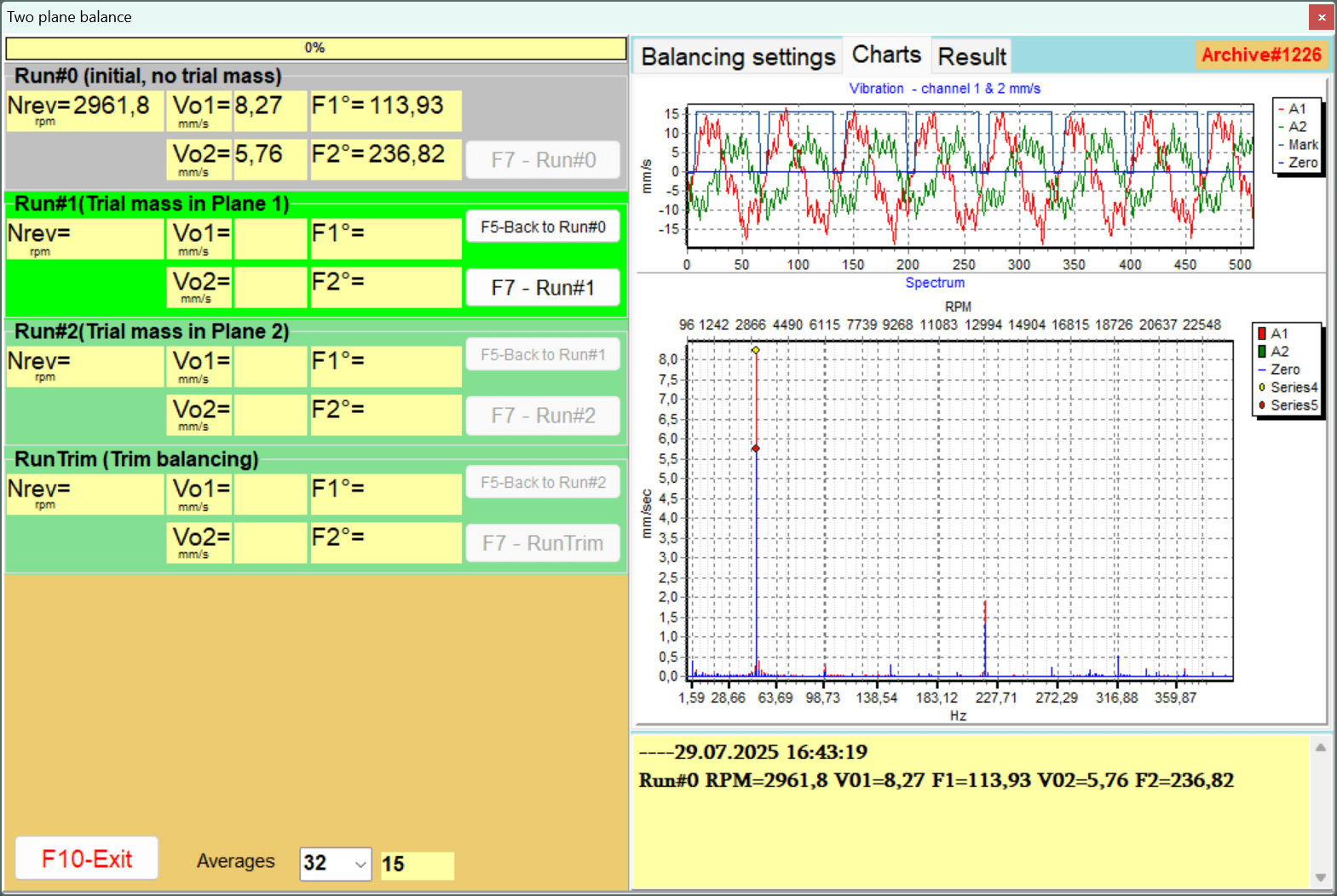
運轉 0:初始測量
- 啟動機器並使其達到穩定的運轉速度。極其重要的是,所有後續運轉的旋轉速度必須相同。
- 在軟體中開始測量。儀器將記錄初始振動的振幅與相位數值。
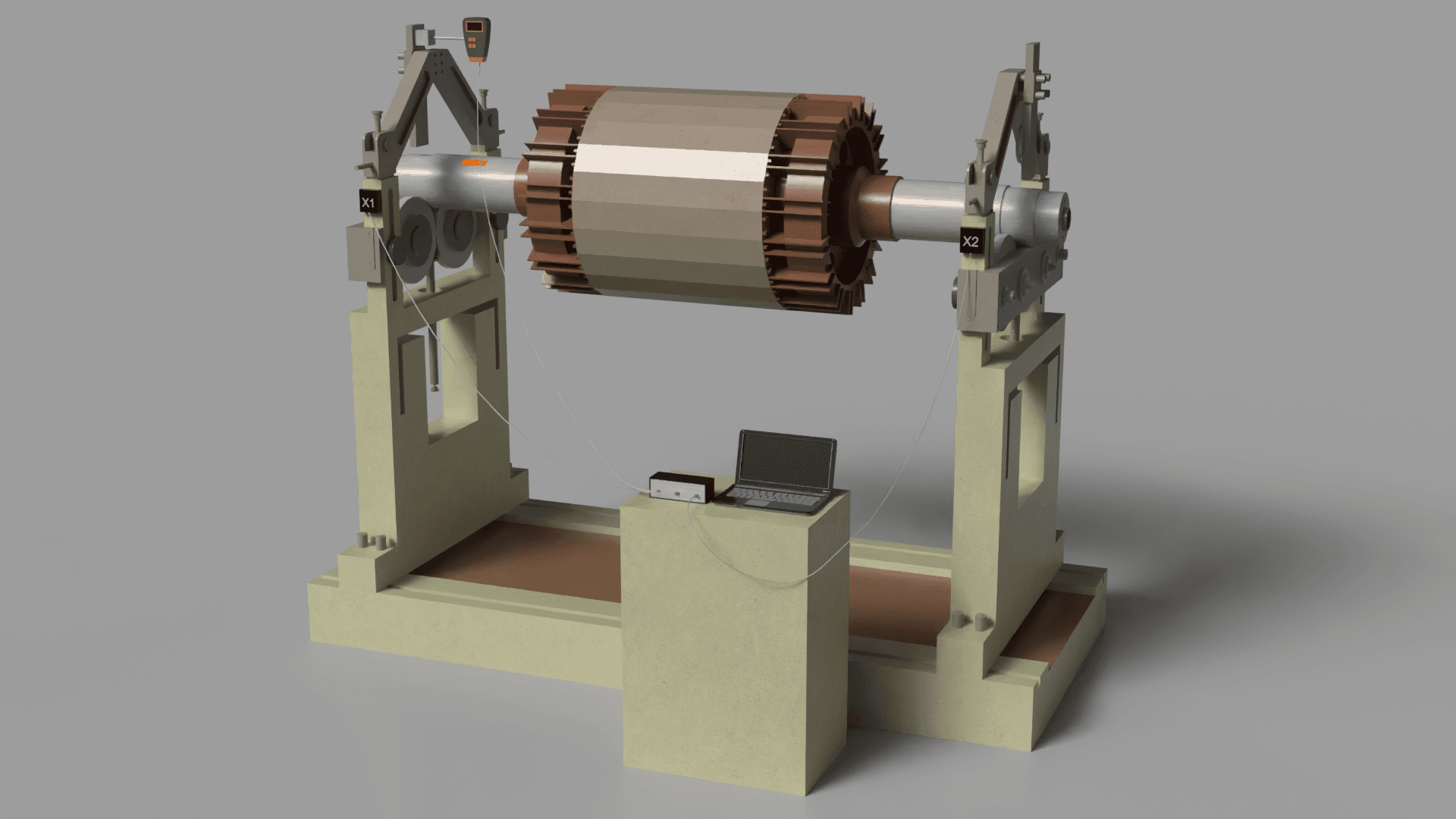
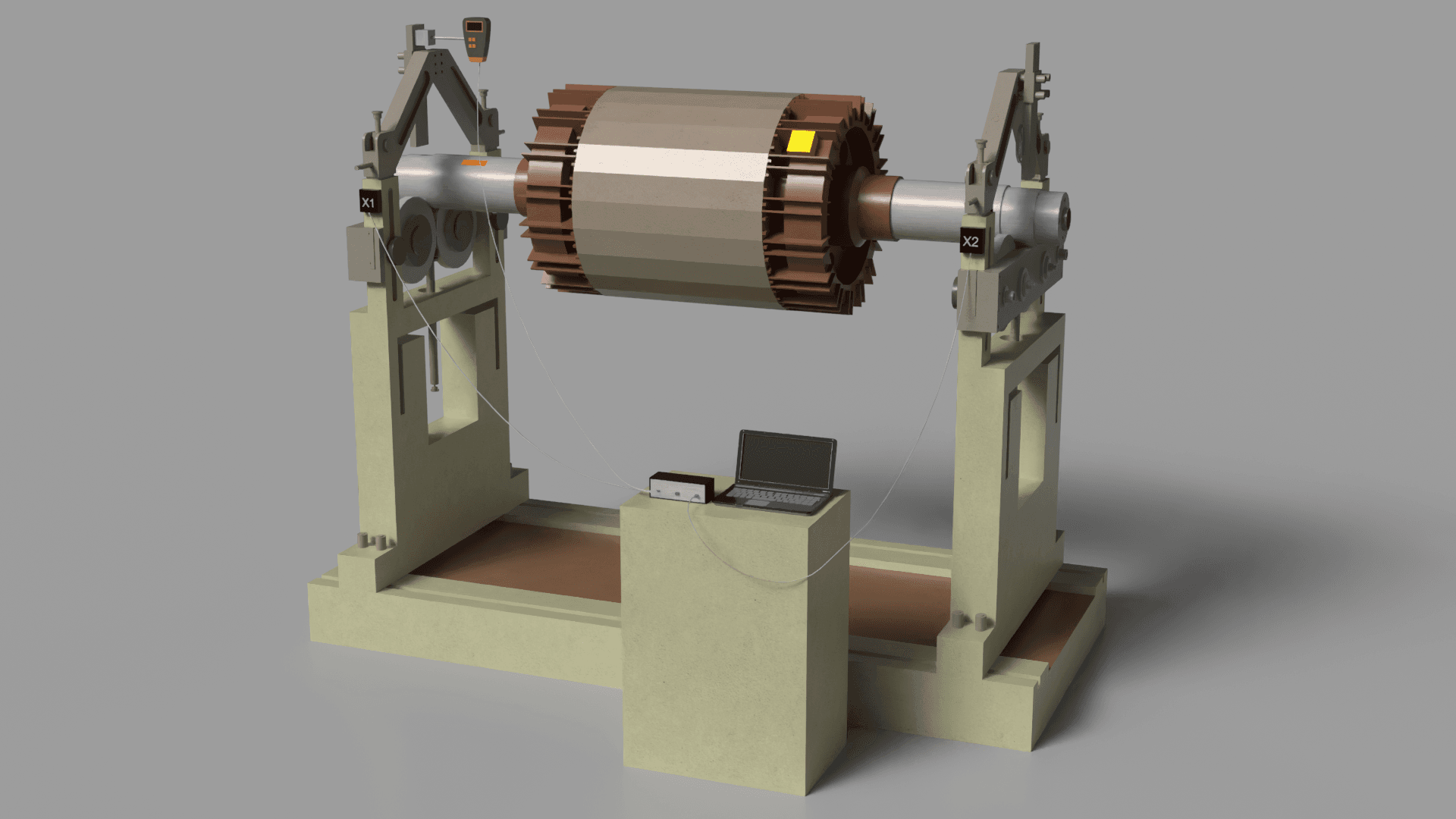
運轉 1:平面 1 加裝試重
- 停止機器。
- 試重選擇: 試重質量應足以引起振動參數的明顯變化(振幅變化至少20–30%,或相位變化至少20–30度)。無需自己猜測初始質量:完成Run 0後,軟體的首次試重估算器會根據轉速表標記,同時給出試重質量和安裝角度的建議,如果實際安裝的試重偏小,程式也會提示。
- 試重安裝: 將已秤重的試重牢固地安裝在平面1的已知半徑處。記錄其角度位置。
- 以相同的穩定速度啟動機器。
- 進行第二次測量。
- 停止機器並 移除試重。若移除不切實際,可將其保留在轉子上——請在軟體中勾選「Leave on rotor」方塊,以便計算時納入考量。
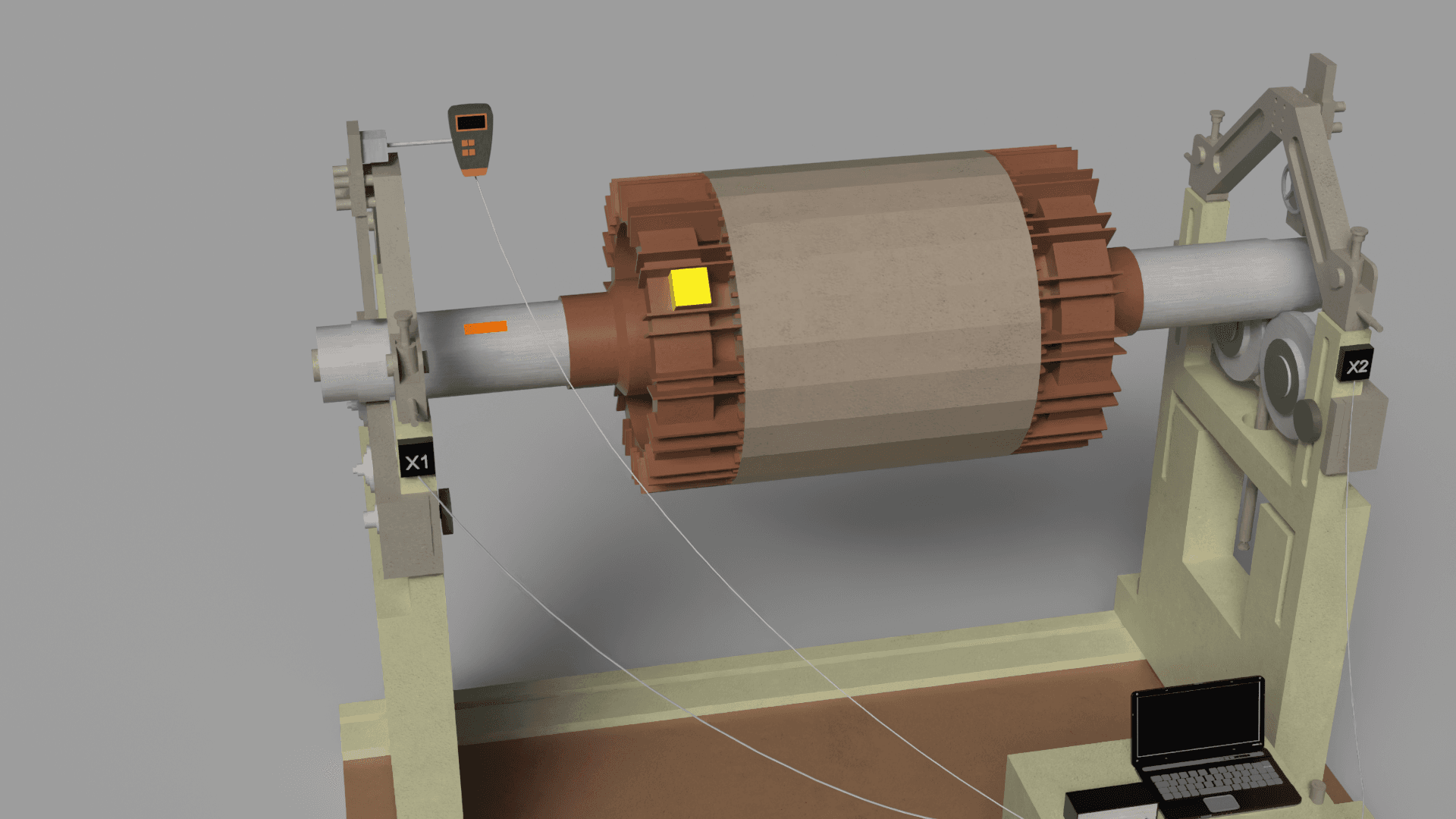
運轉 2:平面 2 加裝試重(用於雙平面平衡)
- 重複步驟2的程序,但將試重安裝在平面2。
- 啟動、測量、停止並 移除試重 (或勾選「Leave on rotor」方塊使其保留在轉子上,如同Run 1的做法)。
校正配重的計算與安裝
- 根據試運轉期間記錄的向量變化,程式將自動計算每個平面的校正配重質量與安裝角度。
- 安裝角度通常從試重位置沿轉子旋轉方向測量。
- 牢固地安裝永久校正配重。使用焊接時,請記住焊料本身也具有質量。
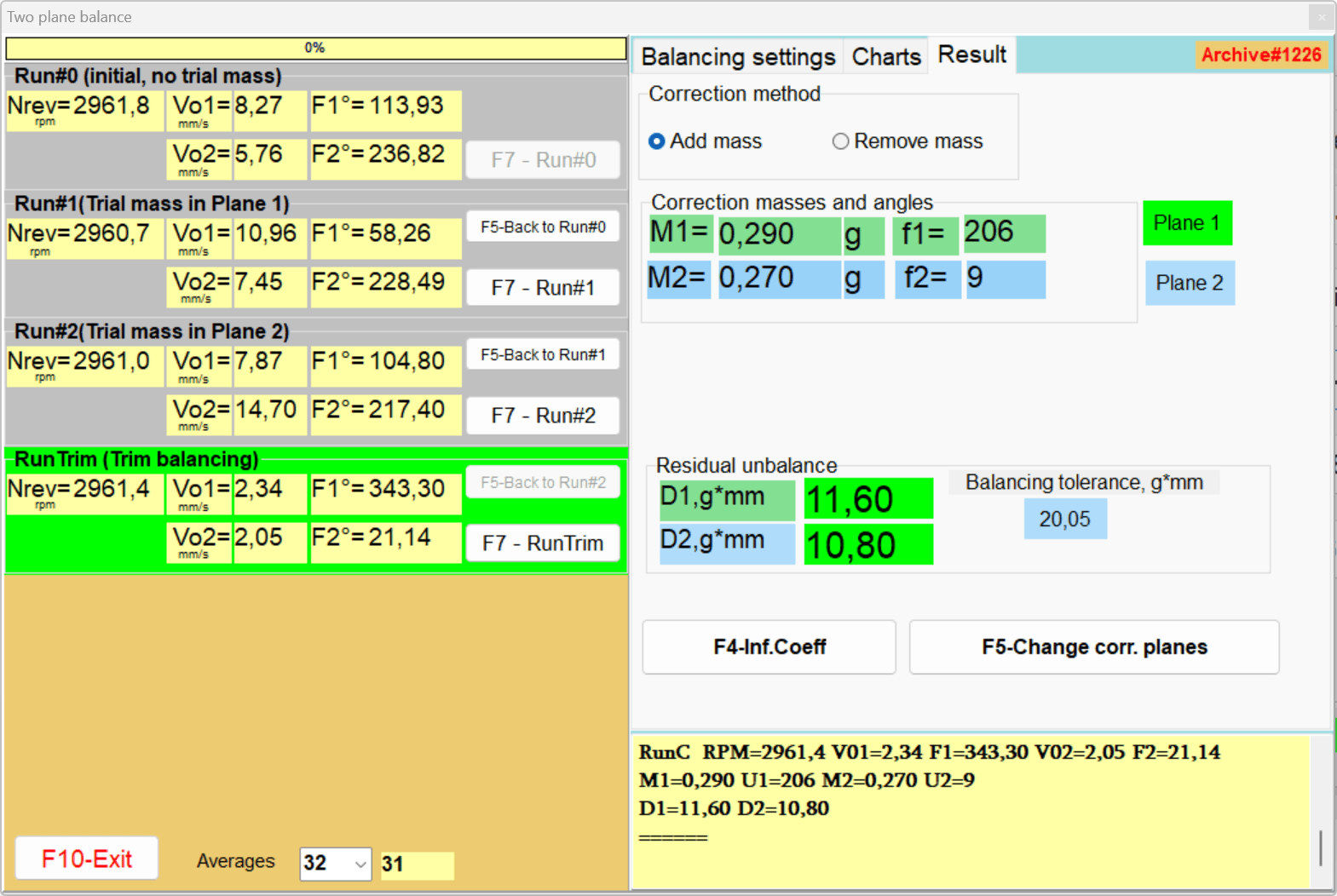
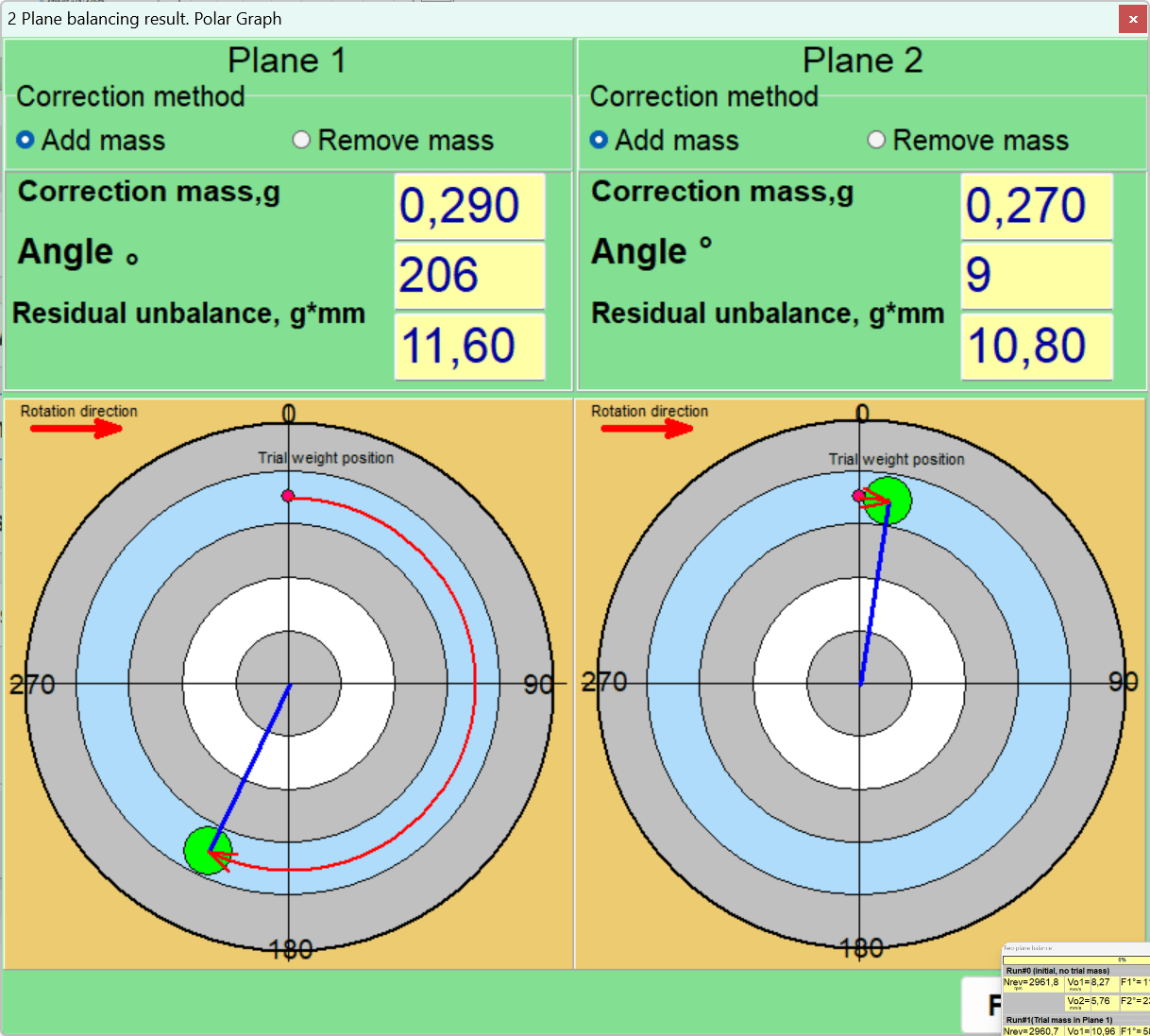
Run T(Trim):驗證測量與精修動平衡
- 再次啟動機器。
- 執行控制測量以評估殘餘振動水平。
- 將獲得的值與根據 ISO 1940-1 計算的公差進行比較。
- 若振動仍超出公差範圍,儀器將計算一個小幅的「精修」(trim)校正。
- 完成後,儲存報告與影響係數,以備日後使用。
第三部分:進階問題解決與故障排除
本節致力於現場動平衡中最複雜的方面——標準程序無法產生結果的情況。
安全措施
防止意外啟動(上鎖/掛牌): 開始工作前,請先斷電並斷開轉子驅動裝置。在啟動器上懸掛警告標籤,以免有人誤啟動機器。
個人防護裝備: 必須佩戴安全眼鏡或防護面罩。服裝應緊身,無鬆散邊緣。長髮應束入頭罩內。
機器周圍的危險區域: 限制未經授權人員進入動平衡校正區域。測試運轉期間,在設備周圍設置圍欄或警示帶。危險區域半徑至少為 3-5 公尺。
可靠的配重固定: 安裝試重或永久校正配重時,須特別注意其固定方式。飛脫的配重會成為危險的拋射物。
電氣安全: 遵守一般用電安全措施 - 使用功能正常的接地插座,避免將電纜佈線於潮濕或高溫區域。
第 3.1 節:診斷與克服測量不穩定性
症狀: 在相同條件下重複測量時,振幅和/或相位讀數發生顯著變化(「浮動」、「跳躍」)。這使得校正計算無法進行。
根本原因: 儀器並未故障。它準確報告系統的振動響應不穩定且不可預測。
系統性診斷演算法:
- 機械鬆動: 這是最常見的原因。檢查軸承座安裝螺栓、機架錨固螺栓的緊固情況。檢查基礎或機架是否有裂紋。
- 軸承缺陷: 滾動軸承內部游隙過大或軸承襯套磨損,會導致軸在支撐內混亂移動。
- 工藝相關的不穩定性:
- 空氣動力學(風機): 紊流、葉片流體分離可能導致隨機力效應。
- 水力(泵): 空蝕會產生強烈的隨機液壓衝擊,掩蓋來自不平衡的週期性信號。
- 內部質量移動(破碎機、磨機): 材料可能在轉子內部重新分佈,形成「移動不平衡」。
- 共振: 如果運轉速度非常接近結構的自然頻率,即使微小的速度變化也會導致振動幅值和相位發生巨大變化。
- 熱效應: 隨著機器升溫,熱膨脹可能導致軸彎曲或對中變化。
第 3.2 節:當平衡無效時:識別根本缺陷
症狀: 動平衡校正程序已完成,讀數穩定,但最終振動仍偏高。
利用振動頻譜進行鑑別診斷(在 Balanset 軟體中:F7 - Charts,“F5-Spectrum (Hz)”分頁):
- 軸不對心: 主要特徵 - 在 2x RPM 頻率處出現高振動峰值。高軸向振動是典型特徵。
- 滾動軸承缺陷: 表現為特徵「軸承」頻率(BPFO、BPFI、BSF、FTF)處的高頻振動。
- 轉子彎曲: 表現為1x RPM處的高峰值,但常常伴有明顯的2x RPM分量。當轉子在心軸上進行平衡時,軟體提供內建的跳動補償功能:F7 - Run Ecc測量(在心軸上將轉子轉過180度後進行)配合“Subtract mandrel runout from measurements”(從測量值中扣除心軸跳動)選項,可避免將偏心誤判為不平衡。
- 電氣問題(電動機): 磁場不對稱可能導致振動頻率為供電頻率的兩倍(50 Hz 電網為 100 Hz)。
常見平衡錯誤與預防建議
- 平衡有故障或髒污的轉子: 動平衡校正前務必檢查機械狀態。
- 試重過小: 目標是遵循振動變化 20-30% 的規則。
- 各次運轉間的工作轉速不一致: 所有測量過程中務必保持穩定且一致的旋轉速度。
- 相位和標記錯誤: 仔細監控角度確定。校正配重角度通常從試重位置沿旋轉方向測量。
- 配重附著不正確或丟失: 請嚴格遵循操作方法——運行結束後取下試重,或者,如果試重留在轉子上,請確保勾選「Leave on rotor」複選框,以便計算過程將其納入考慮。
平衡品質標準
| 品質等級 G | 平衡品質等級 G = eper·ω (mm/s) | 轉子類型(範例) |
|---|---|---|
| G4000 | 4000 | 低速船用柴油機的剛性安裝曲軸 |
| G1600 | 1600 | 大型二衝程引擎的曲軸 |
| G16 | 16 | 有特殊要求的萬向軸、農業機械、破碎機 |
| G6.3 | 6.3 | 泵轉子、風機葉輪、電動機電樞 |
| G2.5 | 2.5 | 燃氣與汽輪機轉子、透平壓縮機、機床驅動裝置 |
| G1 | 1 | 磨床驅動裝置、主軸 |
| G0.4 | 0.4 | 精密磨床主軸、陀螺儀 |
注意:等級數值為乘積eper·ω,單位為mm/s。容許比不平衡量本身與轉速相關:eper = (G × 9549) / n [μm]。範例:G6.3在1500 rpm下得到eper = 40.1 μm;於3000 rpm時為20.1 μm。
| 缺陷類型 | 主導頻譜頻率 | 相位特徵 | 其他症狀 |
|---|---|---|---|
| 不平衡 | 1x RPM | 穩定 | 徑向振動為主 |
| 軸不對心 | 1x、2x、3x RPM | 可能不穩定 | 高軸向振動——關鍵徵兆 |
| 機械鬆動 | 1x、2x 及多倍諧波 | 不穩定、「跳動」 | 肉眼可見的移動 |
| 滾動軸承缺陷 | 高頻(BPFO、BPFI 等) | 與 RPM 不同步 | 異常噪音、溫度升高 |
| 共振 | 運轉速度與自然頻率重合 | 通過共振時相位變化 180° | 在特定速度下振動幅值急劇增加 |
第四部分:常見問題與應用說明
第 4.1 節:一般常見問題(FAQ)
何時應使用單平面與雙平面動平衡校正?
對於長徑比(L/D)低於約0.5、轉速適中(大致低於1000 rpm)的窄盤狀轉子,例如砂輪或窄型風機葉輪,應採用單平面(靜)平衡。對於細長轉子、L/D大於約0.5的轉子,以及高速窄盤,應採用兩平面(動)平衡。兩平面平衡可同時校正靜不平衡和偶(力矩)不平衡。
如果試重導致危險的振動增加,我該怎麼辦?
立即停止機器。這表示試重安裝在靠近現有重點的位置,加劇了不平衡。解決方案是將試重從原始位置移動 180 度,並重複測量。這可確保試重產生相反的效果,而不是增加現有的不平衡。
我可以將儲存的影響係數用於不同的機器嗎?
可以,但僅限於機器完全相同的情況——相同型號、相同轉子、相同基礎、相同軸承。結構剛性的任何變化都會改變影響係數並使其失效。最佳實務是針對每台新機器始終進行新的試運轉,以確保校正計算的準確性。
靜態與動態不平衡有何差異?
靜不平衡是指轉子的中心慣性主軸與旋轉軸平行錯位——即質心相對於旋轉軸發生徑向偏移——不需要旋轉,把轉子放在刀口支承上即可檢測出來。動不平衡則是靜不平衡與偶不平衡的組合,此時慣性主軸與旋轉軸既不平行也不重合——只有在旋轉時才會顯現,需要採用兩平面校正。
為什麼我的動平衡校正讀數不穩定(浮動)?
不穩定的讀數表示系統的振動響應不可預測。常見原因包括:機械鬆動(螺栓鬆動、裂紋)、軸承磨損導致游隙過大、工藝不穩定(泵的空蝕、風機的湍流)、共振(運轉速度接近自然頻率)、暖機過程中的熱效應,或來自鄰近設備的振動。在嘗試進行動平衡校正之前,請先解決這些問題。
雙平面動平衡校正中的三次運轉法是什麼?
三次運轉法包括:運轉 0 - 在未安裝任何試重的初始狀態下進行測量,以建立振動基線;運轉 1 - 在平面 1 安裝試重後進行測量,以確定其影響;運轉 2 - 將試重移至平面 2 後進行測量。基於這三個數據點,儀器使用影響係數法計算兩個平面所需的精確校正配重。
如何根據 ISO 1940-1 計算允許的殘餘不平衡?
首先計算容許的比不平衡量:eper = (G × 9549) / n,其中 G 為品質等級(例如渦輪為 2.5,風機為 6.3),n 為轉速(RPM)。接著計算允許殘餘不平衡量:Uper = eper × M,其中M為轉子質量(kg)。例如,一個5 kg、以3000 RPM運轉、品質等級為G2.5的轉子:eper = (2.5 × 9549)/3000 = 7.96 μm, Uper = 7.96 × 5 = 39.8 g·mm。
精確動平衡校正所需的最小試重效應是多少?
試重應導致振動振幅至少變化 20-30% 或相位角至少變化 20-30 度。如果效應太小,有用信號會淹沒在測量噪聲中,導致校正計算不準確。如果沒有變化,請在安全範圍內增加試重質量,直到達到足夠的效應。
如何考量鍵槽的影響?(ISO 8821,現為ISO 21940-32:2012)
標準做法是在沒有配合零件的情況下進行平衡時,在軸鍵槽中使用「半鍵」,如ISO 21940-32:2012(取代了ISO 8821)所規定。這是為了補償填滿軸上凹槽的那部分鍵的質量。
| 症狀 | 可能原因 | 建議措施 |
|---|---|---|
| 不穩定/「浮動」讀數 | 機械鬆動、軸承磨損、共振、工況不穩定、外部振動 | 鎖緊所有螺栓連接處,檢查軸承間隙,進行惰轉降速測試(F5 - Vibration Meter 模式中的 RunDown 分頁),穩定運轉工況 |
| 經過多次循環後仍無法達到公差 | 影響係數不正確、轉子為柔性、存在隱藏缺陷(不對心) | 使用適當選擇的配重重複試運轉,檢查轉子是否為柔性,使用 FFT 搜尋其他缺陷 |
| 平衡後振動正常,但很快復原 | 校正配重脫落、轉子上產品積聚、熱變形 | 使用更可靠的配重固定方式(焊接),實施定期轉子清潔計劃 |
第 4.2 節:特定設備類型的動平衡校正指南
工業風機與引風機(ID風機):
- 問題: 由於葉片上產品積聚或磨損,最容易受到不平衡影響。
- 程序: 開始工作前務必徹底清潔葉輪。注意可能導致不穩定性的空氣動力。
泵浦:
- 問題: 主要敵人——空蝕。
- 程序: 動平衡校正前,確保入口處有足夠的空蝕餘量(NPSHa)。檢查吸水管路是否堵塞。
破碎機、研磨機與粉碎機:
- 問題: 嚴重磨損,可能因錘片斷裂或磨損而導致不平衡大幅變化。
- 程序: 檢查工作元件的完整性與固定情況。可能需要額外加固機架的錨定。
電動機轉子:
- 問題: 可能同時存在機械與電氣振動源。
- 程序: 使用振動頻譜(F7 - Charts)檢查是否存在電源頻率兩倍處的振動。其出現表示電氣故障,而非不平衡。
結論
使用Balanset-1A等可攜式儀器對就位轉子進行動平衡校正,是提升工業設備運作可靠性與效率的有力工具。然而,這項作業能否成功,與其說取決於儀器本身,不如說更取決於操作人員的專業水準以及採用系統化方法的能力。
關鍵原則:
- 準備工作決定結果: 徹底清潔轉子、檢查軸承與基礎狀況,以及進行初步振動診斷,是成功完成動平衡校正的必要條件。
- 符合標準是品質的基礎: 應用ISO 1940-1,可將主觀評估轉變為客觀、可測量且具法律效力的結果。
- 儀器不僅是動平衡校正儀,也是診斷工具: 無法完成動平衡或讀數不穩定,都是提示存在更嚴重問題的重要診斷訊號。
- 理解過程物理學是解決非標準任務的關鍵: 了解剛性轉子與柔性轉子之間的差異,並理解共振的影響,可協助專業人員做出正確的判斷。
遵循本指南所述的建議,技術人員不僅能夠成功應對典型任務,還能有效診斷並解決旋轉設備振動方面複雜、非常規的問題。
本頁所述的操作流程由 Vibromera 團隊使用 Balanset-1A(一款用於現場轉子平衡的便攜式雙通道動平衡儀及振動分析儀)開發並經過實地測試。

