ISO 8041: Human Response to Vibration — Measuring Instrumentation
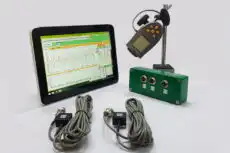



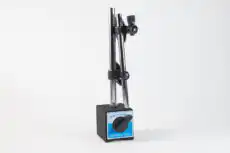

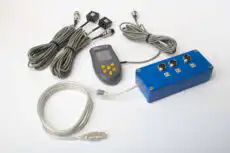
ISO 8041 is the specialised international standard that defines the performance specifications and testing requirements for instruments built to measure human exposure to vibration. Unlike the machinery-focused standards that govern equipment health, ISO 8041 is concerned with occupational health, safety, and comfort. Its purpose is to ensure that different “human vibration meters” are accurate and mutually consistent, so that the data used to assess two hazards — hand-arm vibration (HAV) from power tools and whole-body vibration (WBV) from vehicles and industrial equipment — is reliable no matter which manufacturer’s meter produced it. It is the human-exposure counterpart to instrument standards such as ISO 2041 on vibration vocabulary, and it draws on the same measurement quantities — particularly acceleration — used throughout vibration analysis.
1. Scope and Applicability
The opening of the standard fixes its purpose: to specify the performance requirements for instruments that measure vibration values for the specific purpose of assessing human response. It deliberately draws a boundary between itself and general-purpose vibration meters used to diagnose machine faults. Two exposure types fall within its scope:
- Hand-Arm Vibration (HAV): vibration transmitted into a person’s hands and arms from vibrating tools such as grinders, breakers, and impact wrenches.
- Whole-Body Vibration (WBV): vibration transmitted through the feet or buttocks while standing or sitting on a vibrating surface — a vehicle seat, a platform, or a building floor.
The goal in both cases is the same: measurements taken for health and safety assessment must be accurate, repeatable, and comparable, independent of the instrument’s maker. That comparability is what allows a measured exposure to be checked against a legal limit with confidence.
2. General Requirements and Specifications
This chapter establishes the baseline for an instrument’s design and behaviour. Above all, it mandates that the primary measurement parameter be the root-mean-square (RMS) acceleration, because RMS is the quantity most closely correlated with human sensation and the risk of injury — far more so than a simple peak reading.
It also sets out the supporting functionality an instrument must provide:
- Clear display: the measured value, its units, and the active frequency-weighting filter must all be shown unambiguously.
- Status indicators: battery level and signal-overload warnings, so that a depleted battery or a clipped signal cannot quietly corrupt a measurement.
- Defined environmental envelope: minimum operating ranges of temperature, humidity, atmospheric pressure, and immunity to electromagnetic fields, within which the instrument must hold its specified accuracy.
The attached transducer is itself part of the measuring chain, so the standard’s accuracy requirements implicitly extend to the accelerometer and its mounting — a theme picked up in the calibration section.
3. Frequency Weighting Filters
This is the technical heart of ISO 8041, and the feature that most sharply distinguishes a human-vibration meter from a machinery analyser. Decades of biodynamic research show that the human body’s sensitivity to vibration varies strongly with frequency: the same acceleration is far more harmful at some frequencies than at others. To capture that, the standard specifies a set of mandatory frequency-weighting filters — electronic filters that reshape the raw signal, amplifying the bands where the body is sensitive and attenuating those where it is not, so the final number reflects the genuine potential for harm or discomfort.
The standard provides precise mathematical definitions and tolerance bands for the principal weightings:
- Wh: for hand-arm vibration, emphasising frequencies from roughly 8 Hz to 16 Hz.
- Wk: for vertical (z-axis) whole-body vibration — for example, bouncing in a seat.
- Wd: for horizontal (x- and y-axis) whole-body vibration — swaying from side to side.
- Wc, We, Wj and others: further specialised weightings for specific applications such as motion sickness and back-rest measurements.
This is the polar opposite of machine diagnostics, where a flat, unweighted response is usually wanted so every frequency is seen on equal terms. In human-vibration work the weighting is not optional — it is the very thing that converts a physical measurement into a health-relevant one.
4. Performance Tests and Calibration
To make an “ISO 8041-compliant” claim meaningful, the standard prescribes a rigorous suite of performance-verification tests with defined pass/fail criteria, carried out by the manufacturer or a calibration laboratory. They include checks for:
- Self-generated electrical noise: the instrument’s internal noise floor.
- Frequency-weighting conformity: the accuracy of each weighting filter against its specified tolerance band.
- Linearity: correct measurement across the instrument’s full amplitude range.
- Environmental susceptibility: stability under temperature changes and external magnetic fields.
Periodic verification against this suite is what keeps a meter trustworthy over its service life, and a current calibration certificate documenting these results is the practical evidence that the label still holds true. In short, the chapter ensures that compliance is a guarantee of measurement quality rather than a marketing badge.
5. User Manual and Documentation
The final section governs the information manufacturers must hand to the end-user. It requires a comprehensive manual stating the instrument’s measurement range, frequency response, and the specific weightings it implements, together with clear operating instructions — how to select the correct settings, and how to mount the required accelerometers properly. Mounting is no detail: HAV measurements use adaptors clamped to the tool handle, while WBV measurements use a semi-rigid seat pad, and an incorrectly coupled transducer can invalidate the result. Good documentation is what lets a trained operator collect data valid for a formal exposure assessment.
6. Human Vibration vs. Machinery Vibration
It is worth drawing the contrast explicitly, because engineers familiar with machine diagnostics often approach ISO 8041 with the wrong instincts.
- Bio-mechanics, not machine mechanics: the objective is to quantify the potential for human injury or discomfort, not to locate a machine fault.
- Weighting is mandatory, not optional: where machine analysis prizes a flat response, human-vibration measurement requires weighting to assess the hazard correctly. A high-amplitude vibration at an insensitive frequency may be less harmful than a smaller one at a very sensitive frequency.
- Regulatory application: data from an ISO 8041-compliant instrument is used to demonstrate compliance with health-and-safety regulation — such as the EU Physical Agents (Vibration) Directive 2002/44/EC — and to guide the design of ergonomic tools and comfortable vehicle suspensions.
The two disciplines do meet in practice, however. A reliability engineer who reduces a machine’s vibration at source also reduces the exposure of the people who operate it. Correcting a rough running rotor by field balancing — measuring 1× amplitude and phase with a portable analyser such as the Balanset-1A and trimming the residual unbalance to within an ISO 21940-11 grade — lowers the structure-borne vibration that an ISO 8041 meter would later record at the operator’s hands or seat. The machinery standard fixes the cause; ISO 8041 measures the human consequence. Used together, they close the loop between equipment condition and worker protection.

