Kuelewa Seismic Transducers

A sensor ya seismic — inaitwa pia seismic sensor au inertial transducer — ni vibration sensor that uses an internal seismic mass (a “proof mass”) suspended on springs or compliant flexures as an inertial reference, allowing it to measure the absolute motion of the sensor base. When the housing vibrates, the relative motion between the suspended mass and the housing is converted into an electrical signal that represents the vibration. Depending on where the measurement frequency lies relative to the mass-spring system’s frequency asili, the sensor works in one of two regimes: above resonance the mass tends to stay still in space and the relative motion follows the housing displacement (the classic seismometer and velocity-pickup regime), while below resonance the small residual deflection of the mass is proportional to the housing acceleration (the accelerometer regime). The defining feature is that the reference is carried inside sensor, kwa hivyo hakuna datum ya nje iliyo tulivu inayohitajika.
Jina “seismic” linatoka kwa kuandaliwa kwa tetemeko: kundi lililopotea la seismometer linataka kubaki tulivu sambamba na ardhi inarudi chini yake. Katika uzamili wa mashine, zote transducers ya kasi and accelerometers ni seismic transducers kwa maana hii, ingawa neno hilo ni linatafsiri zaidi na velocity pickup ya kimesa.
1. Kanuni ya Operesheni
Mifumo ya Mass-Spring-Damper
Kila seismic transducer ni, kwa moyo, oscillator ndogo ya mitambo na sehemu nne za kazi:
- Seismic mass: kile kinzani cha uthibitishaji kilichosimamishwa ndani ya nyumba ya sensorer.
- Spring: chemchemi za makanika au vipande nyembamba vinavyouunga mkakati kile kinzani.
- Damping: hewa, sumaku (emf ya kusambaza), au kunyongeza kwa maji kinachosezesha resonansi.
- Transduction: kipengele kinachobadilisha mwendo wa jamaa kati ya kinzani na nyumba kuwa kwa volteji.
Maeneo ya Pata la Mzunguko
How the sensor behaves depends entirely on where the excitation frequency falls relative to its own natural frequency — and the two main sensor families deliberately work on opposite sides of the resonance:
- Below natural frequency (accelerometer regime): mass and housing move essentially together, and the small residual deflection of the mass is proportional to the housing acceleration. Piezoelectric and MEMS accelerometers work here, below their high mounted resonance.
- Wakati wa mzunguko wa asili: the system resonates — output is amplified but distorted and unreliable, so measurement near resonance is avoided.
- Above natural frequency (seismometer regime): the mass effectively stays put while the housing vibrates around it, and the relative motion follows the housing displacement (or velocity). Displacement seismometers and moving-coil velocity pickups work here, above their low natural frequency.
- Usable ranges: a velocity pickup is conventionally used above roughly 2× its natural frequency, where its response has settled and is flat; an accelerometer is used well below its mounted resonance — typically up to about one-third of it for good accuracy.
2. Aina za Mjumbe wa Seismic
Wajenzi wa Kasi (Coil inayohamia)
- Sumaku inasimamishwa kwa chemchemi ndani ya coil iliyofungwa (au kinyume chake).
- Kasi ya jamaa kati ya sumaku na coil inazaa kwa volteji kwa kusambaza sumaku.
- Mzunguko wa asili kwa kawaida 8–15 Hz.
- Inaweza kutumika juu ya takriban 16–30 Hz.
- Inapima kasi moja kwa moja, bila kuhitaji ujumlisho wa ishara.
Accelerometers
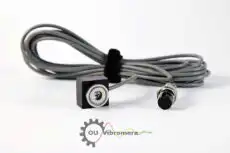
- Piezoelectric aina hizi hutumia kristal ya piezo kutambuua nguvu ya inertia ya uzani.
- Aina za MEMS hutumia kumbuzi ya capacitive au piezoresistive juu ya kipengee kilichotengenezwa kwa mikro.
- Much higher (mounted) natural frequency, typically 10–30 kHz.
- Unlike velocity pickups, used below resonance: usable from about 1 Hz up to roughly one-third of the mounted resonance frequency.
- Hupima acceleration, ambayo inaweza kuunganishwa kuwa kasi au kuhama.
3. Sensors za Seismic vs. Non-Seismic
Familia ya seismic inaeleweka vyema kwa kulinganisha na sensors zenye kwa sensors zinazotutegemea kumbukumbu ya nje.
Sensors za Seismic (Kumbukumbu ya Inertia)
- Accelerometers na velocity transducers.
- Hupima mwendo kamili katika nafasi ya inertia.
- Pigia moja kwa moja juu ya muundo wa vibration.
- Hubeba uzani wao wa ndani kama kumbukumbu.
- Chaguo linalojumbuika zaidi kwa ufuataji wa mashine.
Sensors za Non-Seismic (Kumbukumbu ya Nje)
- Njia za karibu (sensors za eddy-current).
- Hupima mwendo wa jamaa kati ya nyuso mbili.
- Zinahitajika mahali pa kupiga imara ili kuangalia kutoka.
- Kawaida hupima mwendo wa motomali kuhusiana na kapaya.
- Sawa na kipimo cha vibration ya motomali kwenye mashine zenye kumimina mabamba.
4. Faida za Muundo wa Seismic
Rejea Yenye Kujitegemea
- Hakuna haja ya fremu ya rejea ya nje.
- Sensaa inaweza kupigwa karibu mahali popote kwenye muundo wenye kumtatanisha.
- Inaripoti harakati halisi kamili katika nafasi ya ineshia.
Versatility
- Aina moja ya sensaa inashughulikia matumizi makubwa sana.
- Inafaa masuluhisho ya muda na mituo isiyobadilika.
- Hali rahisi ya kubeba kutoka kwa mashine hadi mashine.
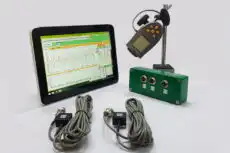
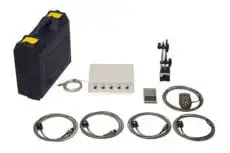
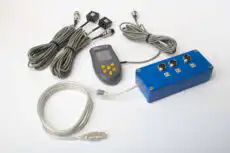
Hii mulika ndio sababu nzuri inayofanya zana zinazobeba kila mahali kutegemea juu ya sensaa hizi. Balanset-Pande-Mbili Balancet-1A, kwa mfano, inachukua usomaji wake kutoka kwa accelerometers zilizofungwa kwenye nyumba za kusuporta — sensaa za seismiki zenye kujitegemea ambazo hazihitaji datum isiyobadilika, kwa hiyo injineer anaweza kusogea haraka kati ya vituo vya kupima na mashine wakati wa kusambaza kwenye mahali pa kazi.
5. Limitations
Mipango ya Kujibu kwa Masafa
- Velocity pickups cannot measure reliably below roughly 2× their natural frequency; moving-coil types in particular respond poorly below 15–20 Hz. There is an inherent trade-off: a lower natural frequency gives better low-frequency reach but demands a larger, heavier sensor.
- Accelerometers lose accuracy as the measurement frequency approaches their mounted resonance; the practical upper limit (typically about one-third of the mounted resonance) depends strongly on the mounting method (see ISO 5348).
- At the very low end, accelerometer response is limited by the sensing element and amplifier electronics rather than the seismic suspension — typically down to about 0.5–1 Hz for standard industrial units.
Inapima Harakati za Nyumba
- Sensaa inaripoti harakati za nyumba ya kusuporta, si shimoni moja kwa moja.
- Mtatazo wa nyumba ya kusuporta si sawa na mtatazo wa shimo — inafungwa na ukali wa kusuporta na muundo unaozunguka.
- Ambapo obiti ya kweli ya shimo ndiyo inayohusika, proximi probes zinahitajika badala yake.
6. Matumizi
Ufuatiliaji wa Hali ya Mashine
- Vipimo vya mtatazo wa nyumba ya kusuporta.
- Mwenendo wa jumla wa mitikiti.
- Bearing-defect detection.
- Utambuzi wa jumla wa mashine zinazohusu.
Mitikiti ya Miundo
- Uchunguzi wa mitikiti ya majengo na misingi.
- Ufuatiliaji wa seismic wa tetemeko la ardhi.
- Kupima mitikiti inayotoka ardhini kutoka kwa mashine.
Modal Analysis
- Kupima jibu la muundo wa miundo kwa mgongano uliopimwa.
- Determining frequency za asili and mode shapes.
- Building the kazi za athari za mzunguko used in modal analysis.
Seismic transducers, using an internal suspended mass as an inertial reference, form the foundation of vibration measurement on rotating machinery. Grasping the seismic principle — how a suspended mass enables absolute-motion measurement, and why velocity pickups work above their natural frequency while accelerometers work below their mounted resonance — explains both the strengths and the limits of these twin workhorses of every industrial vibration-analysis programme.

