BPFI — Ball Pass Frequency, Inner Race (Ichki Halqa Sharlar O'tish Chastotasi) tushunchasi


BPFI (Ball Pass Frequency, Inner Race) to'rtta asosiy podshipnik nosozlik chastotalariga va podshipnikning aylanuvchi ichki halqasidagi nuqson ustidan dumalovchi elementlarning o'tish tezligini ifodalaydi. Ichki halqa yoʻlida chiziq, yoriq yoki chuqurcha paydo bo'lganda, har bir dumalovchi element halqa ularni yonidan o'tkazib yuborar ekan, nuqsonga uriladi va davriy zarbalar hosil qiladi; bu zarbalar esa vibration signal at the BPFI frequency. What sets BPFI apart from the other characteristic frequencies is its near-constant escort of ±1× sidebands — bu barmoq izi kabi naqsh ichki halqa nuqsonlarini podshipnik diagnostikasida eng ishonchli aniqlash mumkin bo'lgan xatoliklar qatoriga kiritadi tebranish tahlili.
1. Ta'rif: BPFI nima?
BPFI ichki halqaning bir nuqtasi ustidan birlik vaqt ichida sodir bo'ladigan dumalovchi element o'tishlarining sonini hisoblaydi. Ichki halqa val bilan birga aylanadi, dumalovchi elementlar esa qafas tezligida ancha sekinroq orbitada harakatlanadi; shu sababli halqa va elementlar o'rtasidagi nisbiy tezlik katta — demak, chastota ham yuqori. Nuqson aylanuvchi halqada joylashgani uchun u har bir shar yoki rolik o'tib ketayotganda qayta-qayta zarbaga uchraydi. Tashqi halqa chastotasi (BPFO), qafas chastotasi (FTF) va dumalovchi elementning o'z atrofida aylanish chastotasi (BSF) bilan birga BPFI analizchi podshipnik ichidagi shikastlanishni lokalizatsiya qilish uchun hisoblaydigan standart chastotalar to'plamini tashkil etadi. Nuqsonlarning o'zi esa keng podshipnik nuqsonlari.
2. Matematik hisoblash
Formula va o'zgaruvchilar
BPFI podshipnik geometriyasi va val aylanish tezligidan kelib chiqadi:
BPFI = (N × n / 2) × [1 + (Bd/Pd) · cos β]
- N = podshipningdagi dumalovchi elementlar soni.
- n = valning aylanish chastotasi Hz da (yoki RPM ÷ 60).
- Bd = shar yoki rolik diametri.
- Pd = yoʻnaltiruvchi diametr (dumalovchi elementlar markazlari orqali o'tadigan aylana).
- β = aloqa burchagi.
Nima uchun BPFI doimo BPFO dan yuqori bo'ladi
Bir xil podshipnik uchun BPFI har doim BPFOdan katta bo'ladi va formula buning sababini aniq ko'rsatib beradi:
- The inner race rotates with the shaft, while the rolling elements orbit more slowly at cage speed (roughly 0.4× shaft speed), so the relative velocity at the inner race is greater.
- BPFI uses the term [1 + Bd/Pd], whereas BPFO uses [1 − Bd/Pd].
- Adding the fraction to one keeps BPFI’s multiplier larger than BPFO’s.
- BPFI/BPFO nisbatining odatdagi qiymati taxminan 1.6–1.8.
Typical values
- Keng tarqalgan podshipniklar uchun BPFI taxminan Val tezligining 5–7 barobari.
- Amaliy misol: a 10-ball bearing at 1800 RPM (30 Hz) gives BPFI ≈ 173 Hz, about 5.8× shaft speed.
Har bir mashina uchun buni qo'lda hisoblash o'rniga, ko'pchilik analizchilar bu qiymatni — BPFO, BSF va FTF bilan birga — to'g'ridan-to'g'ri Podshipnik nosozligi chastotasi kalkulyatoridan o'qib oladi, podshipnik geometriyasini va ishlash tezligini bir marta kiritgan holda.
3. Jismoniy mexanizm va yuklama zonasining modulatsiyasi
Aylanuvchi nuqson
Ichki halqa nuqsoni tashqi halqa hech qachon duch kelmaydigan vaziyatni yaratadi, chunki nuqsonning o'zi harakatda bo'ladi:
- Nuqson aylanuvchi ichki halqa ustida joylashgan.
- Halqa aylanishi bilan nuqson podshipnik atrofi bo'ylab harakat qiladi.
- Har bir dumalovchi element o'tishda unga uriladi — bu BPFI chastotasidir.
- Ammo har bir zarbaning kuchi nuqsonning o'sha onda yuklama zonasiga nisbatan qayerda joylashganiga bog'liq.
Yuklama zonasi ta'siri
Har qanday yuklangan podshipnikda yuklama zonasi deb ataladigan soha mavjud — dumalovchi elementlar halqalarga eng kuchli bosim o'tkazadigan joy. Ichki halqa nuqsoni val bir marta aylanganda bu zonadan o'tib chiqishi bilan zarba kuchi oshib va kamayib boradi:
- Nuqson yuklama zonasi ichida: yuqori kontakt kuchi, har bir element urilganda kuchli zarba.
- Nuqson yuklama zonasiga qarama-qarshi tomonda: kontakt kuchi juda kichik yoki yo'q, zarba sust yoki umuman his etilmaydi.
- Modulyatsiya chastotasi: nuqson bu siklni val bir marta aylanganida yakunlaydi — ya'ni 1× ishchi tezlikda.
- Result: BPFI zarbalari amplitudasi val aylanish chastotasining 1× katlamasida modulyatsiya qilinadi.
Yon chiziqlar hosil bo'lishi
Aynan shu amplituda modulyatsiyasi diagnostik yon chiziqlar taroqini vujudga keltiradi:
- Tashuvchi chastota: BPFI.
- Modulyatsiya chastotasi: val aylanish chastotasining 1× katlamasi.
- Sidebands: BPFI ± 1×, BPFI ± 2×, BPFI ± 3×, symmetrically spaced about the carrier.
- Diagnostik ahamiyati: Bu muntazam 1× yon chiziqlar oilasi ichki halqa nuqsoni uchun deyarli patognomonik hisoblanadi — va aynan shu xususiyat BPFI ni BSF nuqsonining FTF-oraliqli yon chiziqlaridan ajratib turadi.
4. Tebranish imzosining xususiyatlari
Spektrning tipik ko'rinishi
- Central peak BPFI chastotasida.
- Yon chiziqlar oilasi of peaks at BPFI ± n×(1×).
- Garmoniklar oilasi at 2×BPFI and 3×BPFI, each carrying its own ±1× sidebands.
- Vizual naqsh: teng oraliqda joylashgan cho’qqilardan iborat “panjara” yoki taroq shakli.
Konvert spektri nima uchun hal qiluvchi ahamiyatga ega
Ichki halqa zarbalari BPFI ga bevosita energiya berish o'rniga yuqori chastotali podshipnik rezonanslarini qo'zg'atadi, shuning uchun xom FFT dastlabki bosqichlarda e'tiborga loyiq ko'rinmasligi mumkin. Konvert tahlili ushbu rezonant impulslarni demodulyatsiya qiladi va natijada olingan konvert spektri BPFI cho'qqisi ustun bo'lib, 1× yon chiziqlar g'ayrioddiy aniqlik bilan ajralib turadi — odatda standart spectrum biror narsa ko'rsatishidan oylar oldin. Nuqson o'sgan sari konvert amplitudasi keskin oshib boradi.
5. Aniqlash, tashxislash va amaliy ish
Ishonchli aniqlash ketma-ketligi
- Calculate BPFI podshipnik model raqami yoki geometriyasidan.
- Spektrni tekshiring hisoblangan chastotada cho'qqini qidirish uchun taxminan ±5% tolerans bilan.
- Verify the ±1× sidebands — asosiy tasdiqlash belgisi.
- Garmonikalarni tekshiring (2×BPFI, 3×BPFI) for their own sidebands.
- Amplitudani baholang asosiy ko'rsatkichlar yoki og'irlik mezonlari bilan taqqoslaganda.
- Confirm: BPFI va 1× yon chastotalar yig'indisi ichki halqa nuqsonini bildiradi.
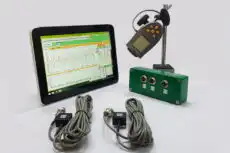
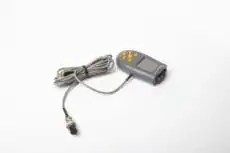
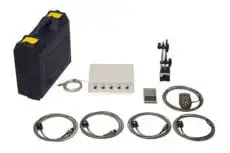
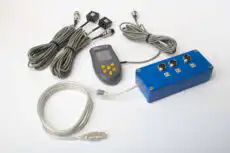
Sahnada xuddi shu ish jarayoni ko'chma ikki kanalli asbob yordamida bajariladi. Tahlilchi tezlatgichni podshipnik korpusiga o'rnatib, ish tezligida yuqori chastotali tebranishni qayd etishi va konvertli spektrni joyida tekshirishi mumkin — bu aynan Balanset-1A kabi asbob bajaradigan vazifa: u rotor muvozanatlash funksiyasi bilan bir qatorda sahnada tebranish tahlilchisi sifatida ham xizmat qiladi.
BPFI va BPFO: tezkor taqqoslash
| Feature | BPFI (ichki halqa) | BPFO (tashqi halqa) |
|---|---|---|
| Frequency | Yuqori (val tezligidan 5–7 marta) | Past (val tezligidan 3–5 marta) |
| Sidebands | Almost always present (±1×) | Mavjud bo'lishi ham, bo'lmasligi ham mumkin |
| Yon chastotalar naqshi | Juda muntazam, aniq oraliq | Mavjud bo'lganda kamroq muntazam |
| Occurrence | Kamroq uchraydi (~nosozliklarning 25%) | Eng ko'p uchraydi (~nosozliklarning 40%) |
6. Rivojlanish, og'irlik darajasi va qolgan resurs
Nuqson rivojlanish bosqichlari
- Initiation: mikroskopik yoriq yoki chuqurcha hosil bo'ladi; hali aniqlanmaydi.
- Incipient: konvertli spektrda kichik BPFI cho'qqisi paydo bo'ladi (≈ 0,1–0,5 g).
- Early: bir yoki ikki garmonik va yon chastotalar bilan aniq BPFI cho'qqisi (≈ 0,5–2 g).
- Moderate: ko'p garmoniklar, yaqqol yon chastotalar, tekshiruvda ko'rinadigan yorilib chiqish (≈ 2–10 g).
- Advanced: juda yuqori amplituda, ko'plab garmoniklar, shovqin polining ko'tarilishi (> 10 g).
- Severe: keng polosali shovqin ustunlik qiladi, diskret cho'qqilar yo'qoladi va halokatli nosozlik yaqinlashib qoladi.
Qolgan resurs bo'yicha ko'rsatmalar
- Dastlabki bosqich: odatda 6–18 oy qolgan muddat.
- Erta bosqichdan o'rtacha bosqichga: 3–6 months.
- O'rtacha bosqichdan rivojlangan bosqichga: 1–3 months.
- Rivojlangan bosqichdan og'ir bosqichga: days to weeks.
- Caveat: haqiqiy muddat yuklamaga, tezlikka, moylashtirish sifatiga va podshipnik o'lchamiga bog'liq — ko'rsatkichlar yo'riqnoma sifatida xizmat qiladi, kafolat emas, va har qanday rasmiy qolgan foydali resurs muddati estimate.
7. Sabablar va tuzatish choralari
Ichki halqa nuqsonlarining keng tarqalgan sabablari
- Fatigue: takroriy yuklamadan kelib chiqadigan yuqori tsikllik osti yuzasi charchoq — xizmat muddati tugashining klassik mexanizmi.
- Noto'g'ri o'rnatish: o'rnatish paytidagi shikastlanish, masalan, ichki halqaga zarba berib podshipnikni haydash.
- Shaft damage: val o'rindig'idagi qo'pollik yoki tirnalish natijasida yuzaga keladigan fretyng.
- Haddan ortiq bosim o'rnatish: juda qattiq press-o'rnatish natijasida halqa kuchlanishining oshishi.
- Misalignment: charchoqni tezlashtiruvchi notekis yuklanish.
- Contamination: qattiq zarrachalarning poyga yuzasiga botib kirishi.
- Moylashtirish nosozligi: yetarli moylashtiruvchi plyonkaning yo'qligi natijasida yuzaning shikastlanishi va spalling.
Javob choralarini ko'rish va almashtirish rejalashtirilishi
On detection, step up the monitoring interval (monthly → weekly → daily as severity rises), schedule replacement for the next convenient outage, and trend the amplitude to forecast remaining life. Avoid lingering at kritik aylanish tezliklarini bu nosozlikning tezlashishiga olib kelishi mumkin. Almashtirishni rejalashtirish jarayonida to'g'ri podshipnik modelini buyurtma qiling, valni tekshiring (ichki halqa nuqsonining rivojlangan bosqichi o'rindiq yuzasini ishqalab ketishi mumkin), va xuddi shu tarzda almashtirilgan podshipnik ham ishdan chiqmasligi uchun ildiz-sabab tahlilini o'tkazing. Intizomli texnik holatni monitoring qilish dasturga kiritilgan holda, BPFI aniqlash podshipnik ishonchliligining asosiy elementi bo'lib qoladi — o'ziga xos yuqori chastotali cho'qqi, 1× yon chiziqlar bilan birgalikda, vallar va korpuslarga ikkilamchi zarar yetkazilishining oldini oladigan o'z vaqtida va aniq ogohlantirish beradi.

