Kuelewa BPFI — Mzunguko wa Kupita kwa Mpira, Mstari wa Ndani


BPFI (Mzunguko wa Kupita kwa Mpira, Mstari wa Ndani) ni moja ya msingi nne taajweza za kosa la kuzaa na inawakilisha kasi ambayo vipengele vya kuvingirishwa hupita juu ya kasoro kwenye mstari wa ndani unaozunguka wa beari. Wakati chipukizi, ufa, au shimo linapounda kwenye njia hiyo ya ndani, kila kipengele cha kuvingirishwa hugonga hitilafu hiyo kadiri mstari unaopita, ukizalisha mipigo ya mara kwa mara inayoonekana katika vibration signal at the BPFI frequency. What sets BPFI apart from the other characteristic frequencies is its near-constant escort of ±1× sidebands — alama ya vidole inayofanya kasoro za mstari wa ndani kuwa miongoni mwa hitilafu zinazotambuliwa kwa ujasiri zaidi katika vibration analysis.
1. Ufafanuzi: BPFI ni Nini?
BPFI inahesabu idadi ya mapito ya vipengele vya kuvingirishwa yanayotokea juu ya nukta moja kwenye mstari wa ndani kwa kila kipande cha muda. Kwa sababu mstari wa ndani unazunguka pamoja na shimoni huku vipengele vikizunguka polepole zaidi kwa kasi ya kizimba, kasi ya jamaa kati ya mstari na vipengele ni kubwa — na hivyo ndivyo mzunguko unavyokuwa. Kasoro iko kwenye mstari unaozunguka, kwa hivyo inagongwa mara kwa mara na kila mpira au roller inayopita. Pamoja na mzunguko wa mstari wa nje (BPFO), mzunguko wa kizimba (FTF), na mzunguko wa mzunguko wa kipengele cha kuvingirishwa (BSF), BPFI inaunda seti ya kawaida ya mzunguko ambao mchambuzi huhesabu ili kutambua mahali pa uharibifu ndani ya beari. Hitilafu hizo zenyewe ni sehemu ya mada pana zaidi ya matatizo ya bearing.
2. Hesabu ya Hisabati
Fomula na vigeuzi
BPFI inatokana na jiometri ya beari na kasi ya shimoni:
BPFI = (N × n / 2) × [1 + (Bd/Pd) · cos β]
- N = idadi ya vipengele vya kuvingirishwa katika beari.
- n = mzunguko wa kuzunguka wa shimoni kwa Hz (au RPM ÷ 60).
- Bd = diameter ya mpira au roller.
- Pd = kipenyo cha mzunguko wa kati (mduara unaopita katikati ya vipengele vya kuvingirishwa).
- β = contact angle.
Kwa nini BPFI daima ni kubwa kuliko BPFO
Kwa beari moja, BPFI daima inazidi BPFO, na fomula inaonyesha kwa nini hasa:
- The inner race rotates with the shaft, while the rolling elements orbit more slowly at cage speed (roughly 0.4× shaft speed), so the relative velocity at the inner race is greater.
- BPFI uses the term [1 + Bd/Pd], whereas BPFO uses [1 − Bd/Pd].
- Adding the fraction to one keeps BPFI’s multiplier larger than BPFO’s.
- Uwiano wa kawaida wa BPFI/BPFO hutokana na takriban 1.6–1.8.
Typical values
- Kwa vipande vya kusaidiana vya kawaida, BPFI huangukia karibu 5–7× kasi ya axle.
- Mfano uliofanyiwa kazi: a 10-ball bearing at 1800 RPM (30 Hz) gives BPFI ≈ 173 Hz, about 5.8× shaft speed.
Badala ya kukokotoa hili kwa mkono kwa kila mashine, wataalamu wengi husoma thamani — pamoja na BPFI, BPFO, BSF, na FTF — moja kwa moja kutoka kwenye Kikokotoo cha Masafa ya Kasoro ya Vipakira, wakiingiza jiometri ya kipande cha kusaidiana na kasi ya mzunguko mara moja.
3. Mfumo wa Kimwili na Moduli ya Eneo la Mzigo
Kasoro inayozunguka
Kasoro katika mzunguko wa ndani huunda hali ambayo mzunguko wa nje hauwezi kuona, kwa sababu kasoro yenyewe inasogea:
- Kasoro hupanda juu ya mzunguko wa ndani unaozunguka.
- Mzunguko unapogeuka, kasoro husafiri kuzunguka mzingo wa kipande cha kusaidiana.
- Kila kipengele cha kuvingirishwa huigonga kinapopita — hii ndiyo kiwango cha BPFI.
- Lakini nguvu ya kila mgongano inategemea mahali kasoro ilipo kuhusiana na eneo la mzigo wakati huo.
Athari ya eneo la mzigo
Kila kipande cha kusaidiana chenye mzigo kina eneo — eneo la mzigo — ambapo vipengele vya kuvingirishwa hushinikiza zaidi dhidi ya mizunguko. Kasoro ya mzunguko wa ndani inapopigia mzunguko ndani na nje ya eneo hili mara moja kwa kila mzunguko wa shimoni, nguvu ya mgongano hupanda na kushuka:
- Kasoro ndani ya eneo la mzigo: nguvu kubwa ya mguso, mgongano mkali kila kipengele kinapogonga.
- Kasoro mbali na eneo la mzigo: nguvu ndogo au ya sifuri ya mguso, mgongano dhaifu au usiowepo.
- Masafa ya moduli: kasoro inakamilisha mzunguko huu mara moja kwa kila mapinduzi ya shimoni — yaani kwa 1× running speed.
- Result: athari za BPFI zinafanyiwa urekebishaji wa mzunguko (amplitude modulation) kwa kasi ya mara 1× ya mhimili.
Uzalishaji wa mipande ya pembeni (sidebands)
Urekebishaji huo wa mzunguko ndio unaozalisha mfululizo wa mipande ya pembeni (sideband comb) kwa madhumuni ya utambuzi:
- Mzunguko wa msingi (carrier frequency): BPFI.
- Masafa ya moduli: kasi ya mara 1× ya mhimili.
- Sidebands: BPFI ± 1×, BPFI ± 2×, BPFI ± 3×, symmetrically spaced about the carrier.
- Thamani ya Utambuzi: familia hii ya kawaida ya mipande ya pembeni ya 1× ni dalili ya wazi kabisa ya kasoro ya njia ya ndani (inner race) — na ndiyo inayotofautisha BPFI na mipande ya pembeni iliyopangwa kwa FTF katika kasoro ya BSF.
4. Sifa za Ishara ya Mtetemo
Mwonekano wa kawaida wa wigo
- Central peak katika mzunguko wa BPFI.
- Familia ya mipande ya pembeni (sidebands) of peaks at BPFI ± n×(1×).
- Familia za mawimbi ya harmoniki at 2×BPFI and 3×BPFI, each carrying its own ±1× sidebands.
- Mchoro wa kuona: mfululizo wa vilele vilivyopangwa kwa usawa sawa, kama “uzio wa nguzo” au comb.
Kwa nini wigo wa bahasha (envelope spectrum) ni wa kuamua
Athari za njia ya ndani (inner race) huchochea mzunguko wa juu wa bonde la resonansi ya kichwa cha gurudumu badala ya kuweka nishati yote moja kwa moja kwenye BPFI, kwa hivyo wigo ghafi FFT unaweza kuonekana bila utofauti wowote katika hatua za awali. Uchambuzi wa bahasha inagawanya mawimbi hayo ya resonansi, na katika wigo unaotokana spectri ya envelope kilele cha BPFI kinatawala na mipande ya pembeni ya 1× inaonekana wazi kabisa — mara nyingi miezi kadhaa kabla ya wigo wa kawaida spectrum kuonyesha chochote. Kasoro inapokua, ukubwa wa bahasha huongezeka kwa kasi.
5. Ugunduzi, Utambuzi, na Mazoea ya Uwanjani
Mfuatano wa utambuzi unaotegemewa
- Calculate BPFI kutoka kwa nambari ya mfano wa bearing au jiometri yake.
- Tafuta wigo kwa kilele katika masafa yaliyohesabiwa, ukiwa na uvumilivu wa takriban ±5%.
- Verify the ±1× sidebands — kipengele kikuu cha uthibitisho.
- Angalia harmoniki (2×BPFI, 3×BPFI) for their own sidebands.
- Tathmini amplitudo dhidi ya mstari wa msingi au miongozo ya ukali wa mtetemo.
- Confirm: BPFI pamoja na sidebands 1× inamaanisha kasoro ya mzunguko wa ndani.
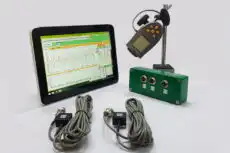
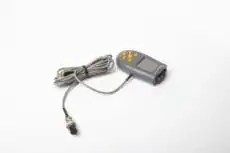
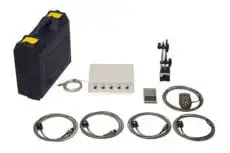
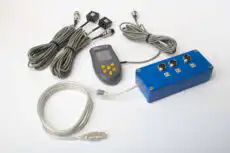
Katika hali ya kwenye tovuti, mchakato huo huo unafanywa kwa chombo cha portable chenye njia mbili. Mchambuzi anaweza kufunga accelerometer kwenye nyumba ya bearing, kupata mtetemo wa masafa ya juu kwa kasi ya uendeshaji, na kukagua envelope mahali pa kufanya kazi — hasa aina ya kazi ya kupima-mahali-inapofanya kazi ambayo chombo kama vile Balancet-1A kimeundwa kwa ajili yake, kikifanya kazi pia kama mchambuzi wa mtetemo wa kwenye tovuti pamoja na jukumu lake la kusawazisha rotori.
BPFI dhidi ya BPFO kwa muhtasari
| Feature | BPFI (Inner Race) | BPFO (Outer Race) |
|---|---|---|
| Frequency | Juu zaidi (mara 5–7 ya kasi ya shimoni) | Chini zaidi (mara 3–5 ya kasi ya shimoni) |
| Sidebands | Almost always present (±1×) | Inaweza kuwepo au kutokuwepo |
| Mfumo wa sideband | Nafasi ya kawaida sana, iliyo wazi | Isiyo ya kawaida inapokuwepo |
| Occurrence | Si ya kawaida sana (~25% ya hitilafu) | Ya kawaida zaidi (~40% ya hitilafu) |
6. Maendeleo, Ukali, na Maisha Yaliyobaki
Hatua za maendeleo ya kasoro
- Initiation: ufa mdogo au shimo la hadubuni huonekana; bado haliwezi kugunduliwa.
- Incipient: kilele kidogo cha BPFI kinaonekana katika wigo wa bahasha (≈ 0.1–0.5 g).
- Early: kilele wazi cha BPFI chenye sauti moja au mbili za harmonic na sidebands (≈ 0.5–2 g).
- Moderate: harmonic nyingi, sidebands zinazojitokeza, kipande cha kuchomoka kinachoonekana wakati wa ukaguzi (≈ 2–10 g).
- Advanced: mtetemeko mkubwa sana, harmonic nyingi, sakafu ya kelele inayopanda (> 10 g).
- Severe: kelele pana (broadband) inatawala, vilele vilivyotamkika vinafifia, na kushindwa kwa ghafla kunakaribia.
Mwongozo wa maisha yaliyosalia
- Mwanzo hadi mapema: kwa kawaida miezi 6–18 imesalia.
- Mapema hadi wastani: 3–6 months.
- Wastani hadi ulioendelea: 1–3 months.
- Ulioendelea hadi mkali: days to weeks.
- Caveat: ratiba halisi inategemea mzigo, kasi, ulubriki, na ukubwa wa beari — takwimu ni mwongozo, si dhamana, na zinaingizwa katika yoyote rasmi umri unaobaki wa matumizi estimate.
7. Sababu na Hatua za Kurekebisha
Sababu za kawaida za kasoro za mzunguko wa ndani (inner race)
- Fatigue: uchovu wa chini ya uso wa mzunguko mwingi kutokana na mzigo wa kurudiwa, utaratibu wa kawaida wa mwisho wa maisha.
- Kuanzisha vibaya: uharibifu wakati wa usakinishaji, kama vile kupiga beari kwa kugonga mzunguko wa ndani.
- Shaft damage: kiti cha shimoni chenye makwaruzo au mchakato wa fretting.
- Ulinganifu wa nguvu kupita kiasi (Excessive interference fit): kubana kupita kiasi wakati wa kuingiza kwa nguvu kunakosababisha msongo wa mzunguko.
- Misalignment: mzigo usio sawa unaouharakisha uchovu wa chuma.
- Contamination: chembe ngumu zinazochonga njia ya mzunguko wa vipande vya kusogeza.
- Kushindwa kwa unyunyiziaji: filamu duni inayosababisha dhiki ya uso na spalling.
Mipango ya kukabiliana na uingizwaji
On detection, step up the monitoring interval (monthly → weekly → daily as severity rises), schedule replacement for the next convenient outage, and trend the amplitude to forecast remaining life. Avoid lingering at kasi za muhimu ambayo inaweza kuharakisha kushindwa. Wakati wa kupanga uingizwaji, agiza mfano sahihi wa gia ya kusogeza, kagua mhimili (kasoro ya hali ya juu ya pete ya ndani inaweza kukwaruza kiti), na fanya ukaguzi wa chanzo cha tatizo ili uingizwaji usishindwe kwa njia ile ile. Ikijumuishwa katika ufuatiliaji wa hali ya mashine mpango uliopangwa, ugunduzi wa BPFI unakuwa nguzo ya uaminifu wa gia za kusogeza — kilele chake cha wazi cha mzunguko wa juu chenye sidebands za 1× kikitoa onyo la wakati unaofaa, lisilo na utata, linalozuia uharibifu wa sekondari wa mihimili na makazi.

