Understanding Spike Energy



Spike energy (also called impact energy or shock-pulse energy) is a vibration measurement parameter that quantifies the energy content of high-frequency impact events — particularly those generated by rolling-element bearing defects. It is measured by detecting the peak high-frequency acceleration response that occurs when rolling elements strike defects on the bearing races, and it serves as an early-warning indicator of bearing damage that is more sensitive than overall vibration level or even standard frequency analysis.
The technique is closely related to the Shock Pulse Method (SPM). Both focus on the brief, high-amplitude acceleration spikes created when balls or rollers impact spalls, cracks or pits, enabling bearing-defect detection months earlier than conventional vibration monitoring.
1. The Physical Basis
How Impacts Arise in Bearings
When a rolling element strikes a bearing defect, a rapid sequence of events follows:
- A brief, high-force impact occurs, lasting only microseconds.
- That impact excites the high-frequency resonances of the bearing structure, typically 5–40 kHz.
- A short burst of high-frequency ringing is produced.
- The energy is concentrated into a short-duration spike.
- Spike energy measures the energy content of that spike.
The impacts repeat at the relevant bearing fault frequency, so the rate of spiking is itself diagnostic once the defect has matured enough to analyse spectrally.
Why Focus on High Frequencies?
- Bearing impacts deposit their energy chiefly at high frequencies.
- Low-frequency vibration such as unbalance does not contribute to the spikes.
- High-frequency measurement therefore isolates the bearing-generated events.
- This gives a much better signal-to-noise ratio for incipient bearing defects.
2. The Measurement Method
Instrumentation
- High-frequency accelerometer: a wide-bandwidth sensor (>30 kHz).
- Resonant sensor: some systems deliberately use the accelerometer resonance (around 32 kHz) to amplify the impacts.
- Bandpass filter: typically 5–40 kHz, to isolate the impact frequencies.
- Peak detector: captures the maximum acceleration within each impact.
- Energy calculation: the integral of squared acceleration over the impact duration.
Because the working band is so high, the measurement is acutely sensitive to how the sensor is attached — see sensor mounting for why a stud or clean magnetic base, not a handheld probe, is essential here.
Units and Scaling
- Expressed in decibels (dB) relative to a reference level.
- A typical scale runs from 0 to 60 dB.
- Sometimes expressed as gSE — spike energy in g units.
- The logarithmic scale accommodates the wide dynamic range of impact energy.
3. Interpretation and Severity Criteria
Typical Severity Levels
- Good condition (< 20 dB): minimal impact energy, bearing in good condition with normal lubrication, no corrective action needed.
- Fair condition (20–35 dB): some impact activity, early-stage wear or defect initiation; monitor more frequently and plan maintenance within 3–6 months.
- Poor condition (35–50 dB): significant impact energy, active defects present; increase monitoring to weekly or daily and plan replacement within weeks.
- Critical condition (> 50 dB): very high impact energy, advanced damage; immediate replacement recommended, with a real risk of sudden failure.
These bands are a practical way to assign defect severity from a single reading, but they should be calibrated to the specific machine and sensor over time.
Bearing Life Stages and Spike Energy
- New bearing: low spike energy, around 10–15 dB.
- Normal wear: a gradual increase, 15–25 dB.
- Defect initiation: spike energy begins rising, 25–35 dB.
- Active defect: a rapid increase, 35–50 dB.
- Advanced failure: very high, > 50 dB — and it may then fall again as the bearing disintegrates and the sharp defect edges are worn smooth.
That final reversal is the classic trap of any single-number bearing parameter: a falling reading does not necessarily mean recovery, which is why spike energy is trended, not read in isolation.
4. Advantages
Early Detection
- Detects bearing defects 6–18 months before FFT-based methods.
- Sensitive to micro-spalls and incipient damage.
- Rises early in defect development.
- Provides the maximum lead time for maintenance planning.
Simplicity
- A single numerical value in dB.
- Easy to trend over time.
- Simple threshold-based alarming.
- Minimal training required for data collection.
Effectiveness at Low Speed
- Works well at low speeds, where velocity measurements are weak.
- Impacts still generate high-frequency spikes regardless of shaft speed.
- Well suited to slow-speed equipment running below 500 rpm.
5. Limitations
Bearing-Specific
- It primarily detects bearing defects.
- It is not diagnostic for unbalance, misalignment or most other faults.
- It must complement other techniques for comprehensive monitoring.
No Fault Identification
- It indicates a bearing problem but does not specify which component — outer race, inner race, rolling element or cage.
- Specific fault identification requires spectral and envelope analysis.
- A single number lacks diagnostic detail.
Sensor and Mounting Sensitivity
- It requires a good high-frequency sensor.
- The mounting method is critical — stud mount best, magnet acceptable, handheld poor.
- The transmission path between defect and sensor affects the reading.
6. Practical Application
Route-Based Monitoring
- Take a quick spike-energy reading at each bearing.
- Identify the bearings with elevated readings.
- Flag those for detailed FFT or envelope analysis.
- Screen many bearings efficiently on a single survey route.
Trending
- Plot spike energy against time.
- Watch for upward trends.
- Treat rapid increases as a sign of accelerating damage.
- Use the trend to trigger detailed analysis or maintenance.
Where Spike Energy Fits Alongside Other Tools
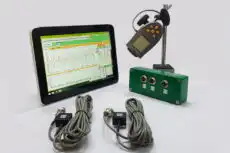
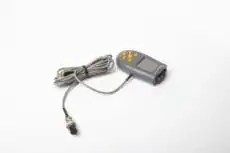
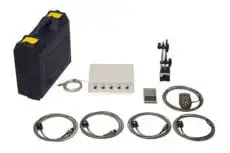
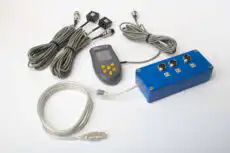
Spike energy is best used for screening and trending; when a reading is elevated, follow up with the methods that pinpoint the defect. In the field that means switching from a single overall number to true diagnostics — capturing the spectrum, running envelope analysis for the specific fault, and combining crest factor and kurtosis for a rounded bearing assessment. A portable two-channel analyser such as the Balanset-1A measures the vibration spectrum a technician needs for that follow-up step, and the expected defect frequencies can be predicted in advance with a bearing defect frequency calculator so the suspect peaks are easy to confirm.
Spike energy is a valuable bearing-condition indicator that gives early warning of developing defects through a simple, single-value measurement. It lacks the diagnostic detail of frequency analysis, but its simplicity, early-detection capability and effectiveness at low speed make it a useful part of any comprehensive bearing-monitoring and predictive-maintenance programme — especially for screening large populations of bearings and triggering deeper analysis the moment a problem appears.

