ಟರ್ಬೊಮಶೀನರಿಯಲ್ಲಿ ಸ್ಟೀಮ್ ವರ್ಲ್ ಅನ್ನು ಅರ್ಥಮಾಡಿಕೊಳ್ಳುವುದು






ಸ್ಟೀಮ್ ವರ್ಲ್ — also called aerodynamic cross-coupling instability or seal whirl — is a ಸ್ವಯಂ-ಪ್ರೇರಿತ ಕಂಪನ that arises in steam and gas turbines when aerodynamic forces inside labyrinth seals, blade-tip clearances, or other annular passages generate a destabilising tangential force on the ರೋಟರ್. ಹಾಗೆ ಎಣ್ಣೆ ವರ್ಲ್ in hydrodynamic bearings, it is a form of ರೋಟರ್ ಅಸ್ಥಿರತೆ in which energy is continuously drawn from the steady flow of steam or gas and converted into orbital motion of the shaft. The result is high-amplitude ಸಬ್-ಸಿಂಕ್ರೋನಸ್ vibration ರೋಟರ್ನ ಯಾವುದಾದರೂ ಒಂದರ ಸಮೀಪದ ಆವೃತ್ತಿಯಲ್ಲಿ ನೈಸರ್ಗಿಕ ಆವೃತ್ತಿಗಳನ್ನು — and, if not detected and corrected quickly, it can drive a machine to catastrophic failure.
1. ಭೌತಿಕ ಕಾರ್ಯವಿಧಾನ
Steam whirl is fundamentally a fluid-structure interaction in the narrow clearances of turbine seals. It develops in three linked stages.
Labyrinth Seal Clearances
- Steam or gas flows through narrow annular passages between rotating and stationary seal components.
- A high pressure differential acts across the seals — often 50–200 bar in large machines.
- Radial clearances are tight, typically 0.2–0.5 mm.
- The flow acquires a swirl, a tangential velocity component, as it passes through the seal teeth.
Aerodynamic Cross-Coupling
The instability is born the moment the rotor is displaced from its centred position:
- The clearance becomes asymmetric — smaller on one side, larger on the opposite side.
- The flow and pressure distribution around the seal turn non-uniform.
- The net aerodynamic force gains a tangential component, acting perpendicular to the displacement rather than opposing it.
- That tangential force behaves like a destabilising “negative ಕಠಿಣತೆ“, pushing the rotor along its orbit instead of back to centre.
ಸ್ವ-ಉತ್ತೇಜಿತ ಕಂಪನ
- The tangential force drives the rotor into a forward ವರ್ಲ್ orbit.
- The orbit frequency settles near a natural frequency, hence sub-synchronous.
- Energy is continuously extracted from the steam flow to sustain the motion.
- Amplitude grows until limited by the available clearance — or by failure of the machine.
2. Conditions Promoting Steam Whirl
Whether a given machine becomes unstable depends on a balance between destabilising seal forces and the available damping. Three groups of factors tip that balance.
ಜ್ಯಾಮಿತೀಯ ಅಂಶಗಳು
- Tight seal clearances: smaller clearances produce stronger aerodynamic forces.
- Long seal lengths: more seal teeth or longer seal sections increase the destabilising force.
- High swirl velocity: flow entering the seal with a large tangential component is especially destabilising.
- Large seal diameters: a larger radius amplifies the moment generated by the aerodynamic force.
ಕಾರ್ಯಾಚರಣೆ ಪರಿಸ್ಥಿತಿಗಳು
- High pressure differentials: a greater pressure drop across the seal raises the force.
- High rotor speed: both centrifugal effects and swirl velocity grow with speed.
- Low bearing damping: insufficient damping cannot counteract the seal forces.
- Light-load conditions: low bearing loads reduce the effective damping a ಜರ್ನಲ್ ಬೇರಿಂಗ್ can provide.
ರೋಟರ್ ಲಕ್ಷಣಗಳು
- Flexible rotors: a ಲವಚಿಕ ರೋಟರ್ running above its ನಿರ್ಣಾಯಕ ವೇಗ is more susceptible.
- Low-damping systems: minimal structural or bearing damping leaves nothing to absorb the energy.
- High length-to-diameter ratio: slender rotors are inherently more prone to instability.
3. Diagnostic Characteristics
ಕಂಪನ ಸಿಗ್ನೇಚರ್
Steam whirl leaves a distinctive pattern that vibration analysis can identify with confidence:
| ಪ್ಯಾರಾಮೀಟರ್ | ಲಕ್ಷಣ |
|---|---|
| ಆವೃತ್ತಿ | Sub-synchronous, typically 0.3–0.6× running speed, often locking onto a natural frequency |
| ಆಯಾಮ | High — often 5–20 times the normal unbalance vibration |
| ಆರಂಭ | Sudden, above a threshold speed or pressure |
| Speed dependence | Frequency may lock and refuse to track with speed changes |
| ಕಕ್ಷೆ | ದೊಡ್ಡ ವೃತ್ತಾಕಾರ ಅಥವಾ ಅಂಡಾಕಾರ, ಮುಂದುವರಿಯುವ ಪ್ರಿಸೆಷನ್ |
| ಸ್ಪೆಕ್ಟ್ರಮ್ | ಪ್ರಧಾನ ಸಬ್-ಸಿಂಕ್ರೋನಸ್ ಶೃಂಗ |
ಇತರ ಅಸ್ಥಿರತೆಗಳಿಂದ ಭೇದಿಸುವಿಕೆ
- vs. oil whirl / whip: steam whirl occurs in turbines with labyrinth seals, whereas oil whirl occurs in plain ಜರ್ನಲ್ ಬೇರಿಂಗ್ಗಳು.
- vs. unbalance: steam whirl is sub-synchronous, while unbalance is a 1× ಸಮಕಾಲಿಕ ಪ್ರತಿಕ್ರಿಯೆ.
- vs. rub: steam whirl can occur without any contact, and its frequency is more stable than the erratic vibration of a ರೋಟರ್ ರಬ್.
4. Prevention and Mitigation Methods
Most countermeasures attack one of two targets: reduce the destabilising swirl at source, or add damping so the rotor can absorb it. Seal design tackles the first; bearing improvements and operating limits tackle the second.
ಸೀಲ್ ವಿನ್ಯಾಸ ಬದಲಾವಣೆಗಳು
- Anti-swirl devices (swirl brakes): stationary vanes or baffles placed upstream of the seal strip the tangential velocity out of the incoming flow, sharply reducing the cross-coupling force. This is the most effective and most common solution.
- Honeycomb seals: replacing the smooth labyrinth lands with a honeycomb structure generates turbulence that dissipates swirl energy and raises the effective damping in the seal region; widely used in modern gas turbines.
- Increased seal clearances: larger radial clearances weaken the aerodynamic force, but at the cost of more leakage and reduced turbine efficiency, so this is usually only a temporary measure.
- Damper seals: purpose-designed seals — pocket damper seals and hole-pattern seals — that provide damping while still sealing, adding a stabilising force to oppose the cross-coupling.
ಬೆರಿಂಗ್ ವ್ಯವಸ್ಥೆಯ ಸುಧಾರಣೆಗಳು
- Increase bearing damping: fit tilting-pad bearings or add a squeeze film damper.
- Bearing preload: applying ಪ್ರೀಲೋಡ್ raises both effective stiffness and damping.
- Optimised bearing design: selecting the bearing type and configuration for maximum stability margin.
ಕಾರ್ಯಾಚರಣಾ ನಿಯಂತ್ರಣಗಳು
- ವೇಗ ನಿರ್ಬಂಧಗಳು: keep operating speed below the instability threshold.
- ಲೋಡ್ ನಿರ್ವಹಣೆ: avoid light-load running that strips damping from the bearings.
- Pressure control: reduce seal pressure differentials where the process allows.
- ನಿರಂತರ ನಿಗಾವಹಿಕೆ: real-time ಸ್ಥಿತಿ ಮೇಲ್ವಿಚಾರಣೆ with dedicated sub-synchronous alarms.
5. Detection and Emergency Response
ಆರಂಭಿಕ ಎಚ್ಚರಿಕೆ ಸೂಚನೆಗಳು
- Small sub-synchronous peaks beginning to appear in the vibration spectrum.
- Intermittent high-frequency components.
- A gradual rise in the overall ಕಂಪನ ತೀವ್ರತೆ as speed approaches the threshold.
- Changes in the ಕಕ್ಷೆ shape captured by proximity probes.
Immediate Actions When Steam Whirl Is Detected
- Reduce speed: immediately decrease speed below the threshold.
- Do not delay: amplitude can grow from acceptable to destructive in 30–60 seconds.
- ತುರ್ತು ಸ್ಥಗಿತ: trip the machine if a speed reduction is insufficient or impossible.
- ಘಟನೆಯನ್ನು ದಾಖಲಿಸಿ: record the speed at onset, the frequency, the peak amplitude, and the operating conditions.
- ಮರುಪ್ರಾರಂಭ ಮಾಡಬೇಡಿ: keep the machine down until the root cause is identified and corrected.
Where Field Instruments Fit
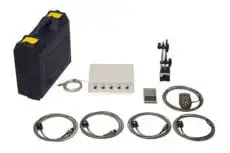
Permanently installed protection systems handle the split-second trip, but a portable two-channel analyser is invaluable for investigating the instability once the machine is stopped and for commissioning checks afterwards. An instrument such as the ಬ್ಯಾಲೆನ್ಸೆಟ್-1ಎ captures the FFT spectrum to confirm the sub-synchronous peak, tracks its amplitude during a controlled run-up, and lets an engineer first rule out a 1× unbalance problem — by measuring amplitude and phase at running speed — before attributing the vibration to a true self-excited seal instability. Separating an ordinary unbalance, which field balancing can cure, from genuine steam whirl, which it cannot, is a critical early diagnostic step.
6. Industries, Applications, and Related Phenomena
ಸ್ಟೀಮ್ ವರ್ಲ್ ವಿಶೇಷವಾಗಿ ಚಿಂತಾಜನಕವಾಗಿರುವುದು:
- ವಿದ್ಯುತ್ ಉತ್ಪಾದನೆ: large steam turbine-generators.
- ಪೆಟ್ರೋಕೇಮಿಕಲ್: steam-driven compressors and pumps.
- Gas turbines: aircraft engines and industrial gas turbines.
- Process industries: any high-speed turbomachinery fitted with labyrinth seals.
It also sits within a family of closely related instabilities. ಆಯಿಲ್ ವರ್ಲ್ shares the same destabilising mechanism but in a bearing oil film rather than a seal; ಶಾಫ್ಟ್ ವಿಪ್ exhibits the same frequency lock-in at a natural frequency; and all of them are members of the broader category of self-excited ರೋಟರ್ ಅಸ್ಥಿರತೆ. While advances in seal technology and bearing design have reduced how often it appears, understanding steam whirl remains essential for anyone engineering or operating high-speed, high-pressure turbomachinery.

