ಟ್ಯಾಕೋಮೀಟರ್ ಸಿಗ್ನಲ್ ಅನ್ನು ಅರ್ಥಮಾಡಿಕೊಳ್ಳುವುದು
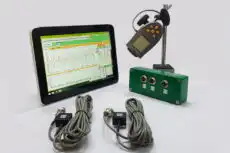
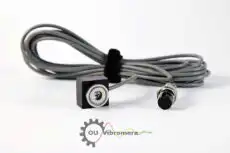
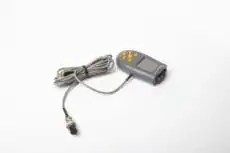
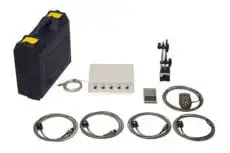

ನಲ್ಲಿ vibration analysis, ಒಂದು tachometer is a sensor that produces a timing pulse synchronised to the rotation of a shaft. It does two jobs at once: it measures running speed (RPM) with high precision, and — far more importantly — it gives the analyser a phase reference. Without that reference, balancing and most advanced rotor diagnostics are simply impossible.
1. Definition: What is a Tachometer?
The tachometer output is a clean pulse train, most often a once-per-revolution pulse. Functionally it is identical to the signal from a ಕೀಫೇಸರ್, and the two terms are frequently used interchangeably. Each pulse marks the instant t = 0 for a revolution, giving every vibration sample a known angular position on the shaft. That single fact — knowing where the shaft is at each moment — is what turns a raw vibration trace into actionable diagnostic information.
2. How a Tachometer Works
A tachometer setup for vibration work has two parts:
- A target on the shaft — a feature the sensor detects once per turn: a strip of reflective tape, a bolt head, a keyway, a notch, or an existing gear tooth.
- A stationary sensor aimed at the target. Common types are:
- Photoelectric / laser tachometers — emit a light beam and detect the reflection from reflective tape, firing a pulse each time the tape passes. These are the standard choice for portable field balancing because they need no shaft preparation beyond a strip of tape.
- Proximity (eddy-current) probes — detect a keyway or notch without contact; the classic permanently-installed Keyphasor.
- Hall-effect sensors — sense a small magnet fixed to the shaft.
Whatever the sensor, its pulse train is fed into the analyser alongside the accelerometer signals, locking the vibration data to shaft angle.
3. The Two Roles of the Tachometer Signal
Speed measurement
By timing the interval between pulses, the analyser derives an instantaneous, highly accurate RPM. This is far more precise than a handheld contact tachometer and is essential for matching vibration frequencies to specific machine components — for example, separating ಚಾಲನೆ-ವೇಗ ಸುಸಂಗತಿಗಳು ಇಂದ ಸ್ಥಾಪನೆ ನೈಮಾಷಿಕತೆ ಆವರ್ತನಗಳು.
Phase reference
This is the critical role. The analyser measures the delay between the tachometer pulse and the peak of a vibration component — for instance the 1× unbalance response — and converts that delay into a phase angle. The measured phase is the response phase relative to the tachometer pulse, not the heavy-spot angle itself — the response lags the heavy spot by an amount that depends on how close the running speed is to a resonance (near 0° well below it, 90° at it, near 180° above it), plus instrumentation delays — so the location of the ತಿದ್ದುಪಡಿ ತೂಕ is computed with the influence-coefficient (trial-weight) method rather than read directly from the phase. Phase also underpins:
- Field balancing — impossible without a phase reference; the analyser uses amplitude-and-phase before and after a trial weight to compute the correction.
- ಆರ್ಡರ್ ವಿಶ್ಲೇಷಣೆ — normalising the frequency axis to multiples (orders) of running speed, essential on variable-speed machines.
- Advanced plots — Bode, ನೈಕ್ವಿಸ್ಟ್ and ಕಕ್ಷೆ plots all require a phase mark from the tachometer.
4. The Tachometer in Practical Field Balancing
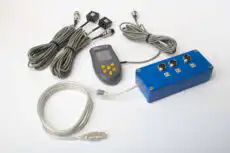
On a portable instrument the tachometer is not an optional extra — it is the component that makes single- and two-plane balancing possible on site. The ಬ್ಯಾಲೆನ್ಸೆಟ್-1ಎ ships with an optical laser tachometer that triggers from a small piece of reflective tape on the shaft, working at 50–500 mm standoff and across the full 250–90,000 rpm range. Its once-per-revolution pulse supplies the phase reference the software needs to calculate the mass and angle of each balance weight, and to verify the ಉಳಿದ ಅಸಮತೋಲನ after correction. In effect, the humble tachometer pulse is the timing backbone of the entire balancing workflow.
5. Common Pitfalls
- Double triggering: a shiny shaft or a second reflective feature can fire extra pulses, doubling the reported RPM. Matte tape and careful aiming prevent it.
- Weak or missed pulses: dirty tape, excessive standoff, or a bad aiming angle cause dropouts that corrupt phase. A clean, square-cut tape target and correct distance fix most issues.
- ಪರಿಸರ ಬೆಳಕು: direct sunlight on the sensor can swamp a laser tachometer; shading the target restores a reliable pulse.

