Serviços de balanceamento › Bombas e Rotores
Balanceamento de Bombas — In Situ, na Velocidade de Operação
Bombas centrífugas e hidráulicas desenvolvem vibração no momento em que a corrosão, a cavitação ou a incrustação deslocam a massa do rotor. Nós balanceamos rotores de bomba no local, na velocidade de operação — sem remoção da carcaça, sem desconexão de tubulação — eliminando a causa raiz da falha de mancais e vazamentos de vedação em uma única sessão no local.
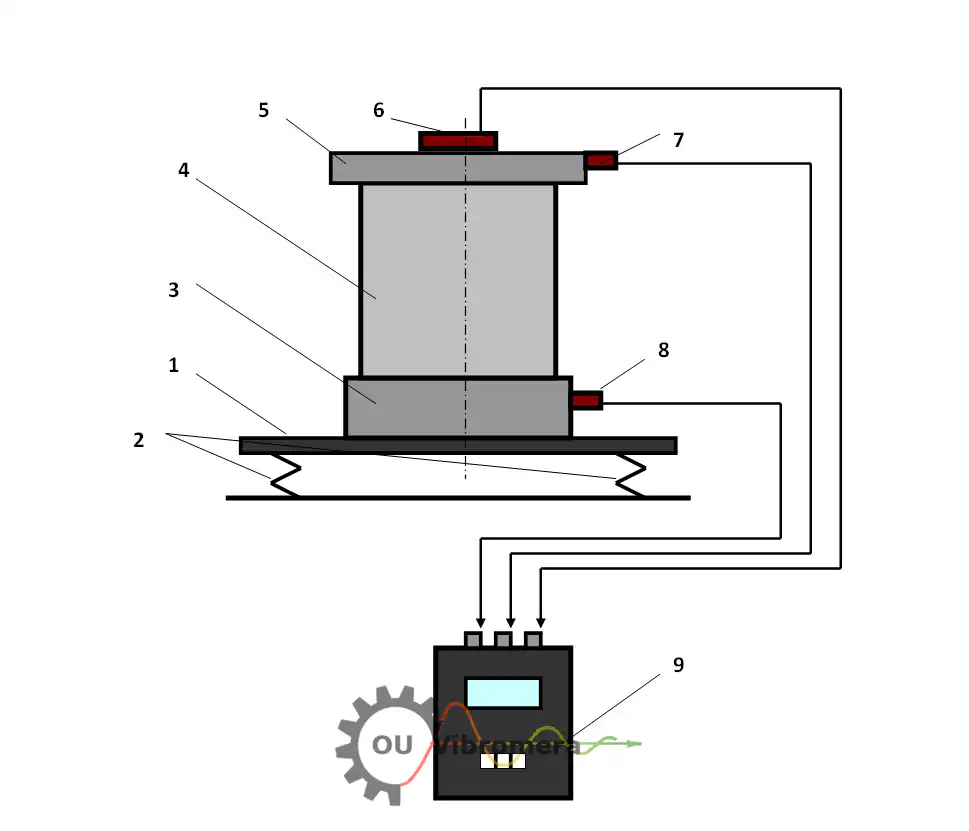
Em resumo: O balanceamento do rotor da bomba é realizado in situ, na velocidade e pressão normais de operação, usando o método dos coeficientes de influência. Um sensor de vibração no mancal do rolamento e um tacômetro a laser no eixo medem o estado de desbalanceamento; o Balanset-1A calcula a massa e o ângulo de correção exatos. Sem remoção da bomba, sem trabalho de tubulação — um trabalho típico de estágio único é concluído em menos de uma hora, reduzindo a vibração em 70 % ou mais e prolongando a vida útil do rolamento e da vedação em um fator de oito ou mais.
Sinais de que sua bomba está desbalanceada
A vibração de bombas costuma ser descartada como normal, mas cada um destes sintomas aponta para um desbalanceamento corrigível no rotor ou impulsor:
Por que os rotores de bombas perdem o balanceamento — e o que isso custa
Uma bomba recém-montada sai de fábrica balanceada, mas as condições de serviço atacam continuamente esse balanceamento. Pitting por cavitação desgasta as superfícies das pás de forma irregular; polpas abrasivas desgastam um lado do rotor mais rápido que o outro; incrustações e depósitos acumulam-se de forma não uniforme dentro das passagens de fluxo; reparos soldados ou anéis de desgaste substituídos adicionam massa assimétrica. Como a força centrífuga cresce com o quadrado da velocidade de rotação, alguns gramas de deslocamento a 1.500 rpm se tornam dezenas de quilonewtons de força de vibração a 3.000 rpm.
O custo financeiro se acumula rapidamente: substituição de vedação a cada três meses, troca de rolamentos, paradas não planejadas do processo e o custo de mão de obra para retirar a bomba de linha. Uma única sessão de balanceamento de campo — tipicamente com menos de uma hora — remove a carga dinâmica responsável por todas essas falhas, em vez de apenas substituir os componentes que ela destrói.
Por que reduzir a vibração pela metade multiplica a vida útil do rolamento
Como balanceamos uma bomba — passo a passo
O balanceamento em campo com o Balanset-1A segue o método do coeficiente de influência — o mesmo procedimento sistemático que você pode realizar sozinho no local:
- Monte os sensores. Um acelerômetro de vibração é fixado no mancal do rolamento da bomba, e um tacômetro a laser é apontado para uma faixa refletiva no eixo. Nenhuma desmontagem é necessária — a bomba funciona sob condições normais de operação durante todo o processo.
- Meça o valor de referência. Uma corrida em velocidade de operação plena registra a amplitude de vibração e o ângulo de fase, estabelecendo o estado atual de desbalanceamento em amplitude e direção.
- Adicionar uma massa de teste. Uma massa de teste conhecida é fixada no cubo do rotor ou no anel de balanceamento. Uma segunda corrida mostra como o rotor responde a um peso específico em uma posição angular conhecida — o coeficiente de influência.
- Deixe o dispositivo calcular. O Balanset-1A aplica o algoritmo dos coeficientes de influência para calcular a massa de correção exata e o posicionamento angular — um plano para rotores fechados compactos, dois planos para rotores largos de dupla sucção ou conjuntos de eixo multiestágio longos.
- Instale a massa de correção. Solde, parafuse ou fixe a massa calculada na posição indicada no cubo do rotor, na pá ou no anel de balanceamento. Remova o peso de prova, a menos que ele faça parte da solução.
- Verifique e documente. Uma corrida final de medição confirma que o desbalanceamento residual está dentro da faixa de tolerância ISO para o grau de balanceamento da bomba. O Balanset-1A imprime um relatório de balanceamento para os registros de manutenção.
O que balanceamos
- Rotores de bombas centrífugas de estágio único
- Conjuntos de eixo de bomba multiestágio
- Rotores de dupla sucção (dois planos)
- Rotores de bombas hidráulicas
- Rotores de bomba de vácuo
- Rotores de bombas submersíveis
- Rotores de bomba de polpa e química
- Rotores de bomba em linha e de sucção final
- Rotores de bombas de incêndio e reforço
- Rotores de bombas de circulação e água de resfriamento
Tolerâncias e normas
ISO 21940-11 (anteriormente ISO 1940-1) define os graus de qualidade de balanceamento de rotor rígido de G0.4 a G4000. A maioria dos rotores de bombas de processo é balanceada a G2.5 ou G1.0 — os graus mais rigorosos, apropriados para máquinas com alta velocidade periférica ou vedações mecânicas de precisão.
Em contextos de plantas de processo, API 610 especifica ainda os limites de desbalanceamento residual para bombas centrífugas em serviço de hidrocarbonetos, exigindo que cada conjunto rotativo atinja um desbalanceamento residual máximo por plano de correção de Umax = 6350W/N (g·mm), onde W é a carga estática do munhão para aquele plano de correção em kg e N é a velocidade contínua máxima em rpm (a forma equivalente no sistema imperial é 4W/N oz·in com W em lb). Balanceamos conforme o grau exigido pela sua aplicação e fornecemos valores documentados de desbalanceamento residual para seus registros de manutenção. Use nosso calculadora de desbalanceamento residual para encontrar sua tolerância admissível antes de começar.
O Balanset-1A — seu kit completo de balanceamento em campo
Tudo nesta página é feito com um único instrumento portátil: o Balanset-1A. É um balanceador dinâmico e analisador de vibração de dois canais que balanceia rotores de bomba em seus próprios mancais, na velocidade de operação, usando o método dos coeficientes de influência de 3 medições — o software calcula a massa e o ângulo exatos de correção e salva um relatório.
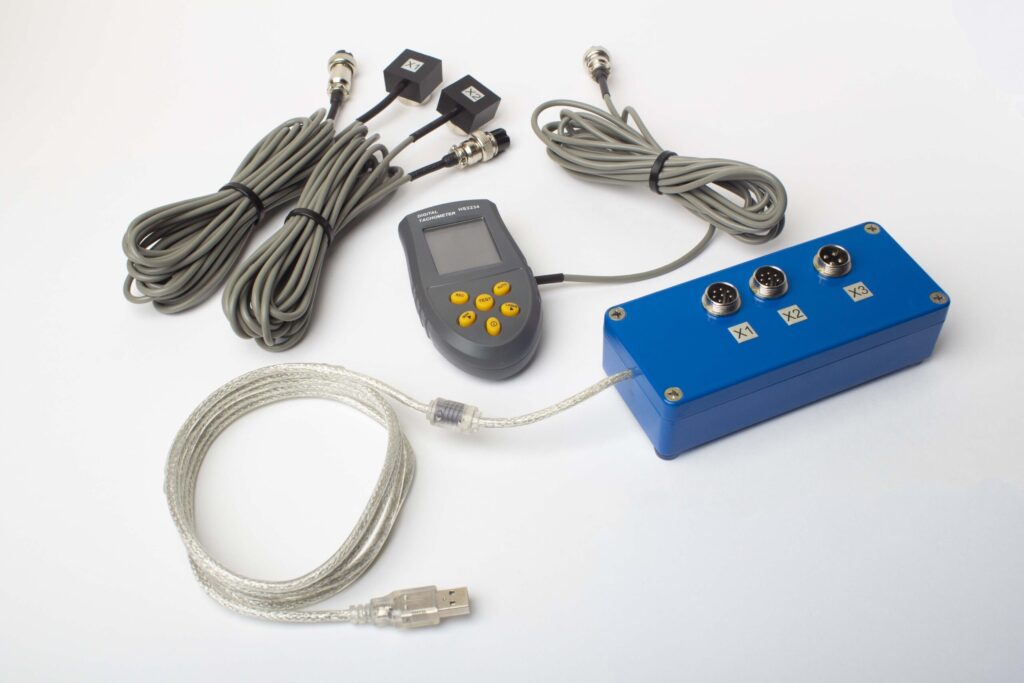
O que há no Kit Completo
€1.975 · Kit Completo, em estoque, nota fiscal com IVA
- Unidade de medição de interface (USB, 2 canais)
- Dois acelerômetros de vibração (cabo de 4 m, 10 m opcional)
- Tacômetro a laser / sensor de fase óptico (50–500 mm)
- Suporte magnético para o sensor
- Balança digital para massas de teste e correção
- Software de balanceamento e análise para Windows
- Estojo de transporte em plástico
Kit completo
Unidade · 2 sensores · tacômetro a laser · suporte magnético · balança digital · software · estojo de transporte. Tudo o que é necessário para começar a balancear direto da caixa.
Conjunto OEM
Unidade · 2 sensores · tacômetro a laser · software. Para integradores que já possuem suporte, balança e estojo, ou que incorporam a unidade em uma máquina de balanceamento.
| Parâmetro | Valor |
|---|---|
| Canais de medição | 2 (balanceamento em plano único e em dois planos) |
| Faixa de velocidade de vibração | 0,02–80 mm/s RMS |
| Faixa de frequência | 5–1000 Hz (≤10% de erro de amplitude acima de 550 Hz) |
| Precisão de medição | ±5% da escala total |
| Método | Coeficientes de influência de 3 medições (1 ou 2 planos) |
| Análise | Amplitude e fase em 1×, espectro FFT e forma de onda, relatórios salvos |
| Computador portátil | Não incluído (PC com Windows, disponível sob solicitação) |
Balanceamento em campo vs. máquina de balanceamento — qual é o certo para a sua bomba?
| Fator | Balanceamento em campo (Balanset-1A) | Máquina de balanceamento (oficina) |
|---|---|---|
| Bomba removida da linha? | Não — opera no local | Sim — desmontagem completa necessária |
| Desconexão de tubulação? | Não | Sim |
| Tempo de parada da produção | Apenas instalação do sensor (<15 min) | Horas a dias (retirada, envio, balanceamento, reinstalação) |
| Velocidade de balanceamento | Velocidade e condições reais de operação | Mandril de baixa velocidade separado |
| Considera a flexão do acoplamento e do eixo | Sim — montagem completa balanceada | Apenas o rotor |
| Normas atendidas | ISO 21940-11, API 610 | ISO 21940-11 |
| Custo do equipamento | €1.975 (Kit Completo) | €10.000 – €50.000+ |
| Tempo típico de serviço | <1 hora no local | 1–3 dias no total |
O balanceamento de campo é a escolha preferida sempre que a bomba pode funcionar e o critério de rigidez do rotor é satisfeito. Uma máquina de oficina continua adequada para rotores de fabricação nova onde não há tempo de funcionamento disponível, ou para rotores muito grandes que exigem desmontagem por outros motivos.
Casos reais de balanceamento de bombas
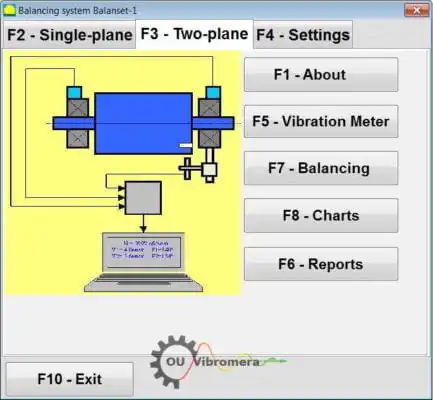
Bombas hidráulicas
Balanceamento em campo de rotores de bombas hidráulicas para eliminar vibração e prolongar a vida da vedação.
Rotores de bomba de vácuo
Balanceamento de rotores de bomba de vácuo no local para reduzir cargas nos mancais e ruído.
Bancada de bomba de vácuo
Procedimento de balanceamento em bancada para rotores de bomba de vácuo com resultados documentados.
Calculadoras gratuitas para bombas
FAQ sobre balanceamento de bombas
A bomba precisa ser retirada da tubulação para o balanceamento?
Um plano ou dois para um rotor de bomba?
Minha bomba vibra, mas os mancais são novos — ainda assim é desbalanceamento?
Quanto tempo leva um serviço típico de balanceamento de bomba?
Podemos fazer isso nós mesmos com o Balanset-1A?
Qual grau de balanceamento os rotores de bomba precisam atender?
Aprenda a teoria
Balanceie o rotor da sua bomba — no local, hoje
O Balanset-1A guia você pelo balanceamento de bombas em plano único e em dois planos, na velocidade de funcionamento, calcula a massa e o ângulo de correção exatos, e documenta o resultado conforme a ISO 21940-11 e a API 610. Sem desmontagem, sem perda de produção — apenas uma bomba mais silenciosa e mais duradoura.

