Huduma za usawa › Fans › Mashabiki ya Mnara wa Kupoza
Usawazishaji wa Mashabiki wa Mnara wa Kupoza — Mahali Hapo, kwa Kasi ya Kawaida ya Uendeshaji
Mashabiki ya mnara wa kupoza yenye kipenyo kikubwa ya FRP na matau ya aluminium hufanya kazi bila kukoma katika mazingira yenye unyevu na yanayokabiliwa na uchafu. Wakati mashapo ya madini, ukuaji wa kibiolojia au mmomonyoko wa matau husogeza uzito wa tao, mtetemo unaotokana nao huenea kwenye kisanduku cha gia, shimba la uendeshaji na muundo wa mnara. Tunasawazisha mashabiki haya mahali hapo, kwa kasi ya uendeshaji — bila kuondoa rotor, bila kufungua kisanduku cha gia — kuondoa chanzo cha mtetemo kabla haujakuwa tatizo la kimuundo au la kimitambo.

In short: Usawazishaji wa mashabiki wa mnara wa kupoza unafanywa mahali hapo, kwa kasi ya kawaida ya uendeshaji, ukitumia njia ya mgawo wa ushawishi. Accelerometer ya mtetemo kwenye nyumba ya kisanduku cha gia na tachmita ya leza kwenye shimba hupima hali ya kutosawazishwa; Balanset-1A huhesabu uzito sahihi wa marekebisho na msimamo wake wa pembe. Hakuna kuondoa rotor, hakuna kazi kwenye kisanduku cha gia — kazi ya kawaida ya seli moja inakamilika ndani ya saa moja, ikipunguza mtetemo kwa 70 % au zaidi na kurefusha maisha ya kisanduku cha gia na beari kwa mara nane au zaidi.
Dalili kwamba mashabiki ya mnara wako wa kupoza hayako katika usawa
Kutosawazishwa kwa mashabiki ya mnara wa kupoza hukua polepole, na hivyo ni rahisi kupuuza hadi sehemu ghali inaposhindwa. Hizi ni ishara za mapema za kuaminika:
Kwa nini mashabiki wa mnara wa kupoeza hupoteza usawa — na gharama yake
Mashabiki wa mnara wa kupoeza wanakabiliwa na mchanganyiko wa taratibu za uchafu ambazo ni za kipekee katika ulimwengu wa mashabiki. Mineral scale kutoka kwa ukungu wa maji unaozungushwa tena hushikamana bila usawa kwenye uso wa kunyonya wa mapande. Mwani na tope la kibiolojia hujengeka kwa mabaka kulingana na kemikali ya maji na mfiduo wa jua. Erosion kutoka kwa matone ya maji kwenye ukingo wa mbele wa msumari huondoa tabaka nyembamba za FRP au alumini katika sehemu zinazokabili vijikurutu vya usambazaji. Katika hali ya hewa ya baridi, ice loading on one or more blades can add hundreds of grams of asymmetric mass within minutes. Because centrifugal force grows with the square ya kasi ya mzunguko, hata mkengeuko mdogo wa uzito kwa RPM ya chini ya shabiki husababisha nguvu kubwa ya kutetemeka kwenye kisanduku cha gia.
The downstream cost of neglect is high: gearbox rebuilds that cost many times more than a balancing session, structural repairs to the tower deck and basin supports, shortened drive-shaft coupling life, and lost cooling capacity during peak summer demand when every cell is critical. Proactive periodic balancing — achievable on-site in under an hour — prevents all of these by keeping dynamic loads within design limits.
Kwa nini kupunguza mtetemo nusu huongeza maisha ya chokaa na gia
Jinsi tunavyosawazisha shabiki wa mnara wa kupoeza — hatua kwa hatua
Kusawazisha mahali (uwanjani) kwa Balanset-1A kunatumia njia ya mgawo wa ushawishi, ambayo haihitaji kuondoa sehemu na hutoa matokeo yaliyoandikwa kikamilifu:
- Weka mitanzi (sensors). Kichochezi cha mtetemo kinawekwa imara kwenye kiti cha chokaa cha kisanduku cha gia au staha ya shabiki; kipimo cha kasi cha leza kinaelekezwa kwenye ukanda wa kuakisi kwenye shimoni ya uendeshaji. Hakuna kuondoa rotori au kuondoa kisanduku cha gia kinachohitajika — shabiki hufanya kazi kwa kasi ya kawaida ya uendeshaji wakati wote.
- Pima kiwango cha mwanzo. Mzunguko mmoja kwa kasi kamili ya uendeshaji hurekodi ukubwa wa mtetemo na pembe ya awamu, ukiamua hali ya sasa ya kutokuwa na usawa katika ukubwa na mwelekeo.
- Ongeza uzani wa jaribio. Uzito wa majaribio wa uzito unaojulikana umefungwa kwenye pete ya kitovu cha shabiki au kiti cha uwiano wa msumari katika nafasi iliyorekodiwa ya pembe. Mzunguko wa pili unakusanya jinsi mtetemo unavyobadilika, ukimpa kifaa mgawo wa ushawishi kwa rotori hii.
- Acha kifaa kihesabu. Balanset-1A inatumia algorithm ya mgawo wa ushawishi na kutoa uzito wa marekebisho unaohitajika pamoja na msimamo wake sahihi wa pembe — usawazishaji wa uso mmoja kwa magurudumu ya mashabiki yenye umbo la diski nyembamba, au usawazishaji wa nyuso mbili kwa rotari pana zenye urefu mkubwa wa mhimili.
- Weka uzito wa marekebisho. Uzito wa marekebisho unapigiwa bolti au kushikamana kwenye pembe iliyohesabiwa kwenye pete ya kiuno, nyumba ya kubadilisha pembe za msumari, au mstari uliopo wa bolti, ambapo unaweza kupangwa upya iwapo usawazishaji wa baadaye utahitajika.
- Thibitisha na andika hati. Kipimo cha mwisho kinathibitisha kwamba usawa mbaya uliobaki uko ndani ya uvumilivu unaohusika wa ISO kwa kiwango cha mashabiki wa mnara wa kupoza; takwimu za kila uso wa marekebisho zimeandikwa katika ripoti ya usawazishaji kwa faili la matengenezo.
Kinachosawazisha
- Mashabiki wa propela wa mnara wa kupoza (vile vya FRP, alumini na chuma)
- Mifumo ya mashabiki wa mnara wa kupoza wa kuingiza hewa na kulazimisha hewa
- Mashabiki wa mnara wa kupoza wenye kipenyo kikubwa na kasi ndogo (kipenyo cha 1.5 m hadi 12 m)
- Viungo vya mashabiki wa mnara wa kupoza vya kubadilisha pembe za msumari
- Mashabiki wa kusambaza na kurudisha hewa wa kitengo cha udhibiti wa hewa HVAC
- Mashabiki wa mhimili wa sehemu ya condenser ya chiller
- Mashabiki wa kipozaji cha uvukizi na kipozaji cha adiabatic
- Mashabiki wa propela wa dry-cooler na fluid-cooler
- Mashabiki wa kitengo cha vifaa vilivyofungashwa kwenye dari
- Mashabiki wa kupoza maji ya mchakato katika vituo vya data na mitambo ya viwanda
Uvumilivu & mahitaji
ISO 14694 huweka viwango vya ubora wa usawazishaji na mipaka ya kasi ya mtetemo kwa mashabiki wa viwanda, ikijumuisha kategoria za mnara wa kupoza na HVAC. Usawa mbaya unaoruhusiwa kwa kila kiwango cha G-grade huhesabiwa kwa mujibu wa ISO 21940-11 (mrithi wa ISO 1940-1), kwa kutumia uzito wa rotari na kasi ya juu ya uendeshaji kama viingizo.
Watengenezaji wa mashabiki wa mnara wa kupoza mara nyingi wanabainisha kategoria ya ISO 14694 BV-3 or BV-4 kama kigezo cha kukubalika. Tunasawazisha hadi kiwango kinachohitajika na vifano vyako na kuandika takwimu za usawa mbaya uliobaki kwa kila uso wa marekebisho katika ripoti ya kazi. Tumia kikokotoo cha kutokuwa na usawa wa kinzani ili kuamua uvumilivu wako unaoruhusiwa kabla ya kuanza.
Balanset-1A — kiti chako kamili cha kubalanisha shambani
Kila kitu kwenye ukurasa huu kinafanywa kwa kwa njia ya chombo kimoja kinachobebeka: Balancet-1A. Ni kisawazishaji cha mienendo cha njia mbili na kichanganuzi cha mtetemo ambacho husawazisha rotari za mashabiki wa mnara wa kupoza katika kubakia kwao, kwa kasi ya kufanya kazi, kwa kutumia mbinu ya mgawo-wa-ushawishi wa mzunguko 3 — programu inakeshauri uzani halisi wa marekebisho na pembe na kuokoa ripoti.
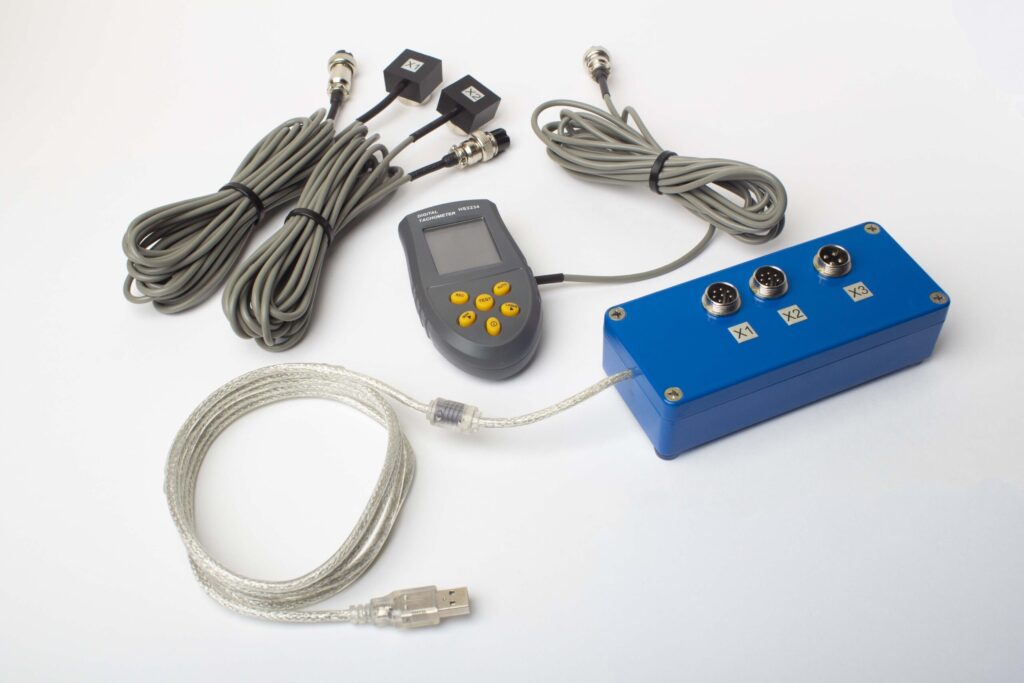
Kuna nini katika Kiti Kamili
€1,975 · Kiti Kamili, kwa stoo, faktura ya VAT
- Kitengo cha kipimo cha kiolesura (USB, njia 2)
- Vikongeza vibration mbili (kebo cha m 4 , 10 m inayoonekana)
- Tachometer ya laser / sensorer ya awamu ya macho (50–500 mm)
- Usikivu wa sumaku kwa ajili ya sensorer
- Mizani ya kidijitali kwa uzani wa majaribio na marekebisho
- Programu ya usambazaji na uchambuzi wa Windows
- Sanduku la usafiri la plastiki
Full Kit
Kitengo · sensorer 2 · tachometer ya laser · usikivu wa sumaku · mizani ya kidijitali · programu · sanduku la usafiri. Kila kitu kinachohitajika kuanza kusawazisha moja kwa moja kutoka kwenye sanduku.
OEM set
Kitengo · sensorer 2 · tachometer ya laser · programu. Kwa waunganisha ambao tayari wana usikivu, mizani na sanduku, au ambao waunganisha kitengo katika mashine ya kusawazisha.
| Parameter | Value |
|---|---|
| Chaneli za kipimo | 2 (kusawazisha kwa uso mmoja na nyuso mbili) |
| Safu ya kasi ya vibration | 0.2–80 mm/s RMS |
| Safu ya masafa | 5–1000 Hz (≤10% amplitude error above 550 Hz) |
| Usahihi wa kipimo | ±5% ya kiwango kamili |
| Method | Mgawo wa ushawishi wa kukimbia 3 (uso 1 au nyuso 2) |
| Analysis | Amplitude & awamu kwa 1×, windo wa FFT & mfumo, ripoti iliyohifadhiwa |
| Laptop | Haijajumuishwa (Kompyuta ya Windows, inayopatikana kwa ombi) |
Usawazishaji mahali pa matumizi dhidi ya mashine ya usawazishaji — ipi inafaa kwa mashabiki wa mnara wa kupoza?
| Factor | Equilibrium ya uwanja (Balanset-1A) | Mashine ya equilibrium (workshop) |
|---|---|---|
| Je, shabehe imeondolewa kwenye mnara? | Hapana — imesawazishwa mahali ilipo | Ndiyo — kuanguka kabisa kunakoshwa |
| Je, gearbox inavunjwa vipande? | No | Ndiyo — mhimili lazima utolewe nje |
| Muda wa uzalishaji unaozidi matakwa | Ulandaji wa sensor tu (<15 min) | Masaa hadi siku kadhaa (kufungua, kusafirisha, kusawazisha, kurudisha) |
| Kasi ya equilibrium | Kasi halisi ya uendeshaji & hali | Spindle ya kasi ndogo iliyojitenga |
| Inazingatia mzigo wa aerodynamic wa mabawa | Ndiyo — mkusanyiko mzima umesawazishwa katika mtiririko wa hewa | Hapana — rotor tuli peke yake |
| Standards met | ISO 21940-11, ISO 14694 BV-3/BV-4 | ISO 21940-11 |
| Equipment cost | €1,975 (Seti Kamili) | €10,000 – €50,000+ |
| Muda wa kawaida wa kazi kwa kila seli | <1 saa mahali | Jumla ya siku 1–3 |
Usawazishaji mahali pa kufanyia kazi (in-situ) unapendekezwa sana kwa mashabehe ya minara ya kupooza iliyosanikishwa: rotor haiwezi kutolewa kiuchumi bila matumizi ya crane na muda mrefu wa kuacha uzalishaji, na usawazishaji katika hali halisi ya mtiririko wa hewa hutoa matokeo ambayo mashine ya kiwanda haiwezi kurudia. Mashine ya karakana inafaa tu kwa mkusanyiko wa mashabehe mapya kabla ya usanikishaji wa kwanza.
Matukio ya kweli ya mashabehe ya minara ya kupooza & HVAC
HVAC fan guide
Utaratibu wa kina wa kusawazisha vipande vya msukumo wa HVAC katika vitengo vya kushughulikia hewa kwa kutumia njia ya mgawo wa ushawishi.
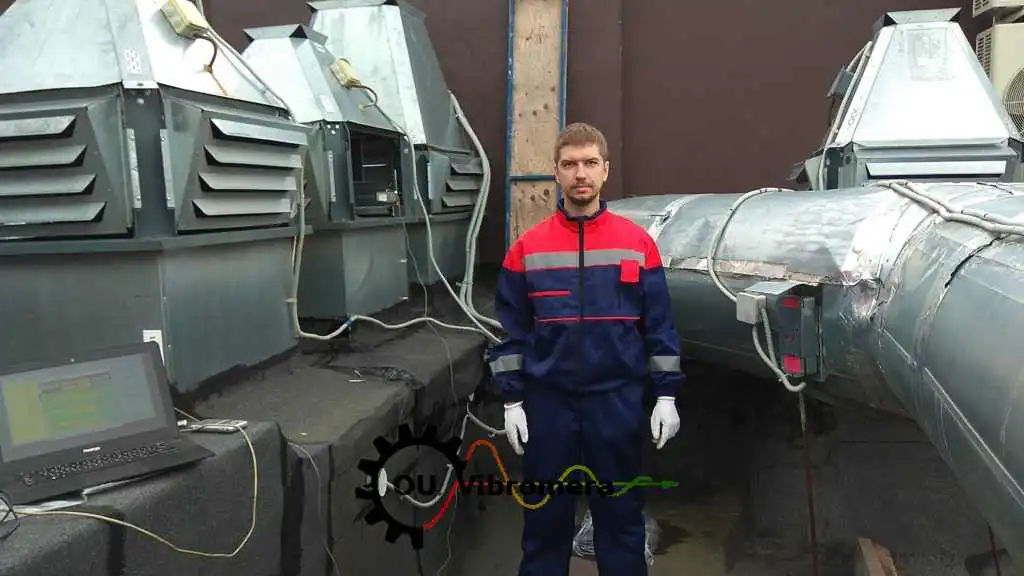
Shabiki wa kutoa hewa mahali pa kazi
Usawazishaji wa ndani wa shabehe ya uingizaji hewa kwa kasi ya uendeshaji na matokeo yaliyorekodiwa ya usawa usiobaki.
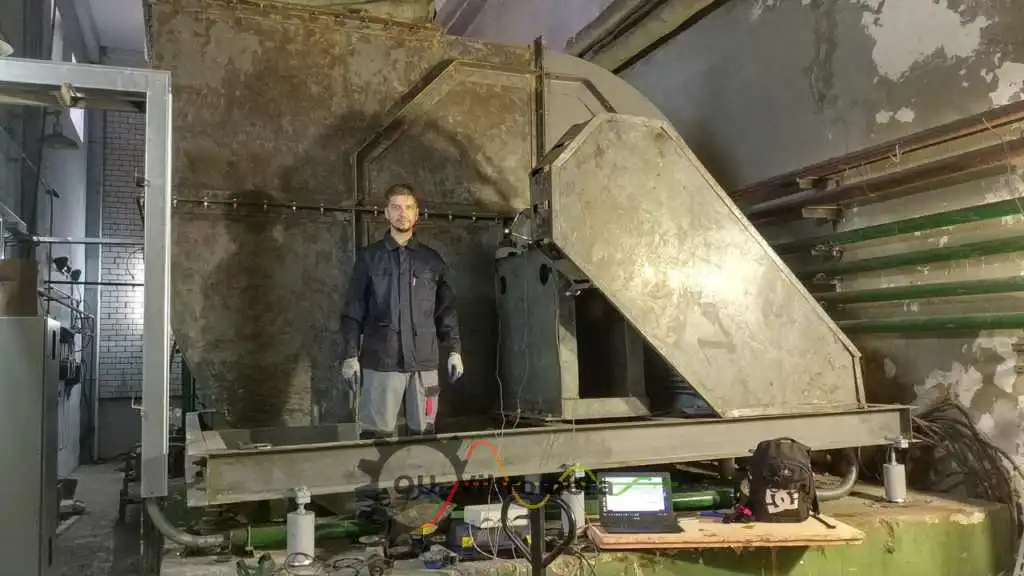
Mashabehe ya rasimu inayovutwa
Usawazishaji wa mashabehe makubwa ya rasimu inayovutwa yanayofanya kazi katika hali ya mchakato wenye joto kali.
Zana za bure za kuhesabu mashabehe ya minara ya kupooza
Maswali yanayoulizwa mara kwa mara kuhusu usawazishaji wa mashabehe ya minara ya kupooza
Je, shabehe ya mnara wa kupooza inaweza kusawazishwa wakati mnara uko katika huduma?
Ninawezaje kujua kama mtetemo unatokana na kutosawazishwa au kasoro ya gearbox?
Vile vya FRP ni vigumu kuchimbwa au kulazwa — uzito wa urekebishaji unawekwaje?
Ni mara ngapi feni za mnara wa kupoza zinapaswa kusawazishwa?
Je, Balanset-1A moja inaweza kushughulikia seli zote katika mnara wa kupoza wenye seli nyingi?
Daraja gani la usawa feni za mnara wa kupoza zinahitaji kukidhi?
Jifunze nadharia
Weka mnara wako wa kupoza ukifanya kazi kwa ufanisi wa juu, kwa majira yote
Balanset-1A hufanya usawazishaji wa feni za mnara wa kupoza katika uso mmoja na mbili mahali pake kwa kasi ya uendeshaji, huhesabu uzito na pembe ya urekebishaji sahihi, na kuandika matokeo ya kutokuwa na usawa iliyobaki kwa mujibu wa ISO 21940-11 na ISO 14694 — hakuna kuondoa rotaa, hakuna kupoteza uzalishaji.

