Aylanuvchi Mexanizmlarda Radial Tebranishni Tushunish




Radial tebranish — bu aylanuvchi valning o'z aylanish o'qiga perpendikulyar yo'nalishda, g'ildirak g'altalari kabi markazdan tashqariga qarab harakatidir. “Radial” so'zi val o'q chizig'idan uzoqlashgan har qanday yo'nalishni qamrab oladi, shuning uchun ham gorizontal (yon-yon) ham vertikal (yuqori-pastga) harakatni o'z ichiga oladi. Bu muhandislar yon tebranish yoki ko'ndalang tebranish deb ataydigan kattalik bo'lib, u aylanuvchi mexanizmlarda vibration ning eng ko'p o'lchanadigan va kuzatiladigan turi hisoblanadi — ishonchlilik texniki avvalo shu ko'rsatkichga e'tibor qaratadi va aksariyat xalqaro standartlar aynan shu atrofida tuzilgan. Amalda, valning fazodagi to'liq traektoriyasini qayta tiklash uchun har bir podshipnikda ikkita o'zaro perpendikulyar yo'nalishda o'lchanadi.
1. Ta'rif va O'lchov Yo'nalishlari
Val o'z o'qiga perpendikulyar tekislikda ixtiyoriy yo'nalishda harakat qila olganligi sababli, bitta sensor hech qachon to'liq tasvirni bermaydi. Har bir podshipnikda 90° burchak ostida o'rnatilgan ikki zond to'liq radial manzarani aks ettiradi va ularning ko'rsatkichlari odatda alohida ham, birlashtirilgan holda ham hisoblanadi.
Gorizontal Radial Tebranish
Gorizontal tebranish — valning yon-yon harakati:
- Val o'qiga perpendikulyar va polga parallel yo'nalishda.
- Ko'pincha gorizontal mexanizmda eng qulay o'lchov nuqtasi.
- Tortishish kuchi, poydevor qattiqligining assimetrik taqsimlanishi va gorizontal ta'sir funksiyalarini aks ettiradi.
- Ko'pgina muntazam monitoring dasturlari uchun o'lchashning standart yo'nalishi.
Vertikal Radial Tebranish
Vertikal tebranish — valning yuqoriga va pastga harakat qilishi:
- Val o'qiga perpendikulyar va polga perpendikulyar yo'nalishda.
- Tortishish kuchi va rotorning statik og'irligi ta'sirida bevosita shakllanadi.
- Rotor og'irligi tayanch qattiqligini assimetrik taqsimlashi sababli amplitudasi ko'pincha gorizontal yo'nalishga qaraganda yuqori bo'ladi.
- Vertikal nasoslar va motorlar kabi vertikal joylashgan mashinalarni diagnostika qilishda muhim ahamiyatga ega, chunki bunday qurilmalarda “gorizontal” va “vertikal” tushunchalari odatiy ma'nosini yo'qotadi va ikkita radial o'q shunchaki perpendikulyar bo'ladi.
Umumiy Radial Tebranish
The two directional readings are sometimes combined into a single vector total:
Radial Total = √(Horizontal² + Vertical²)
- Can be a convenient in-house metric for trending, condensing both directions into one number.
- Not a standard severity number: ISO 20816 (like ISO 10816 before it) evaluates the higher of the two individually measured orthogonal radial values against its zone boundaries — do not compare this combined total directly to ISO 20816 limits, or use it for ISO-based alarm setting, unless the standard or procedure you follow explicitly defines such a combined metric.
- Ikki o'q kamdan-kam holatlarda bir vaqtning o'zida maksimumga yetgani uchun val chizadigan orbita odatda doira emas, balki ellips shaklida bo'ladi — bu fakt orbit tahlilida muhim ahamiyat kasb etadi.
2. Radial Tebranishning Asosiy Sabablari
Radial tebranish val o'qiga perpendikulyar ta'sir etuvchi istalgan kuch natijasida yuzaga keladi. Dominant chastotani aniqlash diagnostikaning asosini tashkil etadi, chunki har bir nosozlik o'ziga xos xarakterli iz qoldiradi.
1. Muvozanatsizlik (Asosiy Sabab)
Unbalance aylanma qurilmalardagi radial tebranishning eng keng tarqalgan yagona manbayi hisoblanadi:
- It creates a markazdan qochma kuch val bilan birga aylanadigan va quyidagi chastotada namoyon bo'ladigan ishchi tezligida (1X).
- Kuch muvozanatsizlik massasi, uning radiusi va — ayniqsa — aylanish tezligining kvadratiga mutanosib ravishda oshadi, shuning uchun kichik og'ir nuqta aylanish tezligi (RPM) ko'tarilishi bilan jiddiy muammoga aylanib qoladi.
- U taxminan doira yoki ellips shaklida shaft orbit.
- U quyidagi usul bilan tuzatiladi: muvozanatlash, odatda qismlarni almashtirmasdan bartaraf etilishi mumkin bo'lgan yagona nosozlik.
2. Noto'g'ri o'rnatish (Misalignment)
Val nomuvofiqligining ulangan mashinalar o'rtasida ham radial, ham o'qiy tebranish:
- U asosan 2X (bir aylanishda ikki marta) radial tebranish sifatida namoyon bo'ladi.
- U shuningdek 1X, 3X va undan yuqori harmonics.
- Radial signalga hamroh bo'lgan yuqori o'qli tebranish kuchli ko'rsatkich hisoblanadi.
- The phase Ikki podshipnik o'rtasidagi bog'liqlik noto'g'ri o'rnatishning burchakli, parallel (ofset) yoki ikkala turda ekanligini aniqlaydi.
3. Mexanik Nosozliklar
Bir qancha mexanik muammolar o'ziga xos radial naqshlarni hosil qiladi:
- Podshipnik nuqsonlari: yuqori chastotali zarbalar podshipnik nosozlik chastotalariga.
- Egilgan yoki qiyshaygan val: muvozanatsizlikka o'xshash, ammo sekin aylanishda ham mavjud bo'lgan 1X tebranish — qarang shaft bow.
- Looseness: chiziqsiz, ko'pincha yo'nalishli xatti-harakatga ega ko'p sonli garmoniklar (1X, 2X, 3X va undan yuqori).
- Cracks: ishga tushirish va to'xtatish paytida o'zgaruvchi 1X va 2X tebranish — buning belgisi cracked rotor.
- Rubs: quyi sinxron va sinxron komponentlarning aralashmasi, buning xarakteristikasi rotor rub.
4. Aerodinamik va Gidravlik Kuchlar
Nasos, ventilyator va kompressorlar ichidagi jarayon kuchlari o'z radial ta'sirini ko'rsatadi:
- Panjara o'tish chastotasi (pichoqlar soni × RPM).
- Nosimmetrik oqimdan kelib chiqadigan gidravlik muvozanatsizlik.
- Girdobli ajralish va oqim turbulentligi.
- Qayta sirkulyatsiya va loyiha parametrlaridan chetga chiqish, shu jumladan cavitation in pumps.
5. Rezonans holatlari
Mashina rezonans chastotasiga yaqin ishlayotganda critical speed, radial tebranish amplitudasi keskin oshadi:
- Tabiiy chastota majburlovchi chastota bilan mos keladi — bu klassik rezonans holati resonance.
- Amplituda faqat tizimning damping.
- Tor aylanish tezligi diapazonida tebranish darajalari halokatli qiymatlarga yetishi mumkin.
- Shu sababli loyihalashda ish tezligi va kritik tezliklar orasida yetarli ajratish marjalari ta'minlanishi shart.
3. O'lchash standartlari va parametrlari
O'lchov birliklari
Radial tebranish turli chastota diapazonlariga mos keladigan uchta bog'liq parametr bilan ifodalanishi mumkin:
- Displacement: haqiqiy siljish masofasi (mikrometr µm yoki mil). Past tezlikdagi mashinalar va proximity-probe val o'lchovlari uchun qo'llaniladi.
- Velocity: siljishning o'zgarish tezligi (mm/s, in/s). Umumiy sanoat mashinalari uchun eng keng tarqalgan parametr va ISO og'irlik darajasi standartlarining asosi.
- Acceleration: tezlikning o'zgarish tezligi (m/s², g). Podshipnik nuqsonlarini aniqlash kabi yuqori chastotali ishlar uchun qo'llaniladi.
Parametr tanlovi muhim, chunki bir xil fizik harakat bir birlikda zararsiz, boshqasida xavfli ko'rinishi mumkin — tezlik ko'rsatkichi o'rta chastota diapazonida spektrni tekislashga moyil bo'lib, aynan shu diapazon aylanma mashinalardagi ko'pchilik nosozliklarni qamrab oladi; ISO chegaralari aynan shu sababdan tezlikka asoslanadi.
Xalqaro standartlar
The ISO 20816 seriyasi radial tebranish og'irlik darajasi chegaralarini belgilaydi. (U avvalgi ISO 10816 oilasi va undan ham oldingi ISO 2372 ni almashtiradi; ISO 20816 ni me'yoriy hujjat sifatida ko'rsating.)
- ISO 20816-1: mashina tebranishini baholash bo'yicha umumiy ko'rsatmalar.
- ISO 20816-3: 15 kVt dan yuqori sanoat mashinalari uchun maxsus mezonlar.
- Og'irlik darajasi zonalari: A (yaxshi), B (qoniqarli), C (qoniqarsiz), D (qabul qilib bo'lmaydigan).
- O'lchov joyi: odatda radial yo'nalishlarda podshipnik korpuslarida.
Tarmoqqa xos standartlar
- API 610: markazdan qochma nasoslar uchun radial tebranish chegaralari.
- API 617: markazdan qochma kompressorlar uchun tebranish mezonlari.
- API 684: radial tebranishni bashorat qilish uchun rotor dinamikasini tahlil qilish tartiblari.
- NEMA MG-1: elektr dvigatellari uchun tebranish chegaralari.
4. Monitoring va diagnostika usullari
Muntazam monitoring
Standart dasturlar radial tebranishni jadval asosida kuzatib boradi:
- Marshrut bo'yicha ma'lumot yig'ish: belgilangan vaqt oraliqlarida davriy o'lchashlar (oylik, choraklik).
- Umumiy daraja tendensiyasi: umumiy amplitudaning vaqt o'tishi bilan o'sishini kuzatish.
- Alarm limits: ISO yoki uskunaga xos standartlar asosida belgilanadi.
- Comparison: current versus baseline, hamda gorizontal va vertikal yo'nalishlar.
Kengaytirilgan tahlil
Muammo gumon qilinganda, chuqur tahlil vositalari uning mohiyatini aniqlaydi:
- FFT analysis: a frequency spectrum tebranishni uning tashkil etuvchilariga ajratish.
- Time waveform: vaqt bo'yicha xom signal, o'tkinchi hodisalar va modulyatsiyani ko'rsatadi.
- Faza tahlili: o'lchov nuqtalari o'rtasidagi vaqt munosabatlari.
- Orbit tahlili: radial o'lchovlarga bevosita mos keladigan val markaziy chizig'ining traektoriyasi.
- Konvert tahlili: podshipnik nuqsonlarini erta aniqlash uchun yuqori chastotali demodulyatsiya.
Uzluksiz monitoring
Muhim ahamiyatdagi uskunalar odatda doimiy ravishda kuzatiladi:
- Val harakatini bevosita o'lchash uchun yaqinlik zondlari.
- Doimiy o'rnatilgan akselerometrlar podshipnik korpuslarida.
- Real vaqtda trend kuzatuvi va signalizatsiya.
- Avtomatik tizim bilan integratsiya machinery-protection systems.
5. Gorizontal va Vertikal Farqlar
Amplitudaning Odatiy Nisbatlari
Ko'pgina mashinalarda vertikal ko'rsatkich gorizontaldan yuqori bo'ladi:
- Tortishish ta'siri: rotor og'irligi vertikal yo'nalishni qattiqlashtiradigan statik egilishni hosil qiladi.
- Assimetrik qattiqlik: poydevorlar va tayanch konstruksiyalari ko'pincha gorizontal yo'nalishda qattiqroq bo'ladi.
- Typical ratio: gorizontal qiymatdan 1,5–2 baravar yuqori vertikal tebranish keng tarqalgan holdir.
- Muvozanat og'irligi ta'siri: rotorning pastki qismiga (eng qulay kirish nuqtasiga) o'rnatilgan tuzatuvchi og'irliklar, birinchi navbatda, vertikal tebranishni kamaytiradi.
Diagnostik Farqlar
- Unbalance: og'ir nuqtaning joylashuviga qarab, bir yo'nalishda kuchliroq ko'rsatishi mumkin.
- Looseness: ko'pincha o'zining chiziqsizligini vertikal yo'nalishda aniqroq namoyon etadi.
- Poydevor muammolari: vertikal tebranish poydevorning yemirilishiga nisbatan ko'proq sezgir.
- Misalignment: nosozlik turiga qarab gorizontal va vertikal o'lchovlarda turlicha namoyon bo'lishi mumkin.
6. Rotor Dinamikasi bilan Bog'liqligi
Radial tebranish rotor dynamics tahlilining markazida turadi, chunki val radial egilish xususiyati uning qayerda va qanday nosozlik ko'rsatishini belgilaydi.
Kritik tezliklar
- Radial tabiiy chastotalar kritik aylanish tezliklarini belgilaydi.
- Birinchi kritik tezlik odatda birinchi radial egilish shakliga mos keladi.
- Kempbell diagrammalari tezlikka bog'liq funksiya sifatida radial xatti-harakatni bashorat qilish.
- Kritik tezliklardan ajralish marjalari radial tebranishni nazorat ostida ushlab turadi.
Mode Shapes
- Har bir radial rejim o'ziga xos og'ish shakliga.
- Birinchi rejim: oddiy yoy.
- Ikkinchi rejim: S-egri chizig'i bilan node point.
- Yuqori rejimlar: tobora murakkablashib boruvchi naqshlar.
Balanslashtirish Mulohazalari
- Balanslashtirish 1X chastotasidagi radial tebranishni kamaytirshga qaratilgan.
- Influence coefficients har bir korreksiya og'irligini radial tebranishdagi natijadagi o'zgarish bilan bog'lash.
- The best correction-plane joylashuvlar radial shakl ko'rinishlaridan kelib chiqadi.
7. Tuzatish, Nazorat va Amaliy Sahada Balansirovka
For Unbalance
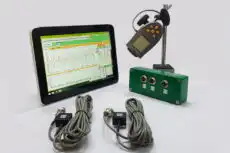
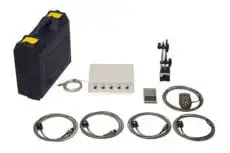
- Maydonni muvozanatlash portativ analizator yordamida. Ikki kanalli asbob, masalan, Balanset-1A har bir podshipnikdagi 1X radial amplituda va fazani o'lchaydi, ta'sir koeffitsiyentlarini hisoblaydi va muhandisga rotorni o'z podshipniklarida ish tezligida — demontaj va balansirovka mashinasisiz — balanslashga imkon beradi. O'lchangan darajani tuzatuvchi massaga aylantirish uchun siz shuningdek quyidagidan foydalanishingiz mumkin: sinov og'irligi kalkulyatori.
- Single-plane or ikki tekislikda balanslashtirish rotor geometriyasiga ko'ra tanlangan protseduralar.
- Eng muhim komponentlar uchun muvozanatlash mashinasi eng muhim komponentlar uchun.
Mexanik Muammolar Uchun
- Noto'g'ri o'qlanishni bartaraf etish uchun aniq tekislash (alignment).
- Podshipnik nuqsonlari uchun podshipnikni almashtirish.
- Bo'sh komponentlarni mahkamlash.
- Tarkibiy muammolar uchun poydevor ta'mirlash.
- Egilgan vallar uchun valni to'g'rilash yoki almashtirish.
Rezonans Muammolari Uchun
- Kritik tezlik oralig'idan qochish uchun tezlikni o'zgartirish.
- Qattiqlik modifikatsiyalari (val diametri, podshipnik joylashuvini o'zgartirish).
- Qo'shimcha so'nishlar, masalan, siqilish-plyonkali so'ndirgichlar yoki podshipnik tanlovini qayta ko'rib chiqish.
- Tabiiy chastotalarni ish tezligidan uzoqlashtirish uchun massa o'zgarishlari.
8. Prognozli texnik xizmatda ahamiyati
Radial tebranishlarni monitoring qilish — bu sohadagi asosiy vosita prognozli texnik xizmat ko'rsatish:
- Nosozliklarni erta aniqlash: radial tebranishlardagi o'zgarishlar nosozlikdan bir necha hafta yoki oy oldin paydo bo'ladi.
- Trending: asta-sekin ortib boruvchi qiymatlar rivojlanayotgan muammoning belgisidir.
- Nosozliklarni aniqlash: chastota tarkibi aniq nosozlik turini aniqlaydi.
- Og'irlik darajasini baholash: amplituda muammoning qanchalik jiddiy va shoshilinch ekanligini ko'rsatadi.
- Texnik xizmatni rejalashtirish: ish taqvim emas, balki uskunaning haqiqiy holati asosida amalga oshiriladi.
- Cost savings: favqulodda nosozliklarning oldini olish va texnik xizmat ko'rsatish oraliqlarini optimallashtirish ta'minlanadi.
Aylanma mexanizmlardagi asosiy tebranish o'lchovi sifatida radial tebranish uskunaning holati haqida muhim ma'lumot beradi — bu esa sanoat aylanma uskunalarining ishonchli, xavfsiz va samarali ishlashi uchun uni zaruriy vositaga aylantiradi.

