← Balanset-1A Knowledge Base — all chapters
Answers straight from real support practice.
About the device’s capabilities
What is the maximum rotor size/mass?
The method does not limit mass — the device measures the supports’ response, not the rotor itself. The real record is a 24,000 kg sugar fiberizer (balanced with +7.8 kg at 270°, final 0.47 mm/s). Rotors at 60,000 rpm have been balanced too.
What is the minimum RPM?
Formally from 100 rpm; for balancing, the practical range starts at ~300 rpm (1x at 5 Hz and above).
The maximum RPM?
The tachometer measures up to 100,000 rpm; for balancing, the practical range reaches ~60,000 rpm (1x at 1000 Hz). Amplitude error is within 10% up to ~33,000 rpm (550 Hz) and within 20% up to ~60,000 rpm (1000 Hz).
The minimum rotor mass?
Rotors of hundreds of grams and heavier are routine work. For very light rotors (20–25 g drone propellers), use heavy averaging; vibration is measured down to 0.02 mm/s.
Do I have to know the rotor mass?
No. The weight calculation needs only the trial mass and the mounting radius. Rotor mass is used only by the tolerance calculator (G grade) and for estimating the trial weight.
Can I balance without removing the rotor from the machine?
Yes — that is the device’s main purpose: balancing in own supports, in place. A kitchen-hood impeller on a roof — routine work; the measurements take 15–30 minutes plus weight mounting.
Does the device diagnose bearings?
The spectrum (5–1000 Hz) shows the basic bearing defect frequencies (BPFO/BPFI).
Does the device tell me what is broken?
It gives you the spectrum, and you draw the conclusions: 1x — unbalance, 2x–3x — misalignment/looseness, high frequencies — bearings, “non-multiple” peaks — a foreign source. The cheat sheet is in chapter 07.
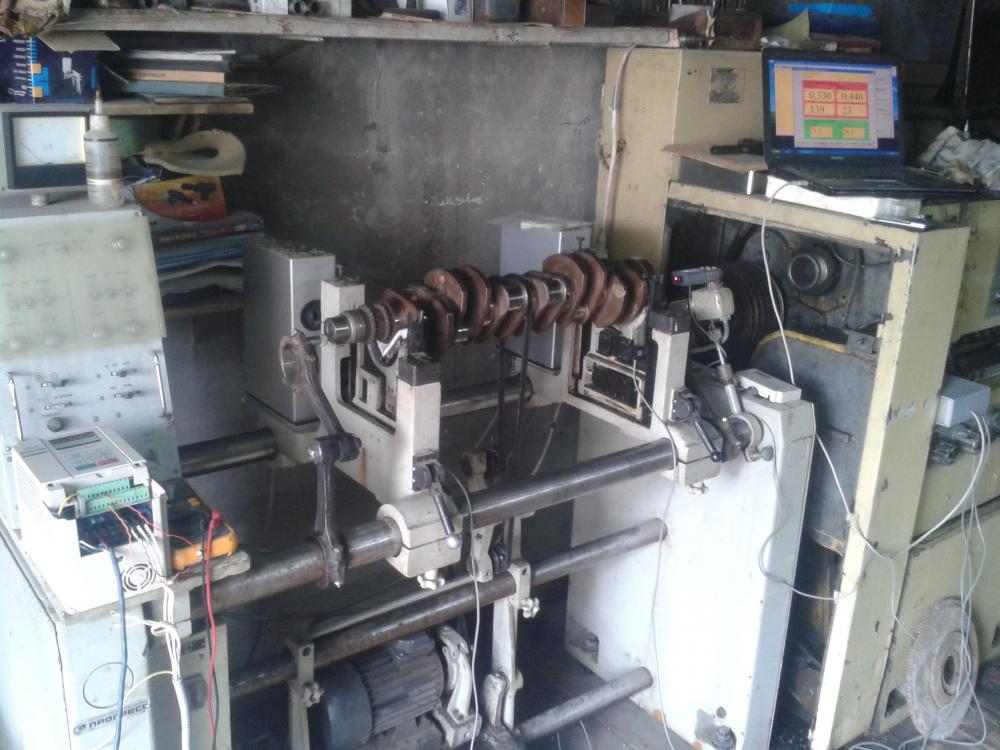
Does it suit hard-bearing balancing machines?
The stock accelerometers are for soft (above-resonance) supports and in-place balancing. On hard supports the signal is small and unstable; hard-bearing rigs use separate force sensors, not included in the kit. Workarounds: balance at reduced RPM below the resonance, or build a spring-mounted (soft) stand.
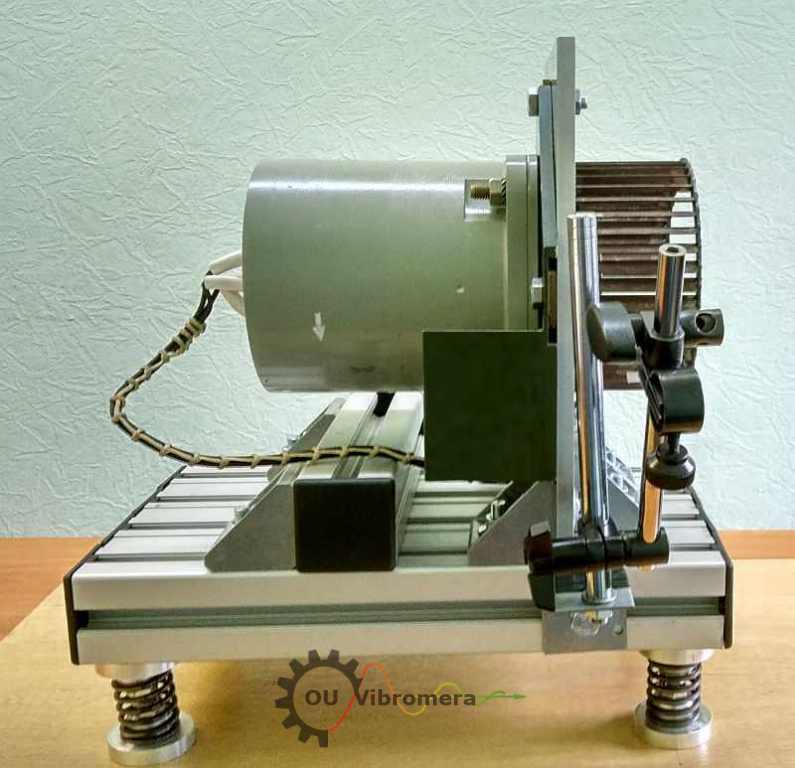
Can I build my own balancing machine around the Balanset-1A?
Yes — a popular scenario: the device as the measuring system plus a DIY stand on soft supports (springs, leaf springs). The stand should “rock by hand”. Article: vibromera.eu/diy-balancing-machines/. Example: a 1450 kg stand (concrete+steel) on interchangeable flat springs.
Cardan (propeller) shafts?
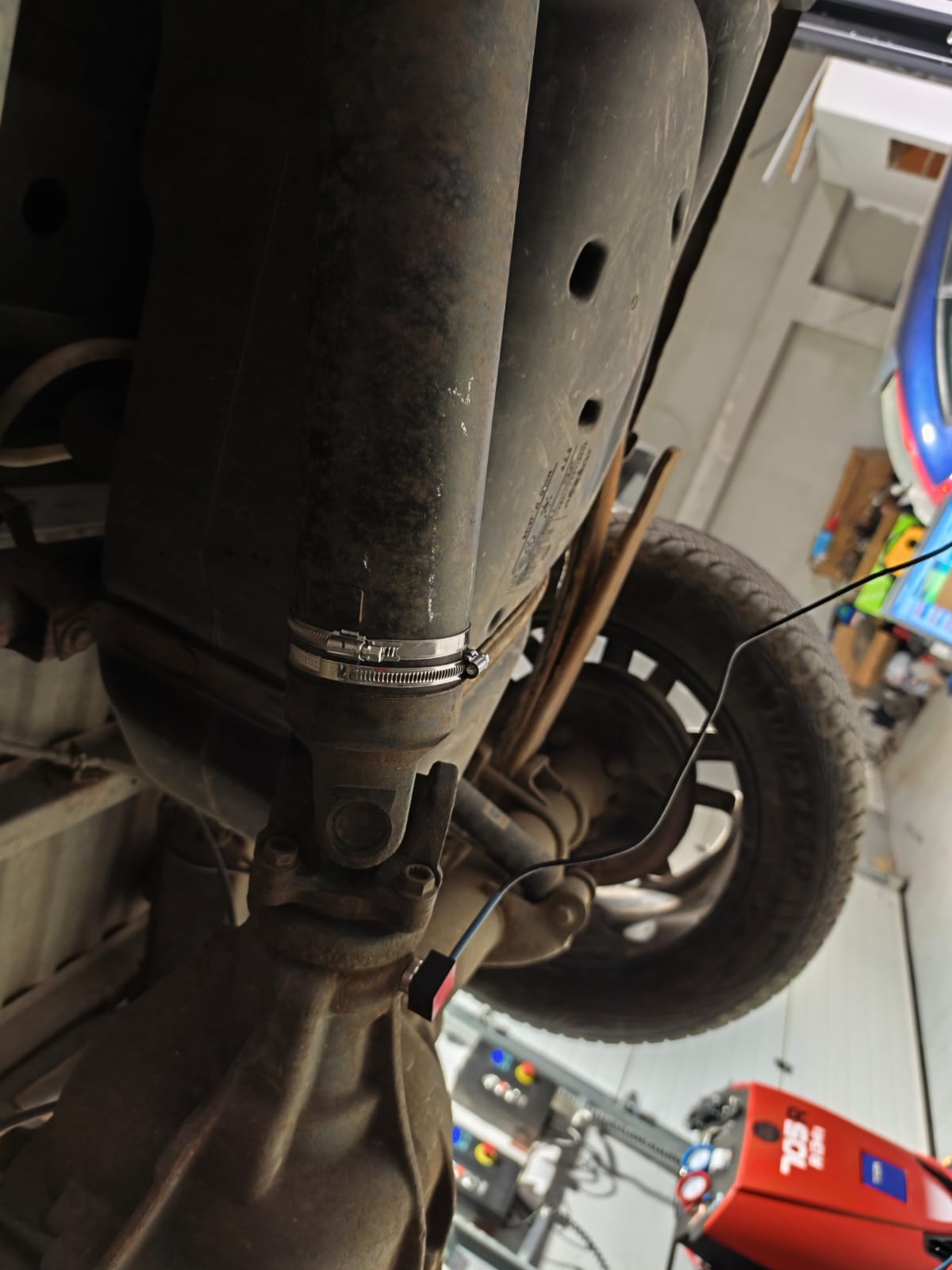
An ordinary cardan shaft balances fine (weights conveniently fixed with hose clamps + threadlocker; 0.5 mm/s final — a real case). For shafts with intermediate supports needing 3–4 planes, use the Balanset-4. With a worn universal joint, repair first: balancing doesn’t cure play.
Ship propellers?
The device will show the heavy spot; for propellers, also check the geometry (pitch, blade shape).
Helicopter rotors?
The device does the mass balancing; before it, blade tracking, coning and blade-geometry checks are mandatory.
About the work
How long does balancing take?
On a rig — minutes. A fan/mower with sound mechanics — ~1.5 hours including setup. A faulty machine — unpredictable (repair first).
At what RPM should I balance?
At working RPM if there’s no resonance there and vibration isn’t off the scale. Otherwise start reduced (mulchers: 400–900 rpm), then trim at working RPM. Above 40–50 mm/s — always two stages.
What trial weight should I use?
One that changes amplitude or phase by 20–30% (but not more than ~100%). Reference: mowers 200–300 g, forestry mulchers 500–700 g, fans at 900–1500 rpm — 40–80 g on the impeller’s back plate. Quick formula: Mp ≈ Mr / (Rp × (N/100))².
Where do I fix the correction weight?
On the same radius as the trial weight. Welding (allow ~100 g of seam), bolts, washers on rivets, clamps for shafts. Glue-on weights on dirty surfaces — bad idea.
When do I stop?
When vibration is inside the tolerance (chapter 06) or when the device asks for weights under ~50 g on a big mulcher — beyond that there’s no practical gain. The quality benchmark: at ~2 mm/s a coin stands on edge on the running mulcher.
About hardware and software
What laptop do I need?
Anything with Windows 7/8/10/11 and USB. i3/4 GB is plenty. Tablets — full Windows only (touch works, keyboard is the on-screen one). Android/iOS — no.
Is there a software subscription?
No. The software is a one-time purchase, updates are free, installs are unlimited. The paid subscription covers only priority WhatsApp support and listing in the service-provider catalogue.
Is annual calibration required?
No. The coefficients are factory-set (sticker on the unit’s bottom). If the customer needs an accredited-lab certificate — a local ISO/IEC 17025 laboratory.
Can the sensor cables be extended?
Yes, to 10 m (15 m has been done) — the cables are shielded. Stock is 5 m; long ones to order.
Do sensors need replacement/checks?
Service life 5–7 years and more (some users are 10+ years in). A “dead sensor” is nearly always a broken cable or connector contact. Test: shake it in vibrometer mode; compare two sensors at one spot.
The program “shows wrong numbers” after an update
Re-enter the calibration coefficients (F4). Write them down before every update — see chapter 03.
Are there training materials?
The manual in many languages (vibromera.eu/balanset-1a-operation-manual/ and localisations), the field-balancing guide (guide-to-field-rotor-balancing…), the YouTube channel, the forum vibromera.eu/community, calculators on the site (trial weight, ISO tolerances). Training happens by chatting with support; there are no formal courses.

