← Balanset-1A kunskapsbas — alla kapitel
Svar direkt från verklig supportpraxis.
Om enhetens möjligheter
Vad är den maximala rotorstorleken/massan?
Metoden begränsar inte massan — enheten mäter stödens respons, inte själva rotorn. Verkliga rekordet är en 24 000 kg sockerfiberiserare (balanserad med +7,8 kg vid 270°, slutresultat 0,47 mm/s). Rotorer vid 60 000 rpm har också balanserats.
Vad är det lägsta varvtalet?
Formellt från 100 rpm; för balansering börjar det praktiska området vid ~300 rpm (1x vid 5 Hz och uppåt).
Det högsta varvtalet?
Takometern mäter upp till 100 000 rpm; för balansering når det praktiska området ~60 000 rpm (1x vid 1000 Hz). Amplitudfelet ligger inom 10% upp till ~33 000 rpm (550 Hz) och inom 20% upp till ~60 000 rpm (1000 Hz).
Den minsta rotormassan?
Rotorer på hundratals gram och tyngre är rutinarbete. För mycket lätta rotorer (20–25 g drönarpropellrar) används kraftig medelvärdesbildning; vibrationer mäts ned till 0.02 mm/s.
Måste jag känna till rotormassan?
Nej. Viktberäkningen behöver bara provmassan och monteringsradien. Rotormassan används endast av toleranskalkylatorn (G-klass) och för att uppskatta provvikten.
Kan jag balansera utan att ta bort rotorn från maskinen?
Ja, det är enhetens huvudsyfte: balansering på plats i rotorns egna lagerstöd. Ett fläkthjul för köksutsug på ett tak är ett rutinjobb. Mätningarna tar 15–30 minuter, och därefter tillkommer monteringen av vikterna.
Diagnostiserar enheten lager?
Spektrumet (5–1000 Hz) visar de grundläggande lagerdefektfrekvenserna (BPFO/BPFI).
Talar enheten om för mig vad som är trasigt?
Du får spektrumet och drar slutsatserna själv: 1x – obalans, 2x–3x – felinriktning/lösa delar, höga frekvenser – lager, “icke-multipla” toppar – en främmande källa. Lathunden finns i kapitel 07.
Passar den för hårdlager-balanseringsmaskiner?
De medföljande accelerometrarna är avsedda för mjuka (överresonanta) stöd och balansering på plats. På hårda stöd är signalen liten och instabil; balanseringsriggar med hårda lager använder separata kraftgivare som inte ingår i satsen. Lösningar: balansera vid reducerat varvtal under resonansen, eller bygg ett fjäderupphängt (mjukt) stativ.
Kan jag bygga en egen balanseringsmaskin kring Balanset-1A?
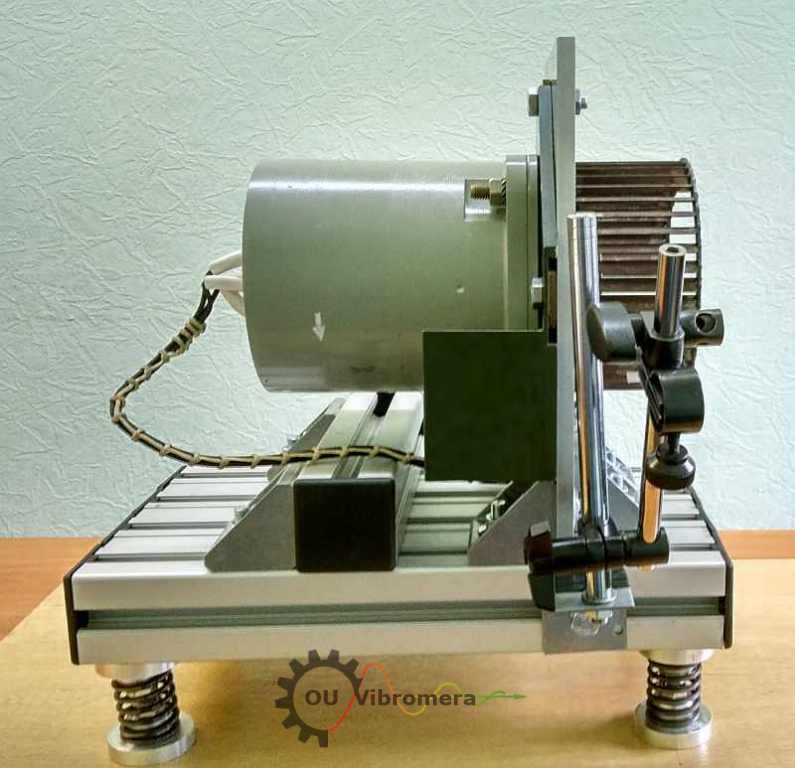
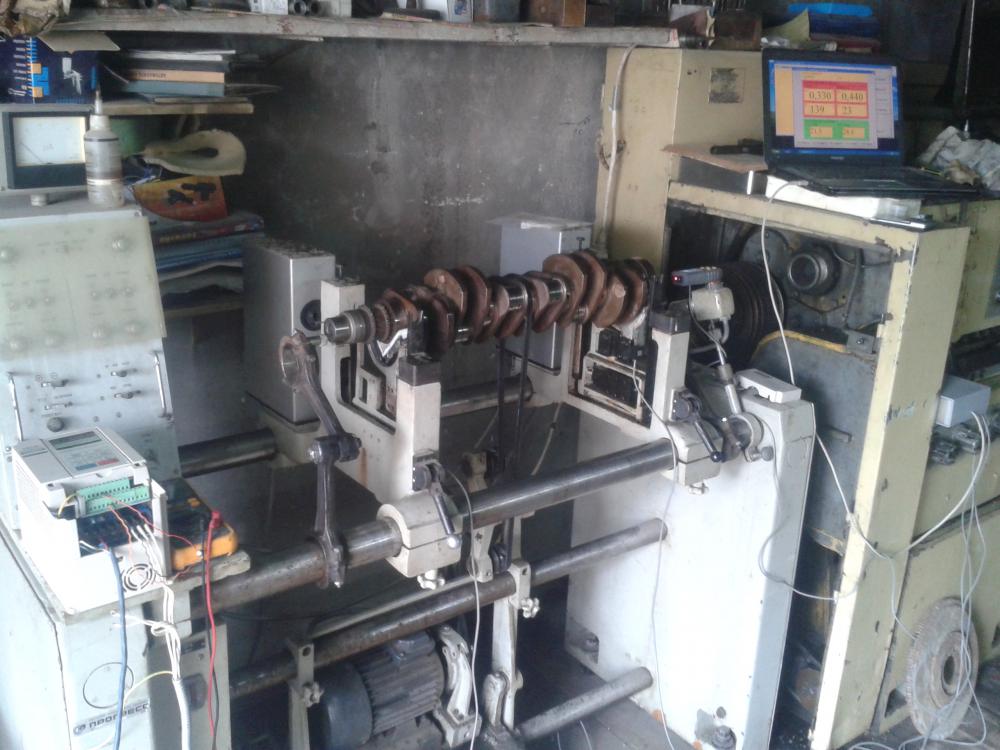
Ja — ett populärt scenario: enheten som mätsystem plus ett egenbyggt stativ på mjuka stöd (fjädrar, bladfjädrar). Stativet ska “gunga för hand”. Artikel: vibromera.eu/diy-balancing-machines/. Exempel: ett 1450 kg stativ (betong+stål) på utbytbara plattfjädrar.
Kardanaxlar (propelleraxlar)?
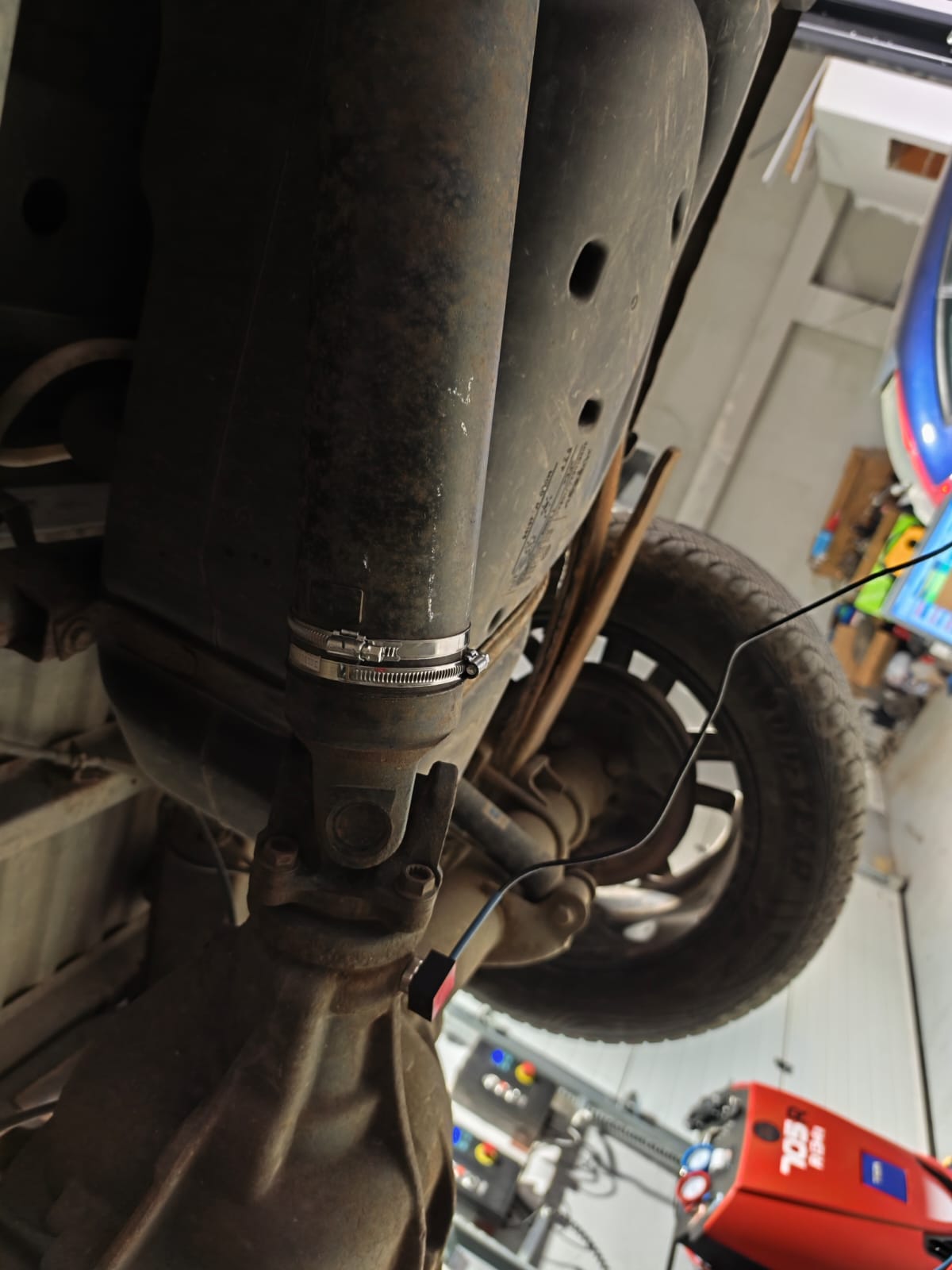
En vanlig kardanaxel går utmärkt att balansera (vikterna fästs enkelt med slangklämmor + gänglåsning; 0.5 mm/s slutvärde – ett verkligt fall). För axlar med mellanliggande stöd som kräver 3–4 plan, använd Balanset-4. Med ett slitet kardanknut ska det repareras först: balansering botar inte glapp.
Fartygspropellrar?
Instrumentet visar var den tunga punkten finns; för propellrar bör man även kontrollera geometrin (stigning, bladform).
Helikopterrotorer?
Instrumentet utför massbalanseringen; före den är kontroll av bladens spårning, konvinkel och bladgeometri obligatoriska.
Om arbetet
Hur lång tid tar balansering?
På en testrigg — minuter. En fläkt/slåttermaskin med sund mekanik — ~1.5 timmar inklusive uppställning. En felaktig maskin — oförutsägbart (reparera först).
Vid vilket varvtal ska jag balansera?
Balansera vid arbetsvarvtalet om det inte finns någon resonans där och vibrationen inte överstiger mätområdet. Börja annars vid ett lägre varvtal (mulchermaskiner: 400–900 rpm) och finjustera sedan vid arbetsvarvtalet. Över 40–50 mm/s används alltid två steg.
Vilken provvikt ska jag använda?
En provvikt som ändrar amplituden eller fasen med 20–30 % men högst cirka 100 %. Riktvärden: slåttermaskiner 200–300 g, skogsmulchermaskiner 500–700 g, fläktar vid 900–1500 rpm 40–80 g på fläkthjulets bakre skiva. Snabbformel: Mp ≈ Mr / (Rp × (N/100))².
Var fäster jag korrigeringsvikten?
På samma radie som provvikt. Svetsning (räkna med ~100 g för fogen), bultar, brickor på nitar, klämmor för axlar. Limmade vikter på smutsiga ytor — en dålig idé.
När ska jag sluta?
När vibrationen ligger inom toleransen (kapitel 06) eller när enheten ber om vikter under ~50 g på en stor mulchermaskin — bortom det finns ingen praktisk vinst. Kvalitetsmåttet: vid ~2 mm/s står ett mynt på högkant på den körande mulchermaskinen.
Om hårdvara och mjukvara
Vilken laptop behöver jag?
Vad som helst med Windows 7/8/10/11 och USB. i3/4 GB räcker gott. Surfplattor — endast fullständig Windows (touch fungerar, tangentbordet är det på skärmen). Android/iOS — nej.
Finns det en mjukvaruprenumeration?
Nej. Mjukvaran är ett engångsköp, uppdateringar är gratis, installationer är obegränsade. Den betalda prenumerationen omfattar endast prioriterad WhatsApp-support och listning i katalogen över serviceleverantörer.
Krävs årlig kalibrering?
Nej. Koefficienterna är fabriksinställda (etikett på enhetens undersida). Om kunden behöver ett ackrediterat laboratoriecertifikat — ett lokalt ISO/IEC 17025-laboratorium.
Kan sensorkablarna förlängas?
Ja, upp till 10 m (15 m har testats) — kablarna är skärmade. Standard är 5 m; längre beställs separat.
Behöver sensorerna bytas ut/kontrolleras?
Livslängd 5–7 år och mer (vissa användare har haft sin i 10+ år). En “död givare” är nästan alltid en trasig kabel eller kontaktfel. Test: skaka den i vibrometerläge; jämför två givare på samma punkt.
Programmet visar felaktiga värden efter en uppdatering
Ange kalibreringskoefficienterna på nytt (F4). Skriv ner dem inför varje uppdatering — se kapitel 03.
Finns det utbildningsmaterial?
Manualen på många språk (vibromera.eu/balanset-1a-operation-manual/ och lokaliseringar), guiden för fältbalansering (guide-to-field-rotor-balancing…), YouTube-kanalen, forumet vibromera.eu/community, kalkylatorer på webbplatsen (provvikt, ISO-toleranser). Utbildning sker genom att chatta med supporten; det finns inga formella kurser.

