What Is RMS (Root Mean Square) in Vibration Analysis?



Author: Industrial Vibration Engineering Team at SDT Ultrasound Solutions — specialists in predictive maintenance instrumentation and condition monitoring with over 45 years of field experience across 150+ countries.
What Is RMS Vibration Analysis and Why Does It Matter?
RMS vibration analysis is the industry-standard statistical method for quantifying the energy content and destructive capability of mechanical vibration in rotating machinery. RMS — Root Mean Square — squares every sample value of a vibration signal, calculates the mean of those squared values, then takes the square root, yielding a single number that represents the signal’s true energy equivalent and correlates directly with component fatigue and wear.
Mathematically, the RMS calculation follows three discrete steps. First, every instantaneous sample value of the vibration waveform is squared, eliminating negative values and weighting larger amplitudes more heavily. Second, the arithmetic mean of all squared values is computed over the measurement period. Third, the square root of that mean is taken. The result is analogous to the DC value that would deliver the same heating or power dissipation — making RMS vibration analysis the most physically meaningful single-number descriptor of vibration severity available to maintenance engineers.
This energy-based interpretation is what separates RMS from simpler metrics like Peak or Average. According to ISO 20816-1:2016, RMS velocity expressed in mm/s is the primary parameter for evaluating machinery vibration severity across virtually all classes of rotating equipment. Facilities that adopt RMS-based trending as part of a structured predictive maintenance program typically see a 25–30% reduction in unplanned downtime, according to a 2022 Deloitte study on predictive maintenance ROI.
Why Is RMS the Preferred Vibration Measurement Over Peak or Average?
RMS vibration analysis is preferred because it is the only single-number metric that directly represents the total energy content of a vibration signal, making it the most reliable indicator of a machine’s continuous running condition and the basis for all major international severity standards including ISO 20816 and the legacy ISO 10816 series.
There are four principal reasons why condition monitoring professionals rely on RMS over alternative amplitude metrics:
- Direct energy correlation. The destructive power of vibration is proportional to energy, not instantaneous peaks. RMS captures total energy across the entire waveform, which correlates with bearing fatigue life calculations (per ISO 281) and structural fatigue curves.
- Whole-waveform consideration. A Peak measurement captures only a single maximum point. RMS processes every sample in the measurement window, producing a stable, repeatable value with typical test-retest variability below ±2% under consistent operating conditions.
- Robustness against random impacts. A transient shock — such as debris passing through a pump — can inflate a Peak reading by 300% or more without reflecting a change in machine health. The RMS value, being a statistical average, absorbs such events with minimal distortion, reducing false alarm rates by an estimated 40–60% compared to Peak-based alarming.
- International standard compliance. ISO 20816-1 through 20816-9, API 670, and VDI 2056 all define alarm and trip thresholds in RMS velocity (mm/s or in/s). Using RMS vibration analysis allows direct benchmarking against these globally accepted limits.
What Is the Difference Between RMS, Peak, and Peak-to-Peak Vibration Values?
For a pure sine wave, RMS equals Peak divided by √2 (approximately 0.707 × Peak), and Peak-to-Peak equals 2 × Peak. However, real-world machinery vibration is never a pure sine wave; the ratio of Peak to RMS — called the Crest Factor — varies with signal complexity and serves as an independent diagnostic indicator of impulsive defects such as bearing spalling.
| Metric | Definition | Relation to Sine Wave Peak | Best Use Case | Standard Reference |
|---|---|---|---|---|
| RMS | Square root of the mean of squared values | 0.707 × Peak | Overall machine health trending, severity classification | ISO 20816, ISO 10816 |
| Peak (0-to-Peak) | Maximum absolute amplitude | 1.0 × Peak | Short-duration impact detection, clearance checks | API 670 (shaft displacement) |
| Peak-to-Peak | Total swing from negative to positive maximum | 2.0 × Peak | Shaft displacement, orbit analysis | API 670, ISO 7919 |
| Average (rectified) | Mean of rectified signal | 0.637 × Peak | Legacy instruments only — rarely used today | Historical / obsolete |
What Is the Crest Factor and Why Does It Matter?
The Crest Factor is the ratio of Peak amplitude to RMS amplitude. For a pure sine wave, the Crest Factor is exactly √2 ≈ 1.414. A Crest Factor exceeding 3.0 in a vibration measurement strongly suggests the presence of repetitive impacts — a hallmark of early-stage rolling-element bearing defects, gear tooth damage, or cavitation. Monitoring the Crest Factor alongside RMS vibration analysis adds a powerful diagnostic dimension: rising Crest Factor with stable RMS indicates emerging localized damage, while rising RMS with stable Crest Factor indicates distributed or progressing wear.
Should I Use RMS Velocity, Acceleration, or Displacement for Condition Monitoring?
For general-purpose machine condition monitoring in the 10 Hz–1,000 Hz frequency range — which covers the vast majority of rotating machinery faults — RMS velocity in mm/s is the industry-standard parameter, as specified by ISO 20816. RMS acceleration is preferred above 1,000 Hz (e.g., high-frequency bearing defect detection), while RMS displacement is used below 10 Hz for slow-speed machinery.
| Parameter | Optimal Frequency Range | Unit (SI / Imperial) | Typical Application |
|---|---|---|---|
| RMS Displacement | < 10 Hz | µm / mils | Slow-speed machines (< 600 RPM), shaft proximity probes |
| RMS Velocity | 10 Hz – 1,000 Hz | mm/s / in/s | General machine health, ISO 20816 severity, most rotating equipment |
| RMS Acceleration | > 1,000 Hz | g / m/s² | High-frequency bearing enveloping, gearbox analysis, ultrasonic detection |
The reason RMS velocity dominates the mid-frequency band is physical: velocity is proportional to vibration energy across a wide frequency range, giving equal weight to low- and high-frequency fault components. Displacement over-emphasizes low frequencies, while acceleration over-emphasizes high frequencies. SDT Ultrasound Solutions recommends combining RMS velocity trending with high-frequency ultrasonic measurements (above 20 kHz) to detect the earliest stages of bearing degradation — often 3–6 months before changes appear in conventional vibration spectra.
How Is RMS Vibration Analysis Applied in Predictive Maintenance Programs?
RMS vibration analysis forms the backbone of predictive maintenance (PdM) programs by providing trendable, standards-referenced severity values that enable condition-based maintenance decisions. When RMS velocity readings are collected at regular intervals and compared against ISO 20816 alarm thresholds, maintenance teams can detect deterioration weeks or months before failure and schedule repairs during planned outages.
A typical implementation follows these steps:
- Baseline establishment. Collect RMS velocity measurements on all monitored bearings and housings immediately after commissioning or after a known-good overhaul. Record operating speed, load, and temperature.
- Threshold assignment. Apply ISO 20816 vibration severity zones (A through D) appropriate to the machine class, or establish statistical baselines using 3× the baseline RMS value as an Alert threshold and 6× as a Danger threshold.
- Trend monitoring. Collect measurements on a route-based schedule — typically every 28–30 days for critical assets, quarterly for non-critical. Plot RMS values over time.
- Alarm response. When a reading exceeds the Alert threshold, increase measurement frequency and perform detailed spectral analysis to identify the fault type.
- Root cause analysis. Use spectral data, phase analysis, and complementary technologies (ultrasound, thermography, oil analysis) to confirm the fault and estimate remaining useful life.
According to a 2023 McKinsey report on industrial analytics, organizations with mature PdM programs built on standardized vibration metrics like RMS velocity achieve 10–20% reduction in overall maintenance costs and 50–70% fewer unexpected breakdowns.
What Are the ISO 20816 Vibration Severity Zones for RMS Velocity?
ISO 20816 classifies machinery vibration severity into four zones — A (good), B (acceptable), C (alert), and D (danger) — based on broadband RMS velocity in mm/s. The exact thresholds depend on machine class, foundation type, and power rating, but the following table shows representative values for Group 1 large machines (Class III/IV) as a practical reference.
| Zone | Condition | RMS Velocity (mm/s) — Rigid Foundation | RMS Velocity (mm/s) — Flexible Foundation | Recommended Action |
|---|---|---|---|---|
| A | Good | 0 – 2.3 | 0 – 3.5 | Normal operation |
| B | Acceptable | 2.3 – 4.5 | 3.5 – 7.1 | Acceptable for long-term operation |
| C | Alert | 4.5 – 7.1 | 7.1 – 11.2 | Restricted operation; plan maintenance |
| D | Danger | > 7.1 | > 11.2 | Immediate shutdown risk; urgent action |
Worked Example: How Do You Calculate RMS From a Vibration Signal?
To calculate the RMS value of a discrete vibration signal, square each sample, compute the mean of those squares, and take the square root. For example, given five instantaneous velocity readings of 3.0, −4.0, 2.5, −1.0, and 5.0 mm/s, the RMS velocity is approximately 3.35 mm/s — which would place this machine in Zone B (Acceptable) per ISO 20816.
Step-by-step calculation:
- Square each sample: 9.0, 16.0, 6.25, 1.0, 25.0
- Calculate the mean of squares: (9.0 + 16.0 + 6.25 + 1.0 + 25.0) / 5 = 57.25 / 5 = 11.45
- Take the square root: √11.45 ≈ 3.385 mm/s RMS
In practice, portable data collectors and online monitoring systems like those offered by SDT Ultrasound Solutions perform this calculation automatically on thousands of samples per second, delivering RMS values with high statistical confidence.
What Are the Most Common Mistakes in RMS Vibration Measurement?
The most common mistakes in RMS vibration analysis are sensor mounting errors, incorrect frequency range selection, inadequate averaging time, and comparing RMS values measured under different operating conditions. Any of these errors can produce misleading trends that either mask real faults or trigger false alarms, undermining confidence in the predictive maintenance program.
- Poor sensor mounting. A loosely attached accelerometer can attenuate high-frequency signals by 50% or more above 2 kHz, producing artificially low RMS acceleration readings. Always use stud-mounted or high-quality magnetic mounts on clean, flat surfaces.
- Wrong frequency band. Measuring RMS velocity in a 2 Hz–100 Hz band when the standard calls for 10 Hz–1,000 Hz produces non-comparable results. Always verify the bandpass filter settings match the applicable standard.
- Insufficient averaging time. RMS values computed from very short time records (< 1 second) are statistically unstable. For machines running at 1,500 RPM (25 Hz), a minimum of 4–8 complete shaft revolutions — approximately 0.16–0.32 seconds — is needed, though 1–2 seconds is preferred for higher confidence.
- Inconsistent operating conditions. RMS vibration varies with speed and load. Comparing a measurement taken at 80% load to a baseline at 100% load can show a false improvement. Always document and normalize for operating conditions.
- Confusing overall RMS with narrowband RMS. Overall (broadband) RMS includes energy from all frequencies, while narrowband RMS isolates specific frequency ranges. Both are useful, but they must not be confused when trending or alarming.
Frequently Asked Questions About RMS Vibration Analysis
What does RMS stand for in vibration analysis?
RMS stands for Root Mean Square. It is a statistical calculation that produces a single value representing the effective energy of a vibration signal by squaring all samples, averaging those squares, and taking the square root. RMS is the most widely used amplitude metric in machinery vibration analysis because it directly correlates with the signal’s energy content and destructive potential.
How do you convert RMS to Peak vibration?
For a pure sine wave only, Peak = RMS × √2 ≈ RMS × 1.414. For real-world machinery signals containing multiple frequencies and impacts, this simple conversion is inaccurate. The actual ratio (Crest Factor) depends on signal complexity and can range from 1.4 to above 5.0. Always measure both values directly rather than converting.
What is a good RMS vibration level for a motor?
According to ISO 20816, an RMS velocity below 2.3 mm/s (0.09 in/s) on a rigidly mounted large industrial motor places it in Zone A (good condition). Values between 2.3 and 4.5 mm/s are acceptable for long-term operation (Zone B). Above 4.5 mm/s, remedial action should be planned. Specific thresholds vary by machine class and mounting type.
Why is RMS velocity preferred over RMS acceleration for general monitoring?
RMS velocity gives approximately equal weight to fault frequencies across the 10 Hz–1,000 Hz range, which covers most common machinery defects including imbalance, misalignment, looseness, and bearing wear. RMS acceleration overweights high frequencies, which can mask low-frequency faults. ISO 20816 specifies RMS velocity as the primary severity metric for this reason.
Can RMS vibration analysis detect bearing faults?
Yes, but with limitations. Overall RMS velocity detects moderate-to-advanced bearing damage that raises broadband energy. Early-stage bearing defects — such as micro-pitting — produce high-frequency impulsive signals that may not significantly change overall RMS. For early detection, combine RMS velocity trending with high-frequency techniques like enveloping (demodulation), shock pulse measurement, or ultrasonic monitoring using tools from SDT Ultrasound Solutions.
What is the difference between ISO 10816 and ISO 20816?
ISO 20816 is the modern replacement for ISO 10816. Both define vibration severity zones based on RMS velocity. The key difference is that ISO 20816 consolidates and updates multiple parts of the older standard, incorporates lessons from 20+ years of field experience, and introduces refined zone boundaries for certain machine types. ISO 20816-1:2016 replaced ISO 10816-1:1995, and migration across all parts is ongoing as of 2024.
How often should RMS vibration measurements be taken?
For critical rotating assets, industry best practice is monthly route-based RMS measurements as a minimum. High-criticality machines benefit from continuous online monitoring with measurement intervals of seconds to minutes. Non-critical equipment can be measured quarterly. The measurement frequency should increase immediately whenever a reading exceeds the Alert threshold or when operating conditions change significantly.
What tools are needed for RMS vibration analysis?
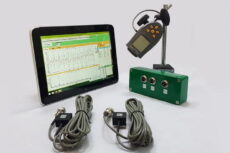
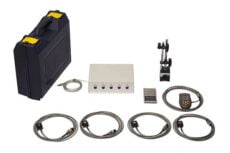
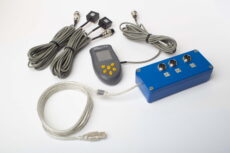
At minimum, you need a calibrated accelerometer, a data collector or vibration analyzer capable of computing RMS in the correct frequency band, and trending software. Modern predictive maintenance platforms integrate vibration, ultrasound, and temperature into a single ecosystem. SDT Ultrasound Solutions offers portable and online instruments that combine ultrasonic and vibration measurements, enabling both early-stage detection through ultrasound and standards-based severity assessment through RMS vibration analysis.
{
“@context”: “https://schema.org”,
“@type”: “TechArticle”,
“headline”: “What Is RMS (Root Mean Square) in Vibration Analysis?”,
“description”: “Comprehensive technical guide to RMS vibration analysis covering calculation methods, ISO 20816 severity zones, comparison of RMS vs Peak vs Peak-to-Peak, and practical application in predictive maintenance programs.”,
“author”: {
“@type”: “Organization”,
“name”: “SDT Ultrasound Solutions”,
“url”: “https://www.sdt.be”
},
“publisher”: {
“@type”: “Organization”,
“name”: “SDT Ultrasound Solutions”
},
“datePublished”: “2024-01-15”,
“dateModified”: “2025-01-15”,
“keywords”: [“RMS vibration analysis”, “root mean square vibration”, “ISO 20816”, “vibration severity”, “predictive maintenance”, “condition monitoring”, “RMS velocity”],
“about”: [
{“@type”: “Thing”, “name”: “Vibration analysis”},
{“@type”: “Thing”, “name”: “Predictive maintenance”},
{“@type”: “Thing”, “name”: “Condition monitoring”}
]
}
{
“@context”: “https://schema.org”,
“@type”: “FAQPage”,
“mainEntity”: [
{
“@type”: “Question”,
“name”: “What does RMS stand for in vibration analysis?”,
“acceptedAnswer”: {
“@type”: “Answer”,
“text”: “RMS stands for Root Mean Square. It is a statistical calculation that produces a single value representing the effective energy of a vibration signal by squaring all samples, averaging those squares, and taking the square root.”
}
},
{
“@type”: “Question”,
“name”: “How do you convert RMS to Peak vibration?”,
“acceptedAnswer”: {
“@type”: “Answer”,
“text”: “For a pure sine wave only, Peak = RMS × √2 ≈ RMS × 1.414. For real-world machinery signals, this conversion is inaccurate. The actual ratio (Crest Factor) depends on signal complexity and can range from 1.4 to above 5.0.”
}
},
{
“@type”: “Question”,
“name”: “What is a good RMS vibration level for a motor?”,
“acceptedAnswer”: {
“@type”: “Answer”,
“text”: “According to ISO 20816, an RMS velocity below 2.3 mm/s on a rigidly mounted large industrial motor places it in Zone A (good condition). Values between 2.3 and 4.5 mm/s are acceptable for long-term operation (Zone B).”
}
},
{
“@type”: “Question”,
“name”: “Why is RMS velocity preferred over RMS acceleration for general monitoring?”,
“acceptedAnswer”: {
“@type”: “Answer”,
“text”: “RMS velocity gives approximately equal weight to fault frequencies across the 10 Hz–1,000 Hz range, covering most common machinery defects. ISO 20816 specifies RMS velocity as the primary severity metric.”
}
},
{
“@type”: “Question”,
“name”: “Can RMS vibration analysis detect bearing faults?”,
“acceptedAnswer”: {
“@type”: “Answer”,
“text”: “Overall RMS velocity detects moderate-to-advanced bearing damage. Early-stage defects require high-frequency techniques like enveloping, shock pulse measurement, or ultrasonic monitoring.”
}
},
{
“@type”: “Question”,
“name”: “What is the difference between ISO 10816 and ISO 20816?”,
“acceptedAnswer”: {
“@type”: “Answer”,
“text”: “ISO 20816 is the modern replacement for ISO 10816. Both define vibration severity zones based on RMS velocity. ISO 20816 consolidates and updates the older standard with refined zone boundaries.”
}
},
{
“@type”: “Question”,
“name”: “How often should RMS vibration measurements be taken?”,
“acceptedAnswer”: {
“@type”: “Answer”,
“text”: “For critical rotating assets, monthly route-based RMS measurements are the minimum. High-criticality machines benefit from continuous online monitoring. Non-critical equipment can be measured quarterly.”
}
},
{
“@type”: “Question”,
“name”: “What tools are needed for RMS vibration analysis?”,
“acceptedAnswer”: {
“@type”: “Answer”,
“text”: “You need a calibrated accelerometer, a data collector capable of computing RMS in the correct frequency band, and trending software. Modern platforms integrate vibration, ultrasound, and temperature into a single ecosystem.”
}
}
]
}
 EN
EN  AR
AR  AZ
AZ  BG
BG  ZH
ZH  HR
HR  CS
CS  DA
DA  NL
NL  ET
ET  FI
FI  FR
FR  DE
DE  KA
KA  EL
EL  HE
HE  HI
HI  HU
HU  ID
ID  IT
IT  JA
JA  KO
KO  LV
LV  LT
LT  MS
MS  NB
NB  FA
FA  PL
PL  PT_BR
PT_BR  PT
PT  RO
RO  SR
SR  SK
SK  SL
SL  ES
ES  SV
SV  TH
TH  TR
TR  UR
UR  UK
UK  VI
VI 