ಕಂಪನ ವಿಶ್ಲೇಷಣದಲ್ಲಿ Blade Pass Frequency (BPF)






ಬ್ಲೇಡ್ ಪಾಸ್ ಆವರ್ತನ (BPF) is a prominent frequency component found in the vibration signature of aerodynamic and hydrodynamic machines such as fans, pumps, blowers, and compressors. It represents the rate at which the rotating blades or vanes of an impeller pass a fixed point — a cutoff (or cutwater) vane, a diffuser, or the sensor location. Each blade passage drives a discrete pressure pulsation, and the sum of those pulses produces a clean, predictable vibration peak that an analyst can calculate in advance and watch over time. Because BPF is tied directly to running speed and blade count, it is one of the most diagnostically useful features in the ಕಂಪನ ವರ್ಣಪಟಲವನ್ನು of any bladed machine.
1. Definition: What is Blade Pass Frequency?
BPF arises from a fundamentally aerodynamic or hydraulic interaction, not a mechanical defect. As each blade sweeps past a stationary obstruction — most often the volute cutwater of a pump or the housing tongue of a fan — it momentarily compresses and then releases the fluid, sending a pressure pulse into the casing and the surrounding structure. Repeat that for every blade, every revolution, and the result is a steady tone at a frequency set purely by how many blades there are and how fast they turn. This is why BPF is sometimes called vane pass frequency on pumps: the physics is identical whether the bladed element is a fan rotor or a pump impeller. It belongs to the family of ವಾಯುಗತಿಶಾಸ್ತ್ರೀಯ ಶಕ್ತಿಗಳು and ಜಲಚರಾಕಾರ ಬಲಗಳು that excite a machine in normal service.
2. How to Calculate Blade Pass Frequency
BPF is straightforward to calculate; it is simply the product of the machine’s rotational speed and the number of blades or vanes on its impeller:
BPF = ಬ್ಲೇಡ್ಗಳ ಸಂಖ್ಯೆ × ಭ್ರಮಣ ವೇಗ
For example, a fan with 7 blades rotating at 1,800 RPM has a BPF of:
BPF = 7 blades × 1,800 RPM = 12,600 CPM (cycles per minute)
To convert this to hertz (Hz), divide by 60:
BPF = 12,600 CPM ÷ 60 = 210 Hz
One subtlety worth remembering: when the blade count and the number of stationary obstructions share a common factor, the effective pulsation pattern changes, and some designs deliberately use a prime number of vanes against a single cutwater to keep BPF a clean, isolated peak. If you would rather not do the arithmetic by hand for every machine on a route, our free ಬ್ಲೇಡ್ ಪಾಸ್ ಫ್ರೀಕ್ವೆನ್ಸಿ ಕ್ಯಾಲ್ಕುಲೇಟರ್ converts blade count and speed straight into BPF, and the ಹಾರ್ಮೋನಿಕ್ ಫ್ರಿಕ್ವೆನ್ಸಿ ಕ್ಯಾಲ್ಕುಲೇಟರ್ lays out the running-speed orders so you can spot where BPF and its harmonics will land relative to other components.
3. Why is BPF Important in Machine Diagnostics?
Vibration at the blade pass frequency is a normal and expected characteristic of any machine that moves air or fluid with blades — its mere presence is not a fault. What matters diagnostically is the amplitude at that frequency, which is a sensitive indicator of the machine’s mechanical and aerodynamic condition. A significant rise in BPF amplitude, or the sudden appearance of strong harmonics, frequently signals a developing problem long before it becomes a failure. This is why BPF amplitude is a prime candidate for routine ಪ್ರವೃತ್ತಿಯಲ್ಲಿರುವ ಒಂದು ಸ್ಥಿತಿ ಮೇಲ್ವಿಚಾರಣೆ ಕಾರ್ಯಕ್ರಮ.
4. Common Problems Indicated by High BPF Amplitude
Elevated vibration at 1×BPF or its multiples (2×BPF, 3×BPF, and so on) can be a symptom of several distinct issues:
- Aerodynamic or hydraulic issues: uneven or turbulent flow at the inlet or outlet is a primary cause, arising from blockages, poor ducting, or running the machine far from its Best Efficiency Point (BEP). In pumps this can shade into ಕ್ಯಾವಿಟೇಶನ್ ಅಥವಾ ಪುನರ್ಸಂಚಲನ when the operating point drifts too far.
- Rotor or impeller imbalance: although unbalance shows up chiefly at 1× running speed, a non-uniform mass distribution can also produce uneven blade loading that raises BPF.
- Blade damage or wear: a cracked, bent, chipped, or eroded blade disrupts the uniform pressure pulsations, causing a marked rise in BPF vibration — a common consequence of ಇಂಪೆಲ್ಲರ್ ದೋಷಗಳು.
- Improper clearances: an eccentric rotor position within the housing, or incorrect clearance between the blade tips and the casing, produces large pressure pulses as the blades sweep past the tightest point. This links closely to ವಿಕೇಂದ್ರಿತತೆ in the rotor-housing geometry.
- Structural resonance: if BPF or one of its harmonics coincides with a ನೈಸರ್ಗಿಕ ಆವೃತ್ತಿ of the machine, its piping, or its foundation, the vibration is dramatically amplified through ರಚನಾತ್ಮಕ ಅನುರಣನ.
5. Harmonics of Blade Pass Frequency (2×BPF, 3×BPF)
The presence of strong BPF harmonics usually points to a more severe problem, or to a sharper, less sinusoidal pressure pulse in the flow. A severely bent blade, or a significant obstruction sitting close to the impeller, produces a pulse that departs from a clean sine wave; in the frequency domain that translates into multiple harmonics rising above the noise. Reading the relative heights of 1×BPF, 2×BPF, and 3×BPF therefore gives the analyst a feel for how “peaky” and how serious the underlying disturbance has become.
6. Analysis Techniques
Diagnosing BPF-related issues follows a clear sequence:
- Calculate BPF: first determine the theoretical value from the known blade count and speed, so you know exactly where to look.
- ಸ್ಪೆಕ್ಟ್ರಮ್ ವಿಶ್ಲೇಷಣೆ: examine the FFT spectrum to identify peaks at 1×BPF and its harmonics, and to gauge how they stand out against the broadband noise floor.
- ಪ್ರಚಲಿತ ವಿಷಯಗಳು: compare the current BPF amplitude against historical baseline data; a sudden or gradual rise is a clear sign of deterioration.
- ಹಂತ ವಿಶ್ಲೇಷಣೆ: with a dual-channel analyser, phase readings help separate a problem rooted in rotor motion from one rooted in the structure.
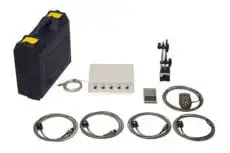
That last step is where a true two-channel instrument earns its keep in the field. A portable analyser and balancer such as the ಬ್ಯಾಲೆನ್ಸೆಟ್-1ಎ captures amplitude and phase simultaneously on two channels at operating speed, letting an engineer confirm whether an elevated peak near BPF is genuinely aerodynamic or is in fact a 1× imbalance that can be corrected by ಸಮತೋಲನ the rotor in place. By monitoring the blade pass frequency systematically, maintenance teams gain valuable insight into the health of their critical rotating equipment and can identify potential failures well before they occur.

