Understanding Pitting in Bearings and Gears





Pitting is the formation of small cavities, craters or depressions on the working surface of bearing races, rolling elements or gear teeth. It arises from two quite distinct mechanisms: fatigue pitting, the early-stage product of rolling-contact fatigue, and corrosion pitting, the result of electrochemical attack that removes material from the surface. In rolling-element bearings, pitting is usually regarded as an early or mild form of spalling; in gears, it is recognised as a failure mode in its own right, separate from tooth breakage or general gear wear.
Whatever its origin, pitting introduces surface roughness and stress concentrations that generate vibration and noise. Left uncorrected, an individual pit becomes a crack-initiation site, pits coalesce into larger spalls, and the component marches toward failure. Catching it early — while the damage is still small and the trend is gentle — is the whole point of monitoring it.
1. Types of Pitting
Fatigue pitting (mechanical)
Fatigue pitting is born of repeated rolling contact and the cyclic subsurface stresses it imposes. It appears at two scales:
- Micropitting: very small pits roughly 10–50 micrometres across that give a matte grey surface texture, barely visible to the naked eye. It concentrates in high-stress zones and is common in gears running thin lubricant films and in high-speed bearings. Depending on conditions it can stabilise or progress to macropitting.
- Macropitting (initial pitting): clearly visible craters around 1–5 mm in diameter and 0.1–0.5 mm deep, formed when a subsurface fatigue crack propagates to the surface and lifts out a flake. It usually grows into larger spalls and may take months to years to progress to failure, which is precisely the window that condition monitoring exploits.
Corrosion pitting (chemical)
Corrosion pitting comes from electrochemical attack rather than load. Moisture, acids or process chemicals in contact with the surface eat shallow, rust-coloured pits, often littered with corrosion products. Unlike fatigue pitting it tends to be widespread rather than confined to the load zone, and although it usually starts shallower than a fatigue pit, each cavity acts as a stress riser that seeds later fatigue cracking. Effective sealing and corrosion-inhibited lubricants are the first line of defence.
Electrical pitting
Electrical pitting is caused by current passing through the bearing and arcing across the oil film, melting tiny craters. The classic signature is closely spaced craters arranged in regular bands — a washboard or corrugated “fluting” pattern. It is common on motors fed by VFDs with inadequate shaft grounding, the same root cause behind many electrical faults, and is usually recognised by its distinctive regular pattern on inspection.
2. Detection Methods
Vibration analysis
Pitting produces a recognisable vibration progression. In the early stage it adds a small increase in high-frequency vibration; as defects grow, discrete bearing fault frequencies appear — BPFO, BPFI or BSF depending on which surface is damaged — and their amplitude and harmonic count climb. Envelope analysis is the single most effective tool for catching early-stage pitting, because it demodulates the faint repetitive impacts out of the broadband background long before they dominate the ordinary spectrum.
Visual inspection
Direct examination requires disassembly or borescope access. The inspector looks for grey matte areas (micropitting) or visible craters (macropitting), counts and sizes the pits to gauge severity, and photographs them for documentation and trending against future inspections.
Oil analysis
Wear-metal particles in an oil sample reveal active material removal. Ferrography distinguishes the particle morphology of pitting from that of ordinary wear, and a rising particle concentration confirms that the damage is progressing rather than stable.
Ultrasonic testing
The surface roughness from pitting raises a bearing’s ultrasonic emissions, and portable detectors can track this non-invasively. Ultrasound often flags trouble before vibration symptoms are unambiguous, making it a useful complement to spectral monitoring.
3. Causes and Prevention
Fatigue pitting
- Adequate bearing rating: select a bearing whose L10 life comfortably exceeds the required service.
- Proper lubrication: maintain a healthy film thickness (lambda ratio greater than about 3) so asperities do not touch.
- Cleanliness: keep out contamination that dents the surface and creates stress risers.
- Alignment: avoid edge loading caused by misalignment.
- Load control: resist overloading — rolling-bearing life falls roughly with the cube of load.
Corrosion pitting
- Effective sealing: keep moisture out of the bearing cavity.
- Proper lubricant: use formulations with corrosion inhibitors.
- Corrosion-resistant materials: specify stainless bearings for wet service.
- Storage protection: shield spare bearings from humidity.
- Condensation prevention: avoid thermal cycling that drives condensation inside the housing.
Electrical pitting
Prevention centres on keeping current out of the bearing: proper shaft grounding on VFD-driven motors, an insulated bearing at one end of the machine, ceramic (non-conductive) rolling elements, and general measures to eliminate or minimise bearing currents.
4. Pitting in Gears
On gear teeth, pitting has its own character. It occurs on the tooth flanks within the contact zone, concentrated near the pitch line where rolling and sliding combine to maximise contact stress. The damage shows up as elevated vibration at the gear mesh frequency, often flanked by sidebands spaced at the shaft running speed, together with audible changes in tone and visible pits on the flanks. A modest amount of so-called “initial” pitting can be acceptable in some designs and may even stabilise as the surfaces conform, but excessive pitting removes load-bearing area and ultimately leads to tooth breakage. Monitoring the mesh frequency and its sidebands, alongside periodic flank inspection, is the practical detection routine for the broader family of gear defects.
5. Severity Assessment and Decisions
For bearings, severity is commonly judged by how much of the load zone is affected:
- Incipient: a few scattered micropits, under about 5% of the load zone.
- Light: visible pitting over roughly 5–25% of the load-zone area.
- Moderate: extensive pitting over 25–50% of the area, beginning to coalesce.
- Severe: over 50% affected with pits joining into spalls — immediate replacement.
Those grades map onto clear actions. Incipient to light pitting can continue in service under monitoring; moderate pitting calls for a planned change-out within one to three months; severe pitting should be replaced at the first opportunity; and rapid progression accompanied by high vibration or temperature warrants an emergency shutdown. Setting sensible alarm and trip levels against these stages, and tracking the trend over time, turns the raw measurement into a maintenance decision.
6. Where Pitting Fits and How Balancing Helps
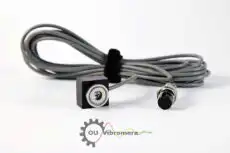
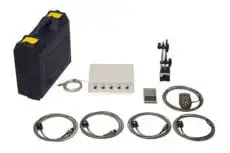
Pitting is an important intermediate stage in component degradation — more serious than general surface wear, yet often manageable when caught early. It also rarely acts alone: edge loading from misalignment or excited resonance accelerates fatigue, and so does the elevated dynamic bearing load that comes from rotor unbalance. Keeping a rotor well balanced is therefore part of preventing premature pitting, and a portable two-channel analyser such as the Balanset-1A earns its place twice over: it runs envelope and spectral diagnostics to spot early bearing and gear pitting in the field, and it performs the field balancing that lowers the rolling-contact stresses driving the damage. Married to proper lubrication, sealing and alignment, that combination lets a team identify pitting early and intervene on its own schedule, well before the slide into catastrophic spalling.

