ISO 18436-2: Personnel Qualification for Vibration Analysis




ISO 18436-2 is the globally recognised standard for the training, qualification and certification of vibration analysis professionals. Its full title is Condition monitoring and diagnostics of machines — Requirements for qualification and assessment of personnel — Part 2: Vibration condition monitoring and diagnostics, and it sits within the wider ISO 18436 family that governs personnel competence across condition-monitoring disciplines. The standard exists to guarantee that the people performing machinery vibration measurements and analysis actually have the knowledge and skill to do the job competently. It defines a four-category certification ladder, each rung representing a higher level of expertise — from a basic data collector to an expert diagnostician and programme leader — giving employers a verifiable way to assess competence and individuals a clear path to advance their careers in condition monitoring and predictive maintenance.
1. Why the Standard Exists
Vibration data is only as trustworthy as the person who collects and interprets it. A poorly mounted sensor, a wrongly set frequency span, or a misread spectrum can send a maintenance programme chasing faults that are not there — or, worse, miss ones that are. Before ISO 18436-2, “experience” was defined differently by every employer and every region. The standard replaces that patchwork with a single, internationally portable benchmark: a defined body of required knowledge, a minimum amount of formal training, a minimum amount of verifiable hands-on experience, and a standardised examination at each level. The result is that an ISO-certified analyst carries a proven, comparable level of competence wherever they work.
2. The Four Categories of Certification
The heart of the standard is a progressive, four-category structure. Each category specifies the responsibilities, required knowledge, training and experience for that level, and each builds on the one below it.
Category I: Data Collector
This is the foundational, entry-level certification for personnel new to vibration monitoring. A Category I individual is qualified to perform basic, single-channel vibration measurements along a pre-established route. Their core duties include operating a portable data collector, correctly identifying the measurement points defined by the route, and properly mounting the sensor — magnet or probe — to acquire clean, repeatable data. They are trained to recognise poor data quality caused by sensor or cable problems and to confirm that readings fall within expected ranges. A key skill is comparing simple broadband vibration readings against pre-set alarm levels — such as those drawn from ISO 20816, the modern successor to ISO 10816 — to judge whether a machine is “normal” or needs a closer look. They are not expected to diagnose faults, but as the front-line of a condition-based maintenance (CBM) programme they gather the consistent, high-quality data on which every later analysis depends.
Category II: Vibration Analyst
Widely regarded as the industry-standard certification for a working vibration analyst, Category II carries a significantly deeper level of knowledge and skill. These analysts not only collect data but perform detailed analysis and diagnostics across a broad range of common machinery. Their responsibilities include selecting the right measurement technique and sensor for the task, setting up the data collector with correct parameters (Fmax, resolution, averaging), and interpreting single-channel FFT spectra, time waveforms and phase measurements. A defining competency is the ability to diagnose common faults such as unbalance, misalignment, mechanical looseness, rolling-element bearing defects and basic gear issues. Category II analysts are also expected to perform basic single-plane balancing of rotors in the field.
Category III: Senior Vibration Analyst
A Category III analyst is recognised as a senior technician and a leader within a condition-monitoring team. This advanced certification demands deep theoretical knowledge and extensive practical experience. The holder is responsible for diagnosing the full range of complex machinery faults — including problems with journal bearings, flexible rotors, resonance and complex gear systems. They are proficient in advanced techniques such as two-channel FFT analysis, Frequency Response Function (FRF) measurements (bump tests) and Operating Deflection Shape (ODS) analysis. Beyond diagnostics their role often extends to programme management: establishing and running a condition-monitoring programme, setting alarm limits and analysis criteria, and providing technical guidance, training and mentorship to Category I and II personnel. They are the key technical resource for complex and critical machinery problems.
Category IV: Master Vibration Analyst
This is the highest level of certification — the pinnacle of expertise in machinery diagnostics. A Category IV analyst is a recognised leader and innovator with a deep, fundamental command of the theory of vibration, signal processing and rotor dynamics. Their responsibilities reach well past routine diagnostics: they develop and validate new diagnostic techniques, resolve the most subtle and complex machinery problems, and understand the intricate relationships between signal-processing parameters — for example, the effects of different windowing functions on a spectrum. They are experts in advanced tools such as modal analysis and finite element analysis (FEA). A Category IV analyst typically serves as the ultimate technical authority for a corporate-wide condition-monitoring programme, mentoring analysts at every level and setting the strategic direction for how diagnostic technologies are applied.
3. Eligibility and Examination Requirements
To enforce a standardised level of competency, the standard lays out strict prerequisites for certification at each level. For each of the four categories it specifies the minimum duration of formal classroom training — for example, 38 hours for Category II — and, critically, the minimum number of months of verifiable, hands-on field experience, such as 18 months for Category II. The requirements are progressive: a candidate must satisfy the training and experience requirements of every lower level before moving up. The standard also defines the examinations themselves — the number of multiple-choice questions for each category, the duration of the exam, and the minimum passing score. This combination of mandated training, documented practical experience and a standardised, invigilated examination is what makes an ISO 18436-2 certificate a reliable signal of real skill rather than mere attendance.
4. Key Concepts at a Glance
- Standardised competency: the standard’s primary purpose is a uniform, global benchmark for what an analyst should know and be able to do at each career stage.
- Progressive skill path: the four categories form a clear roadmap, showing what to learn and experience to advance from beginner to expert.
- Separation of training and certification: training is required, but the standard centres on certification — passing a rigorous examination to prove competence. Training bodies prepare candidates; independent assessment bodies conduct the exams.
- Global recognition: certification to ISO 18436-2 is recognised worldwide and is frequently a requirement for roles in reliability engineering and predictive maintenance.
5. How ISO 18436-2 Fits the Wider Standards Landscape
ISO 18436-2 governs people; its companion standards govern methods and limits, and a competent analyst is expected to know how they interlock. ISO 17359 sets out the general framework for a condition-monitoring programme, ISO 13373-1 details vibration-monitoring procedures, and the ISO 20816 series (which absorbed the older ISO 10816 and the long-withdrawn ISO 2372) defines the vibration-severity limits an analyst measures against. Familiarity with the vocabulary standard ISO 2041 and with ISO 21940-11 for balance quality rounds out the body of knowledge a certified analyst draws on day to day. Many countries operate certification schemes accredited to ISO/IEC 17024 to administer ISO 18436-2 examinations, so the certificate carries weight across borders.
6. The Standard in Everyday Practice
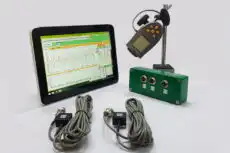
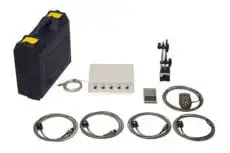
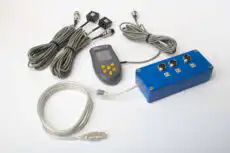
The categories map neatly onto real work. A Category I technician walking a route collects overall levels and trends them against alarm thresholds. When a reading climbs, a Category II analyst takes over with FFT, time-waveform and phase tools to name the fault — and, where the culprit is unbalance, corrects it in the field. This is where a portable two-channel instrument such as the Balanset-1A fits the competency model: it supports the diagnostic spectrum analysis a Category II analyst performs, and the single- and two-plane field balancing the standard expects at that level, verifying residual unbalance against the appropriate ISO grade. Persistent or complex cases — resonance, flexible-rotor behaviour, structural issues — are escalated to a Category III or IV specialist, exactly as the standard’s progressive structure intends. Used this way, ISO 18436-2 is not bureaucracy but a practical division of labour that puts the right level of expertise on each problem.

