बॅलन्सिंग मशीन समजून घेणे
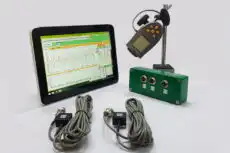


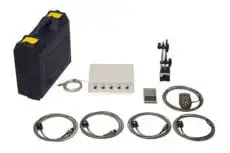



A संतुलन यंत्र (also called a shop balancer) is a dedicated instrument that measures the unbalance मध्ये rotor after that rotor has been removed from its parent machine. It spins the rotor in a calibrated suspension, measures the resulting vibration or force, and from those readings computes the magnitude and angular location of the unbalance in each सुधार समतल — so the operator can drill, grind or add weight exactly where it is needed. Balancing machines are the backbone of rotor manufacturing and of high-precision repair work, where a component must be certified balanced before it goes back into service.
1. व्याख्या: बॅलन्सिंग मशीन म्हणजे काय?
At its heart, a balancing machine is a controlled experiment in केंद्रापसारक बल. When an unbalanced rotor turns, its heavy spot generates a rotating force proportional to the residual mass eccentricity and to the square of speed. The machine spins the rotor at a steady, known rate, senses the once-per-revolution force or motion that this heavy spot produces, and resolves it into the amount of correction mass and the angle at which to apply it. Because the rotor is mounted on the machine’s own precision supports rather than its working bearings, the measurement isolates the rotor as a component — free of coupling, foundation and assembly influences.
This component-level focus is exactly why shop balancing achieves such tight results. A new turbine wheel, pump impeller, electric-motor armature or machine-tool spindle is typically balanced on a machine to a demanding बॅलन्स गुणवत्ता ग्रेड before assembly, giving a clean, repeatable starting point that field correction alone cannot guarantee.
2. बॅलन्सिंग मशीनचे प्रमुख घटक
A typical horizontal balancing machine is built from a small number of well-defined subsystems, each of which contributes to measurement accuracy:
- Bed / base: a rigid, heavy foundation that provides stability and keeps external floor vibration from contaminating the reading. Mass and stiffness here directly limit the smallest unbalance the machine can resolve.
- Suspension system (pedestals): two supports — sometimes called the bearing pedestals — that carry the rotor’s journals. They are deliberately stiff in one direction and compliant in the measurement direction, so the rotor is free to move only where the sensors can read it.
- सेन्सर्स: transducers mounted on the suspension — typically accelerometers, वेग ट्रान्सड्यूसर, or force cells — that convert the unbalance response into an electrical signal.
- ड्राइव्ह प्रणाली: an electric motor with a belt, end-drive or air drive that brings the rotor up to a constant, controlled balancing speed.
- Rotational reference sensor: usually a photo-eye reading a strip of प्रतिबिंबक टेप, or a proximity probe on a keyway. Its once-per-revolution pulse — the same role a tachometer plays in field work — establishes the phase angle, telling the machine जिथे जड स्थान कुठे आहे.
- मापन साधनसामग्री: a microprocessor console that filters the sensor signals at running speed, applies the इन्फ्लुअन्स कोइफिशंट्स, and displays the unbalance amount and angle for each plane.
3. Hard-Bearing विरुद्ध Soft-Bearing Machines
Balancing machines are classified by how their suspension behaves relative to the balancing speed — and the distinction governs how they are calibrated and what they measure.
a) Hard-Bearing बॅलन्सिंग मशीन
The suspension is very stiff and the machine measures the बल created by the unbalance. The natural frequency of the rotor-suspension system sits well above the balancing speed, so the rotor turns far below resonance and the reading is stable. The decisive advantage is स्थायी अंशांकन: once the operator enters the rotor’s dimensions and bearing positions, the machine reads correct unbalance directly, with no trial run for each new part. This speed and versatility make hard-bearing machines the standard choice in modern industrial balancing shops.
b) Soft-Bearing बॅलन्सिंग मशीन
The suspension is very flexible and the machine measures विस्थापन (vibration). Here the system’s natural frequency sits well below the balancing speed, so the rotor runs above resonance. These machines are extremely sensitive — well suited to very small or lightweight rotors — but they require a calibration run with a known trial weight for each rotor type, because the relationship between displacement and unbalance depends on the specific rotor and setup. The trade is sensitivity for setup time.
4. Balancing Machine vs. Field Balancing
Shop balancing and क्षेत्र संतुलन answer two different questions, and a well-run reliability programme uses both.
- Balancing machine (shop balancing): the rotor is removed and balanced as an individual component. This delivers very high precision and is ideal for new or rebuilt rotors, certifying that the part itself meets a tight tolerance before it ever enters service.
- क्षेत्र संतुलन: the rotor is balanced while installed in its own bearings under its own operating conditions. This corrects the entire rotor assembly — keys, couplings, fan hubs and operational effects included — and fixes unbalance on machines already in service without major disassembly.
The two are complementary. A rotor is usually shop-balanced when manufactured or repaired, then given a final ट्रिम बॅलन्स in the field to absorb assembly and operating influences. On an assembled machine, that field step does not need a dedicated machine at all: a portable two-channel analyser such as the Balanset-1A measures 1× amplitude and phase in the machine’s own bearings, computes the influence coefficients, and verifies the final अवशिष्ट असंतुलन against the chosen ISO grade — in effect performing the same measurement a shop balancer makes, but on the rotor as it actually runs.
5. Standards and Acceptance
The unbalance a machine reports is judged against an acceptance limit drawn from ISO 21940-11 (the modern successor to the long-familiar ISO 1940-1), which defines the बॅलन्स गुणवत्ता श्रेणी — G6.3, G2.5, G1.0 and so on — that set the permissible residual unbalance for a given rotor mass and service speed. The machines themselves are described and evaluated under ISO 21940-21, which covers how a balancing machine’s accuracy and minimum achievable residual unbalance are verified. Translating a grade into an allowable gram-millimetre value, and splitting it between two planes, is quick with the अवशिष्ट असंतुलन कॅल्क्युलेटर (ISO 21940-11), while the संतुलन मशीन संवेदनशीलता कॅल्क्युलेटर helps confirm that a machine can actually resolve the unbalance a tight grade demands.

