Understanding Shaft Runout in Vibration Analysis
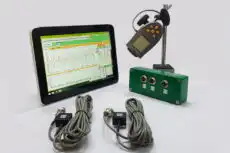
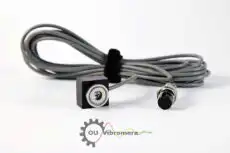

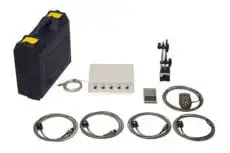



Runout is the umbrella term for imperfections in a rotor that produce a once-per-revolution (1×) signal even when the shaft turns so slowly that dynamic forces like unbalance are negligible. Strictly, it is the total variation of a rotating surface from a perfect circle measured against the shaft’s true centreline. The catch that trips up so many analysts is that runout looks exactly like unbalance in the vibration data — yet it is not a mass-related problem and cannot be cured by balancing.
Because both phenomena live at 1× running speed, telling them apart is one of the more important skills in rotor diagnostics. Getting it wrong wastes time chasing a balance that will never converge; getting it right means correcting the actual defect — or compensating for it cleanly before a balance is attempted. The sections below define the two distinct kinds of runout, explain why they corrupt diagnostics, and lay out the standard technique for removing their influence.
1. Types of Runout: A Critical Distinction
Everything begins with separating the two fundamentally different things the single word “runout” can mean.
Mechanical Runout
Mechanical runout is a genuine physical or geometric imperfection of the shaft: the surface is not perfectly round, or it is not perfectly centred on the axis of rotation. Typical causes include:
- Out-of-roundness: the journal is slightly oval or otherwise mis-shapen from machining.
- Eccentricity: a component such as a pulley, coupling, or gear is machined or mounted off-centre relative to the shaft centreline.
- Bent or bowed shaft: a permanent bend sweeps the surface in and out past a fixed point with every revolution. A related transient version, thermal bow, appears as the machine heats and disappears as it stabilises.
Because it is a real geometric feature, mechanical runout can be measured directly with a dial indicator while the shaft is turned slowly by hand. The total indicator reading is the figure quoted on inspection reports, and our Shaft Radial Runout (TIR) Calculator helps relate that reading to an allowable tolerance.
Electrical Runout
Electrical runout is not a defect of the shaft’s shape at all but a measurement artefact peculiar to non-contact eddy-current proximity probes. These probes establish a high-frequency magnetic field and infer the gap from how the shaft surface loads it. If that surface has localised variations in its magnetic or electrical properties, the probe reports a fluctuating gap even when the true shaft-to-probe distance is perfectly constant. Its causes are metallurgical and surface-related rather than geometric:
- Variations in material permeability: a localised magnetised spot — often the legacy of resting a magnetic-base dial indicator on the journal — produces a strong, persistent 1× signal.
- Changes in surface finish: scratches, dents, or tool marks within the probe’s viewing area.
- Inconsistent material composition: variations in the alloy or metallurgical structure of the shaft itself.
Crucially, electrical runout is invisible to a dial indicator — the geometry is fine — yet it is a major error source in turbomachinery monitored to standards such as API 670, where proximity probes are the primary sensors.
2. Why Runout Corrupts Diagnostics and Balancing
The signal from either kind of runout sits at 1× running speed — the very same frequency as unbalance — which creates two distinct problems for the analyst.
- It masquerades as unbalance: a tall 1× peak in the spectrum invites a confident-but-wrong diagnosis of unbalance, prompting balancing attempts that are both unnecessary and doomed to fail because there is no excess mass to correct.
- It contaminates a real balance: when genuine unbalance is present, the runout vector adds to it. Any honest attempt to balance the rotor must first isolate the true dynamic response, which means measuring the runout component and vectorially subtracting it from the total 1× signal.
This is why a 1× peak alone never settles the diagnosis — confirming a true unbalance against look-alikes such as runout, misalignment, a cracked rotor, or resonance is the heart of competent vibration diagnosis.
3. Runout Compensation: The Slow-Roll Vector
The accepted remedy is runout compensation, an essential step in analysing any machine instrumented with proximity probes. It proceeds in three stages:
- Slow roll: the machine is run at a deliberately low speed — typically 200–500 rpm — where centrifugal forces from unbalance are insignificant, so almost the entire 1× signal is runout.
- Measure the slow-roll vector: the 1× vibration vector (amplitude and phase) captured at this speed is recorded as the “slow-roll” or “runout” vector.
- Subtract the vector: that stored slow-roll vector is then vectorially subtracted from the 1× vibration vector measured at full operating speed.
What remains is the runout-compensated 1× vector, representing the true dynamic motion of the shaft from unbalance and other rotordynamic forces. This compensated value — not the raw reading — is what should drive diagnostics and the calculation of correction weights.
4. Measuring and Compensating in the Field
The same principle carries over to portable work, even on machines that use accelerometers rather than permanently installed probes. Good practice before a field balance is to verify mechanical runout with a dial indicator and check the shaft for residual magnetism, ruling out the look-alikes before adding any trial mass. A portable two-channel analyser such as the Balanset-1A measures the 1× amplitude and phase that a balance depends on, and capturing a slow-roll reference where the machine permits it lets the analyst confirm that the 1× response genuinely grows with speed — the signature of real unbalance — rather than staying fixed, which would point straight back to runout.

