Meet Vibromera.com — our new international website. Visit Vibromera.com →

產品

Hydraulic Pump Balancing Using Balanset-1A Device

Hydraulic Pump Balancing with the Balanset-1A Device

A practical guide for maintenance engineers and technicians, covering dynamic balancing technology using the portable Balanset-1A device

1. 目的與運作原理

液壓泵動平衡校正是消除轉動部件不平衡的程序,旨在降低振動並延長設備使用壽命。

The balancing process involves measuring the rotor’s vibration and phase, then adding or removing small correction weights on the impeller or shaft. By counteracting the uneven mass distribution, this procedure significantly reduces the centrifugal forces that cause vibration and potential damage.

不平衡的主要原因:

  • 葉輪與軸的製造誤差
  • 運行過程中的磨損與損壞
  • 腐蝕與空蝕損壞
  • 維修後組裝不當

不平衡的後果:

  • 振動與噪音增加
  • 軸承與密封件磨損加速
  • 泵效率降低
  • 突發故障風險

2. Balanset-1A 技術說明

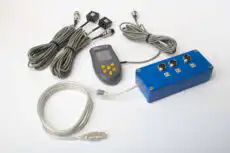
Balanset-1A is a portable dual-channel device for dynamic balancing of rotors directly at the workplace (in-situ).

Balanset-1A 系統結構

Balanset-1A system structure diagram with sensors, tachometer, measuring unit, and laptop USB 介面 感測器 1 感測器 2 轉速計 筆記型電腦 測量單元 振動感測器 Balanset-1A 軟體

技術規格

參數 數值 單位
振動速度測量範圍 (RMS) 0.02 - 80 mm/s
頻率範圍 5 - 1000 Hz
轉速測量範圍 100 - 100,000 rpm
相位測量精度 ±1
校正平面數量 1 或 2 -
工作溫度 +5...+50 °C

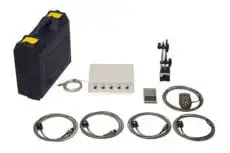
設備包裝內容

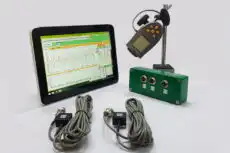
測量單元
帶有前置放大器與 ADC 的 USB 介面
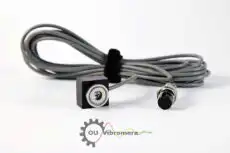
振動感測器
2 個帶磁吸安裝的加速規
雷射測速儀
帶磁吸支架的相位感測器
反光貼紙
用於安裝在泵軸上
電子秤
用於精確測量重量
軟體
存於 USB 隨身碟,附說明書

3. 動平衡校正準備

安全要求: Before starting work, disconnect pump power, install barriers, and check equipment mounting reliability.

感測器安裝

液壓泵感測器安裝圖

Hydraulic pump diagram with vibration sensors, reflective tape on the shaft, and a laser tachometer for balancing setup 感測器 1 感測器 2 轉速計 膠帶
  • Install vibration sensors on the pump housing near the bearings, oriented perpendicular to the shaft axis
  • Attach reflective tape on the pump shaft or coupling
  • Mount the laser tachometer on a magnetic stand opposite the reflective tape
  • Connect the sensors to the measuring unit
  • Connect the measuring unit to the laptop via USB
重要: Sensors must be securely mounted and aligned perpendicular to the shaft rotation axis.

4. 動平衡校正程序

The balancing procedure with Balanset-1A typically follows a three-run method (influence coefficient method) using trial weights. Below is a step-by-step outline of the process, from measuring initial vibration to installing correction weights and verifying the results.

初始振動測量

  • 啟動 Balanset-1A 軟體
  • 選擇單平面或雙平面動平衡校正模式
  • Start the pump at operating speed
  • Press "Run#0" in the software to measure initial vibration
  • Record the vibration amplitude and phase values
Ensure that the pump's rotation speed is stable before starting measurements.

試重安裝

  • 停止泵
  • Weigh a suitable trial weight using the electronic scales
  • Install the weight on the rotor in the first correction plane
  • Enter the weight’s mass and installation radius into the software
  • Restart the pump and perform the "Run#1" measurement
Trial weight should cause at least a 20% change in vibration amplitude or phase to ensure effective measurement.

第二平面測量(適用於雙平面動平衡校正)

  • Stop the pump and remove the trial weight from the first plane
  • Attach the trial weight to the second correction plane
  • Start the pump and perform the "Run#2" measurement
  • The software will automatically calculate the required correction weights

校正配重安裝

  • Stop the pump and remove any trial weights
  • Manufacture or select the correction weights as per the software’s calculation
  • Secure the weights by welding, bolting, or using clamps
  • The installation angle for each weight is measured from the trial weight position in the direction of rotation

驗證測量

  • Run the pump at operating speed
  • Perform a control measurement ("RunTrim")
  • Verify that vibration has been reduced to acceptable levels
  • Adjust weight masses and repeat measurement if necessary

5. 動平衡校正品質評估標準

可接受的殘餘振動值

Pump category (ISO 10816-7) Acceptable for long-term operation (zone B limit), mm/s RMS Risk of damage (zone D), mm/s RMS
Category I (high-reliability duty), up to 200 kW ≤ 4.0 > 6.6
Category I (high-reliability duty), over 200 kW ≤ 5.0 > 7.6
Category II (general duty), up to 200 kW ≤ 5.1 > 8.5
Category II (general duty), over 200 kW ≤ 6.1 > 9.5
注意: These values are the evaluation-zone limits of ISO 10816-7 (Table A.1) for rotodynamic pumps with power above 1 kW. Vibration at or below the zone B limit is considered acceptable for unrestricted long-term operation; values above the zone C/D boundary indicate a risk of damage. Newly commissioned pumps normally fall within zone A (≤ 2.5–4.2 mm/s depending on category and power).

動平衡校正成功的徵兆

  • 70–90% reduction in vibration at the 1× rotational frequency
  • Stable and consistent vibration phase readings
  • Absence of unusual noise
  • Smooth, uniform pump operation

6. 實務建議

動平衡校正頻率

定期動平衡校正

  • New equipment – after initial run-in period
  • After major repairs – mandatory
  • 關鍵設備每年一次
  • When vibration levels double from baseline

不定期動平衡校正

  • Upon noticing unusual vibration or noise
  • After any impeller replacement
  • If vibration exceeds acceptable levels
  • After an emergency shutdown

高品質動平衡校正的要求

  • Ensure the pump is in good mechanical condition
  • Verify the pump is firmly mounted on a stable foundation
  • Check that bearings have no excessive play
  • Confirm proper alignment between pump and driver
  • Maintain stable operating speed during balancing
注意: Balancing will not eliminate vibration caused by issues such as bearing wear, shaft misalignment, coupling defects, or other mechanical faults. Address those problems separately.

結果文件記錄

  • Keep a log of all balancing work performed
  • Save the Balanset-1A software reports for each balance job
  • Document the mass and position of installed correction weights
  • Record the final vibration levels after balancing (control measurements)

結論

The portable Balanset-1A device provides effective balancing of hydraulic pumps directly at the workplace. Proper application of this technology allows users to:

  • Reduce equipment vibration by a factor of 3–10
  • Increase bearing service life by 2–5 times
  • Lower energy consumption by 5–15%
  • Prevent emergency breakdowns
  • Decrease overall maintenance costs

Regular balancing of hydraulic pumps is an important part of the planned preventive maintenance system for industrial equipment.

技術支援: For any questions about using the Balanset-1A device, please contact Vibromera company specialists.

常見問題 (FAQ)

What is hydraulic pump balancing?

Hydraulic pump balancing is the process of correcting the uneven distribution of mass in a pump’s rotating components (such as the impeller and shaft). By adding or removing small weights, the goal is to eliminate excessive vibration and noise, improving performance and extending the pump’s service life.

Why is balancing a hydraulic pump important?

Balancing a pump is crucial because an imbalanced pump can cause excessive vibration and noise, leading to accelerated wear of bearings and seals, reduced efficiency, and an increased risk of sudden failure. Proper balancing helps ensure smooth, efficient, and reliable pump operation.

How do you balance a hydraulic pump?

Hydraulic pump balancing is typically done by using a device like the Balanset-1A. The process involves measuring the pump’s vibration and phase, adding a trial weight to the rotor, measuring the change, and then calculating and installing a correction weight at a specific location. After installing the correction weight, the pump is run again to verify that vibration levels have dropped to acceptable limits.

What equipment is used for pump balancing?

Pump balancing requires a vibration measurement and balancing system. The Balanset-1A kit, for example, includes a USB interface module, two vibration sensors (accelerometers), a laser tachometer (phase reference sensor), reflective tape for the rotor, electronic scales for weighing trial and correction weights, and specialized software running on a laptop to guide the balancing procedure.

How often should a pump be balanced?

Pumps should be balanced whenever there is significant vibration or after events that could cause imbalance. It’s recommended to balance new pumps after an initial run-in period, after major repairs or impeller replacements, and as part of annual maintenance for critical pumps. Unscheduled balancing is advised if unusual vibration or noise appears or after any emergency shutdown.

What are acceptable vibration levels for a balanced pump?

Acceptable vibration levels depend on the pump category and power. ISO 10816-7 (rotodynamic pumps above 1 kW) sets zone B limits — acceptable for unrestricted long-term operation — of 4.0 mm/s (RMS) for Category I (high-reliability) pumps up to 200 kW and 5.0 mm/s above 200 kW; for general-duty Category II pumps the limits are 5.1 mm/s up to 200 kW and 6.1 mm/s above 200 kW. Vibration above the zone C/D boundary (6.6–9.5 mm/s depending on category and power) indicates a risk of damage and needs immediate attention.

Does balancing fix all vibration issues?

No. Balancing addresses vibration caused by rotor mass imbalance. It will significantly reduce vibrations at the rotational frequency, but it cannot fix other sources of vibration such as misalignment, worn bearings, bent shafts, or other mechanical problems. Those issues must be diagnosed and repaired separately.

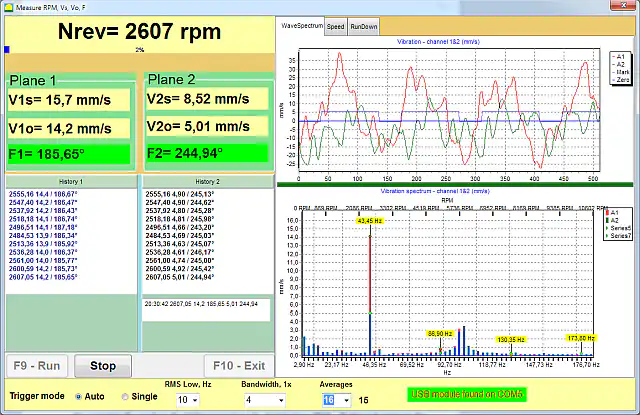
Balanset-1A 便攜式動平衡機與振動分析儀軟體。振動計模式。
WhatsApp
Balanset-1A · €1975Ask engineer