अर्ध-स्थिर असंतुलन समजून घेणे






अर्ध-स्थिर असंतुलन हा एक विशिष्ट आणि तुलनेने दुर्मिळ प्रकार आहे गतिशील असंतुलन. हे तेव्हा घडते जेव्हा रोटरचा जडत्वाचा मुख्य अक्ष शाफ्टच्या परिभ्रमण अक्षाला छेदतो, परंतु not रोटरच्या गुरुत्वमध्यबिंदूवर. सोप्या शब्दांत ही अशी स्थिती आहे जी दोन्ही समाविष्ट करते स्थिर असंतुलन and जोडी असंतुलन — with the special feature that the static and couple unbalance vectors lie in one and the same axial plane. That coplanar alignment is what gives it its name and its distinctive behaviour.
१. व्याख्या: क्वासी-स्टॅटिक अनबॅलन्स म्हणजे काय?
याची कल्पना करण्यासाठी, परिपूर्णपणे बॅलन्स केलेल्या रोटरची व्याख्या काय करते ते आठवा: त्याचा जडत्वाचा मुख्य अक्ष त्याच्या परिभ्रमण अक्षाशी एकरूप असतो. विविध प्रकारचे unbalance ते दोन अक्ष कोणकोणत्या प्रकारे वेगळे होऊ शकतात याचे वर्णन करतात. क्वासी-स्टॅटिक अनबॅलन्समध्ये दोन्ही अक्ष क्रॉस — they intersect — but the crossing point is offset along the shaft from the centre of gravity rather than sitting on it. Geometrically this is a tilted-and-shifted axis whose static and couple ingredients lie in the same axial plane — it is precisely that coplanar combination which makes the two axes intersect at all.
Like every form of dynamic unbalance, it can only be fully measured while the rotor is spinning. Because the whole condition is equivalent to a single resultant unbalance acting in one specific axial plane, a single correction of the right magnitude in that plane can remove it — provided that plane is accessible on the machine; otherwise it is treated as an ordinary two-plane balancing job. A purely static check on knife-edges cannot reveal it, because the couple component only produces forces under rotation.
२. इतर अनबॅलन्स प्रकारांशी संबंध
क्वासी-स्टॅटिक अनबॅलन्सला तीन प्रमाणित श्रेणींच्या बरोबरीने ठेवणे उपयुक्त ठरते:
- स्थिर असंतुलन: केवळ गुरुत्वमध्यबिंदूचे शाफ्ट अक्षापासूनचे विस्थापन. हे केंद्रापसारी बले निर्माण करते जी असतात इन फेजमध्ये दोन्ही बेयरिंगमध्ये असतात.
- कपल असंतुलन: केवळ एक “डगमगणे”, ज्यात विरुद्ध टोकांवर आणि विरुद्ध बाजूंवर समान जड स्पॉट्स असतात. हे अशी बले निर्माण करते जी असतात १८० अंश फेज-बाहेर बेयरिंगमध्ये असतात.
- गतिशील असंतुलन: सामान्य प्रकरण — एकमेकांच्या तुलनेत कोणत्याही अनियंत्रित फेज कोनात स्टॅटिक आणि कपल अनबॅलन्स यांचे एकत्रित स्वरूप.
- अर्ध-स्थैतिक असंतुलन: a special case of dynamic unbalance in which the static and couple unbalance vectors lie in the same axial plane, so the tilted principal axis still crosses the shaft axis (at a point other than the centre of gravity).
दुसऱ्या शब्दांत, प्रत्येक क्वासी-स्टॅटिक रोटर डायनॅमिकदृष्ट्या अनबॅलन्स्ड असतो, परंतु केवळ एक विशिष्ट भौमितिक योगायोगच “क्वासी-स्टॅटिक” हे नाव मिळवतो.
3. व्यावहारिक उदाहरण: ओव्हरहंग रोटर
पाठ्यपुस्तकातील अभिजात उदाहरण म्हणजे एक ओव्हरहंग रोटर ज्याचा अनबॅलन्स मशीनच्या गुरुत्वमध्यापासून दूर असलेल्या एकाच प्लेनमध्ये असतो. लांब शाफ्टच्या टोकाला, दोन्ही बेअरिंग्जच्या पलीकडे बसवलेल्या जड ब्लेड्सच्या संचासह एका मोठ्या औद्योगिक फॅनचा विचार करा.
समजा फॅन डिस्कवर एकच जड स्पॉट आहे — डिस्कवरच एक शुद्ध स्टॅटिक अनबॅलन्स. ती एकच फोर्स दोन बेअरिंग्जपर्यंत पोहोचण्याचा मार्ग सममित नसतो:
- फॅनच्या जवळ असलेल्या बेअरिंगला मोठी कंपन फोर्स जाणवते.
- फॅनपासून दूर असलेल्या बेअरिंगलाही फोर्स जाणवते, परंतु वस्तुमान सपोर्ट्सच्या पलीकडे “ओव्हरहंग” असल्यामुळे ती फोर्स जवळच्या बेअरिंगभोवती होणाऱ्या पिव्होटिंग क्रियेद्वारे कार्य करते.
बेअरिंग्जवरील निव्वळ परिणाम म्हणजे एक गुंतागुंतीची गती जी शेकिंग (स्टॅटिक) घटक आणि रॉकिंग (कपल) घटक या दोन्हींचे मिश्रण असते. दोन्ही घटक एकाच भौतिक जड स्पॉटमधून उद्भवत असल्यामुळे त्यांच्यात एक निश्चित संबंध असतो — आणि नेमका तोच निश्चित संबंध क्वासी-स्टॅटिक स्थिती निर्माण करतो. म्हणूनच ओव्हरहंग रोटर्स कुप्रसिद्धपणे संवेदनशील असतात आणि जवळजवळ नेहमीच दोन-प्लेन उपचाराची मागणी करतात.
4. सुधारणा
In principle, quasi-static unbalance can be removed by a single correction in the appropriate axial plane, because it is equivalent to one resultant unbalance acting in that plane. In practice that exact plane is often not accessible on the assembled machine, so in the field it is corrected just like any general dynamic unbalance. The balancing workflow is:
- कंपन मोजा amplitude and phase 1Г— वर running speed दोन बेअरिंग स्थानांवर।
- आवश्यक मूल्य मोजून काढा सुधारणा वजन आणि दोन निवडलेल्या करेक्शन प्लेन्ससाठी त्यांची कोनीय स्थिती, सामान्यतः वापरून प्रभाव-गुणांक पद्धत सोबत एक trial weight.
- वेट्स अशा प्रकारे बसवा की ते स्टॅटिक आणि कपल हे दोन्ही घटक एकाच वेळी रद्द करतील.
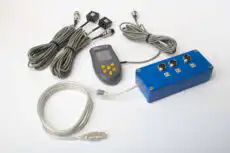
फील्डमध्ये हे एक प्रमाणित द्विस्तरीय संतुलन काम आहे. यासारखे एक पोर्टेबल दोन-चॅनेल उपकरण Balanset-1A दोन्ही बेअरिंग्जवर अॅम्प्लिट्यूड आणि फेज मोजते, रोटरचे इन्फ्लुएन्स कोएफिशिएंट्स काढते, आणि प्रत्येक प्लेनसाठी वस्तुमान व कोन मोजते — त्यानंतर हे पडताळते की अवशिष्ट असंतुलन आवश्यक ISO 21940-11 ग्रेड पूर्ण करते. एखादा विश्लेषक फेज रीडिंग्जवरून ही स्थिती क्वासी-स्टॅटिक म्हणून सहज ओळखू शकतो, परंतु व्यावहारिक सुधारणा कोणत्याही डायनॅमिक अनबॅलन्ससाठी वापरली जाणारी तीच सिद्ध दोन-प्लेन कार्यपद्धती असते.
5. हा फरक का महत्त्वाचा आहे
If the field routine is usually the same two-plane job, why name the condition at all? Because recognising a quasi-static pattern aids समज — and it can even simplify the procedure, since a single correction in the right axial plane is sufficient when that plane is accessible. The phase relationship tells the engineer that a single overhung heavy spot — rather than two independent ones — is the likely physical cause, which guides where to look for the source: a damaged blade, accumulated product, or an assembly fault on the overhung disk. That insight is part of the broader value of careful phase interpretation in rotor dynamics.

