联合收割机平衡:我多年错误操作后总结出的经验教训
多年来我一直以为震动是联合收割机运转的必然现象。结果发现并非如此。以下是我关于平衡滚筒、转子、切碎器以及其他部件的所有经验——先是摸索出来的惨痛教训,然后才是正确的方法。

我如何从"这很正常"转变为"这有问题"
说实话,刚开始开联合收割机的那几年,我一直以为震动就是……机器运转的正常现象。联合收割机不就是这样吗?它会震动。所有东西都会震动。驾驶室会晃动,方向盘在你手里嗡嗡作响,螺栓每隔几天就会松动,然后你再把它们拧紧就行了。这就是我的日常工作。
收割季的某一天——当然,正值旺季,因为旺季总是容易出问题——联合收割机开始剧烈震动。不是平常的嗡嗡声,而是那种震得牙齿都疼的震动。脱粒滚筒肯定出了大问题。几周前我们刚换过几个打谷锤,之后谁也没想过要检查一下平衡。我们干嘛要检查呢?这么多年来我们一直都是这么做的。
那次故障让我们耽误了三天时间。整整三天,正值小麦收割季。
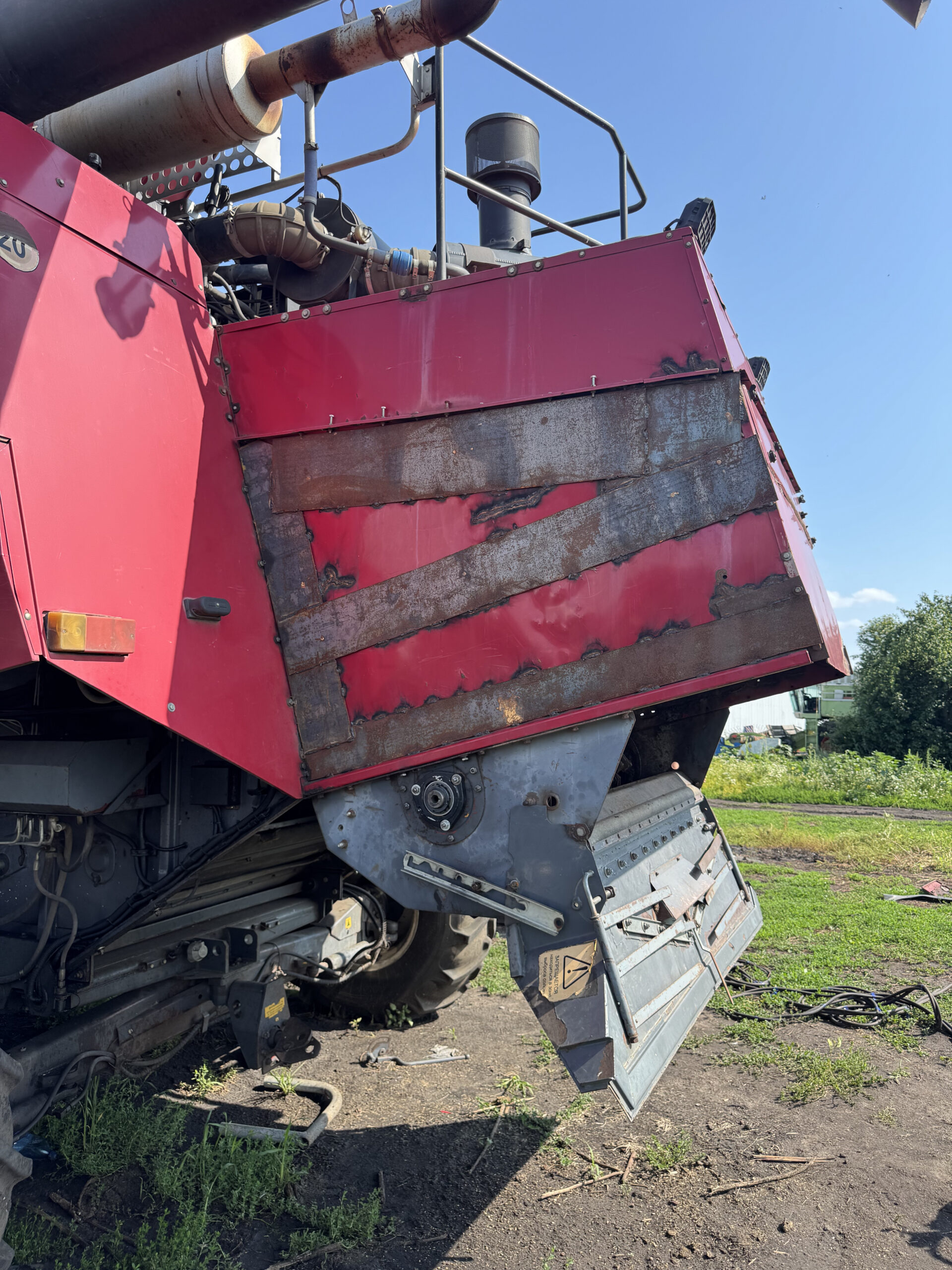
正是这张照片改变了我的想法。一位同事的联合收割机——秸秆输送器外壳因震动而彻底裂开。轴承过热,焊接处车架开裂,维修费用比一台便携式平衡机还贵。贵得多。
不平衡的危害在于它的隐蔽性。沉重的旋转部件——例如滚筒、转子或切碎器——会随着时间的推移形成"重边"。磨损、污垢堆积,以及更换的刀片比旧刀片重15克,这些都会造成不平衡。在每分钟1000转的转速下,这15克的重量会转化为离心力,在每次旋转时冲击轴承。每分钟冲击数千次。轴承不会立即失效,而是在收割过程中突然失效,而此时你绝对不能承受停机损失。
主鼓或转子轴承——零件、人工和停机时间
等待零件、拆卸、修理、重新组装——收割季中期
平均每个组件,现场组装,无需拆卸
在我得到之前 Balanset-1A, 我的选择很有限。你可以把滚筒放在棱柱上旋转,然后找出较重的一侧——这叫做静态平衡,总比没有强,但它只能检测出一种类型的不平衡。动态不平衡——那种只有在高速运转时才会出现的不平衡,即长滚筒的一端比另一端重——你用棱柱是感觉不到的。滚筒运转完美。然后你把它转速提高到每分钟900转,它就几乎要把联合收割机都震散架了。
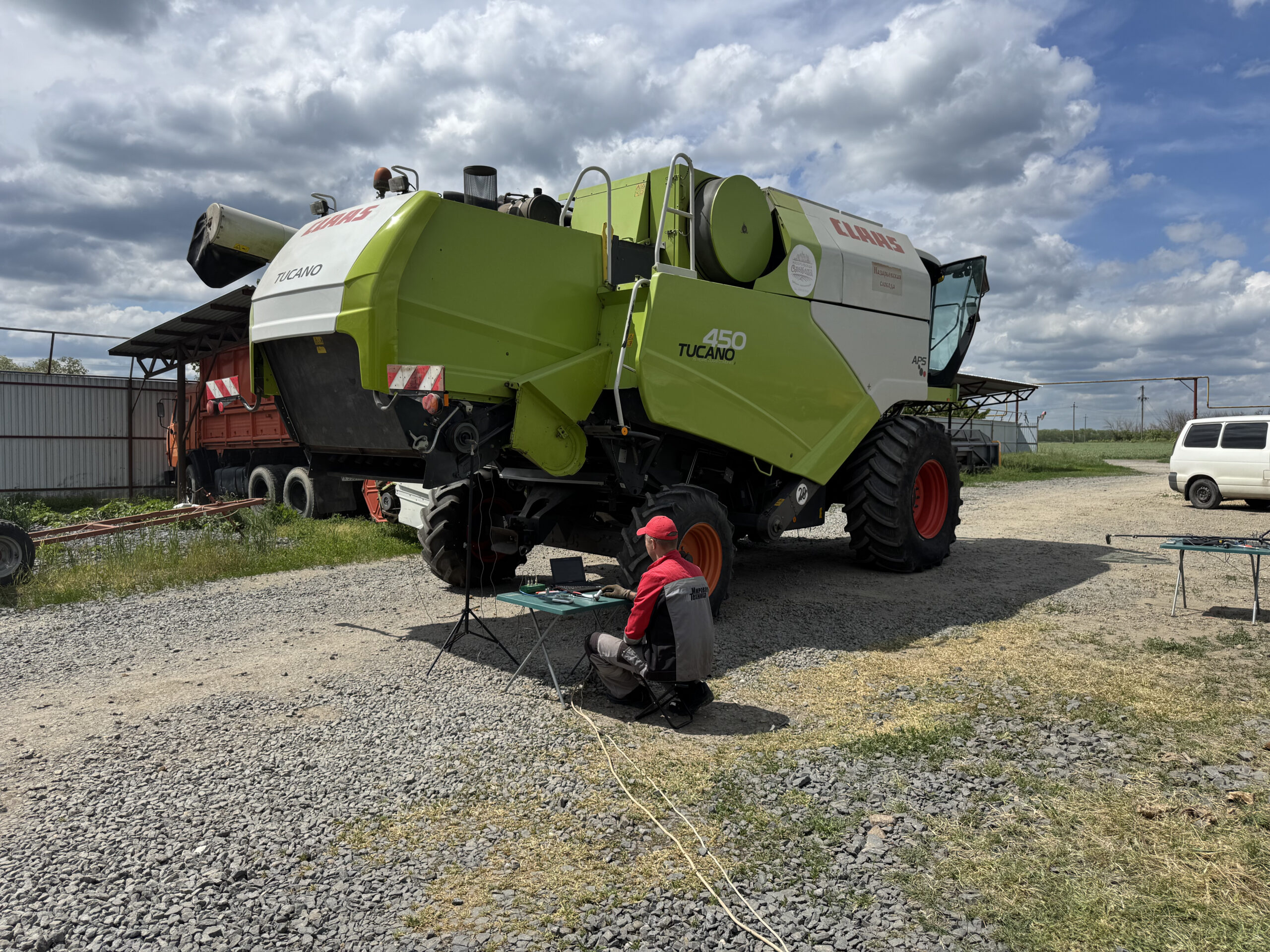
Balanset-1A:它是什么以及我是如何使用的

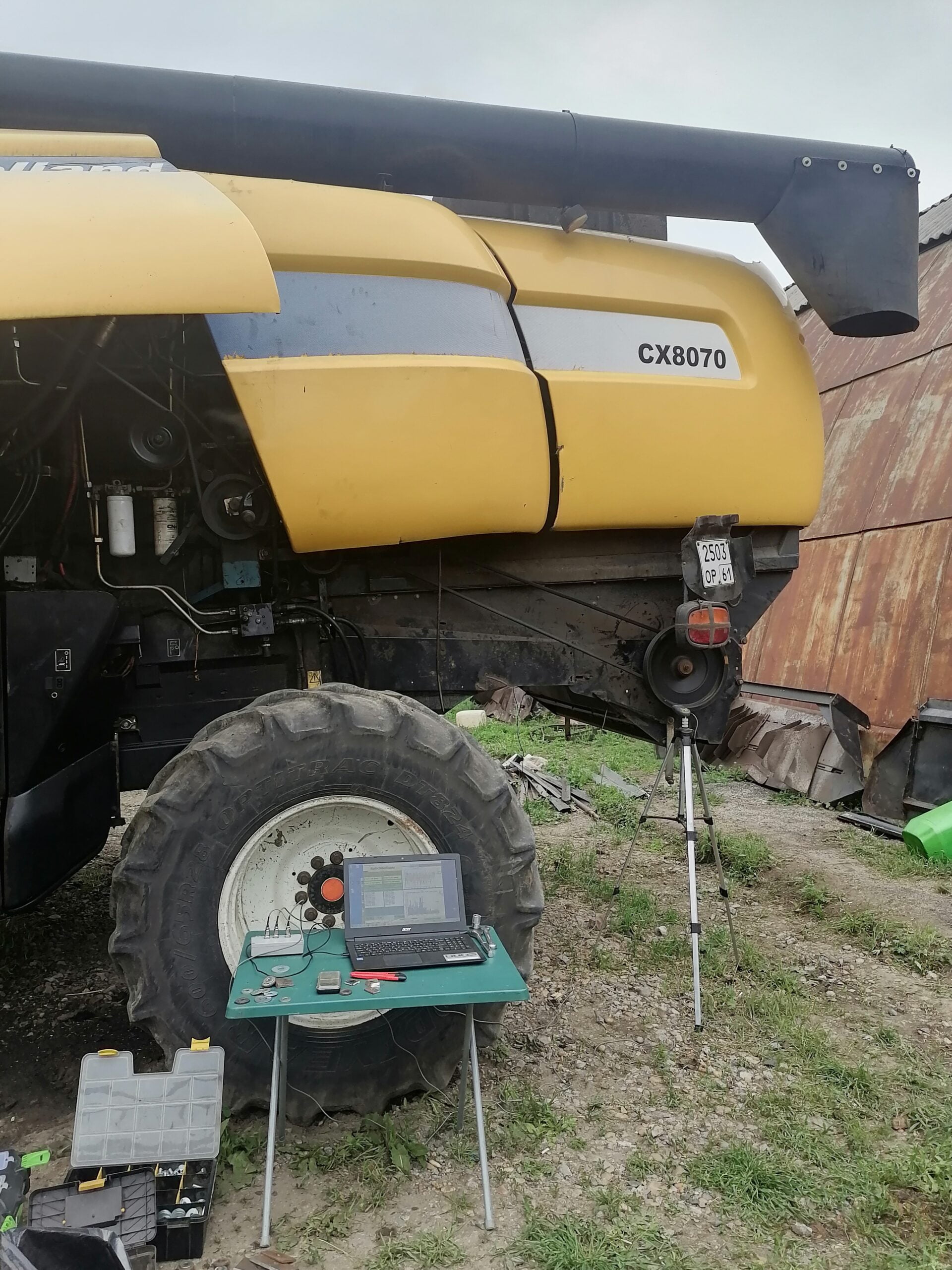
这套装置很简单。它包含两个振动传感器(加速度计),通过磁力吸附在轴承座上;一个安装在磁性支架上的激光转速计,用于读取旋转部件上的反射标记——这能让软件实时精确地知道轴的位置;一个接口模块,通过USB接口将所有部件连接到笔记本电脑;用于称量试验砝码的电子秤;以及反光胶带。整套装置重约4公斤,可以装在一个便携箱里。
去掉所有技术术语,我实际操作的步骤如下:
我装上传感器,启动软件。软件提示"运行机器"。我运行机器。屏幕上出现数字——振动水平和一个相位角,大致指示了振动最重的位置。然后软件提示"停止,在此处放置一个试重"。我用螺栓将一块钢板固定在滚筒的特定位置。再次运行机器。软件现在有了两个读数——一个没有放置重物,一个放置了重物——并根据两者的差值精确计算出需要添加多少金属以及添加的位置。我焊接上去。再次运行机器进行验证。完成。

最棒的是我不需要理解背后的数学原理。软件会自动计算影响系数。我只需要按照它的指示安装配重,并精确称重即可。第一次使用时,我很紧张——我以为会很复杂。结果并非如此。屏幕上只显示"在左侧平面上以 210 度角安装 180 克配重"。就这么简单。我把一块 180 克的配重板以 210 度角固定好,启动联合收割机,震动就从"我能感觉到地板震动"降到了"仪器几乎检测不到"。"
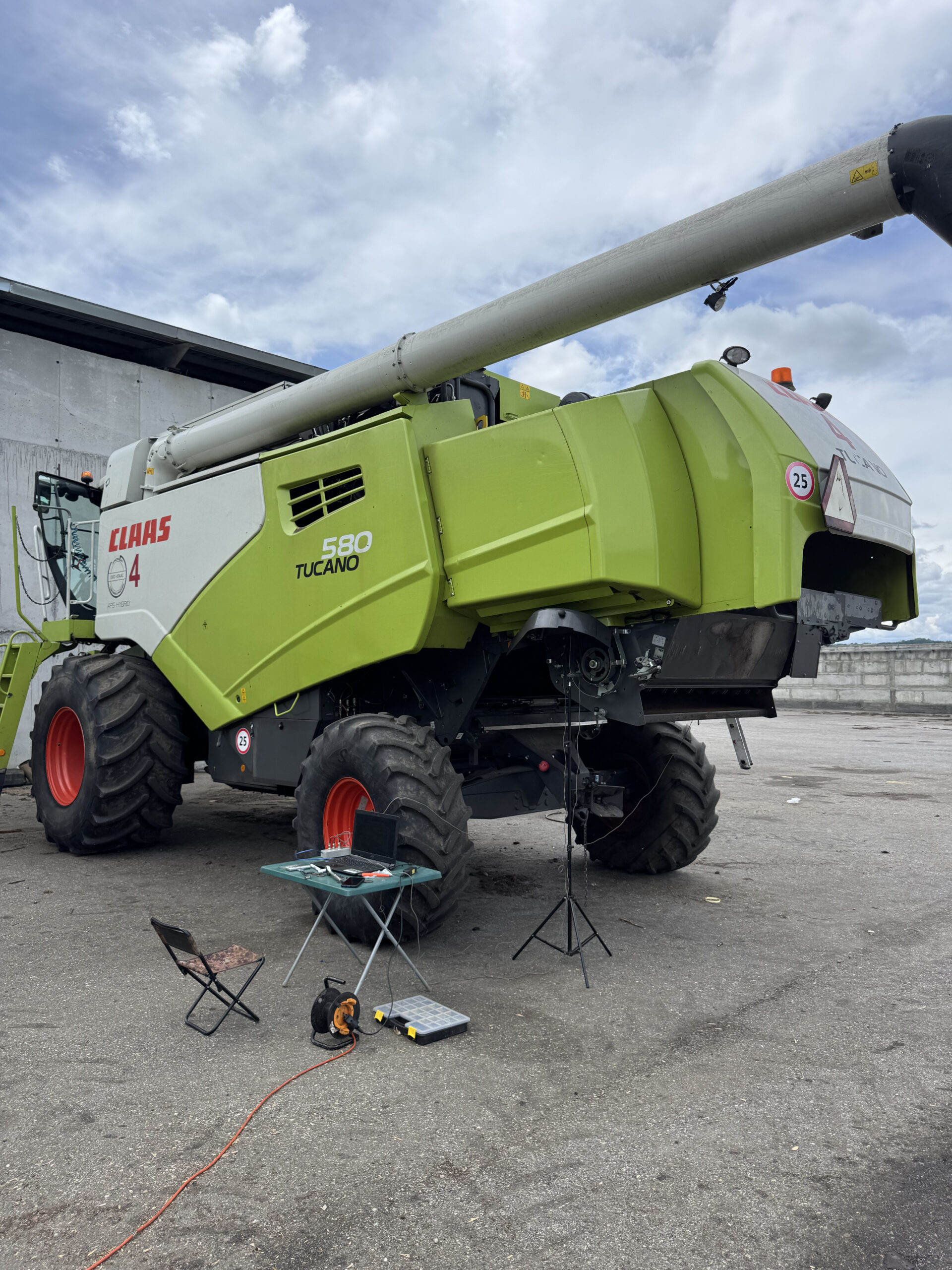
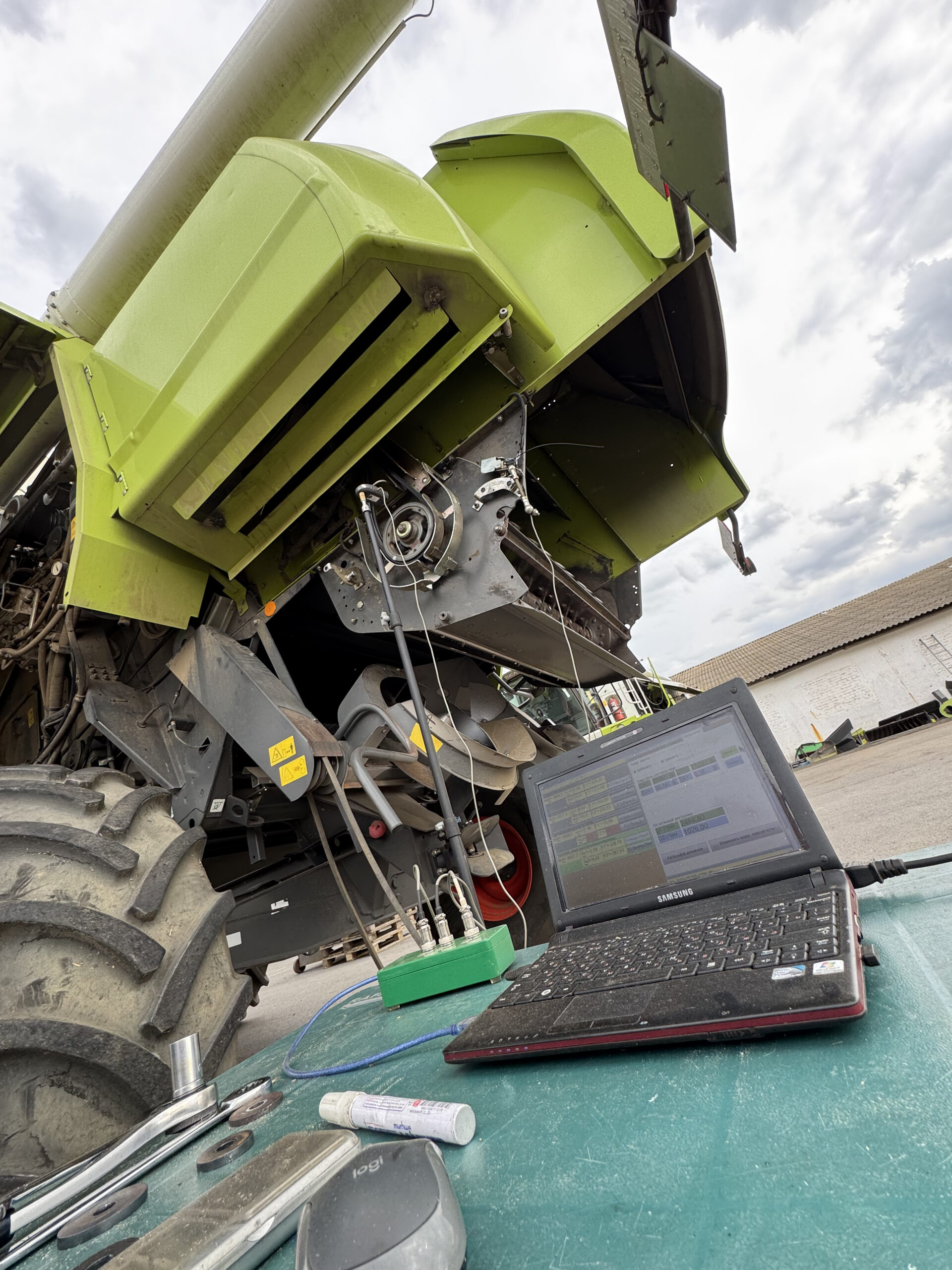
在进行平衡测试时,联合收割机的顶盖会打开,转子以工作速度旋转。我总是会把测试区域围起来。任何人都不允许靠近旋转部件。在测量过程中,我会保持足够的距离。这个步骤绝对不能省略。
容易损坏的部件:联合收割机中真正需要平衡的是什么
联合收割机并非所有部件都需要动平衡。但所有高速旋转、承载重物且承受作物冲击的部件——都需要动平衡。以下是动平衡的详细分类,大致按我动平衡的频率排序:
秸秆切碎机转子
最常做的平衡工作。几十把刀片以惊人的速度旋转。每次更换刀片都会改变平衡。有一次没做好——刀片外壳在一个赛季内就裂开了。
脱粒滚筒
重型滚筒,带击锤。出厂时经过平衡,但多年的磨损、污垢、更换击锤以及焊接裂纹破坏了平衡。由于滚筒较长,因此采用双平面设计。
旋转转子(轴流式)
长轴、大重量,兼具脱粒和分离功能。泥土会堵塞螺旋刀片,导致金属弯曲,磨损不均匀。双平面设计必不可少。
稻草行打草机
脱粒滚筒后方的小滚筒。秸秆流动不均造成的冲击载荷。湿秸秆粘在滚筒一侧。更换板条后——检查平衡情况。
清洁风扇
质量虽小,但运转速度尚可。叶片上积聚了灰尘,或者叶片被小石子击弯。低质量修正——需要精确称重。
电梯螺旋输送机
谷物和尾矿螺旋输送机。转速较低,但潮湿的谷物会堆积在螺旋叶片上,叶片会被石块压弯。通常只有在维修或矫直后才能恢复平衡。
实际操作步骤——我是如何平衡联合收割机组件的
我已经做过很多次了,现在都成了例行公事。但第一次做的时候感觉很复杂。所以,下面我把整个过程一步一步地记录下来,并附上我希望当初有人能给我的笔记。
首先把所有东西都清理干净。
这是人们最想跳过的步骤,但却是最重要的一步。务必清除所有堆积的稻草、泥浆、灰尘和谷物残渣。高压清洗机、刮刀、压缩空气——用什么方法都行。我曾遇到过仅仅清洁就能使振动减少一半的情况。如果你平衡一个脏兮兮的滚筒,你只是在纠正污垢造成的偏差——而下次污垢再次移动时,平衡就失效了。
清洁时,务必仔细检查所有部件。例如,裂纹的击锤、磨损的刀片、松动的轮毂螺栓、弯曲的叶片等等。发现问题就立即修复。损坏的转子无法进行平衡。
安装传感器和转速表
加速度计安装在轴承座上,沿径向方向(通常水平方向效果最佳——用磁铁吸附即可)。对于双平面应用,每个轴承上安装一个传感器。对于单平面应用,将传感器安装在最靠近旋转质量的轴承上。
在轴端或可见的旋转面上粘贴反光胶带。将激光转速表放置在磁性支架上——它需要与反光标记保持清晰的直线连接。将所有部件连接到 Balanset-1A 模块,将 USB 线连接到笔记本电脑,然后启动软件。
运行并记录基线(运行 0)
启动联合收割机,接合待平衡组件的驱动装置。待其达到工作转速。等待读数稳定——通常需要 15-20 秒。软件会显示振动值(单位:毫米/秒)和相位角(单位:度)。
这是你的"之前"的数字。我也把它写在便签纸上,因为我喜欢把它放在显眼的地方。
试验重量——飞机 1(运行 1)
停止机器运转。软件会提示您安装一个试用砝码。我通常使用一块钢板——用螺栓固定或点焊将其固定在转子一端的合适位置。先用电子秤精确称量钢板的重量。然后将质量和角度输入软件。
再次运行。软件会将新的振动与基准振动进行比较,并计算转子在该位置对质量的响应。这就是"影响系数"——简而言之,软件会学习转子的特性。
试验重量——平面 2(如果是双平面试验,则为第二次试验)
对于长转子(例如脱粒滚筒、旋转转子),将试验砝码移至另一端。再次运行。现在软件已获得来自两个平面的数据,可以计算修正值以补偿交叉耦合——即一端的质量如何影响另一端的振动。
对于圆盘状零件(清洁风扇、单滑轮),请跳过此步骤——一个平面就足够了。
安装校正砝码
屏幕上会显示类似这样的信息:"左侧平面:85 克,角度 172°。右侧平面:42 克,角度 305°。" 移除试砝码。切割或组装钢板至所需质量(电子秤在此发挥作用)。按所示角度焊接或螺栓固定。
在打谷器和切碎刀片上,我通常会在刀片安装螺栓上加装垫圈——简单、牢固,而且不会改变刀片的几何形状。在光滑滚筒上,我会点焊小垫片。在螺旋钻叶片上,我会用螺栓固定。
核实并完成
再运行一次。软件会显示残余振动。如果低于目标值(通常农业设备的振动低于 2-3 毫米/秒),则完成。否则,软件会建议进行修整校正。根据我的经验,大约 80% 的作业只需一次校正即可完成。由于刀片排列会产生复杂的不平衡模式,切碎机有时需要两次迭代。
将所有修正配重永久焊接(全焊道,而非点焊)。将报告保存到笔记本电脑上。我为每台机器都建了一个文件夹,记录日期和焊接前后的数值——这有助于追踪机器性能随时间推移是否下降。
实地数据:来自真实工作岗位的数字
我在这里要具体说明,因为含糊其辞地声称"性能提升"对任何人都没有帮助。这些都是我过去几个赛季在体测中得出的实际数据。
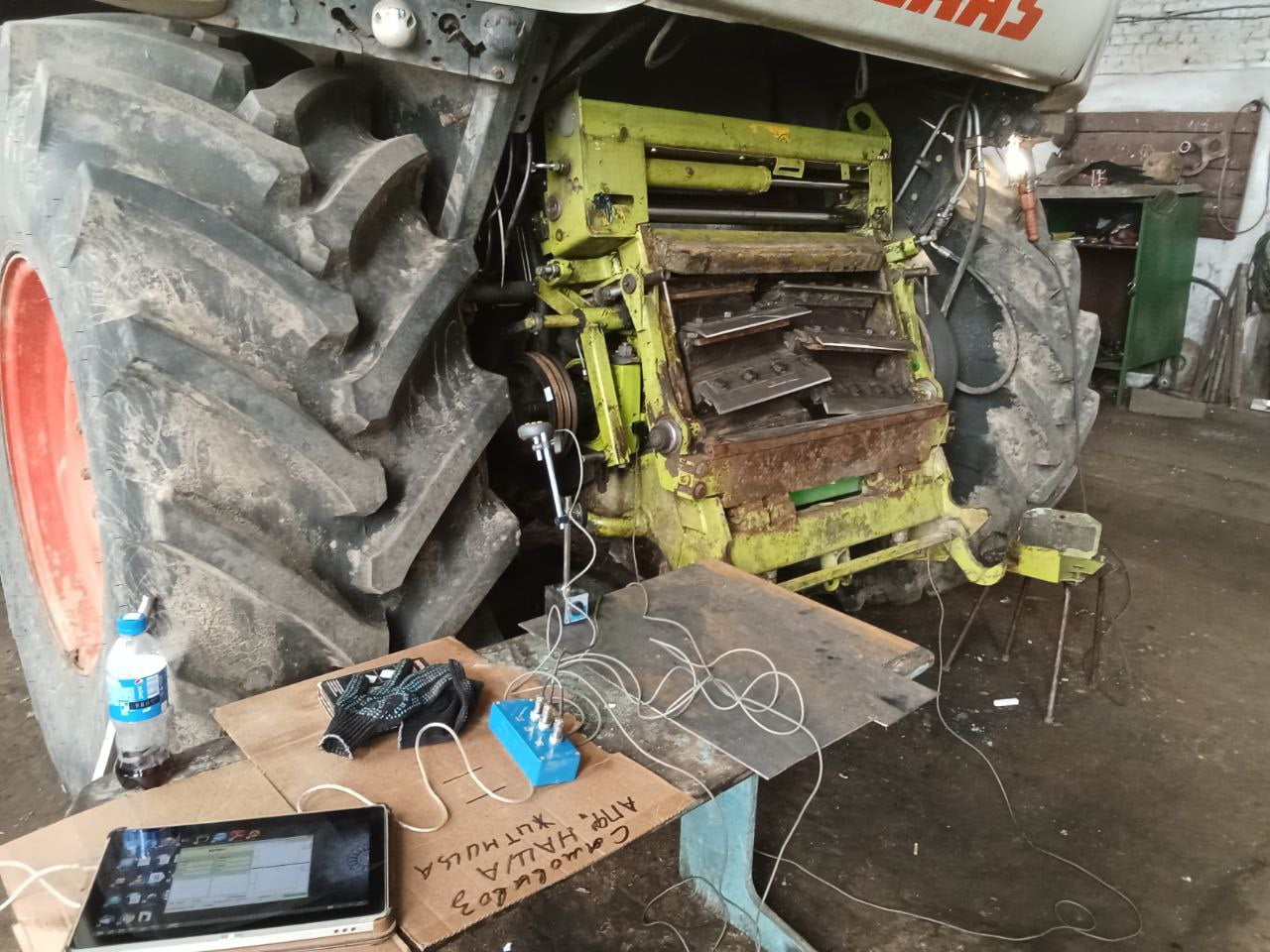
约翰迪尔型联合收割机,滚筒大修后
大修后:更换了三个打浆器,重新加工了轴承座。滚筒在棱柱上滚动良好(静平衡正常)。但在运行速度下,滚筒会带动整台机器晃动。双平面校正——一端180克,另一端95克。
旋转转子的工作情况有所不同。这是一台克拉斯(Claas)型轴流式吸尘器。转子已经运行了一个季度而没有进行任何检查,灰尘不均匀地堆积在螺旋进料段。我们首先进行了清理(这是必须的),但振动仍然很大——叶片本身磨损不对称。


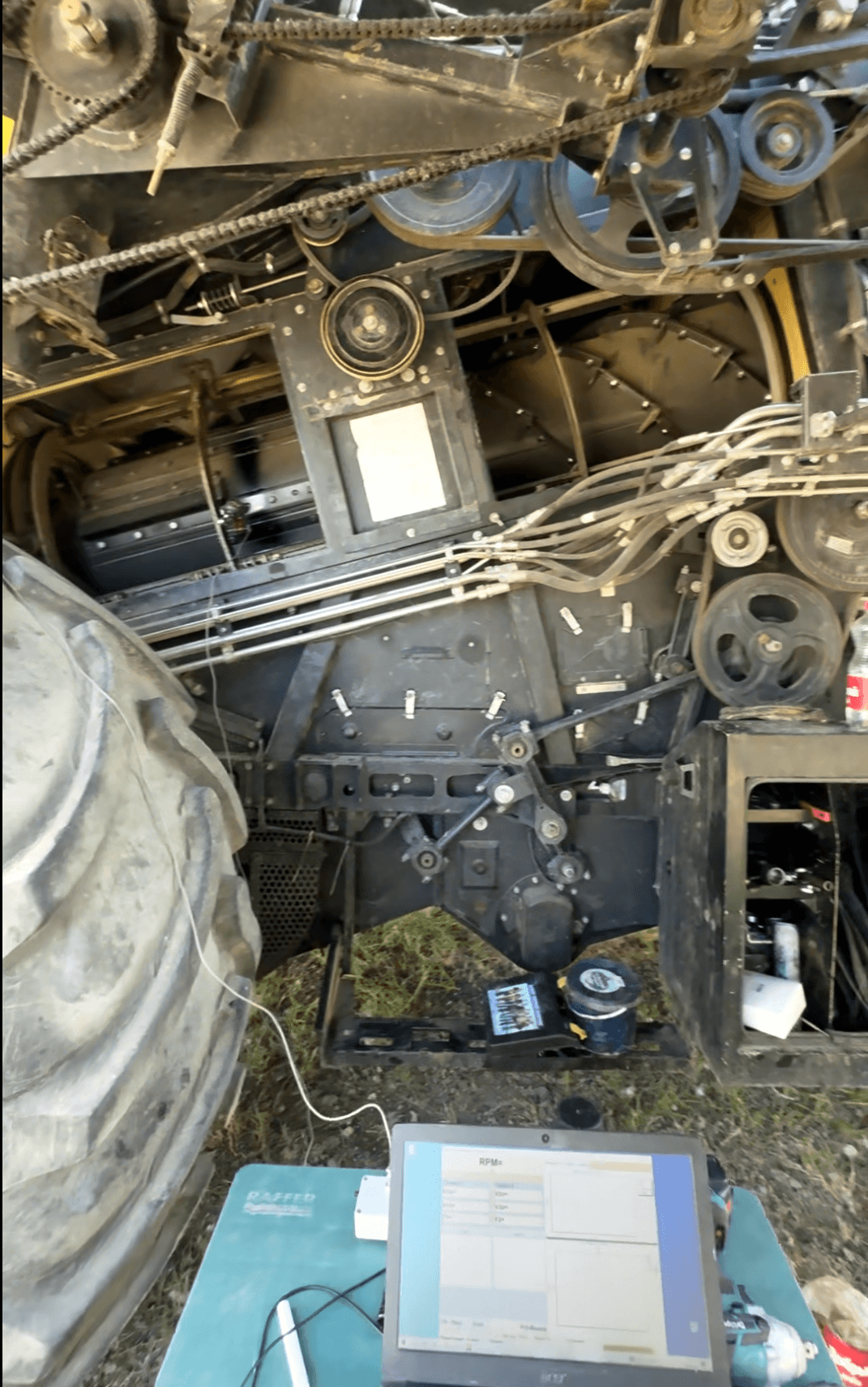

双平面校正后:振动频率从 9.6 毫米/秒降至 1.4 毫米/秒。轴承温度此前比正常值高出 15°C,一天之内就恢复正常。该转子在接下来的赛季中运行良好。旋转转子的轴承更换?我都不敢想那要花多少钱。
每个赛季都要更换轴承,是不是很麻烦?
Balanset-1A 只需完成 2-3 次作业即可收回成本。联合收割机的每个旋转部件都需要一套。无需订阅,也无需支付任何费用。
秸秆粉碎机:最大的难题(也是最大的回报)
我单独给切削器一个章节,因为这是我平衡次数最多的部件,也是我见过故障最严重的部件。
想想看,一台秸秆粉碎机是什么样的:一根轴上装着几十个旋转的刀片(或锤子),转速高达每分钟3000到4000转。在这种高速下,哪怕几克的重量差异都会产生巨大的离心力。而且刀片的重量并非一成不变。它们会磨损、崩裂,需要更换——而更换后的刀片质量永远不可能与拆下来的完全相同。人们会尽量让刀片的重量成对匹配,这固然有所帮助,但在每分钟4000转的高速下,"差不多"的匹配度实际上远远不够。
每次更换切菜机刀片时——每次都一样——我都会检查刀片的平衡。没有例外。我可是吃过亏的。有一次我没检查,因为刀片是"经销商那里买的配对刀片"。三周后:刀架裂了。不平衡的重量只有12克。12克,在每分钟3500转的转速下,持续三周——足以让钢材开裂。
收割机平衡程序与其他步骤相同,但也有一些特殊之处。由于转速高,转速表的定位更为关键——反射标记移动速度很快,激光读数必须清晰准确。我通常将转速表安装在单独的支架上,而不是直接安装在联合收割机机身上,因为联合收割机本身的振动太大,难以稳定安装。
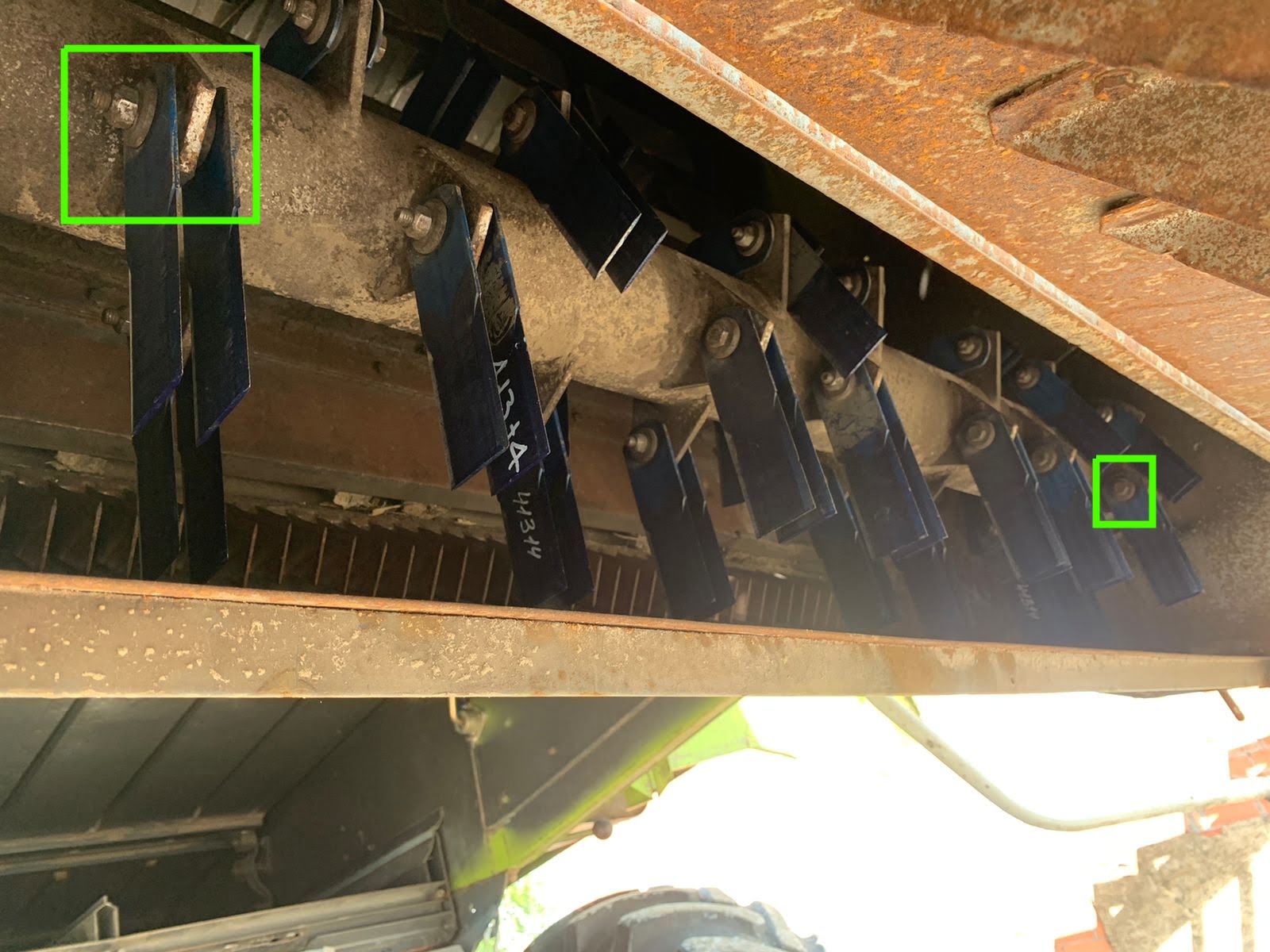

有时,切碎机需要两次修正。第一次修正就能大致完成,但由于刀片绕着枢轴摆动,质量分布并非完全稳定——它会随着速度略微偏移。第二次修正可以消除残余偏差。我为一次切碎工作预留了 90 分钟。
但好处显而易见。平衡后的切碎机运行噪音明显更低——在驾驶室内就能听出来。而且外壳不会开裂,轴承不会过热,皮带也不会跳动。这是整个联合收割机上最有价值的平衡工作。
滑轮、飞轮和其他容易被人遗忘的小东西
清扫风扇很容易被忽略,因为它体积小。但它的转速相当快,而且灰尘会在叶片上积聚不均匀。我曾为两台联合收割机调整过风扇平衡——两次都是在发现清扫效果不佳之后(风扇不平衡导致气流不均匀,进而造成筛网清扫不均匀)。先清洁叶片,然后检查振动情况。调整量很小——只有5-10克——所以精确称重至关重要。
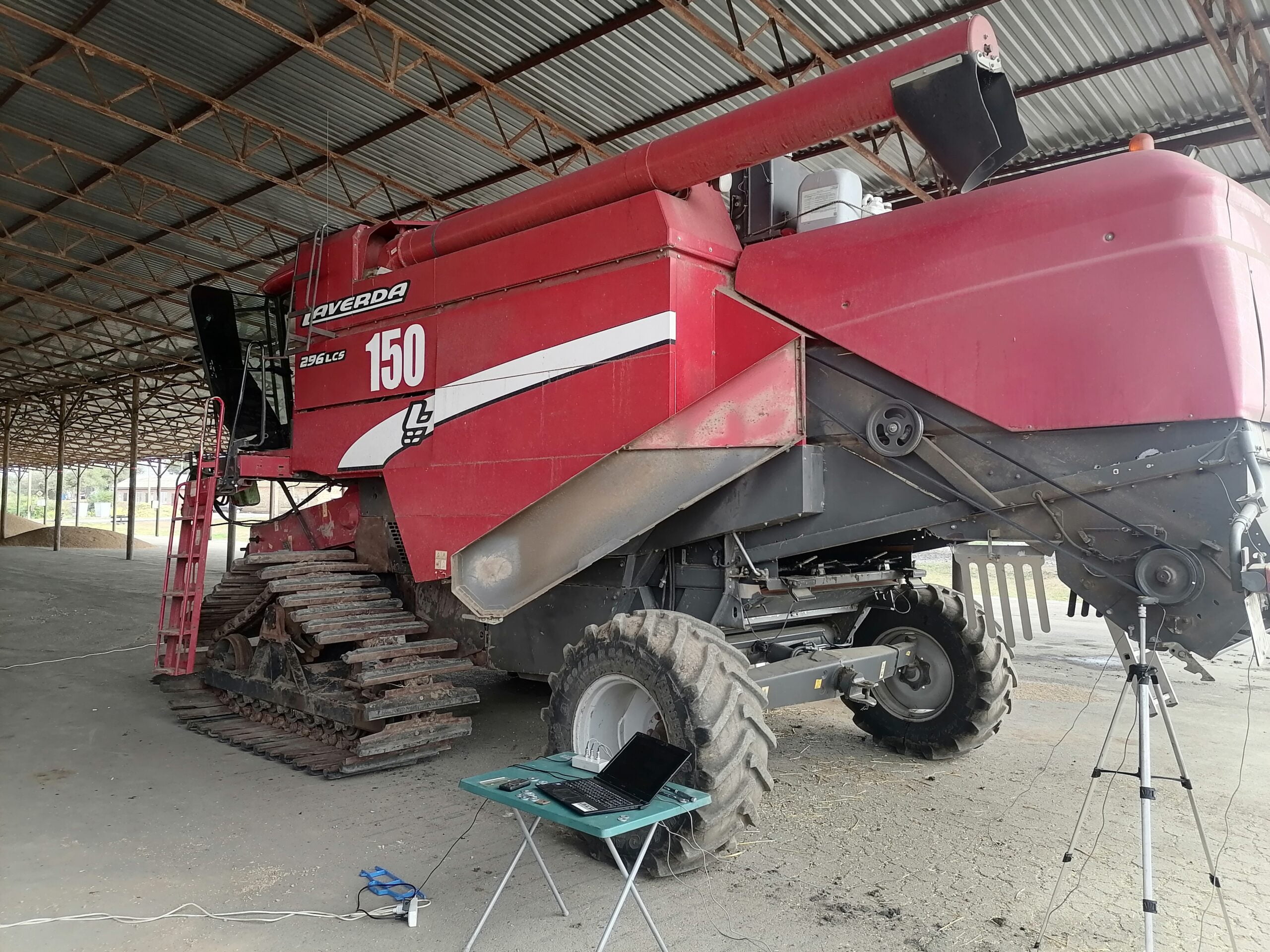
提升机螺旋输送机(用于输送谷物和尾矿)的转速较低,但维修后仍然值得检查。我曾经发现一个螺旋输送机撞到石头后被矫直了,但矫直得并不彻底。联合收割机发出有节奏的砰砰声,谁也找不到原因。用安装在提升机壳体上的 Balanset-1A 平衡器,两分钟就找到了问题所在。加了几个小配重后,砰砰声就消失了。
还有皮带轮和飞轮。我并不经常做这些部件的动平衡——只有在维修过(更换轴承、焊接、镗孔等)之后才会做。但我想要分享一个故事,虽然严格来说它与联合收割机无关,但原理是一样的。
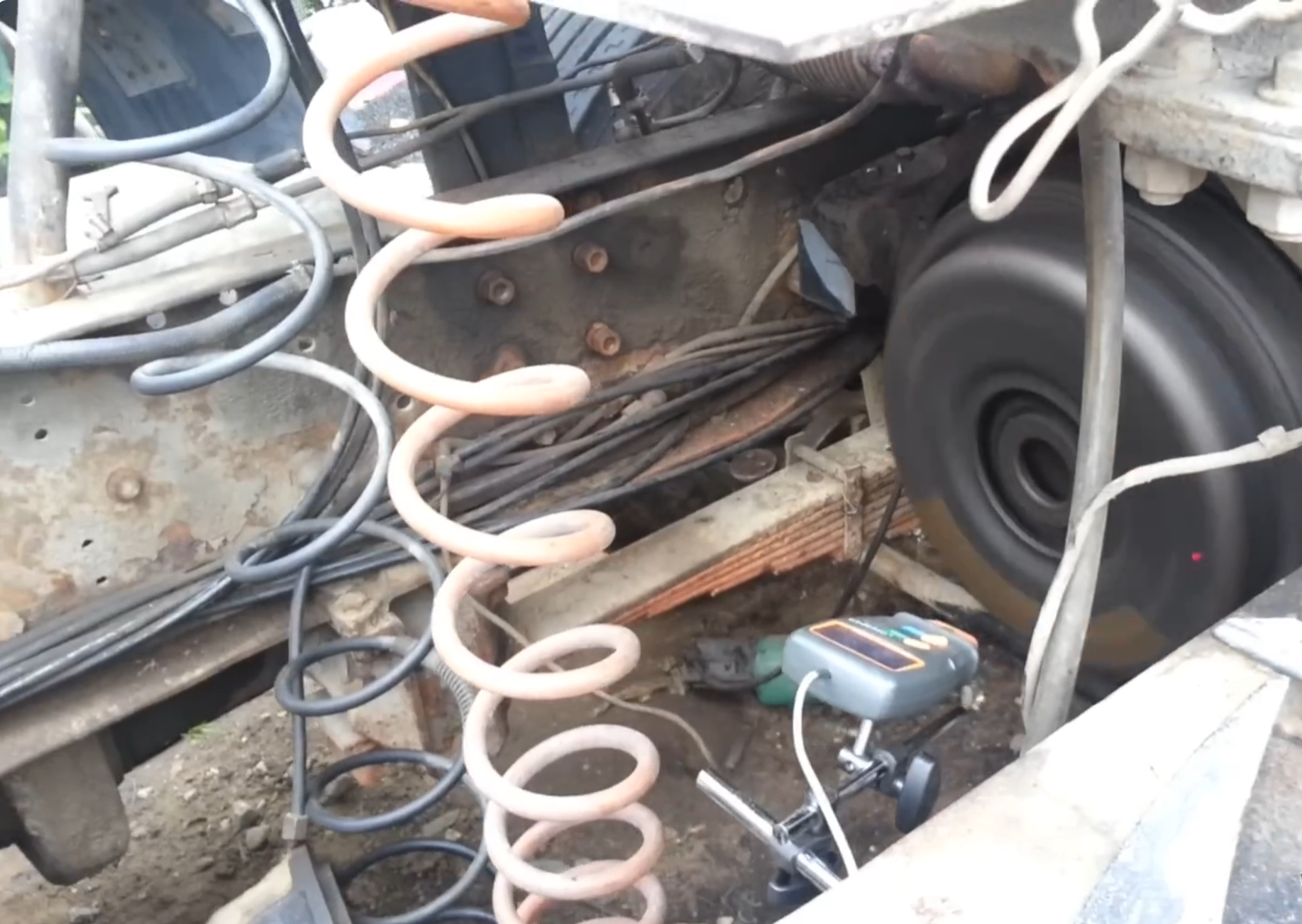
我们有一辆卡车,大修后发动机抖动。没人能找到原因。发动机支架、喷油器和点火正时都没问题。我带了一台 Balanset-1A 平衡仪,把传感器连接到发动机缸体上,并在飞轮上做了个反光标记。果然不出所料——飞轮离合器总成不平衡。在安装螺栓上加两个垫圈后,发动机运转就平稳了。原来是负责大修的技工重新加工了飞轮表面,之后却没检查平衡情况。这个问题很容易被忽略,但也很容易解决——只要你有合适的工具。
Balanset-1A 规格
对于任何想了解技术细节的人来说 Balanset-1A:
套件包含所有必需品:两个加速度计、带磁性支架的激光测速仪、接口模块、USB 数据线、电子秤、反光胶带、便携包以及 USB 存储的软件。可插入任何运行 Windows 系统的笔记本电脑。无需支付任何后续许可费、订阅费或"高级版"之类的附加费用。一次购买,终身使用。
我经常被问到的问题
一个装置。联合收割机中的所有旋转部件。
Balanset-1A。包含滚筒、转子、切碎器、风扇、螺旋钻和飞轮。DHL / UPS全球配送。两年质保。用几次就能回本。
本页所述的操作流程由 Vibromera 团队使用 Balanset-1A(一款用于现场转子平衡的便携式双通道动平衡仪及振动分析仪)开发并经过实地测试。

Nikolai Shelkovenko
Nikolai Shelkovenko是一名振动分析工程师,也是Vibromera的创始人兼首席执行官。 15年多来,他一直在现场——而非在试验台上——为旋转设备进行平衡:粉碎机、工业风机、破碎机、离心机、轴和主轴。正是这些实际工作催生了Balanset系列仪器——它们被设计为一种专业人员可以随身携带到机器旁、在现场独立使用的工具,而非实验室设备。 Vibromera成立于2017年,自2023年起总部设于葡萄牙波尔图。Balanset系列产品的研发、组装与支持均在此完成。旗舰产品是Balanset-1A,一款用于单平面及双平面平衡和振动诊断的便携式分析仪。 Nikolai亲自参与客户支持工作,处理各种棘手的平衡案例,并参与软件开发。他以任何语言为全球客户提供服务。


0 评论