Objetos no lineales en el balanceo de rotores
Por qué el balanceo “no funciona”, por qué cambian los coeficientes de influencia y cómo proceder en condiciones reales de campo
Resumen
En la práctica, el balanceo de rotores casi nunca se reduce simplemente a calcular e instalar un peso de corrección. Formalmente, el algoritmo es bien conocido y el instrumento realiza todos los cálculos automáticamente, pero el resultado final depende mucho más del comportamiento del propio objeto que del dispositivo de balanceo. Por esta razón, en el trabajo real, constantemente surgen situaciones en las que el balanceo «no funciona», los coeficientes de influencia cambian, la vibración se vuelve inestable y el resultado no es repetible de un arranque a otro.
Vibraciones lineales y no lineales, sus características y métodos de balanceo
Un balanceo exitoso requiere comprender cómo reacciona un objeto ante la adición o eliminación de masa. En este contexto, los conceptos de objetos lineales y no lineales desempeñan un papel clave. Comprender si un objeto es lineal o no lineal permite seleccionar la estrategia de balanceo correcta y ayuda a lograr el resultado deseado.
Los objetos lineales ocupan un lugar especial en este campo debido a su predictibilidad y estabilidad. Permiten el uso de métodos de diagnóstico y balanceo simples y confiables, lo que hace que su estudio sea un paso importante en la vibración diagnóstica.
Objetos lineales vs no lineales
La mayoría de estos problemas tienen su raíz en una distinción fundamental, pero a menudo subestimada, entre objetos lineales y no lineales. Un objeto lineal, desde el punto de vista del balanceo, es un sistema en el cual, a una velocidad de rotación constante, la amplitud de la vibración es proporcional a la cantidad de desbalance, y la fase de la vibración sigue la posición angular de la masa desbalanceada de forma estrictamente predecible. Bajo estas condiciones, el coeficiente de influencia es un valor constante. Todos los algoritmos estándar de balanceo dinámico, incluidos los implementados en el Balanset-1A, están diseñados precisamente para este tipo de objetos.
Para un objeto lineal, el proceso de balanceo es predecible y estable. Al instalar un peso de prueba produce un cambio proporcional en la amplitud y la fase de la vibración. Los arranques repetidos dan el mismo vector de vibración, y el peso de corrección calculado sigue siendo válido. Este tipo de objetos son adecuados tanto para el balanceo único como para el balanceo en serie usando coeficientes de influencia guardados.
Un objeto no lineal se comporta de una manera fundamentalmente diferente. Se viola la base misma del cálculo de balanceo. La amplitud de vibración ya no es proporcional al desbalance, la fase se vuelve inestable y el coeficiente de influencia cambia dependiendo de la masa del peso de prueba, el modo de operación o incluso el tiempo. En la práctica, esto se manifiesta como un comportamiento caótico del vector de vibración: después de instalar un peso de prueba, el cambio de vibración puede ser demasiado pequeño, excesivo o simplemente no repetible.
¿Qué son los objetos lineales?
Un objeto lineal es un sistema donde la vibración es directamente proporcional a la magnitud del desbalance.
Un objeto lineal, en el contexto del balanceo, es un modelo idealizado caracterizado por una relación de proporcionalidad directa entre la magnitud del desbalance (masa desbalanceada) y la amplitud de vibración. Esto significa que si el desbalance se duplica, la amplitud de vibración también se duplicará, siempre que la velocidad de rotación del rotor se mantenga constante. Por el contrario, reducir el desbalance disminuirá proporcionalmente las vibraciones.
A diferencia de los sistemas no lineales, donde el comportamiento de un objeto puede variar dependiendo de muchos factores, los objetos lineales permiten un alto nivel de precisión con un esfuerzo mínimo.
Además, sirven como base para la capacitación y práctica de los balanceadores. Comprender los principios de los objetos lineales ayuda a desarrollar habilidades que luego pueden aplicarse a sistemas más complejos.
Representación gráfica de la linealidad
Imagine una gráfica donde el eje horizontal representa la magnitud de la masa desbalanceada (desbalance) y el eje vertical representa la amplitud de vibración. Para un objeto lineal, esta gráfica será una línea recta que pasa por el origen (el punto donde tanto la magnitud del desbalance como la amplitud de vibración son cero). La pendiente de esta línea caracteriza la sensibilidad del objeto al desbalance: cuanto más pronunciada sea la pendiente, mayores serán las vibraciones para el mismo desbalance.
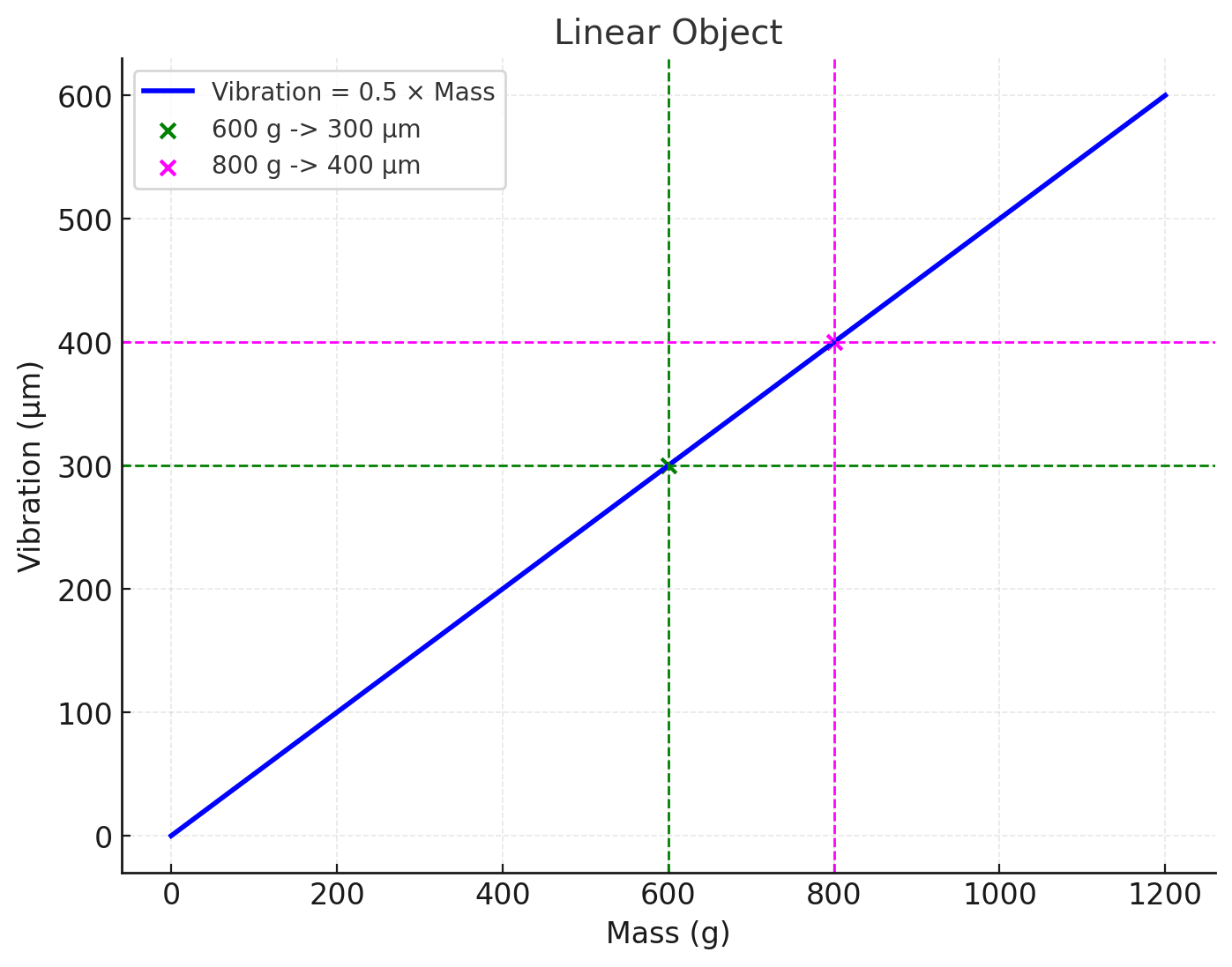
Gráfica 1: Relación Entre la Amplitud de Vibración (µm) y la Masa de Desbalance (g) a un radio de corrección constante y una velocidad de rotación constante
La Gráfica 1 ilustra la relación entre la amplitud de vibración (µm) de un objeto de balanceo lineal y la masa desbalanceada (g) del rotor. El coeficiente de proporcionalidad es 0.5 µm/g. Simplemente dividiendo 300 entre 600 se obtiene 0.5 µm/g. Para una masa desbalanceada de 800 g (MD=800 g), la vibración será 800 g * 0.5 µm/g = 400 µm. Tenga en cuenta que esto se aplica a una velocidad constante del rotor. A una velocidad de rotación diferente, el coeficiente será diferente.
Este coeficiente de proporcionalidad se llama coeficiente de influencia (coeficiente de sensibilidad) y tiene una dimensión de µm/g o, en casos que involucran desbalance, µm/(g*mm), donde (g*mm) es la unidad de desbalance. Conociendo el coeficiente de influencia (CI), también es posible resolver el problema inverso, a saber, determinar la masa desbalanceada (MD) en función de la magnitud de la vibración. Para hacerlo, divida la amplitud de vibración entre el CI.
Por ejemplo, si la vibración medida es de 300 µm y el coeficiente conocido es CI=0.5 µm/g, divida 300 entre 0.5 para obtener 600 g (MD=600 g).
Una nota sobre las unidades: los valores de desplazamiento en µm usados en estos ejemplos son ilustrativos y elegidos para una aritmética sencilla. El Balanset-1A mide y muestra la velocidad de vibración, mm/s RMS; el principio de linealidad y el método del coeficiente de influencia funcionan de manera idéntica en cualquiera de las dos unidades.
Coeficiente de influencia (IC): parámetro clave de los objetos lineales
Una característica crítica de un objeto lineal es la coeficiente de influencia (IC). Es numéricamente igual a la tangente del ángulo de pendiente de la línea en la gráfica de vibración contra desbalance e indica cuánto cambia la amplitud de vibración (en micrones, µm) cuando se agrega una unidad de masa (en gramos, g) en un plano de corrección específico a una velocidad de rotor específica. En otras palabras, el IC es una medida de la sensibilidad del objeto al desbalance. Su unidad de medida es µm/g, o, cuando el desbalance se expresa como el producto de masa y radio, µm/(g*mm).
El CI es esencialmente la característica «pasaporte» de un objeto lineal, que permite predecir su comportamiento cuando se añade o retira masa. Conocer el CI permite resolver tanto el problema directo – determinar la magnitud de vibración para un desbalance dado – como el problema inverso – calcular la magnitud del desbalance a partir de la vibración medida.
Problema directo:
Problema inverso:
Cómo se obtiene el IC en la práctica:
Aquí V0 es el vector de vibración medido en la corrida inicial (Run 0), V1 es el vector medido después de una masa de prueba mtrial se instala (Run 1), K es el coeficiente de influencia, y mcorr es la masa de corrección. Todas estas son cantidades complejas (vectoriales) que combinan amplitud y fase — que es exactamente por qué el artículo habla más adelante sobre el argumento del coeficiente de influencia.
A lo largo de este artículo, la masa en gramos se usa como sustituto del desbalance: equivale al desbalance en g·mm solo mientras el radio de corrección se mantenga igual. Cuando el radio cambia, use g·mm y un CI en µm/(g·mm).
Fase de vibración en objetos lineales
Además de la amplitud, la vibración también se caracteriza por su fase, que indica la posición del rotor en el momento de máxima desviación de su posición de equilibrio. Para un objeto lineal, la fase de vibración también es predecible. Es la suma de dos ángulos:
- El ángulo que determina la posición de la masa desbalanceada global del rotor. Este ángulo indica la dirección en la que se concentra el desbalance primario.
- El argumento del coeficiente de influencia. Este es un ángulo constante que caracteriza las propiedades dinámicas del objeto y no depende de la magnitud ni del ángulo de instalación de la masa desbalanceada.
Por lo tanto, conociendo el argumento del CI y midiendo la fase de vibración, es posible determinar el ángulo de instalación de la masa desbalanceada. Esto permite no solo calcular la magnitud de la masa correctiva, sino también su colocación precisa en el rotor para lograr un balanceo óptimo.
Balanceo de objetos lineales
Es importante señalar que para un objeto lineal, el coeficiente de influencia obtenido de la corrida de prueba como K = (V1 − V0) / mtrial no depende de la magnitud ni del ángulo de instalación de la masa de prueba, ni de la vibración inicial. Esta es una característica clave de la linealidad. Si el IC permanece sin cambios cuando se alteran los parámetros de la masa de prueba o la vibración inicial, puede afirmarse con confianza que el objeto se comporta linealmente dentro del rango de desbalances considerado.
Pasos para balancear un objeto lineal
- Medición de la vibración inicial: El primer paso es medir la vibración en su estado inicial. Se determinan la amplitud y el ángulo de vibración, que indican la dirección del desbalance.
- Instalación de una masa de prueba: Se instala una masa de peso conocido en el rotor. Esto ayuda a comprender cómo reacciona el objeto a cargas adicionales y permite calcular los parámetros de vibración.
- Re-medición de la vibración: Después de instalar la masa de prueba, se miden nuevos parámetros de vibración. Al compararlos con los valores iniciales, es posible determinar cómo afecta la masa al sistema.
- Cálculo de la masa correctiva: Con base en los datos de medición, se determinan la masa y el ángulo de instalación del peso de corrección. Este peso se coloca en el rotor para eliminar el desbalance.
- Verificación final: Después de instalar el peso de corrección, la vibración debería reducirse significativamente. Si la vibración residual aún supera el nivel aceptable, el procedimiento puede repetirse.
Nota: Los objetos lineales sirven como modelos ideales para estudiar y aplicar prácticamente los métodos de balanceo. Sus propiedades permiten a ingenieros y diagnosticadores enfocarse en desarrollar habilidades básicas y comprender los principios fundamentales del trabajo con sistemas de rotores. Aunque el objeto perfectamente lineal es una idealización, la mayoría de las máquinas en buena condición mecánica se comportan de manera suficientemente lineal dentro del rango de desbalance que se encuentra en el balanceo de campo — precisamente por eso funciona el método del coeficiente de influencia. El modelo lineal, por lo tanto, no es un ejercicio académico, sino la suposición de trabajo normal; la no linealidad es la excepción que hay que reconocer.



Balanceo en serie y coeficientes almacenados
El balanceo en serie merece atención especial. Puede aumentar significativamente la productividad, pero solo cuando se aplica a objetos lineales y estables en vibración. En tales casos, los coeficientes de influencia obtenidos en el primer rotor pueden reutilizarse para rotores idénticos posteriores. El software del Balanset-1A soporta esto directamente: los coeficientes de una sesión de balanceo anterior se almacenan en el archivo y pueden volver a aplicarse a un rotor idéntico con la función Apply coefficients (F6 Reports, archivo de balanceo). Sin embargo, en cuanto cambia la rigidez del soporte, la velocidad rotacional o la condición de los rodamientos, se pierde la repetibilidad y el enfoque en serie deja de funcionar.
Objetos no lineales: cuando la teoría diverge de la práctica
¿Qué es un objeto no lineal?
Un objeto no lineal es un sistema donde la amplitud de vibración no es proporcional a la magnitud del desbalance. A diferencia de los objetos lineales, donde la relación entre la vibración y la masa de desbalance se representa mediante una línea recta, en los sistemas no lineales esta relación puede seguir trayectorias complejas.
En el mundo real, no todos los objetos se comportan de forma lineal. Los objetos no lineales exhiben una relación entre el desbalance y la vibración que no es directamente proporcional. Esto significa que el coeficiente de influencia no es constante y puede variar dependiendo de factores como:
- Magnitud del desbalance: Aumentar el desbalance puede cambiar la rigidez de los soportes del rotor, lo que lleva a cambios no lineales en la vibración.
- Presencia de juegos y holguras: Los juegos y holguras en los rodamientos y otras conexiones pueden provocar cambios bruscos en la vibración bajo ciertas condiciones.
Los cambios de temperatura y las cargas externas variables también alteran las características dinámicas del objeto, pero de una manera diferente: hacen que el sistema sea no estacionario en lugar de no lineal (vea la sección sobre inestabilidad de vibración más adelante).
¿Por qué los objetos no lineales son un reto?
La no linealidad introduce muchas variables en el proceso de balanceo. El trabajo exitoso con objetos no lineales requiere más mediciones y un análisis más complejo. Por ejemplo, los métodos estándar aplicables a objetos lineales no siempre arrojan resultados precisos para sistemas no lineales. Esto requiere una comprensión más profunda de la física del proceso y el uso de métodos de diagnóstico especializados.
Señales de no linealidad
Un objeto no lineal puede identificarse por las siguientes señales:
- Cambios de vibración no proporcionales: A medida que aumenta el desbalance, la vibración puede crecer más rápido o más lento de lo esperado para un objeto lineal.
- Desplazamiento de fase en la vibración: La fase de la vibración puede cambiar de manera impredecible con las variaciones en el desbalance o la velocidad de rotación.
- Presencia de armónicos y subarmónicos: El espectro de vibración puede presentar armónicos superiores (múltiplos de la frecuencia rotacional) y subarmónicos (fracciones de la frecuencia rotacional), lo que indica efectos no lineales. En el software del Balanset-1A, estos pueden inspeccionarse en la pantalla F8 Charts, pestaña F5-Spectrum (Hz); tenga en cuenta que el sensor de vibración mantiene su precisión nominal hasta aproximadamente 550 Hz, y su respuesta cae por encima de eso, por lo que los componentes espectrales de mayor frecuencia deben leerse solo como indicativos.
- Histéresis: La amplitud de la vibración puede depender no solo del valor actual del desbalance, sino también de su historial. Por ejemplo, cuando el desbalance se aumenta y luego se disminuye nuevamente a su valor inicial, la amplitud de la vibración puede no regresar a su nivel original.
Cómo probar un objeto para determinar su linealidad
- Verificación de repetibilidad: Realice Run 0, detenga la máquina, reiníciela, y repita Run 0 sin tocar nada. Si la amplitud coincide dentro de aproximadamente 10% y la fase dentro de aproximadamente 10–15°, el objeto es lo suficientemente estable para balancear.
- Verificación de remoción: Después de la corrida de prueba, retire el peso de prueba y repita Run 0. Si el vector de vibración no regresa a su valor original, el objeto tiene histéresis u holgura.
- Verificación de doble masa: Repita la corrida de prueba con un peso de prueba del doble de masa en la misma ubicación. Para un objeto lineal, el cambio de vector (V1 − V0) debe duplicarse en magnitud y mantener la misma dirección. Cualquier otro resultado significa que el coeficiente de influencia depende de la masa de prueba — el objeto es no lineal.
- Verificación de 180°: El mismo peso de prueba movido 180° debe rotar el cambio de vector en 180°.
Representación gráfica de la no linealidad
En una gráfica de vibración frente a desbalance, la no linealidad es evidente en las desviaciones de una línea recta. La gráfica puede presentar curvas, curvaturas, bucles de histéresis y otras características que indican una relación compleja entre el desbalance y la vibración.
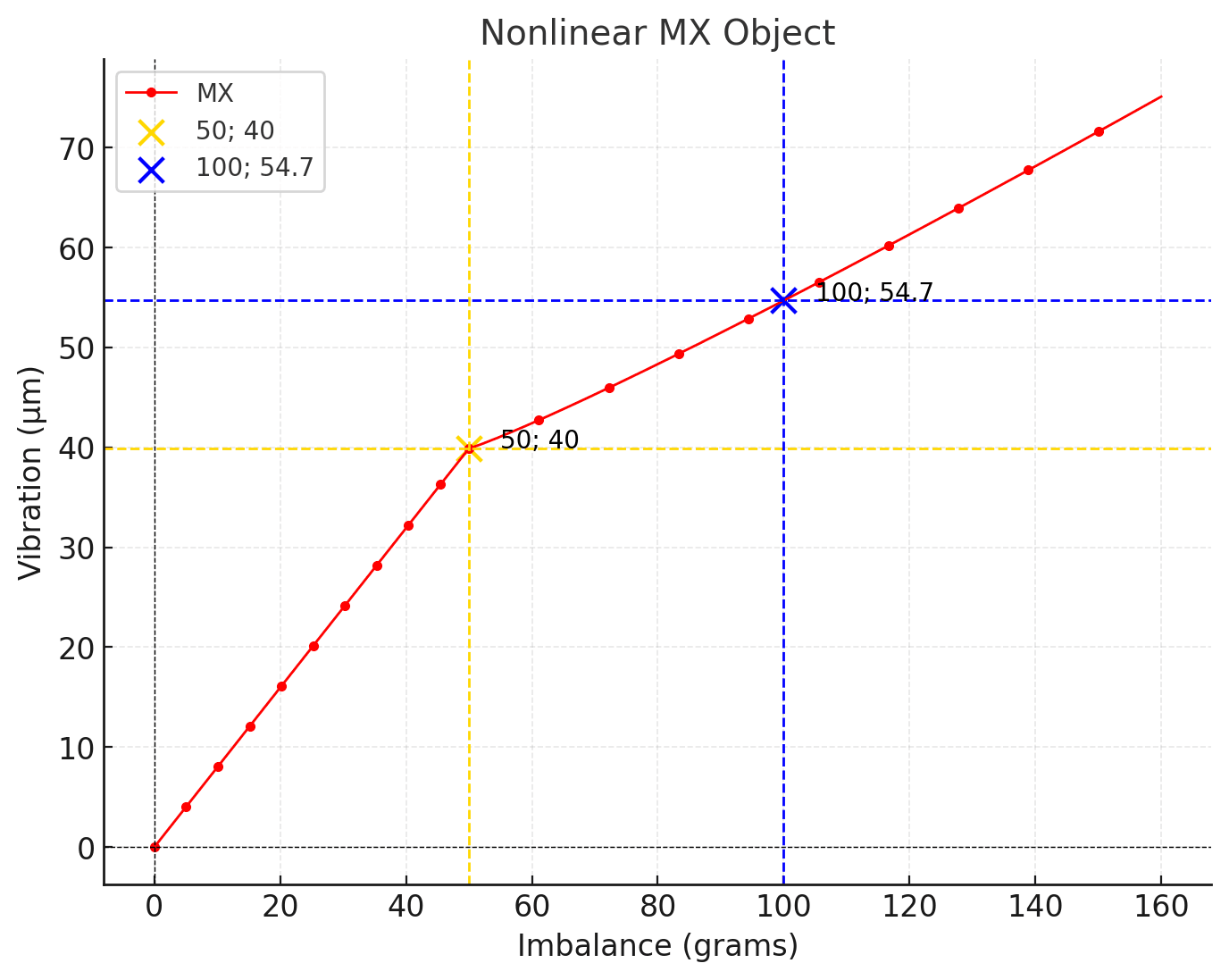
Gráfica 2. Objeto no lineal (a radio de corrección constante y velocidad de rotación constante)
50 g; 40 µm (amarillo), 100 g; 54.7 µm (azul).
Este objeto presenta dos segmentos, dos líneas rectas. Para desbalances menores a 50 gramos, la gráfica refleja las propiedades de un objeto lineal, manteniendo la proporcionalidad entre el desbalance en gramos y la amplitud de vibración en micrones. Para desbalances mayores a 50 gramos, el crecimiento de la amplitud de vibración se ralentiza.
Ejemplos de objetos no lineales
Los ejemplos de objetos no lineales en el contexto del balanceo incluyen:
- Rotores con grietas: Las grietas en el rotor pueden provocar cambios no lineales en la rigidez y, como resultado, una relación no lineal entre la vibración y el desbalance.
- Rotores con juego en los rodamientos: Los juegos en los rodamientos pueden provocar cambios bruscos en la vibración bajo ciertas condiciones.
- Rotores con elementos elásticos no lineales: Algunos elementos elásticos, como los amortiguadores de goma, pueden presentar características no lineales, afectando la dinámica del rotor.
Tipos de no linealidad
1. No linealidad blanda-rígida
En estos sistemas, se observan dos segmentos: blando y rígido. En el segmento blando, el comportamiento se asemeja a la linealidad, donde la amplitud de la vibración aumenta proporcionalmente a la masa de desbalance. Sin embargo, después de un cierto umbral (punto de quiebre), el sistema transita a un modo rígido, donde el crecimiento de la amplitud se ralentiza.
2. No linealidad elástica
Los cambios en la rigidez de los soportes o contactos dentro del sistema hacen que la relación vibración-desbalance sea compleja. Por ejemplo, la vibración puede aumentar o disminuir repentinamente al cruzar umbrales de carga específicos.
3. No linealidad inducida por fricción
En sistemas con fricción significativa (por ejemplo, en rodamientos), la amplitud de la vibración puede ser impredecible. La fricción puede reducir la vibración en un rango de velocidades y amplificarla en otro.
Causas comunes de no linealidad
Las causas más comunes de la no linealidad son el aumento de las holguras del rodamiento, el desgaste del rodamiento, la fricción seca, los soportes aflojados, y las grietas en la estructura. La operación cerca de una resonancia es un problema aparte: no hace que el objeto sea no lineal, pero destruye la repetibilidad de la medición y por lo tanto es igual de fatal para el método del coeficiente de influencia. A menudo, el objeto presenta la llamada no linealidad blanda-dura (soft–hard). A niveles pequeños de desbalance, el sistema se comporta casi linealmente, pero conforme aumenta la vibración, se involucran elementos más rígidos de los soportes o la carcasa. En tales casos, el balanceo solo es posible dentro de un rango de operación estrecho y no proporciona resultados estables a largo plazo.
Inestabilidad de vibración
Otro problema serio es la inestabilidad de la vibración. Incluso un objeto formalmente lineal puede mostrar cambios en la amplitud y la fase con el tiempo. Esto es causado por efectos térmicos, cambios en la viscosidad del lubricante, expansión térmica, fricción inestable en los soportes, y cargas externas variables que actúan sobre la máquina. Como resultado, mediciones tomadas con solo minutos de diferencia pueden producir vectores de vibración distintos. Bajo estas condiciones, la comparación significativa de mediciones se vuelve imposible, y el cálculo de balanceo pierde confiabilidad.
Note la distinción: un no lineal objeto da un coeficiente de influencia diferente para una masa de peso de prueba diferente; un no estacionario (inestable) da un coeficiente de influencia diferente para el mismo peso de prueba medido en un momento distinto. Ambos casos rompen el cálculo, pero los remedios difieren — la no linealidad se corrige mecánicamente, la inestabilidad se corrige estabilizando el régimen de operación y midiendo rápido.
Balanceo cerca de la resonancia
Balancear cerca de la resonancia es especialmente problemático. Cuando la frecuencia de rotación está cerca de una frecuencia natural del sistema, incluso un pequeño desbalance produce un aumento brusco de la vibración, y tanto la amplitud como la fase se vuelven extremadamente sensibles a pequeñas variaciones de velocidad. Note que la resonancia en sí no es no linealidad: un sistema lineal tiene resonancias, y en resonancia la vibración sigue siendo proporcional al desbalance. Lo que se pierde es la repetibilidad — una dispersión de ±1% en la velocidad rotacional cerca de la velocidad crítica cambia el vector medido mucho más de lo que lo hace el peso de prueba, por lo que el coeficiente de influencia medido en esta zona es inutilizable en la práctica. (Una respuesta resonante grande puede, además, empujar los soportes hacia un rango genuinamente no lineal — pero eso es una consecuencia, no la definición.) En estos casos, la velocidad de balanceo debe alejarse de la frecuencia natural, o debe cambiarse la estructura mecánica, antes de intentar el balanceo.
Alta vibración después de un balanceo «exitoso»
En la práctica, es común encontrar situaciones en las que, después de un procedimiento de balanceo formalmente exitoso, el nivel general de vibración permanece alto. Esto no indica un error del instrumento ni del operador. El balanceo elimina solo el desbalance de masa. Si la vibración es causada por defectos en la cimentación, elementos de fijación aflojados, desalineación o resonancia, los pesos de corrección no resolverán el problema. En estos casos, analizar la distribución espacial de la vibración a través de la máquina y su cimentación ayuda a identificar la causa real.
Balanceo de objetos no lineales: una tarea compleja con soluciones no convencionales
El balanceo de objetos no lineales es una tarea desafiante que requiere métodos y enfoques especializados. El método estándar de peso de prueba, desarrollado para objetos lineales, puede arrojar resultados erróneos o ser completamente inaplicable.
Métodos de balanceo para objetos no lineales
- Balanceo paso a paso: Este método implica reducir gradualmente el desbalance instalando pesos correctivos en cada etapa. Después de cada etapa, se toman mediciones de vibración y se determina un nuevo peso correctivo basado en el estado actual del objeto. Este enfoque tiene en cuenta los cambios en el coeficiente de influencia durante el proceso de balanceo.
- Balanceo a varias velocidades: Los coeficientes de influencia dependen de la velocidad, por lo que un rotor que debe funcionar en un amplio rango de velocidades puede necesitar coeficientes medidos a más de una velocidad. Este es el dominio del balanceo modal (multivelocidad) de rotores flexibles y requiere un objeto lineal y repetible, varios planos de corrección y, por regla general, una máquina balanceadora. No es una solución alternativa para un objeto no lineal, y no significa balancear cerca de una resonancia — las velocidades de medición deben seguir eligiéndose lejos de las velocidades críticas. El Balanset-1A implementa el método del coeficiente de influencia a velocidad única: todas las corridas (Run 0 / Run 1 / Run 2 / Run T) deben realizarse a la misma velocidad rotacional.
- Uso de modelos matemáticos: Para objetos no lineales complejos, se pueden emplear modelos matemáticos que describan la dinámica del rotor teniendo en cuenta los efectos no lineales. Estos modelos ayudan a predecir el comportamiento del objeto bajo diversas condiciones y a determinar los parámetros óptimos de balanceo.
La experiencia y la intuición de un especialista juegan un papel crucial en el balanceo de objetos no lineales. Un balanceador experimentado puede reconocer signos de no linealidad, seleccionar un método apropiado y adaptarlo a la situación específica. Analizar los espectros de vibración, observar los cambios de vibración a medida que varían los parámetros de operación del objeto y considerar las características de diseño del rotor ayudan a tomar las decisiones correctas y lograr los resultados deseados.
Cómo balancear objetos no lineales usando una herramienta diseñada para objetos lineales
Esta es una buena pregunta. Mi método personal para balancear este tipo de objetos comienza con la reparación del mecanismo: reemplazar rodamientos, soldar grietas, apretar pernos, verificar anclajes o aisladores de vibración y comprobar que el rotor no roce contra elementos estructurales fijos.
A continuación, identifico las frecuencias de resonancia, ya que es imposible balancear un rotor a velocidades cercanas a la resonancia. Para esto, uso el método de impacto para determinar la resonancia (la función Bump Test del software Balanset-1A) o una gráfica de desaceleración del rotor (la función RunDown).
Luego, determino la posición del sensor en el mecanismo: vertical, horizontal o en un ángulo.
Después de las pruebas de funcionamiento, el dispositivo indica el ángulo y el peso de las cargas de corrección. Reduzco a la mitad el peso de la carga de corrección, pero utilizo los ángulos sugeridos por el dispositivo para la colocación en el rotor. Si la vibración residual después de la corrección aún supera el nivel aceptable, realizo otra prueba de funcionamiento del rotor. Naturalmente, esto toma más tiempo, pero los resultados a veces son inspiradores.
El arte y la ciencia del balanceo de equipo rotativo
El balanceo de equipos rotativos es un proceso complejo que combina elementos de ciencia y arte. Para objetos lineales, el balanceo implica cálculos relativamente simples y métodos estándar. Sin embargo, trabajar con objetos no lineales requiere una comprensión profunda de la dinámica de rotores, la capacidad de analizar señales de vibración y la habilidad para elegir las estrategias de balanceo más efectivas.
La experiencia, la intuición y la mejora continua de las habilidades son lo que hacen de un balanceador un verdadero maestro de su oficio. Después de todo, la calidad del balanceo no solo determina la eficiencia y confiabilidad del funcionamiento del equipo, sino que también garantiza la seguridad de las personas.
Repetibilidad de la medición
Los problemas de medición también juegan un papel importante. La instalación incorrecta de los sensores de vibración, los cambios en los puntos de medición o la orientación inadecuada del sensor afectan directamente tanto la amplitud como la fase. Para el balanceo, no basta con medir la vibración; la repetibilidad y la estabilidad de las mediciones son críticas. Por esta razón, en el trabajo práctico, los lugares de montaje y las orientaciones de los sensores deben controlarse estrictamente.
Enfoque práctico para objetos no lineales
El balanceo de un objeto no lineal siempre comienza no con la instalación de un peso de prueba, sino con la evaluación del comportamiento de la vibración. Si la amplitud y la fase se desplazan claramente con el tiempo, cambian de un arranque a otro o reaccionan bruscamente a pequeñas variaciones de velocidad, la primera tarea es lograr el modo de operación más estable posible. Sin esto, cualquier cálculo será aleatorio.
El primer paso práctico es elegir la velocidad correcta. Los objetos no lineales son extremadamente sensibles a la resonancia, por lo que el balanceo debe realizarse a una velocidad lo más alejada posible de las frecuencias naturales. Esto a menudo significa moverse por debajo o por encima del rango de operación habitual. Incluso si la vibración a esta velocidad es mayor, pero estable, es preferible al balanceo en una zona resonante.
A continuación, es importante minimizar todas las fuentes de no linealidad adicional. Antes del balanceo, se deben verificar y apretar todos los elementos de fijación, eliminar los juegos en la medida de lo posible e inspeccionar los soportes y unidades de rodamiento en busca de holgura mecánica. El balanceo no compensa los juegos ni la fricción, pero puede ser posible si estos factores se llevan a una condición estable.
Al trabajar con un objeto no lineal, no se deben usar pesos de prueba pequeños por hábito. Un peso de prueba demasiado pequeño a menudo no logra mover el sistema a una región repetible, y el cambio de vibración se vuelve comparable al ruido de inestabilidad. El peso de prueba debe ser lo suficientemente grande como para causar un cambio claro y reproducible en el vector de vibración, pero no tan grande que impulse al objeto a un régimen de operación diferente.
Las mediciones deben realizarse rápidamente y en condiciones idénticas. Cuanto menos tiempo pase entre las mediciones, mayor será la probabilidad de que los parámetros dinámicos del sistema permanezcan sin cambios. Es aconsejable realizar varias pasadas de control sin cambiar la configuración para confirmar que el objeto se comporta de manera consistente.
Es muy importante fijar los puntos de montaje del sensor de vibración y su orientación. Para objetos no lineales, incluso un pequeño desplazamiento del sensor puede causar cambios notables en la fase y la amplitud, lo que puede interpretarse erróneamente como el efecto del peso de prueba.
En los cálculos, se debe prestar atención no a la concordancia numérica exacta, sino a las tendencias. Si la vibración disminuye consistentemente con correcciones sucesivas, esto indica que el balanceo se está moviendo en la dirección correcta, incluso si los coeficientes de influencia no convergen formalmente.
No se recomienda almacenar y reutilizar coeficientes de influencia para objetos no lineales. Incluso si un ciclo de balanceo es exitoso, durante el siguiente arranque el objeto puede entrar en un régimen diferente y los coeficientes anteriores ya no serán válidos.
Debe recordarse que el balanceo de un objeto no lineal a menudo es un compromiso. El objetivo no es lograr la vibración más baja posible, sino llevar la máquina a una condición estable y repetible con un nivel de vibración aceptable. En muchos casos, esta es una solución temporal hasta que se reparen los rodamientos, se restauren los soportes o se modifique la estructura.
El principio práctico principal es estabilizar el objeto primero, luego balancearlo y solo después evaluar el resultado. Si no se puede lograr la estabilización, el balanceo debe considerarse una medida auxiliar en lugar de una solución final.
Técnica de reducción del peso de corrección
En la práctica, al balancear objetos no lineales, otra técnica importante a menudo resulta efectiva. Si el instrumento calcula un peso de corrección usando un algoritmo estándar, instalar el peso calculado completo frecuentemente empeora la situación: la vibración puede aumentar, la fase puede saltar y el objeto puede cambiar a un modo de operación diferente.
En tales casos, instalar un peso de corrección reducido funciona bien: dos o a veces incluso tres veces más pequeño que el valor calculado por el instrumento. Esto ayuda a evitar “lanzar” el sistema fuera de la región condicionalmente lineal a otro régimen no lineal. En efecto, la corrección se aplica suavemente, con un paso pequeño, sin causar un cambio brusco en los parámetros dinámicos del objeto.
Después de instalar el peso reducido, se debe realizar una pasada de control y evaluar la tendencia de vibración. Si la amplitud disminuye constantemente y la fase permanece relativamente estable, la corrección puede repetirse usando el mismo enfoque, acercándose gradualmente al nivel mínimo de vibración alcanzable. Este método paso a paso a menudo es más confiable que instalar el peso de corrección calculado completo de una vez.
Esta técnica es especialmente efectiva para objetos con juegos, fricción seca y soportes blandos-duros, donde la corrección calculada completa impulsa inmediatamente el sistema fuera de la zona condicionalmente lineal. El uso de masas de corrección reducidas permite que el objeto permanezca en el régimen de operación más estable y hace posible lograr un resultado práctico incluso donde el balanceo se considera formalmente imposible.
Es importante entender que esto no es un “error del instrumento”, sino una consecuencia de la física de los sistemas no lineales. El instrumento calcula correctamente para un modelo lineal, mientras que el ingeniero adapta el resultado en la práctica al comportamiento real del sistema mecánico.
Principio final
En última instancia, el balanceo exitoso no se trata simplemente de calcular un peso y un ángulo. Requiere comprender el comportamiento dinámico del objeto, su linealidad, estabilidad de vibración y distancia de las condiciones de resonancia. El Balanset-1A proporciona todas las herramientas necesarias para medición, análisis y cálculo, pero el resultado final siempre está determinado por la condición mecánica del sistema en sí. Esto es lo que distingue un enfoque formal de la práctica de ingeniería real en vibración y balanceo de rotores.
Preguntas & respuestas
Esta es una señal de un objeto no lineal. En un objeto lineal, la amplitud de vibración es proporcional a la cantidad de desbalance, y la fase cambia el mismo ángulo que la posición angular del peso. Cuando se violan estas condiciones, el coeficiente de influencia deja de ser constante y el algoritmo de balanceo estándar comienza a producir errores. Las causas típicas son holguras en los rodamientos, soportes aflojados, fricción, y operación cerca de una resonancia — lo cual no es no linealidad en sí, pero amplifica la vibración y destruye la repetibilidad de las lecturas (verifíquelo con la Prueba de Impacto).
Un objeto lineal es un sistema de rotor en el que, a la misma velocidad de rotación, la amplitud de la vibración es directamente proporcional a la magnitud del desbalance y la fase de la vibración sigue estrictamente la posición angular de la masa desbalanceada. Para estos objetos, el coeficiente de influencia es constante y no depende de la masa del peso de prueba.
Un objeto no lineal es un sistema en el que se viola la proporcionalidad entre la vibración y el desbalance y/o la constancia de la relación de fase. La amplitud y la fase de la vibración comienzan a depender de la masa del peso de prueba. Lo más a menudo esto se asocia con juegos de rodamientos, desgaste, fricción seca, soportes blandos-duros o el acoplamiento de elementos estructurales más rígidos.
Sí, pero el resultado es inestable y depende del modo de operación. El balanceo es posible solo dentro de un rango limitado donde el objeto se comporta de manera condicionalmente lineal. Fuera de este rango, los coeficientes de influencia cambian y se pierde la repetibilidad del resultado.
El coeficiente de influencia es una medida de la sensibilidad de la vibración a los cambios en el desbalance. Muestra cuánto cambiará el vector de vibración cuando se instale un peso de prueba conocido en un plano dado a una velocidad dada.
El coeficiente de influencia es inestable si el objeto es no lineal, si la vibración es inestable con el tiempo, o si hay resonancia, calentamiento térmico, elementos de fijación aflojados o condiciones de fricción cambiantes. En tales casos, los arranques repetidos producen diferentes valores de amplitud y fase.
Los coeficientes de influencia almacenados solo pueden usarse para rotores idénticos que operan a la misma velocidad, bajo las mismas condiciones de instalación y rigidez de soporte. El objeto debe ser lineal y estable en vibración. Incluso un ligero cambio en las condiciones hace que los coeficientes antiguos sean poco confiables.
Durante el calentamiento, cambian los juegos de los rodamientos, la rigidez de los soportes, la viscosidad del lubricante y el nivel de fricción. Esto altera los parámetros dinámicos del sistema y, como resultado, cambia la amplitud y la fase de la vibración.
La inestabilidad de vibración es un cambio en la amplitud y/o fase con el tiempo a una velocidad de rotación constante. El balanceo se basa en comparar vectores de vibración, por lo que cuando la vibración es inestable, la comparación pierde sentido y el cálculo se vuelve poco confiable.
Existe inestabilidad estructural inherente, inestabilidad lenta de "arraastre", variación de un arranque a otro, inestabilidad relacionada con el calentamiento e inestabilidad relacionada con la resonancia cuando se opera cerca de las frecuencias naturales.
En la zona de resonancia, incluso un pequeño desbalance causa un aumento brusco de la vibración, y tanto la amplitud como la fase se vuelven extremadamente sensibles a pequeñas variaciones de velocidad. La resonancia en sí no es no linealidad — un sistema lineal tiene resonancias, y en resonancia la vibración sigue siendo proporcional al desbalance. Lo que se pierde es la repetibilidad: la dispersión normal en la velocidad rotacional cerca de la velocidad crítica cambia el vector medido mucho más de lo que lo hace el peso de prueba, por lo que el coeficiente de influencia medido en esta zona es inutilizable en la práctica. La velocidad de balanceo debe alejarse de la frecuencia natural antes de intentar el balanceo.
Las señales típicas son un aumento brusco de la vibración con pequeños cambios de velocidad, fase inestable, protuberancias amplias en el espectro, y alta sensibilidad de la vibración a variaciones menores de RPM. A menudo se observa un máximo de vibración durante el arranque (run-up) o la desaceleración (coast-down). El indicador más confiable es la fase: a medida que la velocidad atraviesa una resonancia, el retraso de fase pasa por unos 90° en el pico y se invierte aproximadamente 180° por encima de él. Observe la lectura de fase durante un arranque o desaceleración lentos — un giro de 180° junto con un máximo de amplitud localiza la velocidad crítica.
Una vibración alta puede ser causada por resonancia, estructuras aflojadas, defectos en la cimentación o problemas en los rodamientos. En tales casos, el balanceo no eliminará la causa de la vibración.
El desplazamiento de vibración caracteriza la amplitud del movimiento, la velocidad de vibración caracteriza la rapidez de este movimiento y la aceleración de vibración caracteriza la aceleración. Estas cantidades están relacionadas, pero cada una es más adecuada para detectar ciertos tipos de defectos y rangos de frecuencia.
La velocidad de vibración refleja el nivel de energía de la vibración en un amplio rango de frecuencias y es conveniente para evaluar la condición general de las máquinas de acuerdo con normas ISO como ISO 10816-1.
La conversión correcta es posible solo para vibración armónica de frecuencia única. Para espectros de vibración complejos, dichas conversiones proporcionan solo resultados aproximados.
Las posibles razones incluyen resonancia, defectos en la cimentación, elementos de fijación aflojados, desgaste de rodamientos, desalineación o no linealidad del objeto. El balanceo elimina solo el desbalance, no otros defectos.
Si no se detectan defectos mecánicos y la vibración no disminuye después del balanceo, es necesario analizar la distribución de la vibración en la máquina y la cimentación. Las señales típicas son una vibración alta de la carcasa y la base, y desplazamientos de fase entre los puntos de medición.
Una instalación incorrecta del sensor distorsiona la amplitud y la fase, reduce la repetibilidad de la medición y puede llevar a conclusiones diagnósticas incorrectas y resultados de balanceo erróneos.
La vibración se distribuye de manera desigual en toda la estructura. La rigidez, las masas y las formas modales difieren, por lo que la amplitud y la fase pueden variar significativamente de un punto a otro.
Por lo general, no. El desgaste y el aumento de los juegos hacen que el objeto sea no lineal. El balanceo se vuelve inestable y no proporciona un resultado a largo plazo. Las excepciones son posibles solo con juegos de diseño y condiciones estables.
El arranque genera altas cargas dinámicas. Si la estructura está aflojada, las posiciones relativas de los elementos cambian después de cada arranque, lo que provoca cambios en los parámetros de vibración.
El balanceo en serie es posible para rotores idénticos instalados en condiciones idénticas, con estabilidad de vibración y ausencia de resonancia. En este caso, los coeficientes de influencia del primer rotor pueden aplicarse a los posteriores.
Esto suele deberse a cambios en la rigidez del soporte, diferencias de montaje, cambios en la velocidad de rotación o la transición del objeto a un régimen de operación no lineal.
La reducción de la vibración a un nivel estable mientras se mantiene la repetibilidad de la amplitud y la fase de un arranque a otro, y la ausencia de señales de resonancia o no linealidad.

Nikolai Shelkovenko
Nikolai Shelkovenko es ingeniero en análisis de vibraciones y fundador y director general de Vibromera. Desde hace más de 15 años balancea equipos rotativos en campo y no en un banco de pruebas: desbrozadoras, ventiladores industriales, trituradoras, centrífugas, ejes y husillos. De ese trabajo nacieron los instrumentos Balanset — se concibieron como una herramienta que el especialista puede llevar hasta la máquina y usar solo, en sitio, y no como equipo de laboratorio. Vibromera se fundó en 2017 y desde 2023 tiene su sede en Oporto, Portugal. Aquí se realizan el desarrollo, el ensamblaje y el soporte de la línea Balanset. El instrumento insignia es el Balanset-1A, un analizador portátil para el balanceo en uno y dos planos y para el diagnóstico de vibraciones. Nikolai participa personalmente en la atención al cliente, en la resolución de casos difíciles de balanceo y en el desarrollo del software. Trabaja con clientes de todo el mundo, en cualquier idioma.


0 comentario