ISO 1940-2 — Vocabulary for Balancing



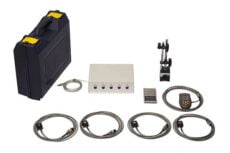


The international "dictionary" for rotor balancing — standardised definitions for unbalance types, rotor classifications, correction methods, machine types, and quality terminology. Now incorporated into ISO 21940-2.
Key Balancing Terms at a Glance
The most important definitions from ISO 1940-2 — the terms every balancing practitioner must know
Complete Terminology Reference
All major terms from ISO 1940-2 / ISO 21940-2, organised by category
| Term | Definition | Significance |
|---|---|---|
| Rotor Rotor | A body capable of rotation about a defined axis. In the context of balancing, includes any rotating component: shafts, impellers, armatures, drums, spindles. | The fundamental object of balancing. All other terms describe properties of, or actions on, the rotor. |
| Rotor Rigid Rotor | A rotor whose unbalance can be corrected in any two arbitrary planes, and after correction, the residual unbalance does not change significantly at any speed up to the maximum service speed. | Determines that ISO 1940-1 (G-grade system) applies. Balancing at low speed on a shop machine is valid. The vast majority of industrial rotors are rigid. |
| Rotor Flexible Rotor | A rotor that deforms elastically at its service speed such that its unbalance state changes. Must be corrected at or near service speed in more than two planes. | Requires ISO 21940-12. High-speed turbines, large generators, multi-stage compressors. Specialised high-speed balancing equipment needed. |
| Rotor Shaft Axis | The straight line joining the centres of the bearing journals. The geometrical axis of rotation. | The reference axis for all unbalance measurements. Runout of journals affects measurement accuracy. |
| Rotor Principal Axis of Inertia | The axis about which the rotor would rotate freely without producing centrifugal force or moment. Coincides with the shaft axis for a perfectly balanced rotor. | The mismatch between principal axis and shaft axis is unbalance. All correction aims to align these two axes. |
| Rotor Centre of Mass (Gravity) | The point where the entire rotor mass may be considered concentrated. For a balanced rotor, lies exactly on the shaft axis. | Static unbalance = CoM displaced from shaft axis. Specific unbalance (e) = displacement distance. |
| Rotor Service Speed | The maximum rotational speed at which the rotor operates in its intended application. | Critical for tolerance calculation: Uper = (9 549 × G × M) / n. Always use service speed, not balancing speed. |
| Rotor Critical Speed | A rotational speed at which a rotor-bearing system experiences resonance, resulting in greatly amplified vibration. | Determines rigid/flexible classification. A rigid rotor operates well below the first bending critical speed. |
| Term | Definition | Formula / Units |
|---|---|---|
| Unbalance Unbalance | Condition where the principal axis of inertia is not coincident with the rotational axis. Causes centrifugal force proportional to mass, eccentricity, and speed squared. | U = m × r (g·mm or kg·m) |
| Unbalance Static Unbalance | Principal axis parallel to rotation axis but displaced. Equivalent to a single mass at a single radius. Detectable without rotation (knife-edges). In-phase bearing vibration. | Corrected in 1 plane |
| Unbalance Couple Unbalance | Principal axis intersects rotation axis at the centre of mass but is tilted. Two equal, opposite heavy spots in different planes create a rocking moment. Only detectable while spinning. | Corrected in 2 planes |
| Unbalance Dynamic Unbalance | The general case: principal axis neither parallel to nor intersecting the rotation axis. Combination of static and couple. The most common real-world condition. | Corrected in 2 planes |
| Unbalance Specific Unbalance | Ratio of unbalance to rotor mass. Represents the eccentricity — the displacement of the centre of mass from the shaft axis. Allows quality comparison across different rotor sizes. | e = U / M (µm or g·mm/kg) |
| Unbalance Residual Unbalance | The unbalance remaining in a rotor after the balancing process. Must not exceed the permissible value (Uper) for the specified G-grade. | Ures ≤ Uper |
| Unbalance Initial Unbalance | The unbalance of a rotor as received, before any balancing correction. Measured on first run. | Baseline for the balancing procedure |
| Unbalance Unbalance Vector | The magnitude and angular position of unbalance in a given plane. Represented as a polar vector with amplitude (g·mm) and phase angle (°). | U∠θ (g·mm at ° from ref) |
| Term | Definition | Practical Notes |
|---|---|---|
| Process Balancing | The process of checking and adjusting the mass distribution of a rotor so that residual unbalance is within a specified tolerance. | Iterative: measure → calculate → correct → verify. |
| Process Correction Plane | A plane perpendicular to the rotor axis in which mass is added or removed. The physically accessible location for weight placement. | May differ from tolerance (bearing) planes — requires geometric conversion. |
| Process Tolerance Plane | The plane in which permissible unbalance is specified — typically the bearing plane. Unbalance here directly affects bearing loads. | Uper is specified for tolerance planes; must be converted to correction planes. |
| Process Correction Mass | The physical mass (weight) added to or removed from the rotor at a specific radius and angle within the correction plane. | Added: clip-on, bolt-on, weld, epoxy. Removed: drilling, milling, grinding. |
| Process Trial Weight | A known mass temporarily attached to the rotor at a known radius and angle during the balancing procedure. Used to determine the rotor's response (influence coefficient). | The Balanset-1A trial-weight method: run → attach trial → run → software calculates correction. |
| Process Influence Coefficient | The change in vibration response (amplitude and phase) at a measurement point caused by a unit unbalance at a specific location. Characterises rotor-bearing sensitivity. | Calculated from trial-weight runs. Two-plane balancing requires a 2×2 influence matrix. |
| Process Single-Plane Balancing | Procedure correcting static unbalance in one correction plane. Appropriate for short (disc-like) rotors with L/D < 0.5. | Balanset-1A F2 mode. One sensor, one plane. |
| Process Two-Plane Balancing | Procedure correcting both static and couple unbalance in two correction planes. Required for elongated rotors or when couple unbalance is significant. | Balanset-1A F3 mode. Two sensors, two planes. |
| Process Trim Balancing | A final, fine balancing adjustment performed on an assembled rotor to compensate for assembly-introduced unbalance (coupling runout, fit tolerances). | Often performed in the field on the installed machine. |
| Process Weight Splitting | Distributing a calculated correction mass between two adjacent accessible locations (e.g., two bolt holes or blade positions) when the exact angular position is not accessible. | Balanset-1A provides automatic weight-splitting calculation. |
| Term | Definition | Comparison |
|---|---|---|
| Machine Balancing Machine | A device that measures unbalance in a rotor (magnitude and angular position) so that mass distribution can be corrected. | Shop-based (stationary) or field (portable like Balanset-1A). |
| Machine Soft-Bearing Machine | Suspension is very flexible. Rotor runs above suspension natural frequency. Measures physical displacement. Must be calibrated for each rotor geometry. | Less common today. Lower cost, but operator must recalibrate per rotor. Displacement sensing. |
| Machine Hard-Bearing Machine | Suspension is very stiff. Rotor runs below suspension natural frequency. Sensors measure centrifugal force directly. Permanently calibrated — accepts wide range of rotors without rotor-specific setup. | Dominant type in modern industry. More versatile, faster setup. Force sensing. |
| Machine Field Balancer | Portable instrument used to balance rotors in-situ (installed in the machine) without disassembly. Uses vibration sensors and a tachometer. Trial-weight method. | Balanset-1A (2-channel) and Balanset-4 (4-channel). ISO 1940 tolerance calculator built in. |
| Machine Mandrel (Arbor) | A shaft or adaptor on which a rotor is mounted for balancing on a machine. Must be accurately concentric and have negligible runout. | Mandrel eccentricity is a major source of systematic balancing error. Verified by index test. |
| Term | Definition | Formula / Standard |
|---|---|---|
| Quality Balance Quality Grade (G) | A classification specifying the maximum permissible velocity of the rotor's centre of mass. G = eper × ω. Grades form a logarithmic scale with factor 2.5. | G 0.4 … G 4000 Defined in ISO 1940-1 |
| Quality Permissible Residual Unbalance (Uper) | Maximum residual unbalance allowed for the specified G-grade, rotor mass, and service speed. The acceptance criterion. | Uper = (9549 × G × M) / n |
| Quality Balance Tolerance | The range within which the residual unbalance must fall to meet the specified quality requirement. Equal to Uper. | Specified per plane after allocation |
| Quality Unbalance Reduction Ratio (URR) | Ratio of initial unbalance to residual unbalance after one correction cycle. Indicates balancing machine/procedure efficiency. | URR = Uinitial / Uresidual Typical: 5–50× |
| Measurement Phase Angle | The angular position of the unbalance vector relative to a reference mark on the rotor (measured by tachometer). Combined with amplitude, defines the complete unbalance vector. | ° (degrees, 0–360) |
| Measurement Vibration Velocity (RMS) | Root-mean-square value of vibration velocity at a bearing housing. The standard measurement parameter for machine condition assessment per ISO 10816. | mm/s RMS (10–1000 Hz) |
| Measurement Index Test | Verification procedure: rotate the rotor a defined angle (e.g. 180°) relative to the machine supports and remeasure. Detects mandrel and fixture errors. | Required for formal verification per ISO 1940-1 Ch. 10 |
| Measurement Minimum Achievable Residual Unbalance (Umar) | The lowest residual unbalance achievable on a given balancing machine for a specific rotor. Determined by machine sensitivity, noise floor, and bearing conditions. | Umar must be ≤ Uper for the machine to be suitable for the required G-grade. |
What is ISO 1940-2?
ISO 1940-2 (Mechanical vibration — Balance quality requirements — Vocabulary) is the international standard that defines the terminology used in rotor balancing. It provides precise, physics-based definitions for all key terms — from unbalance types (static, couple, dynamic) to rotor classifications (rigid, flexible), correction methods, machine types, and quality grades. It is the essential "dictionary" supporting ISO 1940-1 and all other balancing standards. Superseded by ISO 21940-2 with identical terminology.
When an engineer in Germany specifies "dynamic unbalance correction to G 6.3 in two planes," a technician in Japan must understand exactly what is required — the same rotor condition, the same balancing procedure, and the same acceptance criterion. ISO 1940-2 makes this possible by providing a single, internationally agreed vocabulary for the entire field.
The standard is not a procedure or a tolerance specification — it is a terminology standard. Its role is to eliminate ambiguity so that other standards (ISO 1940-1 for tolerances, ISO 14694 for fans, ISO 10816 for vibration evaluation) can use precise, unambiguous language.
Detailed Term Analysis
The Rigid / Flexible Distinction
This is the single most important classification in balancing. The distinction determines everything: which standard applies, what equipment is needed, how many planes are required, and at what speed balancing must be performed.
A rotor whose unbalance can be corrected in any two arbitrary planes and, after correction, the residual unbalance does not change significantly at any speed up to the maximum service speed. Practical test: if the first bending critical speed is well above the maximum service speed (typically > 1.5× or more), the rotor is rigid.
A rotor that deforms elastically at its service speed such that its unbalance state changes. Must be balanced at or near service speed in more than two planes. Applies to: large turbogenerators, multi-stage high-speed compressors, long paper machine rolls at high speed. Covered by ISO 21940-12.
The vast majority of industrial rotors — electric motors, fans, pumps, flywheels, shafts — are rigid rotors. The ISO 1940-1 G-grade system applies directly to rigid rotors.
The Three Types of Unbalance
ISO 1940-2 defines three fundamental types based on the geometric relationship between the principal inertia axis and the rotation axis. Understanding these is essential for selecting the correct balancing procedure:
- Static unbalance produces a force — both bearings vibrate in phase at 1× RPM. The rotor can be detected as unbalanced without rotation (gravity reveals it on knife-edges). One correction plane suffices. Typical for narrow disc-like rotors (L/D < 0.5): narrow pulleys, fan impellers, thin flywheels.
- Couple unbalance produces a moment — bearings vibrate 180° out of phase at 1× RPM. The net force is zero (centre of mass is on the axis), but two equal and opposite heavy spots in different axial positions create a rocking couple. Only detectable while spinning. Requires two correction planes.
- Dynamic unbalance = static + couple combined. The general case for all real rotors that are not perfectly symmetric. Both force and moment are present. Bearings vibrate at 1× with neither in-phase nor exactly 180° out-of-phase relationship. Requires two-plane balancing.
Specific Unbalance and the G-Grade Connection
Specific unbalance (e = U/M) is the key metric that enables universal balance quality comparison. A 5 kg rotor with 50 g·mm unbalance has e = 10 µm. A 500 kg rotor with 5 000 g·mm unbalance also has e = 10 µm — identical balance quality despite 100× mass difference.
The G-grade extends this by incorporating speed: G = e × ω, giving a single number (mm/s) that characterises balance quality independently of both mass and speed. This is the foundation of the ISO 1940-1 tolerance system.
Correction Planes vs. Tolerance Planes
ISO 1940-2 draws a critical distinction that is often missed in practice:
- Tolerance planes = the bearing planes where vibration and dynamic loads are most critical. Permissible unbalance Uper is specified here.
- Correction planes = physically accessible locations where weights can be placed (fan hub, motor end-rings, shaft shoulders). Often at different axial positions than the bearings.
Converting Uper from tolerance planes to correction planes requires knowledge of rotor geometry. For asymmetric or overhung rotors, this conversion can significantly change the per-plane tolerances. The Balanset-1A handles this conversion automatically when rotor dimensions are entered.
Balancing Machine Types
The two fundamental machine types reflect different physical measurement principles:
- Soft-bearing: Suspension natural frequency well below operating speed → machine measures displacement. Requires calibration for each new rotor. Historically significant; declining in use.
- Hard-bearing: Suspension natural frequency well above operating speed → machine measures force. Permanently calibrated — accepts different rotors without individual calibration. The dominant modern type.
Field balancing instruments like the Balanset-1A use a different principle: they are not a "machine" in the ISO sense but use the rotor's own bearings and support as the measurement system, employing the trial-weight (influence coefficient) method to determine correction without requiring a dedicated balancing machine.
Cross-Reference: Where Each Term Is Used
ISO 1940-1 / ISO 21940-11: Uses all tolerance and quality terms — G-grade, Uper, balance tolerance, residual unbalance. The primary consumer of this vocabulary.
ISO 14694: Uses rotor terms (rigid), unbalance terms, and extends with fan-specific BV/FV categories built on G-grades.
ISO 10816 / ISO 20816: Uses measurement terms — vibration velocity, RMS, bearing housing measurement points.
ISO 21940-12: Extends flexible rotor definition with multi-speed, multi-plane procedures.
API 610 / API 617: Petroleum standards reference ISO 1940 G-grades and unbalance terminology for pump and compressor specifications.
ISO 1940-2 → ISO 21940-2: Transition
ISO 21940-2 has formally superseded ISO 1940-2. The terminology is identical — all definitions carry forward unchanged. The ISO 21940 numbering reflects integration into the comprehensive ISO 21940 series covering all aspects of mechanical vibration and balancing. Both designations are accepted in industry practice.
Official standard: ISO 1940-2 on ISO Store →
Frequently Asked Questions — ISO 1940-2
Balancing vocabulary and terminology
Related Glossary Articles
Speak the Language — With the Right Tools
Vibromera balancers implement ISO vocabulary directly: G-grade selection, unbalance vectors, correction planes, residual vs. permissible comparison — all in one portable instrument.
Browse Balancing Equipment → EN
EN  AR
AR  AZ
AZ  BG
BG  ZH
ZH  HR
HR  CS
CS  DA
DA  NL
NL  ET
ET  FI
FI  FR
FR  DE
DE  KA
KA  EL
EL  HE
HE  HI
HI  HU
HU  ID
ID  IT
IT  JA
JA  KO
KO  LV
LV  LT
LT  MS
MS  NB
NB  FA
FA  PL
PL  PT_BR
PT_BR  PT
PT  RO
RO  SR
SR  SK
SK  SL
SL  ES
ES  SV
SV  TH
TH  TR
TR  UR
UR  UK
UK  VI
VI 