बॅलन्सिंग सेवा › टर्बाइन्स & टर्बोचार्जर्स
टर्बाइन & टर्बोचार्जर बॅलन्सिंग — स्थळी, कार्यरत वेगावर
Steam turbines, gas turbines, hydro runners, wind-turbine main shafts and industrial turbocharger rotors spin so fast that even micro-gram eccentricities generate destructive vibration. We balance them त्यांच्याच bearings मध्ये, चालू वेगावर करतो — disassembly नाही, वर्कशॉपला पाठवण्याची गरज नाही — आणि निकाल ISO 20816 आणि ISO 21940-11 विरुद्ध दस्तऐवजीकरण करतो.
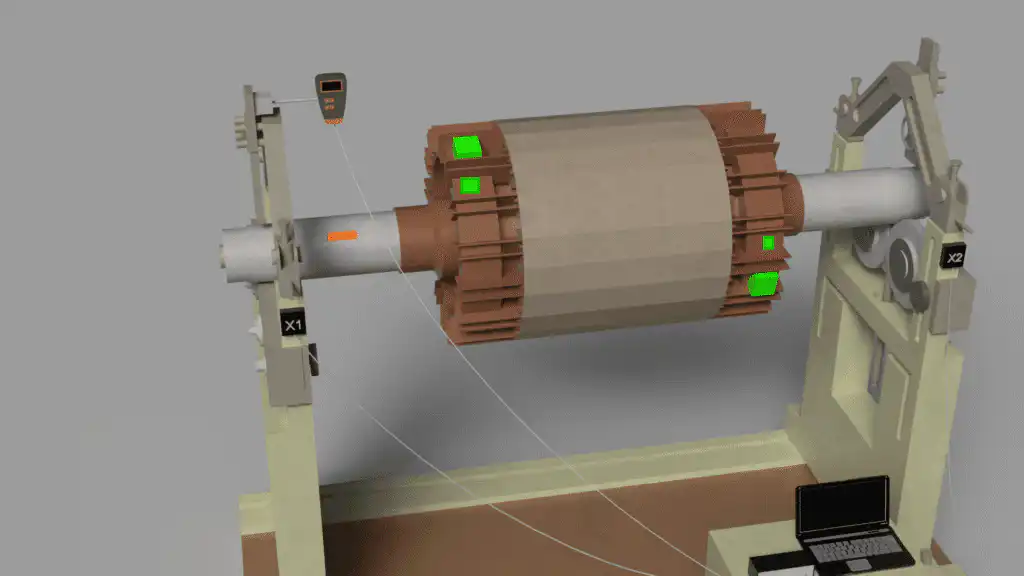
थोडक्यात: Turbine and industrial turbocharger rotors are balanced जागेवरच कार्यरत वेगावर influence-coefficient पद्धतीने केले जाते. bearing housings वरील vibration sensors आणि laser tachometer amplitude व phase मोजतात; Balanset-1A एक किंवा दोन planes साठी अचूक correction mass आणि angle मोजतो; वजन बसवल्यानंतर specific turbine class साठी ISO 20816 zone limits आणि rotor साठी ISO 21940-11 G-grade विरुद्ध residual vibration पडताळली जाते. पहिल्या run पासून documented result पर्यंतची संपूर्ण प्रक्रिया — साधारणपणे — स्थळी एका कामकाजाच्या शिफ्टपेक्षा कमी वेळात पूर्ण होते.
तुमचा टर्बाइन किंवा टर्बोचार्जर असमतोलात असल्याची चिन्हे
उच्च-वेगवान turbine rotors unbalance चे परिणाम मोठ्या प्रमाणात वाढवतात. ही चेतावणी संकेत कधीही दुर्लक्षित करू नयेत:
टर्बाइन्सचा समतोल का बिघडतो — आणि त्याची किंमत काय
turbine rotors अशा वेगाने चालतात की ते कठीण वस्तुमानांपेक्षा flexible bodies प्रमाणे वागतात — स्वतःच्या वजनाखाली आणि aerodynamic loading खाली ते किंचित वाकतात, त्यामुळे mode बदलल्यावर effective mass centre बदलतो. unbalance साचत जाते blade erosion आणि deposit build-up steam आणि gas turbines मध्ये, cavitation damage hydraulic runners मध्ये, ice accretion wind-turbine blades वर, आणि seal wear मुळे, जे rotating mass बदलते. turbochargers मध्ये turbine wheel वरील carbon आणि soot deposits हे प्रमुख कारण असते आणि ते हजारो operating hours मध्ये विकसित होऊ शकते.
दुर्लक्षित turbine unbalance ची किंमत bearing replacement पेक्षा खूप पुढे जाते: blade fatigue failures मुळे दीर्घ overhauls करावे लागतात, seal rubs मुळे precision re-machining आवश्यक होते, आणि base-load power plant मधील एकच forced outage संपूर्ण वार्षिक maintenance budget पेक्षा अनेक पटींनी महाग पडतो. ISO 20816 family विरुद्ध field vibration measurement ऑपरेटर्सना तात्काळ हस्तक्षेप आणि सतत monitored operation यांपैकी निर्णय घेण्यासाठी आवश्यक objective data देते — नियोजित correction आणि अनियोजित shutdown यातील फरक.
व्हायब्रेशन अर्धे केल्याने बेअरिंगचे आयुष्य अनेकपट का वाढते
आम्ही टर्बाइन किंवा टर्बोचार्जरचे balancing कसे करतो — टप्प्याटप्प्याने
Balanset-1A सह field balancing influence-coefficient पद्धतीचे अनुसरण करते — हीच प्रक्रिया तुम्ही या उपकरणासह स्वतःही चालवू शकता. बहुतेक इतर rotors पेक्षा turbines साठी precision requirements अधिक कडक आणि safety protocols अधिक मागणीची असतात:
- बेसलाइन मोजा. vibration sensors bearing housings किंवा pedestals वर बसवले जातात; laser tachometer shaft phase angle पकडतो. स्थिर-वेगाचा run प्रत्येक measurement plane साठी vibration amplitude आणि phase नोंदवतो आणि ISO 20816 zone position निश्चित करतो.
- चाचणी वजन जोडा। precision-machined trial weight balancing plane वरील ज्ञात radial position वर बसवले जाते — सामान्यतः bolt-circle groove किंवा blade-tip pocket मध्ये. मग rotor त्याच वेगावर पुन्हा चालवला जातो, ज्यामुळे instrument system response नोंदवते.
- उपकरणला गणना करू द्या. Balanset-1A influence-coefficient matrix वापरून प्रत्येक plane साठी अचूक correction mass आणि angular position निश्चित करते, rotor geometry परवानगी देत असलेल्या सर्वात कडक ISO 21940-11 G-grade ला लक्ष्य करत.
- सुधार वजने बसवा. correction masses गणना केलेल्या स्थितीवर बसवले जातात आणि trial weight काढला जातो. net mass change OEM documentation आणि traceability साठी नोंदवला जातो.
- ISO 20816 विरुद्ध पडताळा. कार्यरत वेगावरील अंतिम run applicable ISO 20816 acceptance zone मध्ये broadband RMS आणि 1× synchronous amplitude आहेत याची खात्री करतो. निकाल job report मध्ये जतन केले जातात.
आम्ही काय संतुलन करतो
- औद्योगिक steam-turbine rotors (back-pressure आणि condensing)
- gas-turbine power sections आणि compressor wheels
- hydroelectric Francis, Kaplan आणि Pelton runners
- wind-turbine main-shaft assemblies
- Industrial turbocharger turbine and compressor wheels (running speeds up to ≈60 000 RPM)
- micro-turbine आणि ORC expander rotors
- turbo-blower आणि high-speed compressor impellers
- axial आणि radial turbine test-rig rotors
सहनशीलता & मानके — ISO 20816 family
ISO 20816 हे न-फिरणाऱ्या भागांवरील (bearing housings, pedestals) मोजमापांद्वारे मशीनच्या यांत्रिक vibration चे मूल्यांकन करण्यासाठीचे निश्चित बहुभागीय मानक आहे. प्रत्येक भाग विशिष्ट turbine class ला कव्हर करतो आणि broadband RMS velocity किंवा displacement साठी चार severity zones (A–D) परिभाषित करतो:
- ISO 20816-2 — 50 MW पेक्षा जास्त land-based steam turbines आणि generators. Zone A/B thresholds सामान्यतः 2.3 आणि 4.5 mm/s RMS; Zone D (trip) साधारणपणे 7.1 mm/s असते.
- ISO 20816-4 — 3 MW पेक्षा जास्त power output असलेल्या gas turbines, ज्यात industrial aeroderivative units समाविष्ट आहेत. bearing-housing vibration आणि shaft-relative displacement साठी स्वतंत्र limits ठरवते.
- ISO 20816-5 — power plants मधील hydraulic machines (pumps आणि turbines), ज्यात Francis, Kaplan आणि Pelton runners समाविष्ट आहेत. vibration zones hydraulic excitation तसेच mechanical unbalance यांचा विचार करतात.
- ISO 20816-21 — onshore आणि offshore wind turbines. सामान्य कार्यप्रणालीदरम्यान मूल्यांकन केलेले main bearing, gearbox आणि generator vibration यांना कव्हर करते.
सर्व turbine प्रकारांसाठी rotor balance tolerances ISO 21940-11 G-grades ने नियंत्रित केल्या जातात. high-speed turbines ला सामान्यतः G 1.0 किंवा G 2.5. ISO 21940-11 lists turbochargers at G 6.3 among its general rotor examples and provides the G-grade calculation framework; specific turbocharger tolerances are usually set by the OEM and may be stricter than the generic ISO examples. Our Balanset-1A measurements give you the data to demonstrate compliance with both the vibration acceptance limits of ISO 20816 and the residual-unbalance limits of ISO 21940-11 in a single on-site session.
blade-resonance सुरक्षिततेसाठी, Campbell diagram पद्धती वापरून critical-speed crossings नकाशित केले जातात; आमचा turbine blade frequency कॅल्क्युलेटर कमिशनिंगपूर्वी किंवा re-blading नंतर कोणतीही blade natural frequency कार्यरत वेग श्रेणीत येते का ते तपासू देतो.
Balanset-1A — turbines साठी तुमचे संपूर्ण field-balancing kit
या पानावरील सर्व काही एका पोर्टेबल उपकरणाने केले जाते: Balanset-1A. हे दोन-चॅनेल dynamic balancer आणि vibration analyzer आहे, जे turbine आणि turbocharger rotors चे balancing करते त्यांच्या स्वतःच्या बेअरिंगमध्ये, ऑपरेटिंग स्पीडवर, using the 3-run influence-coefficient method — the software calculates the exact correction mass and angle and saves a report. Its vibration channel covers 5–1000 Hz, which corresponds to 1× running speeds of roughly 300–60 000 RPM (best accuracy up to ≈33 000 RPM / 550 Hz); automotive-style turbocharger wheels spinning at 100 000–300 000 RPM lie outside this range and require specialized high-speed balancing equipment.
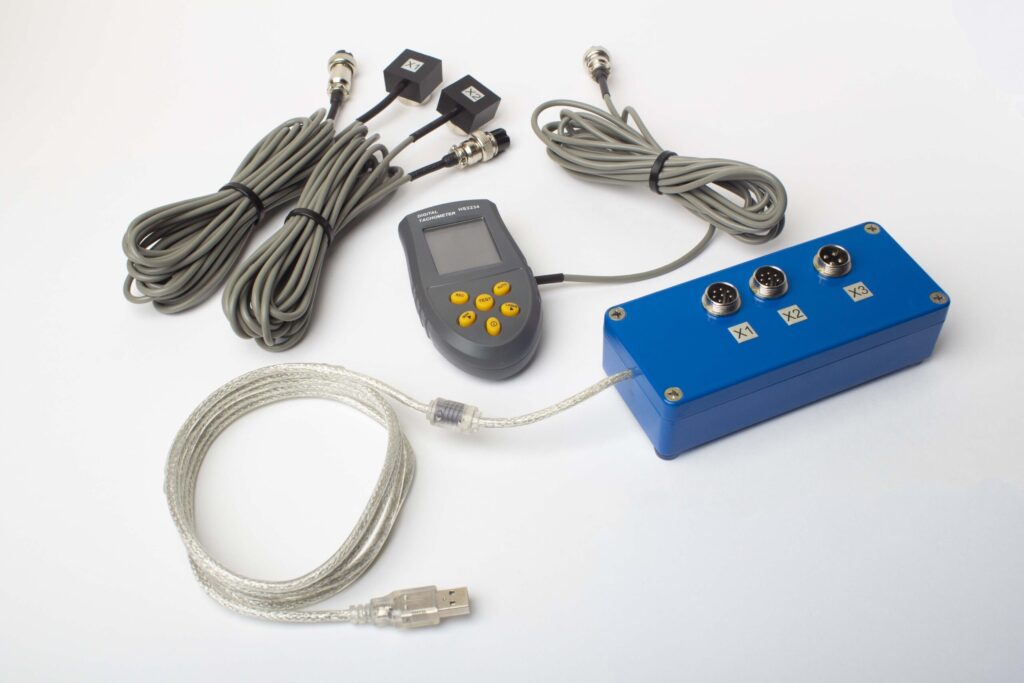
फुल किटमध्ये काय आहे
€1,975 · पूर्ण किट, स्टॉकमध्ये, VAT इनव्हॉइस
- इंटरफेस मापन युनिट (USB, 2 चॅनल)
- दोन व्हायब्रेशन एक्सेलेरोमीटर (4 m केबल, 10 m पर्यायी)
- लेझर टॅकोमीटर / ऑप्टिकल फेज सेन्सर (50–500 mm)
- सेंसरसाठी चुंबकीय स्टँड
- चाचणी & सुधारणा वजनसाठी डिजिटल स्केल
- Windows संतुलन & विश्लेषण सॉफ्टवेअर
- प्लास्टिक ट्रान्सपोर्ट केस
पूर्ण किट
Unit · 2 sensors · laser tachometer · magnetic stand · digital scale · software · transport case. बॉक्समधून बाहेर काढल्याबरोबर turbines चे balancing सुरू करण्यासाठी आवश्यक सर्व काही.
OEM संच
युनिट · 2 सेन्सर्स · लेझर टॅकोमीटर · सॉफ्टवेअर. ज्यांच्याकडे आधीपासून स्टँड, स्केल आणि केस आहे किंवा जे युनिट बॅलन्सिंग मशीनमध्ये एम्बेड करतात अशा इंटिग्रेटर्ससाठी.
| परिमाण | मूल्य |
|---|---|
| मापन चॅनल | 2 (एक- & दोन-प्लेन संतुलन) |
| व्हायब्रेशन वेग रेंज | 0.2–80 mm/s RMS |
| वारंवारता श्रेणी | 5–1000 Hz (≤10% amplitude error above 550 Hz) |
| मापन अचूकता | पूर्ण स्केलच्या ±5% |
| पद्धत | 3-धावा प्रभाव-गुणांक (1 किंवा 2 विमाने) |
| विश्लेषण | 1× वर अॅम्प्लिट्यूड & फेज, FFT स्पेक्ट्रम & वेव्हफॉर्म, जतन केलेले अहवाल |
| लॅपटॉप | समाविष्ट नाही (Windows PC, विनंतीवर उपलब्ध) |
field मध्ये turbine & turbocharger balancing
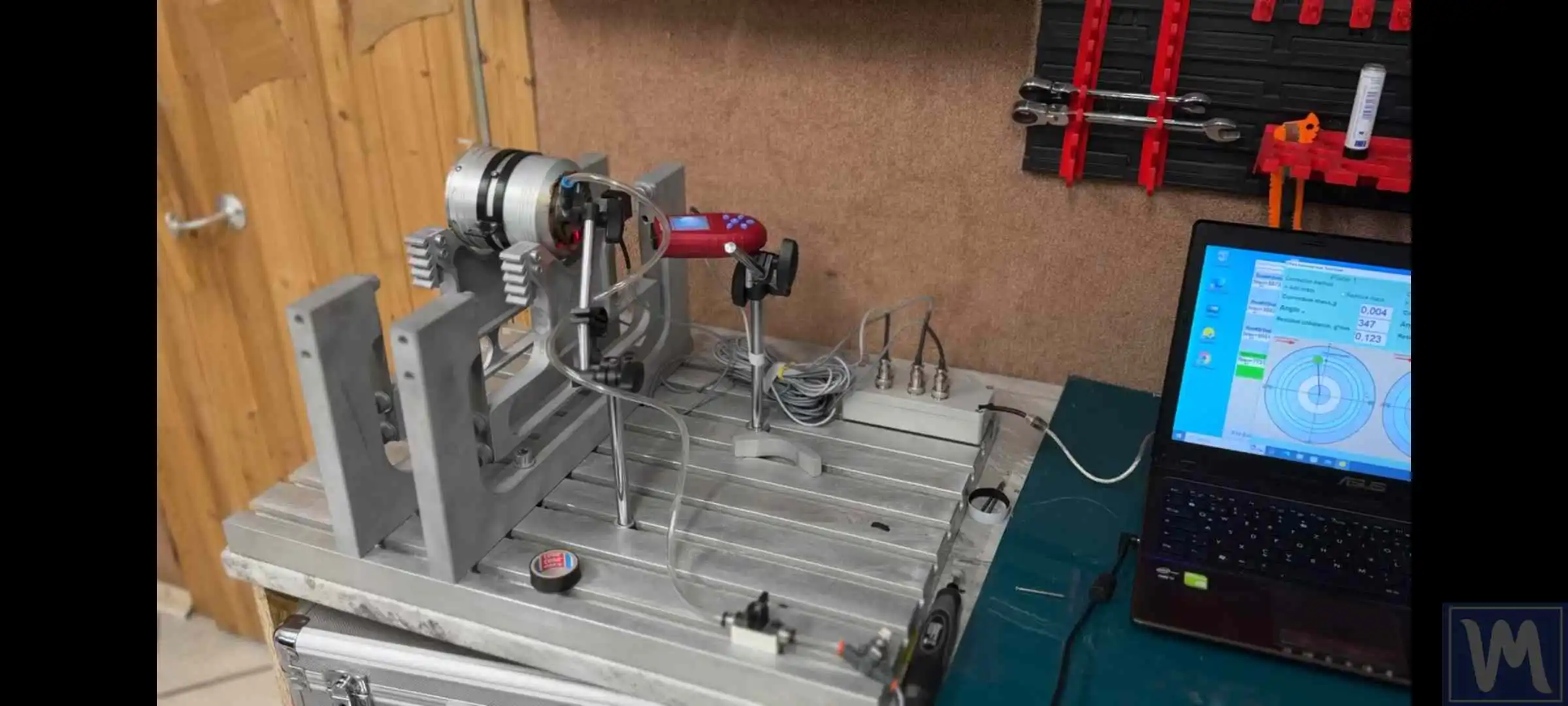
balancing setup वरील rotor
Balanset-1A सह two-plane field balancing साठी instrument केलेला high-speed turbo rotor.
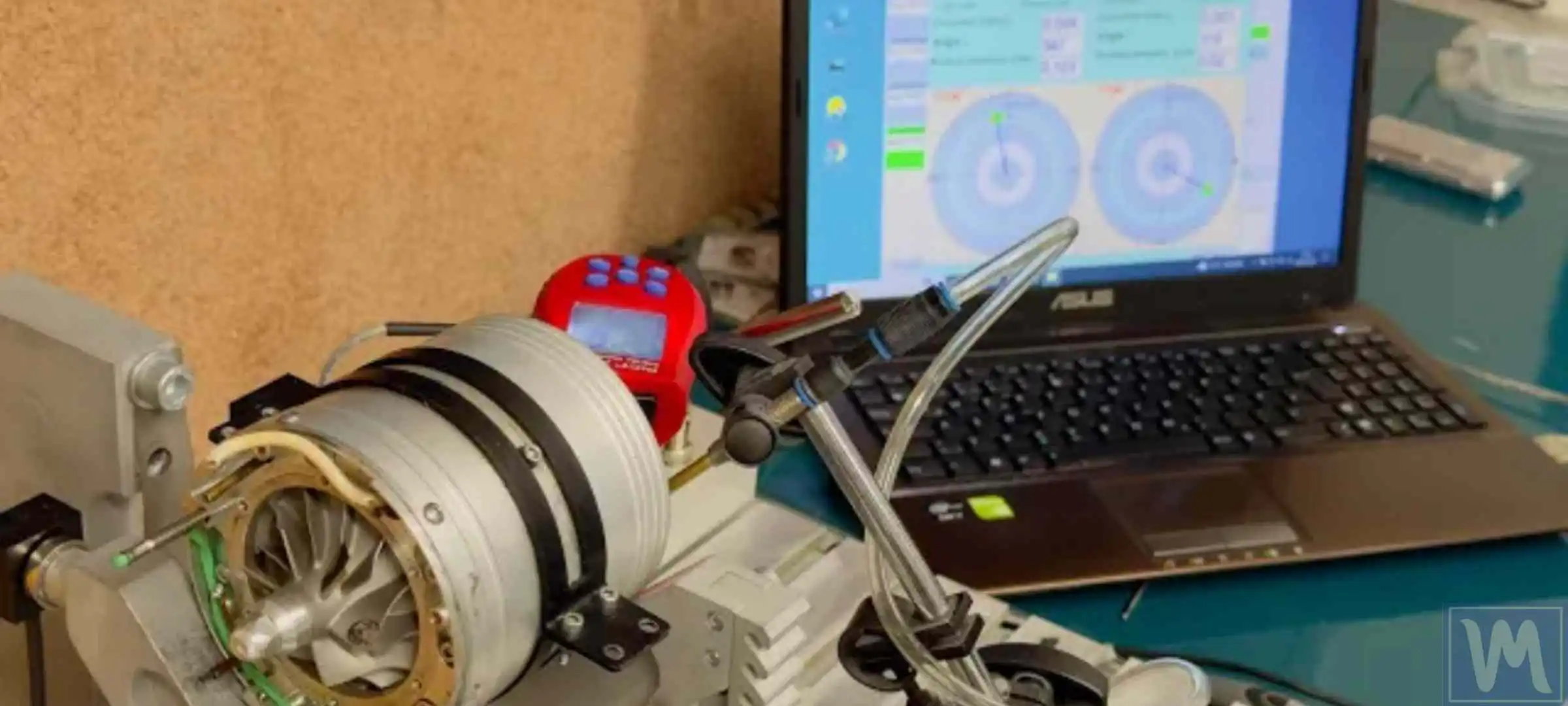
bearing वर vibration measurement
bearing वरील sensor आणि laser tacho चालू वेगावर 1× amplitude आणि phase पकडतात.
फील्ड बॅलन्सिंग विरुद्ध बॅलन्सिंग मशीन — कोणते योग्य?
| निकष | क्षेत्र संतुलन (Balanset-1A) | वर्कशॉप balancing machine |
|---|---|---|
| rotor काढणे आवश्यक | नाही — जागेवरच balance केले जाते | होय — पूर्ण disassembly |
| प्रत्यक्ष कार्यरत परिस्थिती | होय — प्रत्यक्ष वेग, प्रत्यक्ष bearings | नाही — कमी वेग, वेगळे supports |
| downtime | तास ते एक शिफ्ट | दिवस ते आठवडे |
| flexible rotor effects पकडले जातात | होय — वेगावर होणारे bending समाविष्ट | कमी-वेगाच्या shop run मध्ये नाही |
| ISO 20816 vibration पडताळणी | प्रक्रियेत अंगभूत | re-assembly नंतर स्वतंत्र टप्पा |
| दोन-समतल दुरुस्ती | होय (दोन्ही planes एकाच वेळी) | होय |
| पोर्टेबल — कोणतेही site | होय — carry case मध्ये बसते | फक्त स्थिर वर्कशॉप |
| प्रति कामाचा सामान्य खर्च | कमी (वाहतूक नाही, crane नाही) | जास्त (logistics + shop time) |
मोफत turbine कॅल्क्युलेटर्स
turbine balancing FAQ
turbine rotor चे balancing field मध्ये करता येते का, की balancing machine लागते?
माझ्या turbine साठी ISO 20816 चा कोणता भाग लागू होतो?
टर्बोचार्जरला कोणता balance grade आवश्यक असतो?
प्रत्येक मोठ्या overhaul नंतर माझा turbine overvibration मुळे trip का होतो?
Balanset-1A ISO 20816 नुसार bearing-housing vibration मोजू शकते का?
मला one-plane balancing करायचे की two-plane, हे कसे कळेल?
सिद्धांत जाणून घ्या
तुमच्या turbine चे मूल्यांकन करा आणि balance करा — ISO मानकानुसार
Balanset-1A ISO 20816 नुसार bearing-housing vibration मोजते आणि ISO 21940-11 नुसार two-plane field balancing करते — त्यामुळे प्रत्येक कामासाठी documented result सहित निदान आणि correction दोन्ही एका पोर्टेबल instrument मध्ये मिळतात.

