Meet Vibromera.com — our new international website. Visit Vibromera.com →

ISO 8579-1:2002 — 齒輪單元驗收規範 — 第 1 部分:空氣傳聲測試規範
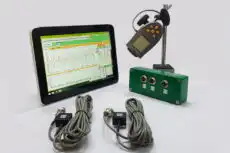
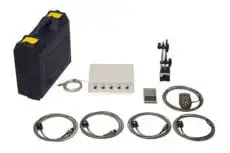
便攜式平衡機 & 振動分析儀 Balanset-1A

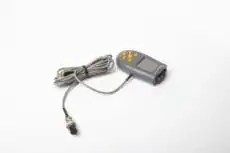
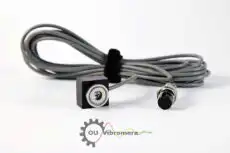
振動感測器

光學感測器(雷射轉速計)

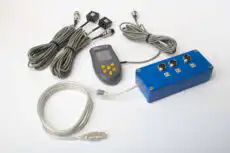
Balanset-4

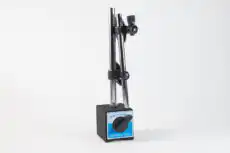
磁吸支架 Insize-60-kgf

反光膠帶

動平衡機「Balanset-1A」OEM

ISO 8579-1:2002 (齒輪單元驗收規範 — 第 1 部分:空氣傳聲測試規範) 是一項專門標準,詳細說明了測量與報告封閉式齒輪單元輻射空氣噪音的詳細、可重複程序。它是一項 驗收規範:其目的在於讓製造商與客戶驗證新製或修復之齒輪箱是否符合合約協議之聲學性能等級。此使其與 振動分析區分開來,後者檢查結構振動以偵測與診斷故障。ISO 8579-1 則關注量化總 聲功率級 ,以用於環境噪音控制與職業健康目的——單一、可辯護之“合格或不合格”數值,而非診斷頻譜。

1. 範圍與測量原理

該標準的範圍是確定封閉式齒輪單元與齒輪馬達的空氣傳聲排放 — 指定位置的聲壓級與聲功率級 — 。由於其作為驗收規範的功能,其程序旨在驗證供應商與採購商之間預先協定的聲學規範是否符合要求。其主導原則是 聲功率級 ——此為聲源之固有屬性,獨立於觀測者位置——係從一組 聲壓級 測量值計算得出,這些測量值取自包圍齒輪箱之假想表面上多個精確定義之點。透過在單元周圍各處採樣壓力,此方法捕捉總輻射聲能,而非任意單一位置之壓力。

2. 測試環境與條件

標準此部分對測試地點與方式提出嚴格要求,以確保所測得之聲音僅來自齒輪箱本身。測試必須在近似 自由場 之聲學環境中進行——附近無反射表面干擾測量。無響室為理想選擇,但大型開放戶外區域亦可使用。關鍵在於,來自所有其他來源之背景噪音——包括驅動測試齒輪箱之馬達——必須單獨測量,且必須比 低 6 dB 齒輪箱噪音,且最好低超過 10 dB。若背景噪音過大,將污染結果並使測試無效。齒輪單元亦必須在指定負載與轉速下運轉,因為兩者對產生之噪音及 齒輪嚙合頻率 主導之音調有顯著影響。

3. Instrumentation

The standard fixes the performance class of the equipment in the measurement chain. It mandates a Type 1 (Class 1) precision Sound Level Meter, microphone and filter set conforming to the relevant IEC standards, ensuring high accuracy and consistency. It also requires a 聲學校準器 of the same precision class, and specifies that the entire system — microphone, meter and cables — be calibrated with it both immediately before and immediately after the run of sound measurements. That bracketing 校正 confirms the instrument’s sensitivity did not drift during the test, which is essential for a valid acceptance result.

4. Measurement Procedure

This is the prescriptive heart of the standard. It requires the definition of a hypothetical 測量表面 that completely envelops the gearbox — typically a rectangular parallelepiped (a box shape) set at a fixed distance, usually 1 metre, from the reference surface of the unit. The standard then specifies the minimum number and exact location of microphone positions on that surface; for a parallelepiped this is commonly a set of nine points covering the four sides, the top and key positions between them. The sound pressure level is recorded at each point while the gearbox runs under the agreed steady-state load and speed. Sampling many points is what allows the sound field to be averaged correctly and accounts for the directionality of the radiated noise.

5. Calculation of Sound Power Level

This section supplies the mathematics that turns raw readings into a result. First, the sound pressure levels — being logarithmic dB values — measured at the various microphone positions are logarithmically averaged to give the mean sound pressure level over the whole measurement surface. That mean is then used to compute the sound power level (Lw), a calculation that brings in the area (S) of the hypothetical measurement surface. The final sound power level is a single figure in dB representing the total acoustic energy radiated by the gearbox. Because it is independent of measurement distance and environment, it is the definitive metric for the acceptance test.

6. Information to Be Recorded and Reported

To keep results unambiguous, comparable and fully traceable, the final section lists everything that must appear in the official test report. Beyond the calculated sound power level itself, this includes:

  • Gear-unit description: model, serial number and other identifying details.
  • 運轉條件: input speed, output torque, and lubricant type and temperature.
  • Test environment: a description and sketch of the room and the microphone positions.
  • 儀器設備: every instrument used, with serial numbers and calibration dates.
  • Background noise: the results of the separate background-noise measurements.

This rigorous documentation underpins the test’s validity and lets it be reliably reproduced if a dispute arises.

7. Key Concepts Behind the Standard

  • Sound power vs. sound pressure: the standard determines sound 功率, the total acoustic energy radiated by the source. This differs from sound pressure, which is what a microphone actually senses and which falls with distance from the unit. Sound power is the more consistent, transferable metric for an acceptance test.
  • Acceptance test code, not a diagnostic tool: the standard is a standardised pass/fail procedure. A customer can write a maximum acceptable sound power level into a purchase contract, and ISO 8579-1 provides the agreed method to verify compliance.
  • The vibro-acoustic link: although the standard measures airborne sound, the root cause of that sound is the structural vibration of the gearbox housing, itself driven by the meshing of the gear teeth. High noise levels therefore tend to correlate with high vibration at the gear-mesh frequency and its sidebands — and conditions such as 齒輪缺陷, wear or misalignment that raise vibration usually raise radiated noise as well.

8. ISO 8579-1 in Practice: Noise, Vibration and Diagnostics

The acoustic acceptance figure from ISO 8579-1 tells a purchaser whether a gearbox is quiet enough to install, but it does not, on its own, reveal 為何 a unit is noisy or how its condition changes in service. That is the domain of vibration measurement. Because airborne sound and structural vibration share the same origin in the tooth mesh, a unit that drifts louder over time is usually telling the same story its vibration spectrum tells — rising energy at the gear-mesh frequency, growing sidebands, or new impact content from a spalled tooth.

In the field, engineers complement the supplier’s ISO 8579-1 noise certificate with on-machine vibration checks. A portable two-channel analyser such as the Balanset-1A measures vibration directly on the gearbox bearing housings, capturing the spectrum where mesh-frequency tones and sidebands appear, so that a noisy gearbox can be diagnosed rather than merely graded. Where a numerical gear-vibration limit is needed, the ISO 20816-9 gear-drive vibration limits tool provides one, the 齒輪嚙合頻率計算器 pinpoints the frequencies to look for, and the 噪音距離衰減計算器 helps relate a measured sound level to distance for occupational-noise planning.

9. The Official Standard

ISO 8579-1 is published and maintained by the International Organization for Standardization, and the full normative text — including the exact microphone coordinate sets, the averaging formulae and the report template — is available through the ISO Store. The summary here conveys the standard’s purpose, principle and procedure, but any formal acceptance test should be conducted against the complete published document to ensure full compliance.


← 返回主索引

WhatsApp
Balanset-1A · €1975Ask engineer