ಕಪಲ್ ಅಸಮತೋಲನವನ್ನು ಅರ್ಥಮಾಡಿಕೊಳ್ಳುವುದು






ಸಂಯೋಜಕ ಅಸಮತೋಲನ ಇದರ ಒಂದು ವಿಶೇಷ ರೂಪವಾಗಿದೆ ಚಿತ್ರಾಕರ್ಷಕ ಅಸಮತೋಲನ in which a ರೋಟರ್ carries two equal unbalance masses positioned 180° apart, in two separate ಸುಧಾರಣೆ ಸಮತಲಗಳು. When the rotor spins, these two opposing centrifugal forces form a turning moment — a “couple” — that tries to twist the rotor, making it wobble or rock end-to-end about its centre of gravity. A defining feature of pure couple unbalance is that the centre of gravity still lies on the axis of rotation, so the rotor is statically balanced: placed on knife-edges it would not roll to a heavy spot. The condition can only be detected when the rotor is turning, and it can only be corrected with weights in two different planes.
1. ವ್ಯಾಖ್ಯಾನ: ಕಪಲ್ ಅಸಮತೋಲನ ಎಂದರೇನು?
The word “couple” is borrowed from mechanics, where it denotes a pair of equal, opposite, parallel forces separated by a distance — a system that produces pure rotation, no net translation. That is exactly what happens here. Each off-centre mass generates a ಕೇಂದ್ರಮುಖ ಬಲವನ್ನು as the rotor spins; because the two are equal and oppositely directed but axially separated, they cancel as a net force yet add as a moment. The rotor experiences no sideways push at its centre, but it does feel a relentless rocking torque that reverses twice per revolution.
2. ಕಪಲ್ ಅಸಮತೋಲನವನ್ನು ದೃಶ್ಯೀಕರಿಸುವುದು
Imagine a long, thin rotor. Place a 10 g weight at the top (0°) of the left end, then place a second 10 g weight at the bottom (180°) of the right end:
- Check it for ಸ್ಥಿರ ಸಮತೋಲನ and it appears perfectly balanced — the two weights cancel, and the centre of gravity sits on the axis.
- Spin it, and the left weight pulls the left end up while the right weight pulls the right end down. The result is a powerful rocking, or rocking-couple, motion.
ಈ ಸ್ಥಿತಿ ಹೆಚ್ಚು ಉಂಟುಮಾಡುತ್ತದೆ vibration at 1× the running speed, and — crucially for diagnosis — the phase readings at the two bearings are roughly 180° out of phase with each other, because the two ends move in opposite directions at any instant.
3. ಕಪಲ್, ಸ್ಥಿರ ಮತ್ತು ಡೈನಾಮಿಕ್ ಅಸಮತೋಲನಗಳ ಹೋಲಿಕೆ
Understanding how the three classes relate is the key to choosing the right correction:
| ಪ್ರಕಾರ | Mass description | Centre of gravity | Bearing phase relationship | ತಿದ್ದುಪಡಿ |
|---|---|---|---|---|
| Static unbalance | Single heavy spot | Offset from the axis | In-phase | One weight, one plane |
| ಸಂಯೋಜಕ ಅಸಮತೋಲನ | Two equal, opposite heavy spots in two planes | On the axis | 180° out-of-phase | Two weights, two planes |
| ಡೈನಾಮಿಕ್ ಅಸಮತೋಲನ | Combination of static and couple | Offset and tilted | Some intermediate angle | Two weights, two planes |
Dynamic unbalance is the most common condition in real rotors and is simply static and couple unbalance occurring together; correcting it therefore demands measurement and weight placement in at least two separate planes. A useful field clue is the phase comparison: nearly in-phase bearings point toward a dominant static component, while a near-180° split points toward a dominant couple.
4. Correcting Couple Unbalance
To remove a couple, the ಸಮತೋಲನ ಯಂತ್ರ or analyser calculates the size and angular location of two correction weights:
- One ತಿದ್ದುಪಡಿ ತೂಕ goes in the first plane to oppose the force there.
- A second goes in the second plane to oppose the equal, opposite force at the other end.
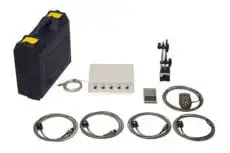
With both forces neutralised, the twisting moment vanishes and the rotor runs smoothly. Note that the further apart the two planes sit, the smaller each weight can be for the same corrective moment — long lever arm, less mass — which is why maximising plane separation is good practice. On an assembled machine, this two-plane correction is carried out without disassembly using a portable two-channel instrument such as the ಬ್ಯಾಲೆನ್ಸೆಟ್-1ಎ, which measures the 1× amplitude and phase at each bearing, derives the rotor’s ಪ್ರಭಾವ ಗುಣಾಂಕಗಳು ಒಂದರಿಂದ ಪರೀಕ್ಷಾ-ತೂಕ run, and resolves both weights at once. The job concludes by verifying the ಉಳಿದ ಅಸಮತೋಲನ against an ISO 21940-11 balance grade.
5. Why Couple Unbalance Is Easy to Miss
Because a couple-unbalanced rotor passes a static (single-plane) check, relying on a static test alone can leave a damaging defect undetected. Only a spinning measurement that reads both bearings — and compares their phase — exposes the rocking couple. This is the fundamental reason that ಎರಡು-ಸಮತಲ ಸಮತೋಲನ exists and why most general-purpose industrial rotors, from motor armatures to drive shafts, are balanced dynamically rather than statically.

