← База знания Balanset-1A — всички глави
Тази глава е минимумът теория, необходим, за да работите с Balanset-1A съзнателно, а не просто натискайки бутони.
Какво е вибрация и защо машината вибрира
Всеки въртящ се ротор (барабан на мулчер, работно колело на вентилатор, вал) в идеалния случай има център на масата точно върху оста на въртене. В действителност винаги има малко изместване на масата — дисбаланс. При всяко завъртане тежката точка тегли ротора настрани и създава центробежна сила, която разтърсва машината с честотата на въртене.
Важно: дисбалансът е само една от причините за вибрация. Други причини за трептенето на машината са:
- луфт и износване на лагерите,
- разцентровка на вала (съединители, ремъци),
- пукнатини и разхлабени крепежни елементи (болтове, рама),
- огънат вал,
- конструктивен резонанс,
- аеродинамични и електромагнитни сили (вентилатори, честотни преобразуватели).
Балансирането отстранява само дисбаланса. Всичко останало трябва да се ремонтира, а не да се балансира. Оттук и златното правило: уредът не може да поправи повредена машина чрез балансиране.
В какви единици се измерва вибрацията
Balanset-1A измерва скорост на вибрация — стойността RMS в mm/s. Това е стандартната величина за оценка на състоянието на машината в работния честотен диапазон.
Груба скала за бърза оценка (базирана на ISO 10816/20816, подробности в глава 06):
| Скорост на вибрациите (RMS) | Оценка |
|---|---|
| до 1,4 мм/с | отлично |
| 1,4 – 2,8 мм/с | добре |
| 2.8 – 4.5 mm/s | приемливо |
| над 4,5 mm/s | лошо — необходимо е действие |
За селскостопанска техника (мулчери, косачки) границите са по-меки: до 4,8 mm/s е добре, до 7,1 mm/s на меки опори, а като се вземат предвид работните условия — „под 8 mm/s вече е добре“.
Честота, обороти (RPM) и хармоници
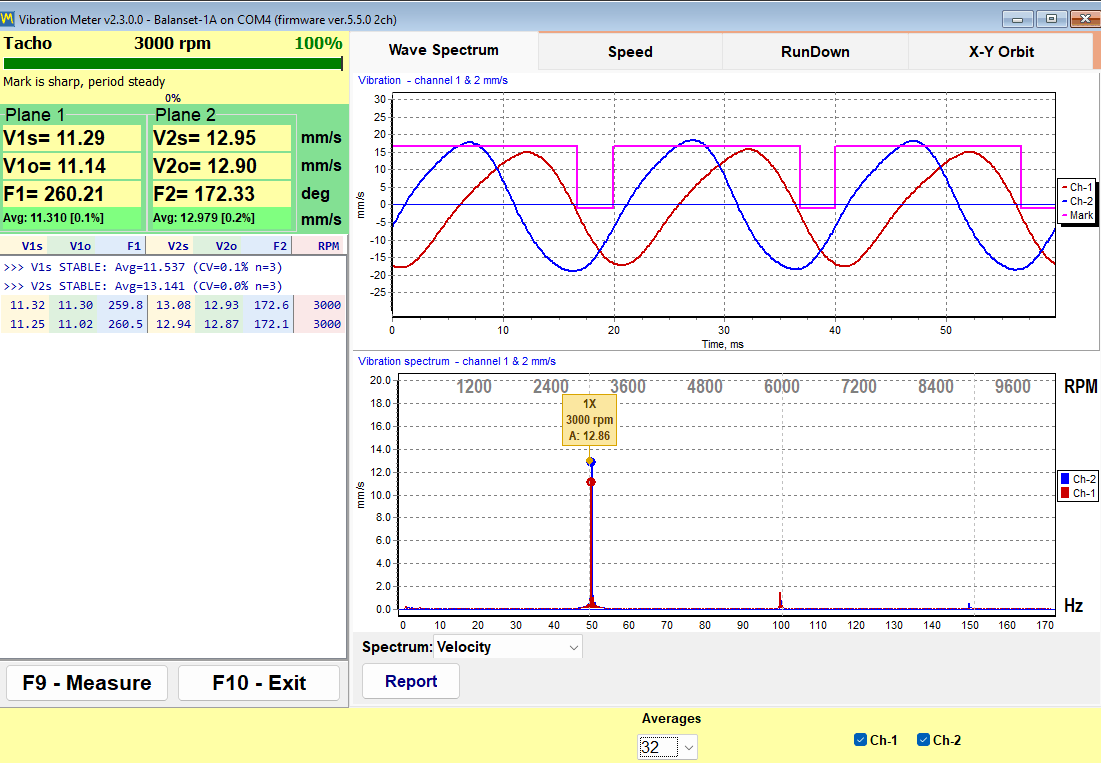
Да приемем, че роторът се върти при 3000 об/мин. Това са 50 оборота в секунда = 50 Hz. Вибрацията се разлага на честотни компоненти — спектър (FFT). Спектърът показва какво причинява трептенето:
- 1x (честота на въртене) — класическият признак на дисбаланс. Това е компонентата, която балансирането намалява.
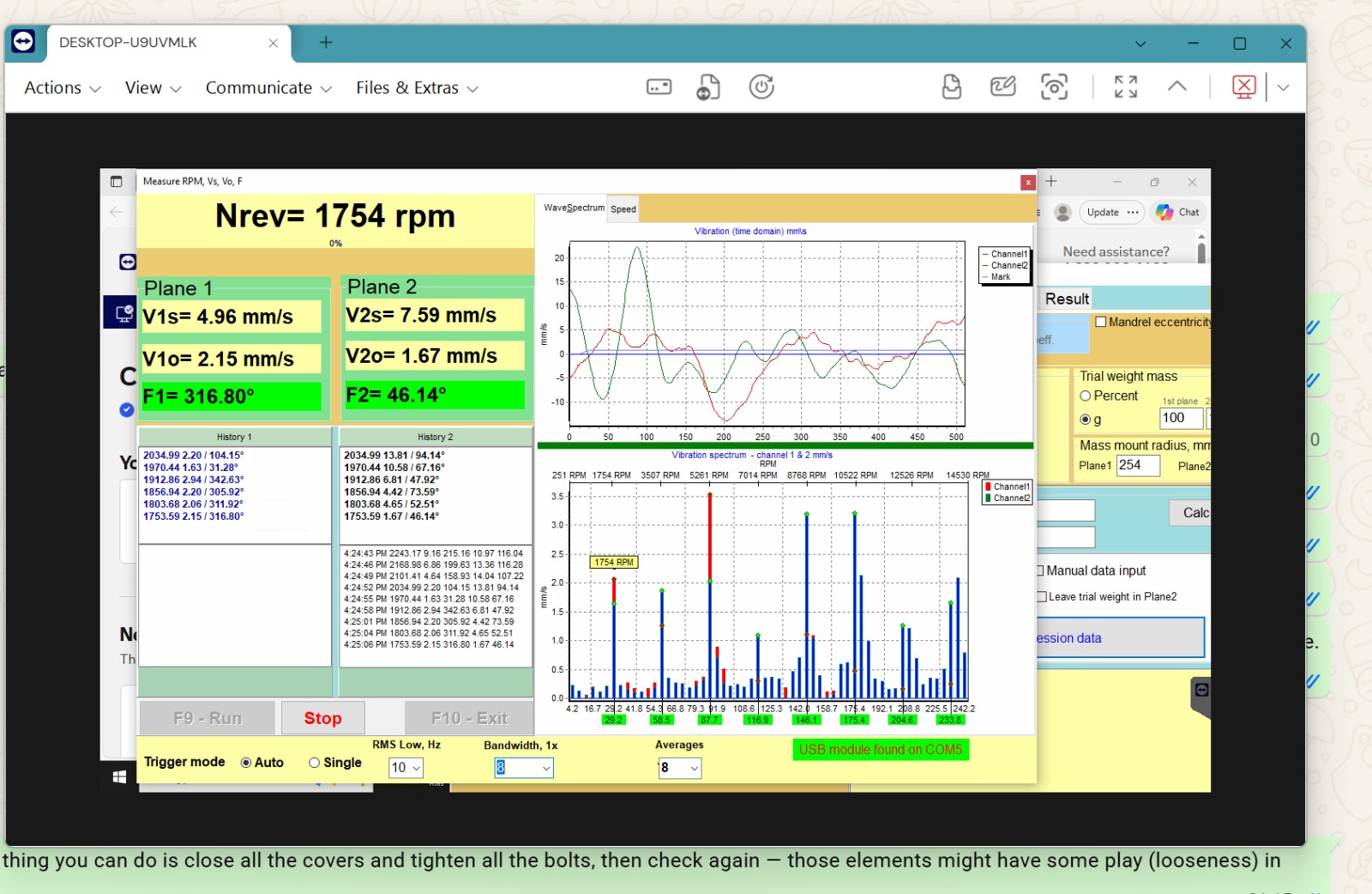
- 2x, 3x (втори, трети хармоник) — по-често несъосност на вала, разхлабени крепежни елементи, огънат вал. Ако 2x е по-високо от 1x — още е рано за балансиране; първо потърсете разцентровка/разхлабване.
- Високи честоти, „шум“ — дефекти на лагери и зацепване на зъбни колела.
- Ниски честоти, несвързани с оборотите (RPM) — разхлабена основа/крепежни елементи, аеродинамика.
- Кратни на честотата на захранващата мрежа (напр. 6 × 50 Hz = 300 Hz) — електромагнитни смущения от честотен преобразувател. Тест: изключете честотния преобразувател при изтичане на оборотите — ако пикът изчезне, причината е електрическа, не механична.
Практическо правило от техническата поддръжка: ако пик в спектъра се измества пропорционално при промяна на оборотите, той е хармоник на въртенето; ако остава на място, това е конструктивен резонанс или външен източник.
Как изглежда на екрана:
Фаза — накъде сочи тежката точка
Освен амплитудата устройството измерва фаза — ъгълът между импулса на тахометъра (преминаването на отражателния маркер покрай лазера) и максимума на вибрацията. Фазата показва КЪДЕ се намира дисбалансът. От промяната на амплитудата и фазата след монтиране на пробно тегло уредът изчислява масата и ъгъла на коригиращото тегло — метод на коефициента на влияние.
Практически последствия:
- маркерът на тахометъра не трябва да се залепва наново между пусковете — фазовата “нула” се измества. Самият тахометър също не трябва да се премества или пренасочва;
- оборотите трябва да са еднакви във всички пускове на серията;
- фазата трябва да е стабилна от пуск на пуск (разсейване не повече от ~10–20°). Ако фазата се лута — на измерването не може да се вярва; търсете механична причина или резонанс.
Резонанс — най-големият враг на балансирането
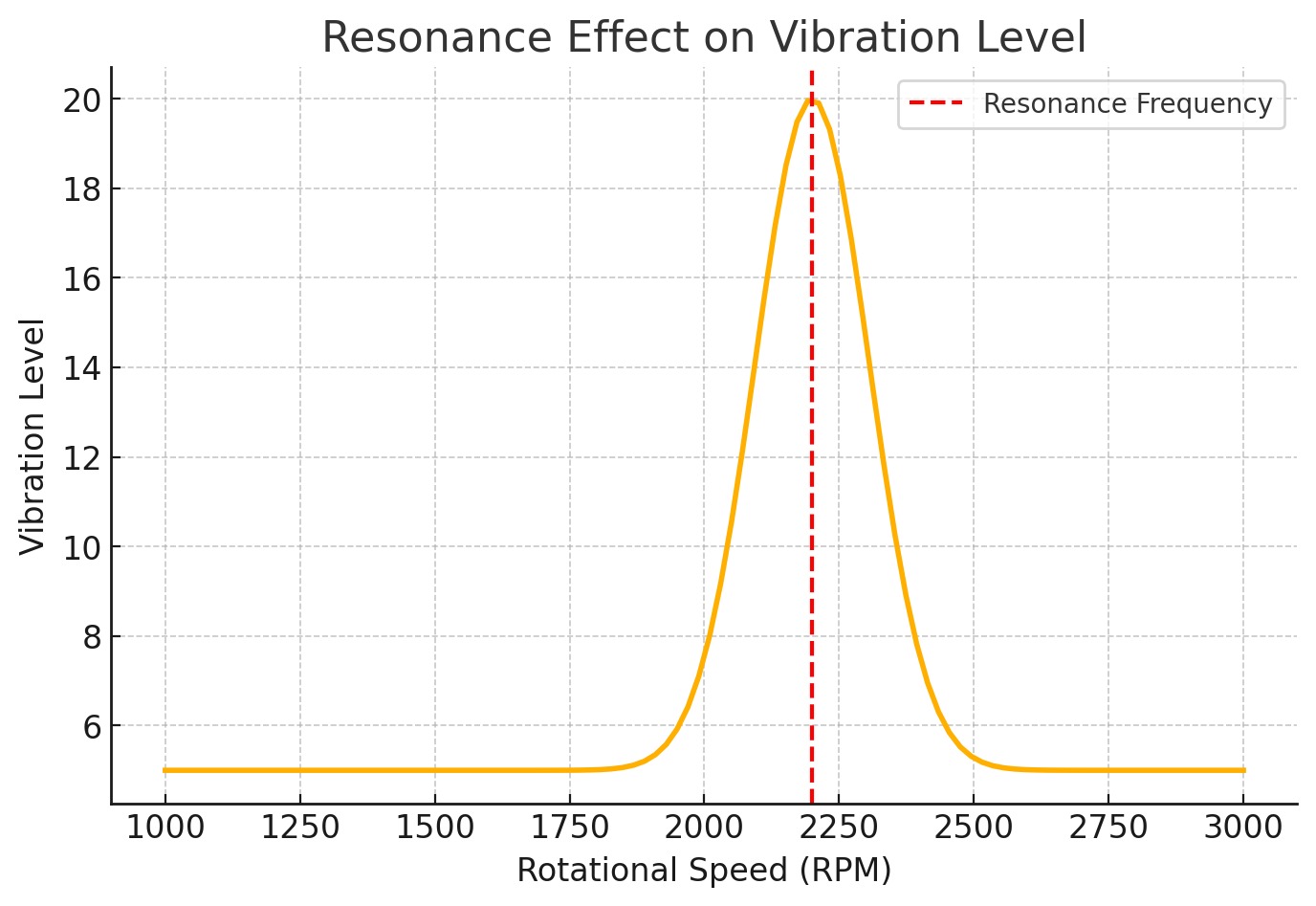
Всяка конструкция (ротор + опори + рама) има собствени честоти. Ако работните обороти (RPM) съвпаднат със собствена честота, резонанс настъпва: вибрацията рязко нараства, фазата скача, изчисленията на устройството престават да се сближават и „устройството продължава да иска повече тегло“.
Признаци на резонанс:
- малка промяна на оборотите променя вибрацията многократно;
- след монтиране на изчисленото тегло вибрацията расте вместо да спада;
- амплитудата и фазата са нестабилни при непроменени условия.
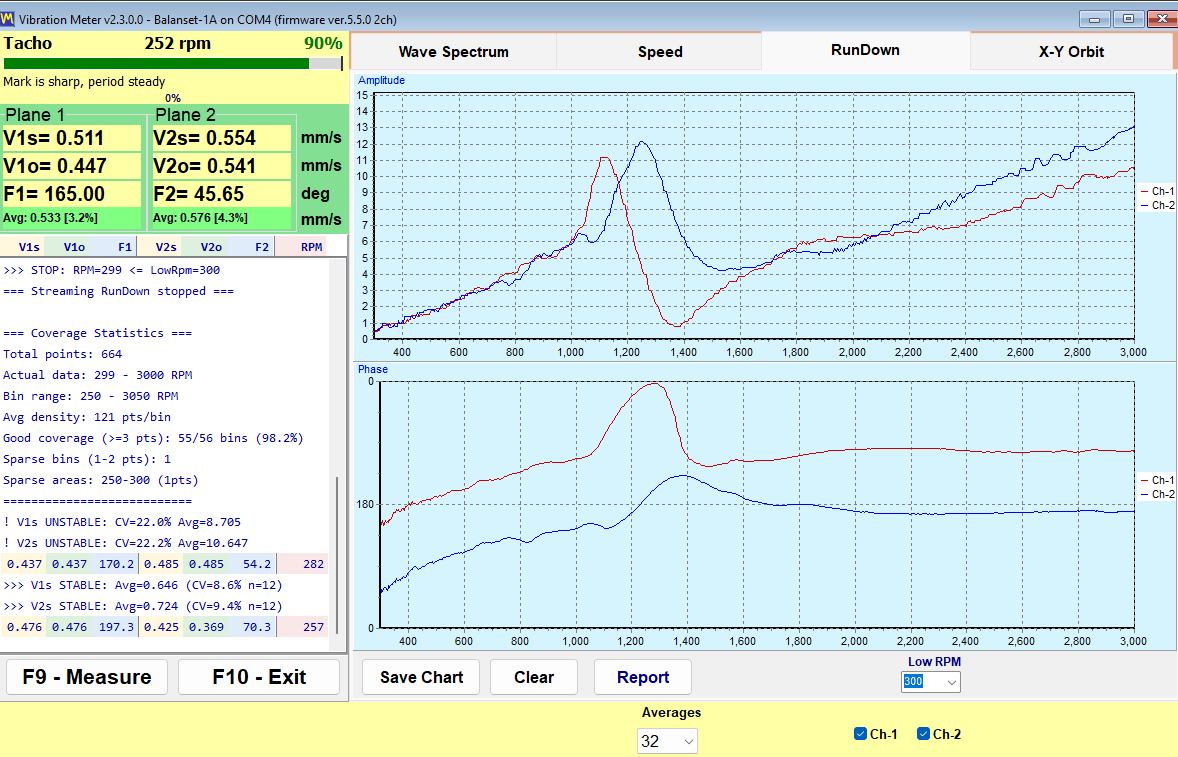
Какво да направите: балансирайте при различни обороти (RPM) — обикновено под резонанса. Типичната рецепта за мулчер: грубо балансиране при 600–900 rpm, после преминаване към работни обороти. По-новите версии на софтуера имат Графика RunDown (избег) — завъртете ротора, прекъснете задвижването и запишете изтичането на оборотите: пиковете разкриват резонансните честоти, а вие избирате оборотите за балансиране между тях.
Реален пример: роторът на клиент не се балансираше при 1600 об/мин, но се балансира добре при 1000 об/мин. Причината беше резонанс близо до 1600 об/мин.
Линейност и защо монтирате половината маса
Изчислението на уреда приема, че системата е линейна: двойна тежест — двоен отклик. При твърди машини със здрава основа това е близо до действителността. Но мулчер на трактор, машина на меки опори или конструкция с луфт и пукнатини се държи нелинейно: откликът на тежестта често не е пропорционален.
Оттук и доказаното на практика правило: монтирайте 1/2 (при лоши машини 1/3) от изчислената маса и направете контролен пуск. Уредът след това ще уточни остатъка. Това е по-бързо от повторно заваряване на голямо тегло, което “прехвърля” целта.
Статичен и динамичен небаланс
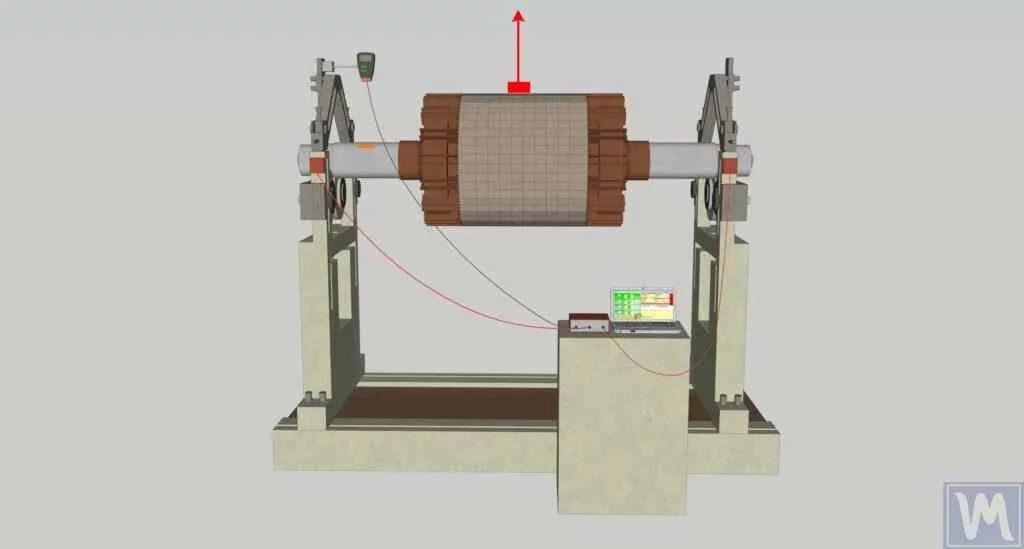
Статично — тежката точка е от едната страна на ротора. Спрян ротор върху свободни опори сам ще се завърти с тежката страна надолу. Коригира се с едно тегло в една равнина.
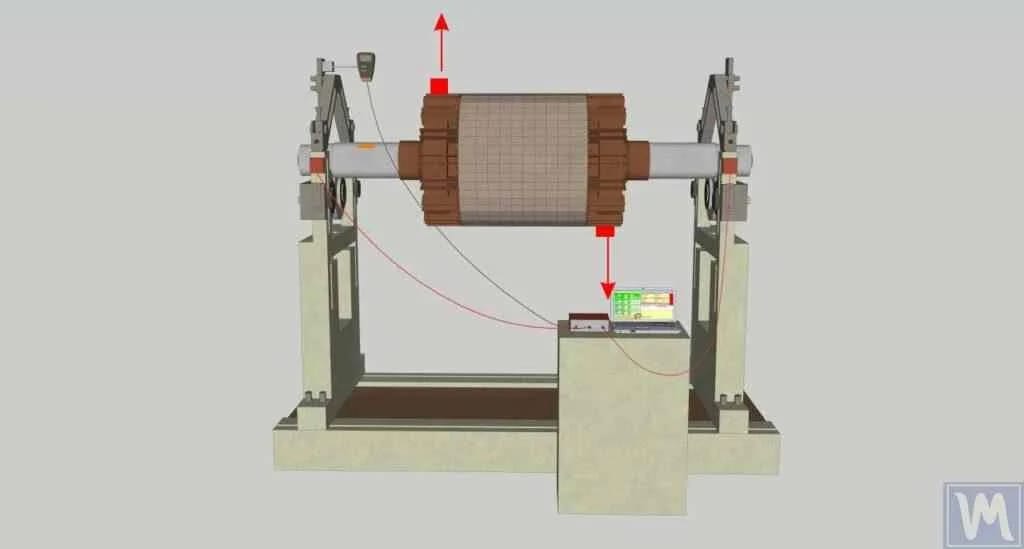
Динамичен — тежки точки в различните краища и от различните страни на ротора. Роторът не просто вибрира, той „клати се“, докато се върти. Необходими са тежести в две равнини. Не може да се открие статично: при завъртане на ротора на 90° двете тежести изглеждат сякаш се балансират взаимно, но при движение всяка тежка точка тегли в своя посока.
Една коригираща равнина или две?
- Една равнина — тесни ротори (дискове, ремъчни шайби, тесни работни колела). Емпирично правило по ISO 21940-11: ако ширината на ротора е по-малка от половината от диаметъра му (съотношение ~1:2; на практика поддръжката препоръчва 1:3) — една равнина е достатъчна.
- Две равнини — дълги ротори (барабани на мулчери, валове, ротори на комбайни, вентилатори при 3000 rpm и по-високи). Небалансът в двата края на ротора си влияе взаимно, затова устройството измерва два канала едновременно (сензори X1 и X2) и изчислява двете тегла едновременно.
Степени на качество на балансиране G (ISO 1940 / ISO 21940-11)
Остатъчният небаланс се задава в г·мм по степени G:
| Клас | Типична употреба |
|---|---|
| G16 | селскостопанска техника, карданни валове |
| G6.3 | вентилатори, барабани, ремъчни шайби, общи ротори — най-често срещаната степен |
| G2.5 | турбини, електродвигатели, металорежещи машини |
| G1 – G0.4 | шпиндели, прецизни ротори |
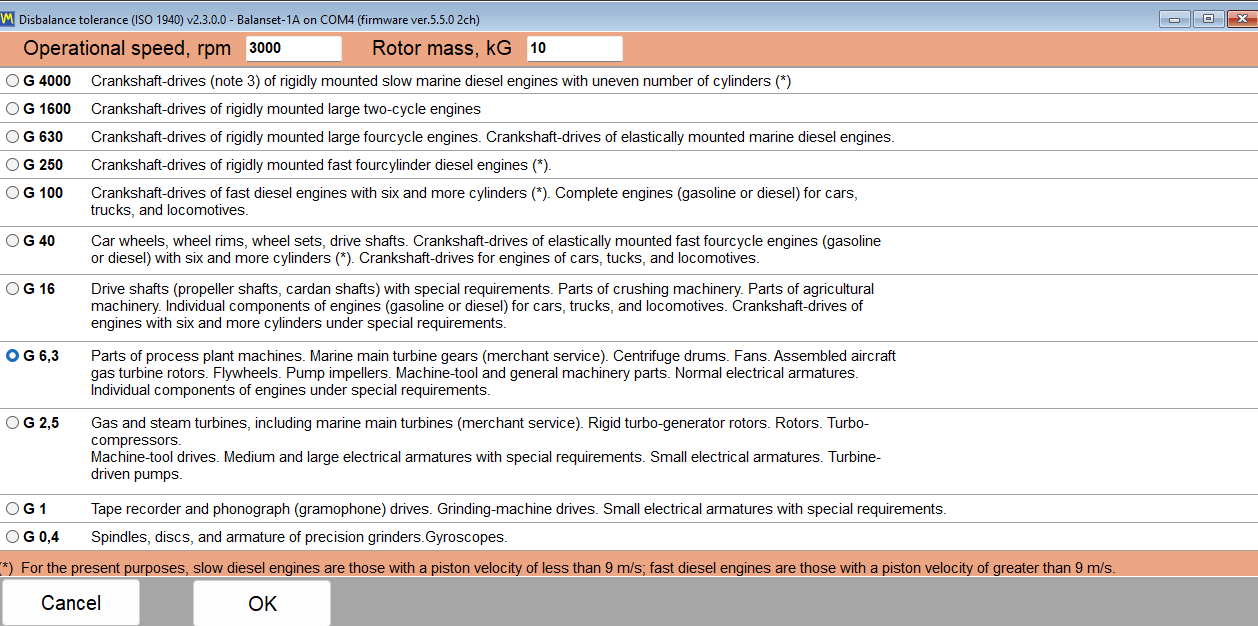
Колкото по-високи са оборотите (RPM) и по-малък е роторът — толкова по-строга е степента. Софтуерът Balanset има калкулатор на допуски: въведете маса на ротора, обороти (RPM) и степен G — той връща допустимия остатъчен дисбаланс в g·mm на равнина. Реален пример: ротор от 80 kg при 3000 rpm, G6.3 → допуск ≈ 802 g·mm на равнина.
Не бъркайте двете системи за оценка:
- mm/s (скорост на вибрация) — оценка на сглобената машина на място, съгласно ISO 10816/20816;
- г·мм (остатъчен дисбаланс) — оценка на самия ротор, по ISO 1940/21940. Балансировъчните машини работят в g·mm; полевото балансиране обикновено следи mm/s.
Мини-речник
| Срок | На прост език |
|---|---|
| Дисбаланс | Изместване на масата на ротора спрямо оста му на въртене |
| RMS | „Средната“ величина на вибрацията — стандартът за оценка |
| 1x, 2x, 3x | Компоненти на вибрацията при 1-во, 2-ро, 3-то кратно на честотата на въртене |
| FFT / спектър | Разлагане на вибрацията по честоти — какво причинява трептенето |
| Фаза | Ъгълът, който локализира небаланса |
| Тегло на изпитването | Известна маса, монтирана така, че уредът да може да “научи” реакцията на машината |
| Коефициенти на влияние | Методът на изчисление: как се е променила вибрацията при известно тегло → колко да монтирате и къде |
| Резонанс | Обороти (RPM), съвпадащи със собствена честота; вибрацията рязко нараства |
| RunDown (изтичане на оборотите) | Записване на вибрацията, докато роторът свободно намалява оборотите — начин за откриване на резонанси |
| г·мм | Единица за небаланс: маса × радиус на нейното разположение |

