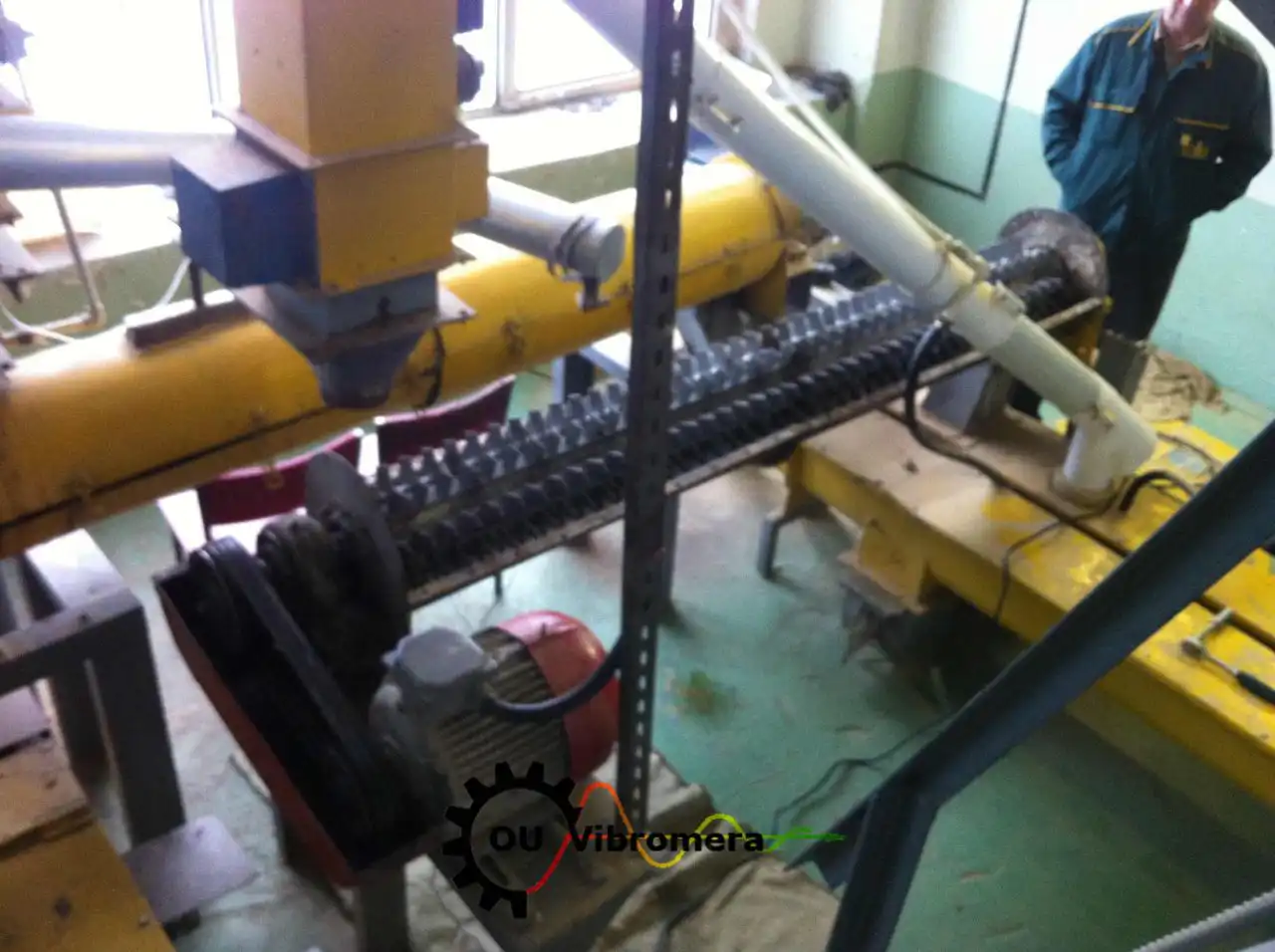
Auger Balancing at Flour Milling Plant
Screw conveyors are a key element of the technological process at flour milling enterprises. They ensure continuous transportation of grain and flour between various stages of production. Disruption of auger balancing can lead to serious problems in equipment operation and reduced production efficiency.
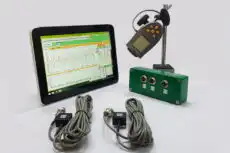
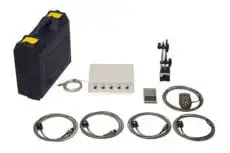
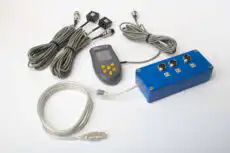
This article examines a practical case of screw conveyor balancing using the portable device Balanset-1A.
Role of the Auger in Flour Milling Production
An auger is a metal shaft with a complex helical surface designed for transporting bulk materials. In the flour milling industry, screw conveyors ensure the movement of grain and finished products over considerable distances with specified productivity.
Auger imbalance occurs when mass is unevenly distributed relative to the axis of rotation. This can happen for various reasons: manufacturing inaccuracies, uneven wear, material accumulation in certain zones of the helical surface.
Problem Diagnosis
During technical inspection of the equipment, the following signs of imbalance were identified:
- Increased vibration level of the screw conveyor housing
Measurements showed exceedance of permissible vibration values, which required balancing work.
Balancing Technology
The balancing procedure was performed according to the following methodology:
Preparatory Stage
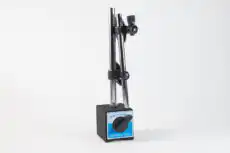
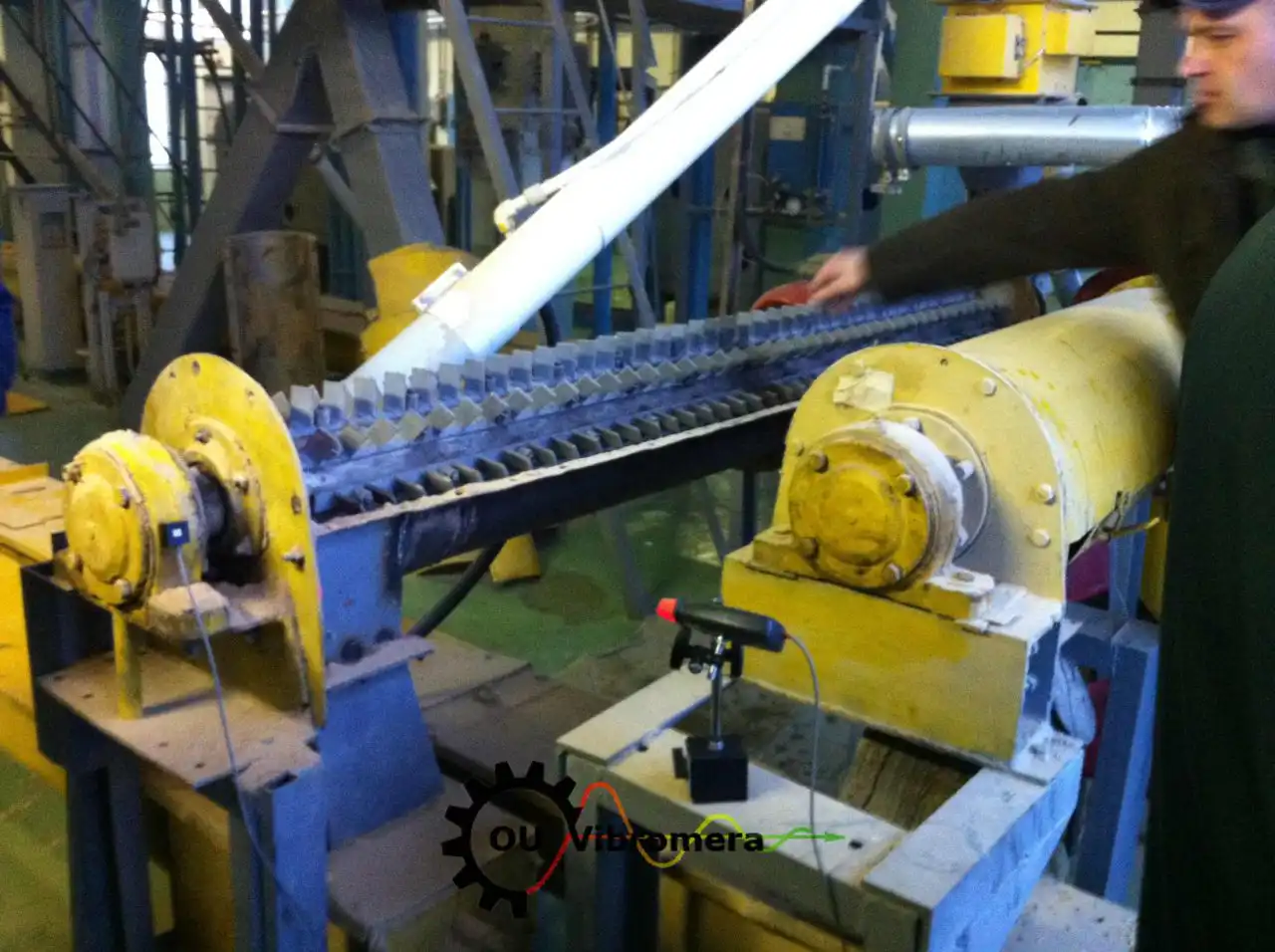
Equipment technical condition was checked, vibration sensors were installed on bearing housing supports, laser tachometer was configured to measure rotation frequency and phase characteristics.
Initial Measurements
Initial vibration parameters were recorded at the working rotation frequency of the auger. The type of imbalance was determined — for this rotor it is dynamic imbalance, requiring correction in two planes.
Trial Weight Installation
Calibrated trial weights were sequentially installed in each correction plane. The system automatically calculated influence coefficients based on changes in vibration parameters.
Correction Weight Calculation
The software automatically determined the masses and angular positions of permanent correction weights for each correction plane. Weights were installed and securely fastened considering the acting centrifugal forces.
Balancing Results
After completing the balancing procedure, control measurements showed a significant reduction in vibration level to values corresponding to technical requirements. Equipment was returned to operation.
For comparison: when balancing a similar auger weighing 500 kg at LLC "Ufatverdosplav" enterprise, it was possible to reduce the initial unbalance by 50 times. Residual imbalance was 3552 g×mm in the first plane and 2220 g×mm in the second plane — well within the balance quality grade G6.3 tolerance calculated for this auger at its service speed in accordance with ISO 21940-11 (formerly ISO 1940-1 / GOST ISO 1940-1).
Benefits of Quality Balancing
- Increased equipment service life: Reduction of dynamic loads decreases wear of bearings, couplings and other drive elements, extending maintenance intervals.
- Improved work efficiency: A balanced auger ensures uniform material transportation without pulsations and blockages in the technological line.
- Improved operating conditions: Vibration reduction decreases noise impact and creates safer working conditions for personnel.
- Reduced operating costs: Decreased electricity consumption, reduced maintenance and spare parts expenses.
- Increased production reliability: Elimination of unplanned equipment stops ensures technological process stability.
Conclusion
Balancing of screw equipment is an important component of technical maintenance at flour milling enterprises. The use of modern portable devices like Balanset-1A allows effective solution of imbalance elimination tasks directly at the equipment operation site.
Regular performance of balancing work contributes to maintaining high production efficiency, reducing operating costs and ensuring safety of technological processes.


Nikolai Shelkovenko
Nikolai Shelkovenko is a vibration analysis engineer and the founder and CEO of Vibromera. For more than 15 years he has balanced rotating equipment in the field rather than on a test bench: mulchers, industrial fans, crushers, centrifuges, shafts and spindles. That work is what the Balanset instruments grew out of — they were designed as a tool a specialist can carry to the machine and use alone, on site, not as laboratory equipment. Vibromera was founded in 2017 and has been based in Porto, Portugal, since 2023. Development, assembly and support of the Balanset line all happen here. The flagship instrument is the Balanset-1A, a portable analyser for single- and two-plane balancing and for vibration diagnostics. Nikolai is personally involved in customer support, in working through difficult balancing cases and in the development of the software. He works with customers worldwide, in any language.


0 Comments