← Balanset-1A zināšanu bāze — visas nodaļas
Divas novērtēšanas sistēmas: nejauciet tās
| Sistēma | Vienība | Ko tas novērtē | Kad izmantot |
|---|---|---|---|
| ISO 10816/20816 | mm/s (vibrācijas ātruma RMS) | Samontētā mašīna uz saviem balstiem | Lauka balansēšana, mašīnas pieņemšana |
| ISO 1940 / 21940-11 | g-mm (atlikušais nebalanss), G klases | Pats rotors | Balansēšanas iekārtas, rotora tehniskā datu lapa |
Ierīce rāda abus: vibrāciju mm/s un atlikušo disbalansu g·mm.
Novērtējums pēc vibrācijas (mm/s)
Vispārējā skala (tipiskām rūpnieciskām mašīnām):
| Zona | RMS, mm/s | Nozīme |
|---|---|---|
| A | līdz 1,4 | izcili — kā jaunai mašīnai |
| B | 1,4 – 2,8 | labi — piemērots ilgtermiņa ekspluatācijai |
| C | 2,8 – 4,5 | pieņemams ierobežotu laiku — plānojiet pasākumus |
| D | virs 4,5 | nepieņemami — bojājumu risks |
Regulējumi uz vietas:
- Mulčētāji/pļaujmašīnas: līdz 4,8 mm/s ir normāli; uz mīkstiem (atsperu) balstiem līdz 7,1 mm/s; ar lauksaimniecības koeficientu 1,2–1,3, “zem 8 mm/s jau ir labi”. Dzīties pēc 0,5 mm/s uz mulčētāja ir bezjēdzīgi.
- Ventilatori (ISO 14694): elastīgam stiprinājumam (gumijas balsti) ir savi ierobežojumi — mašīna ar 3,05 mm/s 1x komponenti uz gumijas balstiem tiek vērtēta kā “Laba”. Dažreiz ražotājs nosaka savu robežu (reāls piemērs: 2,78 mm/s).
- Vērojiet ne tikai kopējo vibrāciju, bet arī 1x komponenti: balansēšana samazina tieši to. Ja kopējā vibrācija ir 5 mm/s, bet 1x ir tikai 1 mm/s, turpmāka balansēšana gandrīz neko nedod. Pārējo vibrāciju rada citi cēloņi.
Novērtējums pēc atlikušā nebalansa (g·mm, G klases)
G klase nosaka pieļaujamo īpatnējo disbalansu, ņemot vērā apgriezienus. Jo ātrāk rotors griežas, jo mazāka ir pielaide.
| Pakāpe | Tipisks lietojums |
|---|---|
| G16 | kardānvārpstas, lauksaimniecības rotori |
| G6.3 | ventilatori, bungas, skriemeļi, vispārējas nozīmes elektromotori — noklusējuma izvēle |
| G2.5 | turbīnas, darbmašīnas, precīzie rotori |
| G1.0 / G0.4 | vārpstas, augstas precizitātes rotori |
Programmai ir ISO 1940 pielaides kalkulators: rotora masa + apgriezieni + klase → pieļaujamais atlikušais nebalanss uz plakni. Lauks “balansēšanas pielaide” ir izvēles — tas ir informatīvs.
Piemēri no reāla atbalsta:
- ~80 kg rotors pie 3000 apgr./min: G6.3 ≈ 802 g·mm uz plakni, G16 ≈ 2037 g·mm;
- Darbvārpstas balansē līdz G1.0–G0.4 klasei (atbalsta dienesta praksē sasniegta G0.1 klase);
- kuģa/rūpnieciskais ventilators pēc balansēšanas: 0,5–0,6 mm/s ir izcils rezultāts.
Kā izskatās parasta darba rezultāts
Salīdzinājumi „pirms → pēc“ no reāliem gadījumiem:
- mulčētājs: 25 → 3 mm/s un 40 → 11 mm/s (stipri saliekts rotors — 11 mm/s tur ir griesti);
- Seppi mulčētājs: >50 mm/s → „darbojas ļoti klusi“;
- 4500 kg drupinātāja rotors: 6 un 8 → 0,9 un 1,3 mm/s;
- universitātes ventilators: 4 un 7 → 0,5 un 0,6 mm/s;
- 24 tonnu cukura šķiedrotājs: 3,2 → 0,47 mm/s;
- kardānvārpsta: gala rezultāts 0,5 mm/s.
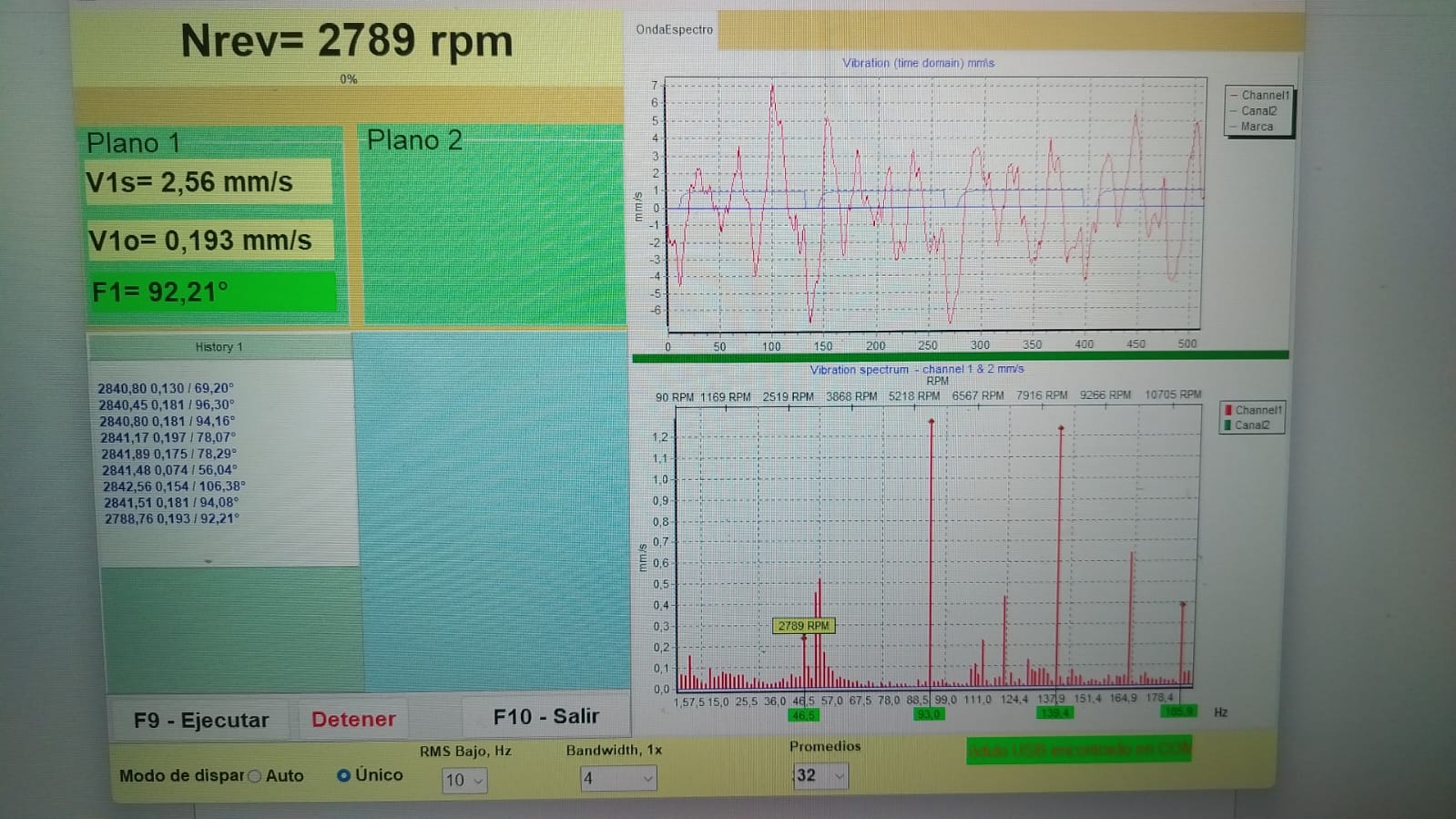
Kritums 3–10 reizes 1–2 iterācijās ir normāls veselai mašīnai. Ja pēc divām iterācijām krituma nav — nemetiniet vairāk; pārejiet uz cēloņa meklēšanu (7. nodaļa).
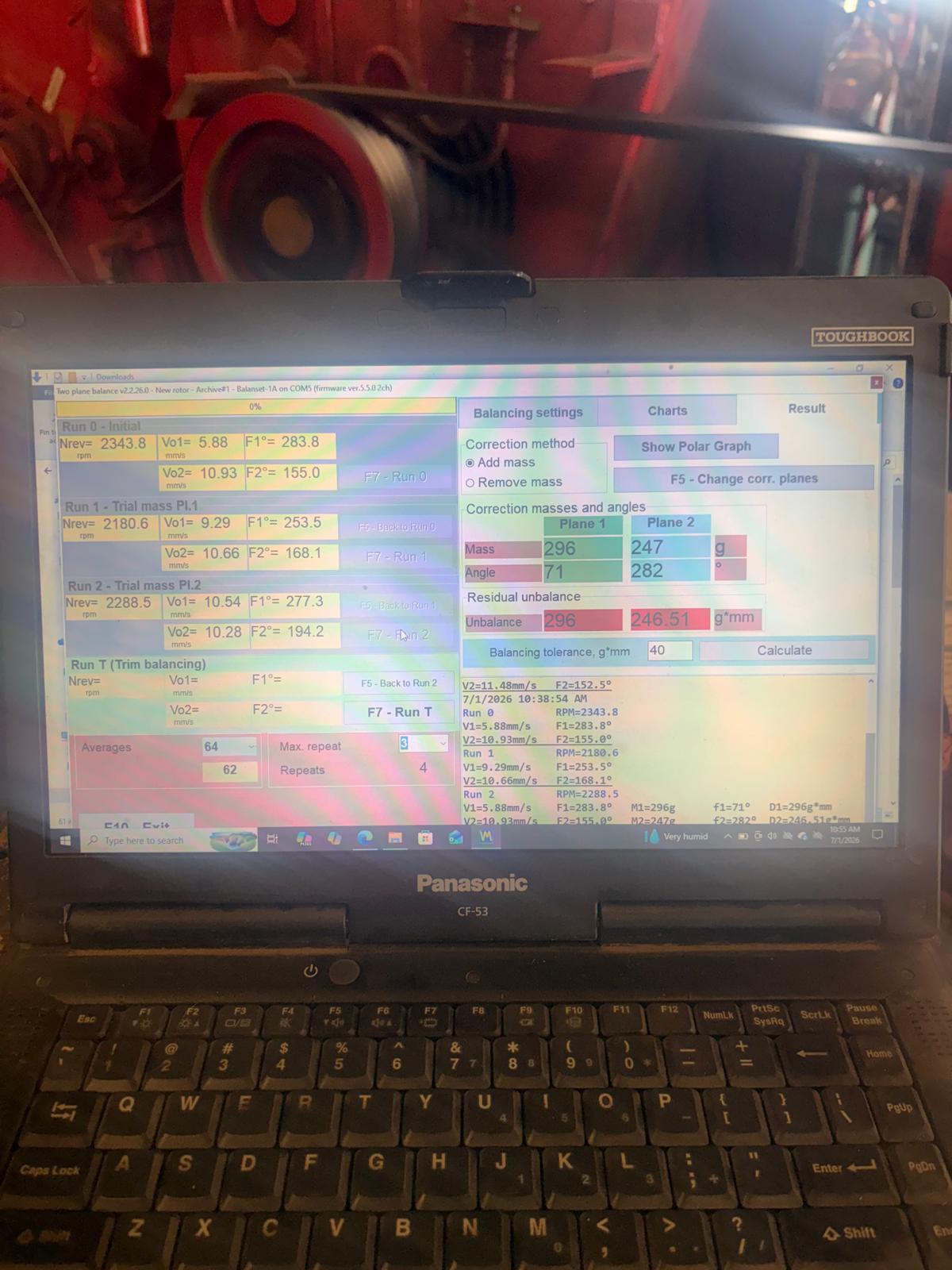
Atskaite
Programma izveido balansēšanas atskaiti: sākotnējā un gala vibrācija, apgriezieni, atsvaru masas un leņķi, atlikušais disbalanss. Veidnes atrodas mapē reporttpl, un tās var aizstāt ar savu uzņēmuma veidlapu. Klientam ar šo atskaiti pietiek darba izpildes apliecināšanai.
Par sertifikātiem: ierīci piegādā ar ražotāja kalibrēšanas sertifikātu. Ja klientam nepieciešams akreditētas laboratorijas sertifikāts (ISO/IEC 17025), to par atsevišķu samaksu sagatavo vietējā laboratorijā. Pašai ierīcei ikgadēja kalibrēšana nav vajadzīga.

