हंटिंग टूथ फ्रिक्वेन्सी समजून घेणे


हंटिंग टूथ फ्रिक्वेन्सी (HTF — ज्याला assembly phase frequency किंवा greatest-common-divisor frequency असेही म्हणतात) ही कमी-वारंवारतेची vibration घटक वारंवारता आहे जी gear pair मध्ये समान individual tooth on the pinion comes back into contact with the same individual tooth on the gear. It is governed by the least common multiple (LCM) of the two tooth counts and is normally a very low frequency — well below shaft speed — that appears as a slow, periodic amplitude modulation of the गीअर मेश वारंवारिता (GMF) आणि त्याचे sidebands.
HTF निदानासाठी महत्त्वाचा आहे कारण या दरावर येणारे vibration हे विशिष्ट स्वतंत्र दात — जसे crack झालेला tooth, स्थानिक spall किंवा eccentric mounting — यांमधील समस्यांकडे निर्देश करते, gear set च्या सर्वसाधारण स्थितीकडे नव्हे. त्यामुळे HTF sidebands ओळखल्यास विश्लेषकाला नेमका कोणता gear, आणि अगदी कोणता tooth, दोषाचा स्रोत आहे हे शोधता येते; म्हणूनच गिअर दोष निदान.
1. व्याख्या आणि भौतिक अर्थ
दोन gears एकत्र चालत असताना pinion चा दिलेला tooth एकामागून एक अनेक gear teeth शी प्रत्येक revolution मध्ये mesh होतो. तो पुन्हा त्याने पहिल्यांदा स्पर्श केलेल्या gear tooth कडे कधी परत येतो — आणि किती लवकर — हे दोन्ही tooth counts मधील अंकगणितीय संबंधावर अवलंबून असते. Hunting tooth frequency म्हणजे त्या पुनरागमनाचा दर. HTF कमी असल्यास विशिष्ट tooth pair फार क्वचित भेटते; HTF जास्त असल्यास तेच काही tooth pairs वारंवार भेटतात.
याचे दोन विरुद्ध परिणाम होतात. Wear च्या दृष्टीने कमी HTF चांगला: damage आणि manufacturing error सर्व teeth मध्ये पसरतात. Diagnostics च्या दृष्टीने हाच कमी HTF एका खराब tooth ची vibration signature स्वच्छ once-per-revolution घटना म्हणून एकवटतो, जी सहज दिसते. हा आकडा समजल्यास दोन्ही गोष्टी एकाच वेळी वाचता येतात.
2. गणितीय पाया
सूत्र
HTF = GMF / LCM(N₁, N₂) = GMF × GCD(N₁, N₂) / (N₁ × N₂)
- N₁ = pinion वरील teeth ची संख्या
- N₂ = gear वरील teeth ची संख्या
- GMF = gear mesh frequency = N₁ × pinion speed (Hz) = N₂ × gear speed (Hz)
- LCM = the least common multiple of N₁ and N₂ (equal to N₁ × N₂ / GCD, where GCD is the greatest common divisor)
HTF ज्याला modulate करतो तो GMF स्वतः कोणत्याही gear साठी N × shaft speed असतो; a गीअर मेश फ्रिक्वेन्सी कॅल्क्युलेटर GMF आणि त्याचा sideband family थेट मोजतो, तर a gear ratio calculator सूत्र लागू करण्यापूर्वी लागणारा input/output speed संबंध हाताळतो.
उदाहरण 1: hunting-tooth pair
- पिनियन: 1800 RPM वरील 23 दात
- गिअर: 67 दात
- GCD(23, 67): 1 — both are prime, so they share no common factor; LCM(23, 67) = 23 × 67 = 1541
- GMF: 23 × (1800 / 60) = 690 Hz
- HTF = 690 / 1541 ≈ 0.45 Hz — the same tooth pair meets only about once every 2.2 seconds, far below the 30 Hz pinion shaft speed
- अर्थ: pattern repeat होण्यापूर्वी pinion चा प्रत्येक tooth gear च्या प्रत्येक tooth शी mesh होतो
- Result: सर्वोत्तम wear distribution असलेला खरा hunting-tooth gear
उदाहरण 2: non-hunting pair
- पिनियन: 1800 RPM वर 20 दात
- गिअर: 60 दात
- GCD(20, 60): 20; LCM(20, 60) = 60
- GMF: 20 × (1800 / 60) = 600 Hz
- HTF = 600 / 60 = 10 Hz — equal to the output (gear) shaft speed
- अर्थ: only 20 distinct tooth pairs exist, and each pair re-meshes ten times every second
- Result: त्याच teeth वर एकवटलेला wear pattern
उदाहरण 3: मध्यम स्वरूपाचे प्रकरण
- पिनियन: 3600 RPM वरील 18 दात
- गिअर: 54 दात
- GCD(18, 54): 18; LCM(18, 54) = 54
- GMF: 18 × (3600 / 60) = 1080 Hz
- HTF = 1080 / 54 = 20 Hz
- नमुना: only 18 distinct tooth-contact pairs exist, each repeating 20 times per second
3. Hunting विरुद्ध Non-Hunting Gear Sets
Hunting-tooth design (GCD = 1)
Tooth numbers परस्पर prime असतील (सामान्य factors नसतील) तेव्हा मिळते:
- लाभ:
- Pinion चा प्रत्येक tooth अखेरीस gear च्या प्रत्येक tooth शी mesh होतो.
- Wear सर्व teeth वर समानपणे वितरित होतो.
- Manufacturing errors वाढवले जात नाहीत, तर सरासरीत विरघळतात.
- Gear चे आयुष्य जास्त.
- बहुतेक applications साठी प्राधान्याचा पर्याय.
- तोटे:
- A defect involving one specific tooth pair repeats only at the very low HTF (a small fraction of shaft speed), so long time records are needed to resolve it. A single damaged tooth still impacts once per revolution of its own shaft.
- यासाठी अधिक अचूक manufacturing लागू शकते.
Non-hunting design (GCD > 1)
Tooth numbers मध्ये समान factors असतील तेव्हा होते:
- लाभ:
- Tooth-count निवडणे सोपे.
- Standard, off-the-shelf gear sizes वापरता येऊ शकतात.
- तोटे:
- तेच teeth वारंवार mesh होतात (फक्त GCD इतकी unique pairs अस्तित्वात असतात).
- Wear त्याच tooth pairs वर एकवटतो.
- विशिष्ट teeth वरील manufacturing errors प्रत्येक cycle ला पुन्हा येतात.
- सामान्यतः gear आयुष्य कमी.
- उत्तम gearbox design मध्ये साधारण टाळले जाते.
4. Vibration Signature
HTF in the spectrum and waveform
HTF rarely appears as a strong standalone peak, and it is usually far too low to be resolved as sideband spacing. Sidebands around the mesh frequency in the कंपन स्पेक्ट्रम are spaced at the shaft speeds of the two gears; HTF itself shows up as a slow, periodic amplitude modulation (a beat) of the mesh vibration:
- मध्यवर्ती शिखर: GMF (gear mesh frequency) मध्ये.
- साइडबँड्स: GMF ± 1×, 2×, 3× the shaft speed of the gear carrying a localised defect.
- HTF signature: a slow beat in the time waveform — the overall vibration level swells and fades at the HTF rate (typically a fraction of a hertz to a few hertz).
- अर्थ लावणे: modulation repeating at HTF points to a fault involving a particular tooth pair, such as a damaged pinion tooth periodically striking a damaged gear tooth; the modulation depth reflects the severity of the localised defect.
हे sidebands उच्च mesh frequency च्या भोवती cluster होतात आणि दाट असू शकतात, म्हणून त्यांना उघड करण्यासाठी दोन तंत्रे उपयोगी पडतात. सेप्स्ट्रम विश्लेषण नियमित spacing असलेल्या sideband family ला एका quefrency line मध्ये collapse करते, ज्यामुळे spacing सहज वाचता येते, आणि लिफाफा विश्लेषण modulated mesh signal मधून खराब tooth चा once-per-revolution impact परत मिळवते.
निदान नमुने
एकच खराब tooth: strong sidebands around GMF spaced at the shaft speed of the gear carrying the damaged tooth; one impact per revolution of that gear; the time waveform मध्ये स्पष्ट periodic impulse दिसतो.
Gear eccentricity: shaft-speed sidebands arising from runout or eccentric mounting; tooth-engagement depth varies once per revolution, amplitude-modulating the GMF; usually correctable by remounting or runout compensation (see विकेंद्रता).
Damage on both gears (tooth-pair fault): when a damaged pinion tooth periodically meets a damaged gear tooth, the vibration swells and fades at the low HTF rate — a slow beat superimposed on the mesh vibration; may require gear replacement, or acceptance if it falls within tolerance.
5. व्यावहारिक निदान
दोष असलेला gear ओळखणे
कोणत्या member — pinion की main gear — वर दोष आहे हे शोधण्यासाठी:
- दोन्ही shaft speeds मोजा: input आणि output RPM.
- Sideband spacing मोजा vibration spectrum मधून.
- जर spacing = input shaft frequency → दोष pinion वर आहे.
- जर spacing = output shaft frequency → दोष gear वर आहे.
- निष्कर्ष: sideband spacing कोणता shaft — आणि म्हणून कोणता gear — समस्या आहे ते ओळखते.
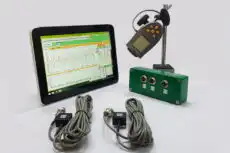
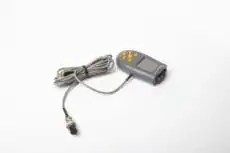
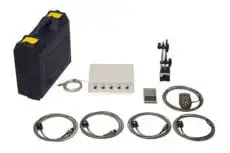
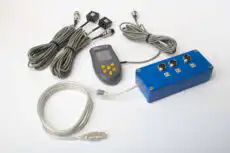
हे अगदी portable two-channel analyser साठी योग्य असे मापन आहे. Optical tachometer च्या मदतीने data ला shaft angle शी lock करून the Balanset-1A gearbox housing वर spectrum आणि time waveform capture करतो, ज्यामुळे ज्ञात input आणि output speeds विरुद्ध sideband spacing मोजता येते, आणि cracked tooth मुळे येणारा once-per-revolution impulse waveform मध्ये पुष्टी करता येतो — casing न उघडता, चालू मशीनवरच. A harmonic frequency calculator नंतर मोजलेला RPM अचूक Hz values मध्ये रूपांतरित करतो, ज्यांचा शोध घ्यायचा आहे.
तीव्रतेचे मूल्यांकन
- Sideband amplitude: जास्त amplitudes अधिक तीव्र स्थानिक दोष दर्शवतात.
- Sidebands ची संख्या: अधिक sidebands (उच्च orders) म्हणजे अधिक खराब स्थिती.
- टाइम वेव्हफॉर्म: स्पष्ट periodic impulse हा स्वतंत्र tooth impact ची पुष्टी करतो.
- GMF शी तुलना: GMF amplitude च्या ~25% पेक्षा जास्त sidebands हे लक्षणीय दोष दर्शवतात — उपयुक्त दोष-तीव्रता मर्यादा.
6. Design considerations
Tooth numbers निवडणे
- Prime numbers वापरा जिथे शक्य असेल तिथे GCD = 1 (hunting-tooth design) करण्यासाठी.
- सामान्य factors टाळा — 20:60 (GCD = 20) सारख्या pairings टाळा.
- चांगली उदाहरण pairs: 17:51, 19:57, 23:69 (सर्व GCD = 1).
- तडजोड: या बंधनामुळे उपलब्ध gear ratios वर थोडी मर्यादा येऊ शकते.
Non-hunting कधी स्वीकार्य आहे
- Low-load applications जिथे wear महत्त्वाचा नाही.
- जिथे अचूक ratio बंधनकारक आहे अशा standard gear sets.
- Short-life applications, जिथे wear distribution कमी महत्त्वाचे असते.
- जिथे manufacturing फायदे wear penalty पेक्षा जास्त असतात.
7. इतर gear frequencies शी संबंध
Gearbox मधील वारंवारतेची hierarchy
- शाफ्ट वेग: 1× for input and output — the lowest rotational frequencies.
- HTF: normally the lowest frequency of all — a small fraction of shaft speed in a hunting design (GCD = 1), and never higher than the slower shaft speed even in a non-hunting one.
- GMF: teeth ची संख्या × shaft speed — सर्वात उच्च primary frequency.
- GMF harmonics: 2×GMF, 3×GMF वगैरे, mesh non-linearities आणि बॅकलॅश.
Sideband analysis strategy
- shaft-speed spacing वरील sidebands → eccentric gear किंवा independent-tooth defect.
- Slow amplitude modulation (beating) at the HTF rate → a repeating tooth-pair issue, such as matched damage on both gears.
- स्पष्ट sidebands नाहीत → सर्वत्र वितरित गिअर घासझीज, किंवा फक्त निरोगी gear.
Hunting tooth frequency ही gear dynamics मधील सूक्ष्म पण महत्त्वाची बाब असली तरी ती शक्तिशाली निदानात्मक माहिती देते. HTF ची गणना समजून घेणे आणि HTF sidebands ओळखणे यामुळे विश्लेषकाला नेमक्या कोणत्या gear मध्ये दोष आहे आणि समस्या एका खराब tooth पुरती आहे की अधिक वितरित स्थिती आहे हे ओळखता येते — आणि त्यामुळे gearbox troubleshooting मध्ये लक्ष्यित व आत्मविश्वासपूर्ण maintenance निर्णय घेता येतात.

