Аңдау Тістің Жиілігін түсіну




Аңдау тістің жиілігі (HTF — сондай-ақ құрамдасу фазасының жиілігі немесе ең үлкен ортақ бөлінгіш жиілігі деп аталады) төмен жиілік vibration компоненті шестеренке жұбында болады, ол бір-бір тіс механизмінің барлығында same individual tooth on the pinion comes back into contact with the same individual tooth on the gear. It is governed by the least common multiple (LCM) of the two tooth counts and is normally a very low frequency — well below shaft speed — that appears as a slow, periodic amplitude modulation of the шестерге торлау жиілігі (GMF) and its sidebands.
HTF диагностикалық ұлғайту үшін маңызды, себебі осы жиілік ішінде берілген вибрация проблемалар болуын көрсетеді анықталған жеке тістердің — сынық тіс, жергілік спалл немесе эксцентрикалық орнату — барлық шестеренке жиынтығының жалпы жағдайы емес. Сондықтан HTF бүйіндік демалыс талдаушыға қайсысы шестеренке және тіс экінші болғанын анықтауға көмектеседі, оны кеңінен құрал жынындағы өндіктер арасында біреуі етеді gear defect diagnosis.
1. Анықтамасы және физикалық мағынасы
Екі шестеренке өндіктерде болғанда, белгілі пара шестердің тісі шестеренке тістерінің секісін, шарты шарты әрбір өндік. Оның қайтадан бірінші шестеренке тіске жүгінісінің бәрі — және қатысу жылдамдығы — екі тіс сандарының арифметикалық қатынасына тәуелді. Аулау тісінің жиілігі осы оралудың жылдамдығы. Төмен HTF бір жұбы тістердің сәл кездессегінін, жоғарыңғы HTF тіс жұптарының бірдей комплектеместің қайтадан әрбір және әрбір болуы.
Бұл екі нәтижесі болады, сонда қарама-қарсы бағыттар. Өндіктердің қиындығы үшін төмен HTF жақсы: зиян және өндіктер барлық тістемесінде таралады. Диагностика үшін, сол төмен HTF біреу нашар тістің вибрация салымын сұрамалар төмен өндіктердің оралуындағы іс-әрекетке біліктеледі. Саны түсінгеніңіз екі істі бірге оқуға мүмкіндік береді.
2. Математикалық негізі
The formula
HTF = GMF / LCM(N₁, N₂) = GMF × GCD(N₁, N₂) / (N₁ × N₂)
- N₁ = number of teeth on the pinion
- N₂ = шестеренке тістерінің саны
- GMF = gear mesh frequency = N₁ × pinion speed (Hz) = N₂ × gear speed (Hz)
- LCM = the least common multiple of N₁ and N₂ (equal to N₁ × N₂ / GCD, where GCD is the greatest common divisor)
HTF модуляциясы істелген GMF өзі кез келген шестеренке үшін N × вал жиілігі тісті дөңгелектің торлау жиілігін есептеу құралы GMF және оның бүйіндік отбасын тура есептеулер, түсіктеме шестеренке қатынас калькулятор формуласын қолдану бойынша қажет болатын енгіз/шығыс жылдамдық қатынасын орындайды.
Мысал 1: аулау-тіс жұбы
- Pinion: 1800 RPM-де 23 тіс
- Gear: 67 teeth
- GCD(23, 67): 1 — both are prime, so they share no common factor; LCM(23, 67) = 23 × 67 = 1541
- GMF: 23 × (1800 / 60) = 690 Hz
- HTF = 690 / 1541 ≈ 0.45 Hz — the same tooth pair meets only about once every 2.2 seconds, far below the 30 Hz pinion shaft speed
- Meaning: барлық пара тістер барлық шестеренке тістемесінде байланысқа келеді де, үлгі қайталанға дейін
- Result: ең оңтайлы тозу бөлінісімен құрылған сегіс өндіргіш тісті дөңгелек
Мысал 2: санау ережесіне құлмаушы жұп
- Pinion: 1800 айн/мин-та 20 тіс
- Gear: 60 teeth
- GCD(20, 60): 20; LCM(20, 60) = 60
- GMF: 20 × (1800 / 60) = 600 Hz
- HTF = 600 / 60 = 10 Hz — equal to the output (gear) shaft speed
- Meaning: only 20 distinct tooth pairs exist, and each pair re-meshes ten times every second
- Result: бір ғана тістің қайта орындалатын іске түсінік түрі
Мысал 3: аралық жағдай
- Pinion: 3600 айн/мин-та 18 тіс
- Gear: 54 teeth
- GCD(18, 54): 18; LCM(18, 54) = 54
- GMF: 18 × (3600 / 60) = 1080 Hz
- HTF = 1080 / 54 = 20 Hz
- Pattern: only 18 distinct tooth-contact pairs exist, each repeating 20 times per second
3. Сегіс өндіргіш және санау ережесін орындамайтын дөңгелек жынстары
Сегіс өндіргіш дизайны (ЕҚБ = 1)
Тіс санының өзара аралас сандарда болған кезде (ортақ көбейткіштері болмаса):
- Advantages:
- Әрбір пинион тісі бүкіл дөңгелек тістерімен барлық рет түсінікке ие болады.
- Тозу барлық тістер бойынша бірлік түрінде таралады.
- Өндіру қателіктері күшейтіліп ғана емес, орта есеппе жүргісінше.
- Дөңгелектің ұзақ жұмыс ресурсы.
- Көптеген қажеттіліктер үшін іс жүргіледі.
- Disadvantages:
- A defect involving one specific tooth pair repeats only at the very low HTF (a small fraction of shaft speed), so long time records are needed to resolve it. A single damaged tooth still impacts once per revolution of its own shaft.
- Ең тиімді өндіру мәтінінің талап ітуі мүмкін.
Санау ережесін орындамайтын дизайн (ЕҚБ > 1)
Тіс сандары ортақ көбейткіштерге ие болғанда орын алады:
- Advantages:
- Тіс санын таңдау қарапайым.
- Стандартты, дайын емес редуктор өлшемдерін пайдалануға мүмкіндік беруі мүмкін.
- Disadvantages:
- Бір ғана тістер бірге зақым салады (тек GCD ерекше жұптары болады).
- Тозуу осы ғана тіс жұптарына шоғырланады.
- Өндіріс қателіктері нақты тістерде әр цикльда қайталанады.
- Редуктордың өмірі қысқарады, әдетте.
- Сапалы редуктор дизайнында жалпы түрде сиқырдалады.
4. Вибрация сигнатурасы
HTF in the spectrum and waveform
HTF rarely appears as a strong standalone peak, and it is usually far too low to be resolved as sideband spacing. Sidebands around the mesh frequency in the вибрация спектрін are spaced at the shaft speeds of the two gears; HTF itself shows up as a slow, periodic amplitude modulation (a beat) of the mesh vibration:
- Central peak: GMF (тіс сетелесу жиілігі).
- Sidebands: GMF ± 1×, 2×, 3× the shaft speed of the gear carrying a localised defect.
- HTF signature: a slow beat in the time waveform — the overall vibration level swells and fades at the HTF rate (typically a fraction of a hertz to a few hertz).
- Interpretation: modulation repeating at HTF points to a fault involving a particular tooth pair, such as a damaged pinion tooth periodically striking a damaged gear tooth; the modulation depth reflects the severity of the localised defect.
Бұл сидебендтер жоғары сетелесу жиілігінің айналасында топталғандықтан және төтенше болуы мүмкін, екі техника оларды ашуға көмектеседі. Кепструм талдауы Тұрақты сидебенд отбасын жалғыз quefrency сызығына ығыстырады, интервалды оқуды қарапайым етеді, және конвертті анализы модульденген сетелесу сигналынан зақымдалған тістің революцияға бір рет әсерін қайта орнатады.
Диагностикалық ығындар
Бір зақымдалған тіс: strong sidebands around GMF spaced at the shaft speed of the gear carrying the damaged tooth; one impact per revolution of that gear; the time waveform анық периодты импульс көрсетеді.
Редукторды эксцентриттігі: shaft-speed sidebands arising from runout or eccentric mounting; tooth-engagement depth varies once per revolution, amplitude-modulating the GMF; usually correctable by remounting or runout compensation (see eccentricity).
Damage on both gears (tooth-pair fault): when a damaged pinion tooth periodically meets a damaged gear tooth, the vibration swells and fades at the low HTF rate — a slow beat superimposed on the mesh vibration; may require gear replacement, or acceptance if it falls within tolerance.
5. Практикалық диагностика
Ақауы бар редукторды анықтау
Қандай құрамды - пиньон немесе негізгі редуктор - ақаулы екенін анықтау үшін:
- Екі вал жылдамдығын есептеңіз: кіреу және шығару RPM.
- Сидбанддар арасындағы қашықтықты өлшеңіз вибрация спектрінен.
- Егер қашықтық = кіреу валы жиілігі → ақау пиньонда болады.
- Егер қашықтық = шығару валы жиілігі → ақау редуктордың шпорында болады.
- Қорытынды: сидбанд қашықтығы қайсы вал - және сондықтан қайсы редуктор - мәселе болғанын анықтайды.
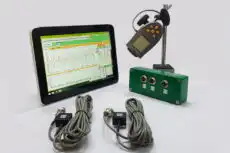
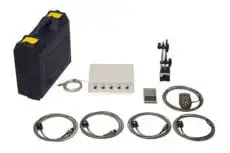
Бұл дәл портативті екі-канальды анализатор үшін дәлік жасалған өлшеу. Оның оптикалық тахометрі деректерді валының бұрышына құлпылағанмен, Балансет-1А редукторлық корпусына спектр және уақыт толқынын түсіндіреді, сонда сидбанд қашықтығы белгілі кіреу және шығару жылдамдықтарына қарсы өлшенуі мүмкін, және сынық тістің бір айналымдық импульсі толқын түрінде растала алады — барлығы жұмыс істеген машинада, корпусты ашпай. A гармоникалық жиіліктерді есептеудің калькуляторы өлшенген RPM-ді іздеу үшін дәл Hz мәндеріне түрлендіреді.
Вибрация ауырлығын бағалау
- Сидбанд амплитудасы: жоғары амплитудалар ақауларының ауырлығын көрсетеді.
- Бүйін ширек санлы пиндердің саны: көп бүйін ширек пиндері (жоғарғы ретті) машина жағдайының нашарлығын көрсетеді.
- Time waveform: анық периодты соққы жеке тіс ұрылуын растайды.
- GMF-пен салыстыру: GMF амплитудасының ~25% үстінде орналасқан бүйін ширек пиндері айтарлықтай ақауларды көрсетеді — пайдалы defect-severity threshold.
6. Конструкциялық ойластырулар
Тіс санларын таңдау
- Мүмкіндігінше жай сандарды пайдалану GCD = 1 болуына мәжбүр ету үшін (аңдатылған мотор конструкциясы).
- Ортақ көбейткіштерден сақтану — 20:60 сияқты (GCD = 20) біріктіулерінен аулақ болыңыз.
- Жақсы мысал біріктіулері: 17:51, 19:57, 23:69 (барлығы GCD = 1).
- Trade-off: шектеу қол жетімді қосарлау қарқындарын сәл шектей алады.
Ағын емес ішінің қабылдауға лайықты болғанда
- Ынамдығы жоғары қосарлау қосарлауларының жүргенінің маңаты жоқ болғанда.
- Стандартты қосарлау жиынтығы, мұндағы нақты қарқындыру міндетті болғанда.
- Қысқа ағынды қолдану, мұнда жүргеннің таралуы аз маңалы.
- Өндіріс ондықтарының жүргеннің айынына басым болғанда.
7. Басқа тісті жиілігіне қатынасы
Редуктордағы жиілік иерархиясы
- Shaft speeds: 1× for input and output — the lowest rotational frequencies.
- HTF: normally the lowest frequency of all — a small fraction of shaft speed in a hunting design (GCD = 1), and never higher than the slower shaft speed even in a non-hunting one.
- GMF: тістердің саны × вал жылдамдығы — ең жоғарғы бірінші деңгейдегі жиілік.
- GMF harmonics: 2×GMF, 3×GMF and so on, arising from mesh non-linearities and backlash.
Бүйіндік талдау стратегиясы
- Вал жылдамдығының интервалында орташа қара — эксцентрикалық тіс немесе жеке тістің ақауы.
- Slow amplitude modulation (beating) at the HTF rate → a repeating tooth-pair issue, such as matched damage on both gears.
- Анық орташа қара болмаса — жалпы бөлінген gear wear, немесе жай ғана сау тіс.
Қуван тісті жиілігі, тіс динамикасының ұсақ бұрышының бөлігі болса да, күшті диагностикалық ақпарат береді. HTF есептеуін түсіну және HTF орташа қараны тану анализаторға дәл қайсы тістің ақауы бар екенін және ақау жалпақ бір сломаланған тіс болса немесе ауыр таралған жағдай болса анықтап, редуктор істі әрітеуде мақсатты, сенімді техникалық қызмет өндіктерін басқарады.

