ISO 10816-3: Vibration Limits for Industrial Machines
The practical standard providing specific RMS velocity limits and evaluation zones for pumps, motors, fans, compressors, and other industrial machines rated 15 kW and above.



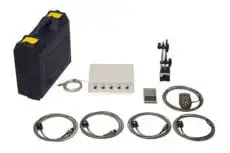



Quick Reference: Vibration Severity Limits
Measure broadband RMS velocity (mm/s) on the bearing housing. Classify your machine, then find your zone below.
Evaluation Criteria — RMS Velocity (mm/s)
ISO 10816-3 zone boundary values for industrial machines
| Machine Group | Zone A / B | Zone B / C | Zone C / D |
|---|---|---|---|
| ಗುಂಪು 1 Large, rigid foundation, >300 kW | 0.71 | 1.8 | 4.5 |
| Group 2 ★ Medium, rigid foundation, 15–300 kW | 1.12 | 2.8 | 7.1 |
| ಗುಂಪು 3 Large, flexible foundation, >300 kW | 1.8 | 4.5 | 11.2 |
| ಗುಂಪು 4 Medium, flexible foundation, 15–300 kW | 2.8 | 7.1 | 18.0 |
Newly commissioned machines. Typical of new or recently overhauled equipment in excellent condition.
Acceptable for unrestricted long-term operation. Most well-maintained machines operate here.
Not suitable for continuous operation. Investigate root cause and plan corrective maintenance.
Danger of damage. Immediate shutdown and corrective action required to prevent failure.
Imperial Units — RMS Velocity (in/s)
Equivalent values for regions using imperial measurement system (1 mm/s ≈ 0.03937 in/s)
| Machine Group | Zone A / B | Zone B / C | Zone C / D |
|---|---|---|---|
| ಗುಂಪು 1 | 0.028 | 0.071 | 0.177 |
| Group 2 ★ | 0.044 | 0.110 | 0.280 |
| ಗುಂಪು 3 | 0.071 | 0.177 | 0.441 |
| ಗುಂಪು 4 | 0.110 | 0.280 | 0.709 |
⚡ Vibration Zone Calculator
Enter your machine parameters and measured vibration to instantly determine the ISO 10816-3 zone
Visual Comparison of Zone Boundaries
The proportional width of each zone shows how limits expand for flexibly mounted and larger machines.
What is ISO 10816-3?
ISO 10816-3 is one of the most widely referenced industrial vibration standards in the world. Published by the International Organization for Standardization, it provides specific numerical limits for vibration severity on common rotating industrial machines. It serves as the direct, practical application of the general framework established in ISO 10816-1: while Part 1 explains the general principles of how to measure and evaluate machine vibration, Part 3 gives you the actual numbers—the RMS velocity values in mm/s—that define whether a machine's vibration is acceptable or dangerous.
The standard divides vibration severity into four evaluation zones (A through D) for four different machine groups, based on power rating and foundation type. This simple matrix gives maintenance engineers, plant operators, and condition monitoring technicians a clear, internationally agreed framework for making go/no-go decisions about equipment health.
ISO 10816-3 has been formally superseded by ISO 20816-3 (published in 2022), which updates measurement methodology and adds shaft vibration criteria. However, the core zone boundary values remain highly relevant, and the vast majority of industrial monitoring systems, plant procedures, and maintenance programs worldwide continue to reference ISO 10816-3 limits. Both standards can be used in parallel during the transition period.
ವ್ಯಾಪ್ತಿ ಮತ್ತು ಅನ್ವಯತೆ
ISO 10816-3 applies to a broad range of industrial rotating machinery. Understanding whether your equipment falls within the scope of this standard is essential before applying the zone boundary values.
Machines Covered
The standard is designed for the most common types of industrial rotating equipment operating under normal steady-state conditions. This includes centrifugal pumps, electric motors and generators (both induction and synchronous), blowers and fans (centrifugal and axial), centrifugal compressors, and gear units integrated into machine trains. The machines must have a power output (or nominal power) above 15 kW, and must operate at speeds between 120 RPM and 15,000 RPM. Measurements are taken exclusively on the non-rotating parts of the machine — specifically bearing housings, bearing pedestals, or structural parts that respond directly to the dynamic forces transmitted through the bearings.
Machines Excluded
Several categories of machinery fall outside the scope of ISO 10816-3 and are covered by their own dedicated standards. Reciprocating machinery such as diesel engines and reciprocating compressors follow ISO 10816-6. Machine tools with their unique vibration characteristics follow ISO 10816-8. Hydraulic power generating sets and pumps in power stations follow ISO 10816-5. Steam turbines with outputs above 50 MW and gas turbines above 3 MW follow ISO 10816-2. Single-cylinder machines and machines with rotating masses that are not rigidly connected to the rotor are also excluded.
Power Range
Applies to machines rated above 15 kW. Equipment below this threshold typically has different vibration characteristics and is evaluated using manufacturer specifications or other criteria.
ವೇಗ ವ್ಯಾಪ್ತಿ
Valid for operating speeds of 120 to 15,000 RPM. This covers the vast majority of industrial rotating equipment from slow gear-driven machinery to high-speed turbomachinery.
ಮಾಪನ ಸ್ಥಳ
All measurements must be taken on non-rotating parts: bearing housings, pedestals, or structural parts that directly respond to rotor dynamic forces.
Measurement Parameter
Broadband RMS velocity in mm/s is the primary evaluation parameter. This single number captures the overall vibration severity across a wide frequency range (typically 10–1000 Hz).
Machine Classification: The Four Groups
Correctly classifying your machine is the most critical step in applying ISO 10816-3. The standard divides industrial machines into four groups based on two key factors: power rating and foundation type. Applying the wrong group can lead to either false alarms (evaluating a flexibly mounted machine against rigid-mount limits) or missed defects (applying lenient limits to a rigidly mounted machine where lower vibration is expected and achievable).
| ಗುಂಪು | ಶಕ್ತಿ | Foundation | ವಿಶಿಷ್ಟ ಯಂತ್ರಗಳು | Key Characteristic |
|---|---|---|---|---|
| 1 | > 300 kW | ಕಠಿಣ | Large pumps, compressors, generators on concrete pads | Tightest limits — massive rotors, precision bearings, heavy foundations absorb vibration |
| 2 ★ | 15–300 kW | ಕಠಿಣ | Standard motors, medium pumps, fans, blowers on concrete or steel base | Most common group — covers the majority of plant equipment |
| 3 | > 300 kW | ಲವಚಿಕ | Large machines on spring isolators, rubber mounts, or elevated platforms | Wider limits — flexible mounts allow higher machine vibration while protecting the structure |
| 4 | 15–300 kW | ಲವಚಿಕ | Medium machines on spring or rubber mounts, pipe-mounted pumps | Most lenient limits — combination of moderate size and flexible mounting |
How to Determine Foundation Type
The distinction between rigid and flexible foundations is critical and can sometimes be ambiguous in practice. A rigid foundation is one where the natural frequency of the machine-foundation system is significantly higher than the principal excitation frequency (typically the machine's running speed). In practical terms, this usually means the machine is bolted directly to a heavy concrete pad, thick steel baseplate, or structural floor without any isolation elements. The foundation mass should be at least 3–5 times the machine mass for it to be considered truly rigid.
A flexible foundation is one that includes deliberate vibration isolation elements — spring isolators, rubber pads, cork layers, or inertia blocks on springs — or where the machine is mounted on an elevated structure (such as a mezzanine or pipe bridge) that has its own significant flexibility. The key test is whether the foundation noticeably moves or resonates when the machine is running. If you can feel vibration on the floor or structure around the machine, the foundation is likely behaving as flexible.
If you are unsure whether a foundation is rigid or flexible, measuring the vibration on both the machine bearing housing and the foundation surface can help. If the foundation vibration is more than 50% of the bearing housing vibration at running speed, the foundation is likely flexible and Group 3 or Group 4 limits should be used.
Guidance on Practical Application
ISO 10816-3 distinguishes between two fundamentally different use cases: evaluating the condition of new or repaired machines (acceptance testing), and monitoring machines already in service (operational monitoring). Each use case has its own methodology and criteria.
Acceptance Testing of New/Repaired Equipment
When commissioning a new machine, accepting a machine after installation, or returning a machine to service after a major overhaul, the vibration level should ideally be within Zone A. Zone B is considered acceptable for newly commissioned equipment, but if a brand-new machine reads Zone B, it may indicate an installation issue (misalignment, soft foot, piping strain) that is worth investigating before it causes premature bearing wear. Any new machine exhibiting Zone C or Zone D vibration should not be accepted until the problem is found and corrected. The acceptance criteria should be documented in the purchase or overhaul contract, explicitly referencing ISO 10816-3 group and zone requirements.
Operational Monitoring of In-Service Equipment
For machines already in service, the standard provides two complementary evaluation approaches. Absolute vibration assessment compares the current broadband RMS velocity against the zone limits for the machine's group. If the reading is in Zone A or B, the machine is acceptable. Zone C means the machine can run for a limited period while corrective maintenance is planned. Zone D requires immediate shutdown to prevent catastrophic damage.
Trend-based assessment is equally important. A sudden increase in vibration — even if the reading remains within Zone B — is a significant change that warrants investigation. A machine that has been running at 1.0 mm/s for years and suddenly jumps to 2.2 mm/s is still in Zone B for Group 2, but the change of 1.2 mm/s represents a developing fault that will continue to worsen. The standard recommends establishing baselines for each machine and tracking changes over time, not just checking against absolute limits.
Measurement Procedures
The standard specifies that vibration measurements should be taken at each accessible bearing location in three orthogonal directions: horizontal (perpendicular to the shaft axis), vertical, and axial (parallel to the shaft axis). The highest reading from any direction at any bearing is used for the overall machine evaluation. This "worst case" approach ensures that directional vibration patterns (such as misalignment that primarily manifests in the axial direction) are not overlooked.
| ದಿಕ್ಕು | Abbreviation | Common Defects Detected |
|---|---|---|
| Horizontal (perpendicular to shaft) | H | Unbalance, looseness, bearing wear |
| Vertical | ವಿ | Unbalance, structural resonance |
| Axial (parallel to shaft) | A | Misalignment, bent shaft, thrust bearing faults |
ISO 10816-3 is a broadband screening tool. It tells you that a problem exists (by placing the machine in Zone C or D), but it does not tell you what the problem is. To diagnose the specific fault — whether it is unbalance, misalignment, bearing damage, or something else — you need frequency spectrum analysis using a vibration analyzer or portable balancing system.
ಪ್ರಾಯೋಗಿಕ ಉದಾಹರಣೆಗಳು
Step-by-step evaluations using ISO 10816-3 zone criteria.
Machine: Centrifugal pump driven by a 75 kW electric motor
Foundation: Bolted to a concrete pad (rigid foundation)
Classification: Group 2 (15–300 kW, rigid foundation)
Measured vibration: 3.5 mm/s RMS on the pump drive-end bearing, horizontal direction
Group 2 boundaries: A/B = 1.12 mm/s · B/C = 2.8 mm/s · C/D = 7.1 mm/s
3.5 mm/s falls between the B/C boundary (2.8) and C/D boundary (7.1). This machine is not suitable for continuous long-term operation. Schedule a vibration analysis to identify the root cause — common faults at this level include unbalance, misalignment, or early bearing deterioration.
Machine: Centrifugal fan, 500 kW motor, 1480 RPM
Foundation: Steel frame on spring isolators (flexible foundation)
Classification: Group 3 (>300 kW, flexible foundation)
Measured vibration: 2.0 mm/s RMS (highest reading, axial on drive-end bearing)
Group 3 boundaries: A/B = 1.8 mm/s · B/C = 4.5 mm/s · C/D = 11.2 mm/s
2.0 mm/s just exceeds the A/B boundary (1.8). For a newly commissioned machine, this is acceptable but not ideal. The slight exceedance suggests investigating alignment or balance — a quick trim balance could bring it into Zone A and extend bearing life significantly.
Machine: Electric motor, 45 kW, driving a small blower
Foundation: Rubber anti-vibration mounts (flexible foundation)
Classification: Group 4 (15–300 kW, flexible foundation)
Baseline vibration: 3.0 mm/s RMS (established 6 months ago)
Current vibration: 6.8 mm/s RMS
Group 4 boundaries: A/B = 2.8 mm/s · B/C = 7.1 mm/s · C/D = 18.0 mm/s
Although 6.8 mm/s is technically still in Zone B for Group 4, the vibration has more than doubled from the 3.0 mm/s baseline. This magnitude of change — even within the same zone — indicates a developing fault and warrants immediate investigation via spectral analysis. Do not wait for the reading to cross into Zone C.
Key Concepts and Best Practices
Actionable Limits
ISO 10816-3 translates the theoretical framework of Part 1 into concrete pass/fail numbers. These values are the basis for setting alarm thresholds on online monitoring systems and for writing acceptance criteria into procurement contracts and overhaul specifications.
Foundation Matters
A vibration level that is perfectly acceptable for a large, flexibly mounted fan (Group 3) could signal imminent failure for a medium-sized, rigidly mounted motor (Group 2). Misclassifying the foundation type is the most common error in applying this standard.
Trend Over Threshold
Experienced practitioners know that the trend is often more important than the absolute value. A machine running steadily at 2.5 mm/s is a lower priority than one that jumped from 1.0 to 2.5 mm/s in two weeks — even though both read the same number today.
Screening, Not Diagnosis
This standard is a broadband screening tool. It identifies that a problem exists but not what the problem is. For root cause diagnosis, use ವರ್ಣಪಟಲ ವಿಶ್ಲೇಷಣೆ, time waveform analysis, and phase measurements with a vibration analyzer.
Setting Alarm Levels for Monitoring Systems
When configuring alarm levels on continuous or periodic vibration monitoring systems, the zone boundaries from ISO 10816-3 provide a natural framework. A common industrial practice is to set the "Alert" (or "Warning") alarm at the Zone B/C boundary and the "Danger" (or "Trip") alarm at the Zone C/D boundary. Some practitioners set a lower "Caution" level at the Zone A/B boundary to flag early changes. For machines with established baselines, additional change-based alarms (e.g., "alarm if vibration increases by more than 25% from baseline") provide earlier detection of developing faults than absolute threshold alarms alone.
ಇತರ ಮಾನದಂಡಗಳೊಂದಿಗೆ ಸಂಬಂಧ
ISO 10816-3 is part of a comprehensive family of vibration evaluation standards. ISO 10816-1 provides the general principles. ISO 10816-7 covers rotodynamic pumps specifically. ISO 7919 addresses shaft vibration (measured on the rotating parts with proximity probes) rather than bearing housing vibration, and is primarily used for machines with fluid-film bearings such as turbines. The successor standard ISO 20816-3 (2022) harmonizes the housing vibration approach of 10816 with the shaft vibration approach of 7919 into a single unified framework. Understanding where ISO 10816-3 fits within this family is important for selecting the correct standard for each specific machine and measurement type.
ಪದೇ ಪದೇ ಕೇಳಲಾಗುವ ಪ್ರಶ್ನೆಗಳು
For a typical medium-sized pump (15–300 kW) on a rigid foundation (Group 2), vibration up to 1.12 mm/s RMS is excellent (Zone A), up to 2.8 mm/s is acceptable for long-term operation (Zone B), up to 7.1 mm/s requires investigation and corrective maintenance (Zone C), and above 7.1 mm/s means immediate shutdown is recommended (Zone D). For pumps on flexible mounts, use Group 4 limits which are more lenient.
A rigid foundation (concrete pad, structural steel base) transmits vibration directly to the surrounding structure and requires lower vibration limits. A flexible foundation (spring isolators, rubber mounts, elastomeric pads) allows higher vibration at the machine because it isolates the vibration from the structure. The standard permits higher vibration limits for flexibly mounted machines because the isolation prevents the vibration from causing damage to surrounding equipment and structures.
Yes, ISO 10816-3 has been formally superseded by ISO 20816-3 (published in 2022). However, the core zone boundary values remain highly relevant and are still the industry standard used in thousands of plants worldwide. Many existing monitoring systems, contractual specifications, and maintenance programs continue to reference ISO 10816-3 limits. The transition to ISO 20816-3 is gradual, and both standards can be used during this period.
ISO 10816-3 does not formally apply to machines below 15 kW. However, in practice many technicians use the Group 2 limits as a rough guideline for smaller equipment. For critical small machines, it is better to establish a baseline vibration level after installation and commissioning, then monitor for changes relative to that baseline rather than applying absolute limits from this standard.

